Pakistan Malaysia Rice Trade Statistics and Growth Outlook for 2026
Pakistan is expected to strengthen its position in Malaysia’s rice import market during 2026. Here is why: rising Malaysian demand, competitive Pakistani rice pricing, expanding Basmati consumption, and stable export infrastructure continue to create growth opportunities for both importers and exporters.
Malaysian buyers evaluating suppliers should first understand how product specifications, packaging preferences, and grade requirements influence purchasing decisions. Buyers can begin by reviewing Malaysian purchasing preferences in our guide on Pakistani Rice Grades and Packaging Options Favoured by Malaysian Buyers.
Malaysia remains one of Southeast Asia’s most attractive rice import destinations. Population growth, food security planning, and demand for premium Basmati rice continue to support imports from Pakistan. These market conditions create opportunities for importers seeking reliable long-term sourcing partners.
AHK Rice supplies premium Pakistani rice varieties to international buyers and continues to support importers with export documentation, quality assurance, shipment coordination, and customized packaging solutions.
What Is Driving Pakistan-Malaysia Rice Trade Growth in 2026?
Growing Basmati demand, competitive export pricing, stable supply chains, expanding retail distribution, and stronger importer relationships are the primary growth drivers for 2026.
Malaysia imports substantial quantities of rice annually because domestic production cannot fully satisfy national demand. Imported rice fills both retail and food service requirements.
Pakistani rice remains competitive because exporters offer multiple grades, flexible packaging options, and consistent supply programs. Malaysian distributors often source both premium and value-oriented rice categories to serve different customer segments.
According to trade data, Pakistan continues to rank among the major rice suppliers to Malaysia alongside regional competitors.
Rice Categories Malaysian Buyers Commonly Import
| Rice Category | Typical Market Segment | Demand Trend |
|---|---|---|
| 1121 Basmati | Premium Retail | Growing |
| Super Kernel Basmati | Traditional Retail | Stable |
| 1509 Basmati | Value Premium | Growing |
| IRRI Rice | Food Service | Stable |
| Long Grain White Rice | Wholesale Distribution | Growing |
Malaysian importers increasingly seek suppliers capable of offering multiple grades through a single procurement channel. AHK Rice addresses this requirement by supplying various rice specifications under one export program.
Growth opportunities become clearer when buyers understand which supplier characteristics influence procurement decisions. The next question is how to select the right export partner.
What Is the Best Solution for Malaysian Importers Seeking Reliable Pakistani Rice Suppliers?
A supplier with verified quality controls, export experience, documentation support, stable processing capacity, and transparent communication provides the most reliable procurement solution.
Rice procurement failures often result from inconsistent quality rather than pricing issues. Malaysian importers must evaluate supplier capabilities beyond quotation sheets.
Reliable exporters inspect, test, certify, and verify every shipment before loading. Documentation accuracy also reduces customs delays and unexpected costs.
AHK Rice follows a structured export workflow:
Export Process
- Receive buyer specifications.
- Prepare representative samples.
- Verify product requirements.
- Mill and grade rice.
- Inspect finished lots.
- Load export containers.
- Dispatch shipment documents.
- Ship cargo to destination port.
- Deliver post-shipment support.
Sample Process and Typical Costs
| Sample Type | Quantity | Estimated Cost |
|---|---|---|
| Small Quality Sample | 500g–1kg | Free |
| Courier Charges | International Delivery | USD 40–80 |
| Commercial Sample | 5–10kg | USD 50–150 |
| Pre-Shipment Inspection Sample | Batch Specific | Variable |
Sample approval reduces procurement risk because buyers can evaluate grain length, aroma, moisture, appearance, and cooking performance before placing large orders.
Many Malaysian buyers compare suppliers before making purchasing decisions. Buyers can understand supplier evaluation criteria through our guide on how successful Malaysian importers compare and work with Pakistani exporters in 2026.
Supplier selection directly impacts shipment reliability. The next consideration is why importers choose specific exporters over competitors.
Why Choose AHK Rice?
Export experience, multiple rice varieties, quality verification, customized packaging, responsive communication, and shipment support make AHK Rice a practical sourcing partner.
AHK Rice focuses on international rice exports and understands the documentation requirements of overseas buyers.
AHK Rice supplies:
- 1121 Basmati Rice
- Super Kernel Basmati Rice
- 1509 Basmati Rice
- Steam Rice
- Sella Rice
- White Rice
- Customized Packaging Programs
AHK Rice applies a detailed processing sequence:
- Clean the paddy.
- De-husk the grain.
- Dry the rice.
- Polish the kernels.
- Grade by length.
- Sort by color.
- Inspect final output.
- Test moisture levels.
- Load export containers.
Quality Features
- Moisture control
- Length grading
- Colour sorting
- Laboratory testing
- Export inspection
- Fumigation support
- Packaging customization
AHK Rice helps buyers reduce sourcing complexity because one supplier can manage multiple specifications within a single procurement cycle.
Supplier capabilities influence outcomes, but importers ultimately want measurable business results. The next section explains expected performance benefits.
What Results Can Malaysian Buyers Expect?
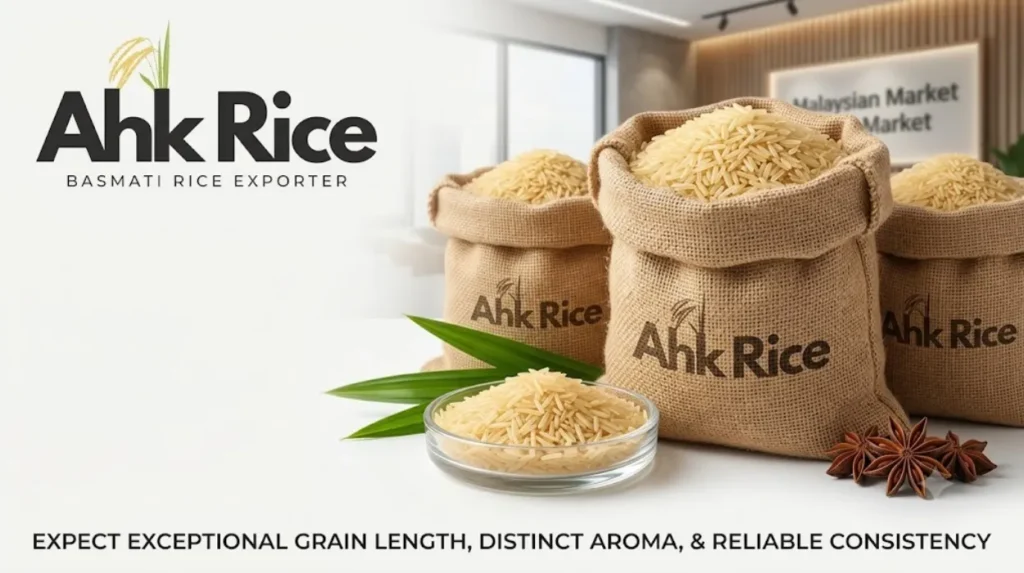
Consistent quality, reduced procurement risk, predictable shipment schedules, stronger retail positioning, and long-term supply stability are the most common outcomes.
Malaysian importers often prioritize consistency because retail customers expect uniform cooking performance.
Premium Basmati varieties deliver stronger retail margins. Value-oriented grades support food service and wholesale channels.
Typical Business Outcomes
| Expected Result | Business Benefit |
|---|---|
| Consistent Grain Quality | Reduced customer complaints |
| Stable Supply | Improved inventory planning |
| Verified Documentation | Faster customs clearance |
| Customized Packaging | Better market positioning |
| Multiple Grade Availability | Simplified procurement |
Shipping Time Estimates
| Destination Market | Typical Shipping Days |
|---|---|
| Port Klang | 12–18 Days |
| Penang Port | 14–20 Days |
| Johor Region | 14–21 Days |
| East Malaysia | 18–28 Days |
Transit times vary according to vessel schedules, seasonal demand, and port congestion.
For example, a distributor importing 1121 Steam Basmati for Kuala Lumpur supermarkets may prioritize appearance and shelf presentation. A food service importer may prioritize consistency and value pricing instead.
These outcomes depend on cost management and specification choices. The next section examines pricing considerations.
What Factors Affect Rice Export Pricing to Malaysia?
Rice variety, processing method, grain length, packaging format, order volume, freight costs, and market conditions determine final export pricing.
Rice pricing changes throughout the year because harvest cycles, freight rates, and global demand influence costs.
Premium Basmati grades command higher prices due to longer grain length and stronger consumer recognition.
Main Pricing Factors
| Factor | Impact on Price |
|---|---|
| Rice Variety | High |
| Grain Length | High |
| Processing Type | High |
| Packaging Size | Medium |
| Freight Costs | High |
| Order Volume | Medium |
| Inspection Requirements | Medium |
Processing Comparison
| Type | Typical Shelf Life |
|---|---|
| White Rice | 12 Months |
| Steam Rice | 12–18 Months |
| Golden Sella Rice | 18–24 Months |
Golden Sella generally stores longer than Steam rice. In warm warehouse environments, Golden Sella often maintains quality for extended periods. Steam rice may require faster inventory rotation. Malaysian distributors managing large inventories frequently evaluate storage duration before selecting specifications.
AHK Rice provides quotations based on buyer requirements, shipment volume, destination, and packaging preferences.
Pricing analysis supports purchasing decisions. The final step is understanding how to begin the sourcing process.
How Can Malaysian Importers Get Started?
Define specifications, request samples, approve quality, confirm pricing, finalize documentation, and schedule shipment to begin procurement efficiently.
Importers achieve better outcomes when product requirements are defined before requesting quotations.
Required Information for Quotations
- Rice variety
- Processing type
- Packaging specification
- Quantity requirement
- Destination port
- Private label requirements
- Certification requirements
Required Export Documents
- Commercial Invoice
- Packing List
- Certificate of Origin
- Phytosanitary Certificate
- Bill of Lading
- Inspection Certificate
- Fumigation Certificate
AHK Rice supports buyers throughout the procurement process, from sample approval through shipment execution.
Procurement Workflow
- Submit product requirements.
- Receive quotation.
- Approve samples.
- Confirm order.
- Finalize packaging.
- Complete production.
- Inspect cargo.
- Load containers.
- Dispatch shipment.
AHK Rice simplifies procurement because buyers receive coordinated support during every stage of the export process.
Malaysia’s rice import market is expected to remain attractive throughout 2026. Importers seeking stable supply chains, competitive pricing, and export support can strengthen sourcing operations by partnering with experienced exporters such as AHK Rice. Contact AHK Rice today and submit your requirements through the quotation request form.
Frequently Asked Questions
How much rice does Malaysia import from Pakistan?
Malaysia imports significant quantities of Pakistani rice every year. Basmati rice remains one of the strongest performing categories. Import volumes fluctuate according to consumer demand and government policies. Pakistan continues to be a recognized supplier in the Malaysian market. Long-term demand supports continued trade growth.
Which Pakistani rice varieties are most popular in Malaysia?
1121 Basmati, Super Kernel Basmati, and 1509 Basmati are among the most popular varieties. Retail buyers often prefer premium Basmati products. Food service businesses may purchase value-focused grades. Importers select varieties according to customer preferences. Product positioning influences purchasing decisions.
How long does rice shipping take from Pakistan to Malaysia?
Most shipments reach Malaysia within approximately 12 to 21 days. Transit times depend on destination ports and vessel schedules. Seasonal congestion can influence delivery timelines. Documentation accuracy helps prevent delays. Buyers should confirm schedules before booking shipments.
What certifications are commonly required for rice exports?
Export shipments typically require a Certificate of Origin, Phytosanitary Certificate, and commercial documentation. Certain buyers request additional inspections. Certification requirements may vary by importer. Regulatory compliance supports smoother customs clearance. Proper documentation reduces shipment risk.
Why do Malaysian buyers choose Pakistani rice?
Pakistani rice offers strong grain length, aroma, and cooking performance. Multiple quality grades support different market segments. Competitive pricing improves commercial viability. Reliable exporters provide documentation and logistics support. These advantages make Pakistani rice attractive for Malaysian importers.