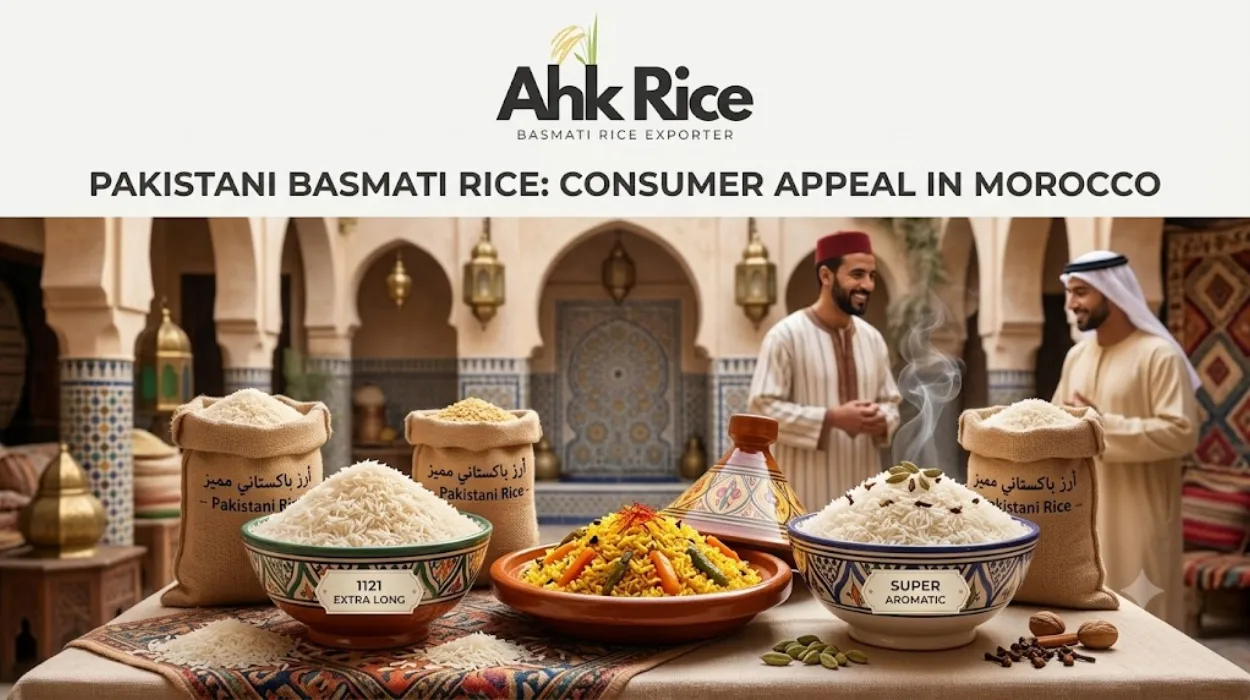
Which Pakistani Basmati Rice Varieties Appeal Most to Moroccan Consumers
Pakistani Basmati rice varieties that combine long grain length, strong aroma, high cooking yield, and visual appearance attract Moroccan consumers the most. Moroccan buyers primarily select 1121 Basmati, Super Kernel Basmati, and 1509 Basmati because these varieties match local culinary preferences and import requirements. Here is why: these varieties deliver grain elongation, fragrance, and consistency that suit both household and food-service consumption.
What Is Pakistani Basmati Rice and Why Does It Appeal to Moroccan Consumers?
1121 Basmati, Super Kernel Basmati, and 1509 Basmati represent the most preferred Pakistani varieties in Morocco because they offer long grains, aromatic characteristics, and strong cooking performance.
Pakistani Basmati rice is a premium aromatic rice cultivated in the Punjab region of Pakistan. Basmati refers to a distinct rice category known for its natural fragrance, slender grain structure, and elongation during cooking.
Moroccan consumers value rice that maintains grain separation after cooking. Pakistani Basmati satisfies this requirement through its low stickiness and distinctive aroma.
Moroccan households frequently prepare rice alongside meat dishes, tagines, grilled poultry, and festive meals. Long-grain aromatic rice complements these preparations because the grains remain separate and visually attractive after cooking.
Pakistan supplies multiple Basmati varieties. Each variety serves a different consumer segment based on grain length, cooking characteristics, and pricing structure.
1121 Basmati Rice
1121 Basmati features raw grain lengths between 8.2 mm and 8.4 mm. This variety delivers exceptional elongation during cooking.
1121 Basmati appeals to Moroccan consumers who prioritize presentation and premium quality. Restaurants and catering businesses often prefer this variety because cooked grains become significantly longer.
Super Kernel Basmati Rice
Super Kernel Basmati features grain lengths between 7.0 mm and 7.5 mm. This traditional variety offers a rich aroma and balanced texture.
Super Kernel Basmati appeals to consumers seeking authentic Basmati fragrance. Many importers select this variety for retail distribution because it combines quality with affordability.
1509 Basmati Rice
1509 Basmati features grain lengths between 8.0 mm and 8.3 mm. This variety matures earlier than traditional Basmati cultivars.
1509 Basmati appeals to price-sensitive markets because it provides long grain characteristics at a competitive cost. Moroccan importers often source this variety for value-oriented retail channels.
With the main rice varieties defined, the next question is how these products move from cultivation to export-ready rice.
How Is Pakistani Basmati Rice Processed Before Export to Morocco?
Pakistani Basmati rice passes through 9 essential processing steps: cleaning, drying, storage, dehusking, milling, polishing, grading, sorting, and packaging.
Rice processing determines final quality. Each stage protects grain integrity and ensures export compliance.
Step-by-Step Processing Process
- Clean the harvested paddy to remove stones, dust, and field impurities.
- Dry the paddy to the required moisture level.
- Store the paddy under controlled conditions.
- Dehusk the grains to remove outer husks.
- Mill the rice to separate bran layers.
- Polish the rice according to grade specifications.
- Grade the rice by length and quality.
- Sort the rice using optical color sorters.
- Package the rice for export shipment.
Modern rice mills use computerized equipment to maintain consistency. Optical sorting systems identify discolored grains and foreign materials.
Quality inspection occurs throughout processing. Laboratories test moisture content, grain length, broken percentage, and purity standards before shipment.
Exporters load finished rice into containers after inspection and documentation procedures are completed.
Processing establishes quality consistency. The next question examines the specific grades Moroccan importers encounter when sourcing Pakistani Basmati rice.
What Grades of Pakistani Basmati Rice Are Available for Moroccan Importers?
Pakistani Basmati rice is available in Raw, Steam, Sella, Golden Sella, White Rice, and broken rice grades, each serving different market requirements.
Rice grades describe processing methods and physical characteristics rather than different rice species.
Raw Basmati Rice
Raw rice undergoes standard milling without parboiling treatment.
Raw rice retains a softer texture after cooking. Consumers who prefer delicate rice texture often choose this grade.
Steam Basmati Rice
Steam rice receives controlled steaming before milling.
Steam processing improves grain strength while preserving natural color. Steam rice offers balanced cooking performance and shelf stability.
Sella Basmati Rice
Sella rice undergoes parboiling before milling.
Parboiling transfers nutrients from the outer layers into the grain. Sella rice delivers firmer texture and stronger grain separation.
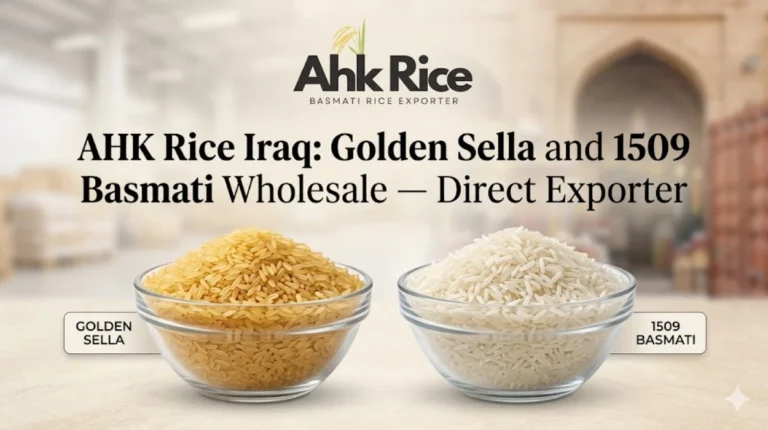
Golden Sella Basmati Rice
Golden Sella receives intensive parboiling treatment that creates a golden appearance.
Golden Sella lasts longer than Steam rice. In warm storage environments, Golden Sella maintains quality for approximately 18 months, while Steam rice generally performs best within 12 months.
Golden Sella suits food-service operations because grains remain separate after large-scale cooking.
Broken Rice Grades
Broken rice contains fractured grains generated during milling.
Broken rice serves industrial food applications, prepared foods, and budget-conscious market segments.
Grade selection influences market positioning. The next section explains which characteristics Moroccan consumers value most when selecting rice.
What Characteristics Do Moroccan Consumers Prefer in Basmati Rice?
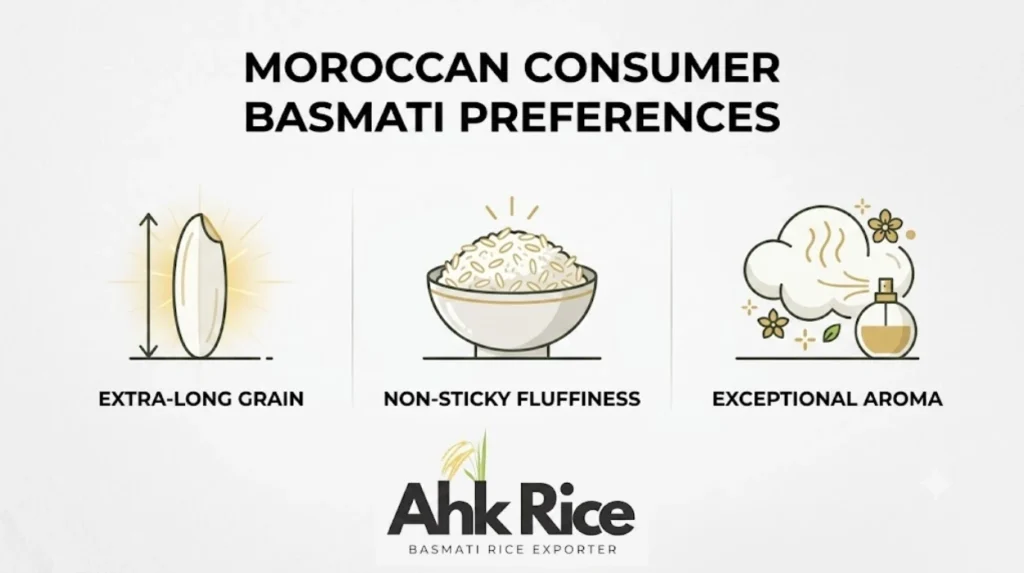
Long grain length, strong aroma, grain elongation, visual appearance, and cooking consistency drive Moroccan consumer preferences.
Grain length strongly influences purchasing decisions. Consumers associate longer grains with premium quality and improved presentation.
Aroma represents another important factor. Traditional Basmati fragrance differentiates Pakistani rice from ordinary long-grain rice.
Cooking performance affects repeat purchases. Consumers expect grains to remain separate rather than becoming sticky.
Visual appearance also influences buying behavior. Uniform grain size and bright color signal quality and proper processing.
Retail buyers often prefer packaging that displays grain appearance clearly. Transparent windows and premium graphics help communicate quality standards.
Consumer preferences determine variety selection. The next section examines the markets and sectors importing Pakistani Basmati rice.
Which Moroccan Market Segments Import Pakistani Basmati Rice?
Retail distributors, wholesalers, restaurants, hotels, catering companies, and food manufacturers import Pakistani Basmati rice into Morocco.
Retail distributors focus on consumer packaging formats. Common package sizes include 1 kg, 5 kg, and 10 kg bags.
Wholesalers purchase container quantities for regional distribution networks. These businesses supply supermarkets and independent retailers.
Hotels prioritize premium presentation. Long-grain varieties such as 1121 Basmati meet hospitality requirements.
Restaurants require rice that remains separate after cooking. Steam and Golden Sella grades often satisfy this requirement.
Food manufacturers utilize rice as an ingredient in prepared foods and packaged meals.
Pakistan remains an important rice supplier to North African markets because of its production capacity and variety selection.
Market applications explain demand patterns. The next question addresses the certifications required for international trade.
What Certifications Apply to Pakistani Basmati Rice Exports?
Phytosanitary certification, quality inspection reports, food safety certifications, and export documentation support international Basmati rice trade.
Certification verifies compliance with importing country requirements.
Common Export Certifications
- Phytosanitary Certificate
- Certificate of Origin
- Quality Inspection Certificate
- Fumigation Certificate
- Packing List
- Commercial Invoice
- Bill of Lading
Food safety certifications strengthen buyer confidence.
Common Food Safety Standards
- ISO 22000
- HACCP
- GMP
- BRC Food Safety Standards
Laboratory testing verifies moisture levels, purity percentages, and grain specifications before shipment.
Certification confirms compliance. The next section addresses common misconceptions surrounding Pakistani Basmati rice.
What Misconceptions Exist About Pakistani Basmati Rice in Morocco?
Many buyers assume all Basmati varieties perform identically, but grain length, aroma intensity, processing method, and cooking behavior differ significantly.
One misconception states that all Basmati rice varieties offer identical elongation. 1121 Basmati elongates more than most traditional varieties.
Another misconception suggests Golden Sella and Steam rice provide identical storage performance. Golden Sella generally performs better during extended storage periods.
Some buyers believe lower-priced varieties indicate lower quality. 1509 Basmati demonstrates that pricing and quality are separate variables. Earlier crop maturity influences production economics without eliminating desirable Basmati characteristics.
Another misconception assumes fragrance remains constant across all varieties. Super Kernel Basmati typically delivers a stronger traditional aroma profile than several newer cultivars.
Understanding these distinctions helps importers align product specifications with market demand. The final question summarizes which varieties attract Moroccan consumers most effectively.
Which Pakistani Basmati Rice Variety Matches Moroccan Consumer Demand Best?
1121 Basmati leads premium demand, Super Kernel Basmati serves traditional aromatic preferences, and 1509 Basmati supports value-oriented market segments.
1121 Basmati dominates premium retail and hospitality applications because of its exceptional grain length and cooking presentation.
Super Kernel Basmati remains important because of its traditional aroma and established reputation among Basmati consumers.
1509 Basmati provides a competitive option for importers targeting affordable long-grain rice categories.
Moroccan consumer demand centers on aroma, grain elongation, appearance, and cooking consistency. Pakistani Basmati varieties satisfy these requirements through specialized cultivation, controlled processing, and standardized grading systems.
For readers interested in understanding supply chain reliability, importer sourcing strategies, and procurement processes, the next logical topic explores how Moroccan buyers establish dependable rice sourcing partnerships in Pakistan.
Frequently Asked Questions
Which Pakistani Basmati rice variety is most popular in Morocco?
1121 Basmati Rice is the most popular premium variety because of its extra-long grains, strong elongation, and attractive appearance after cooking.
What is the difference between 1121 and Super Kernel Basmati?
1121 Basmati offers longer grains and greater elongation, while Super Kernel Basmati provides a stronger traditional Basmati aroma.
Why do Moroccan importers buy Pakistani Basmati rice?
Moroccan importers purchase Pakistani Basmati rice because it offers aroma, grain separation, consistent quality, and multiple processing grades.
What is Golden Sella Basmati Rice?
Golden Sella Basmati is a parboiled rice grade with a golden color, longer shelf life, and strong grain separation after cooking.
Which certifications are required for Pakistani rice exports?
Common requirements include a Phytosanitary Certificate, Certificate of Origin, Quality Inspection Certificate, Commercial Invoice, and Bill of Lading.
Where is Pakistani Basmati rice grown?
Pakistani Basmati rice is primarily cultivated in Punjab, where climate and soil conditions support aromatic rice production.