Philippines Rice Import Dependency and Opportunities for Pakistani Exporters
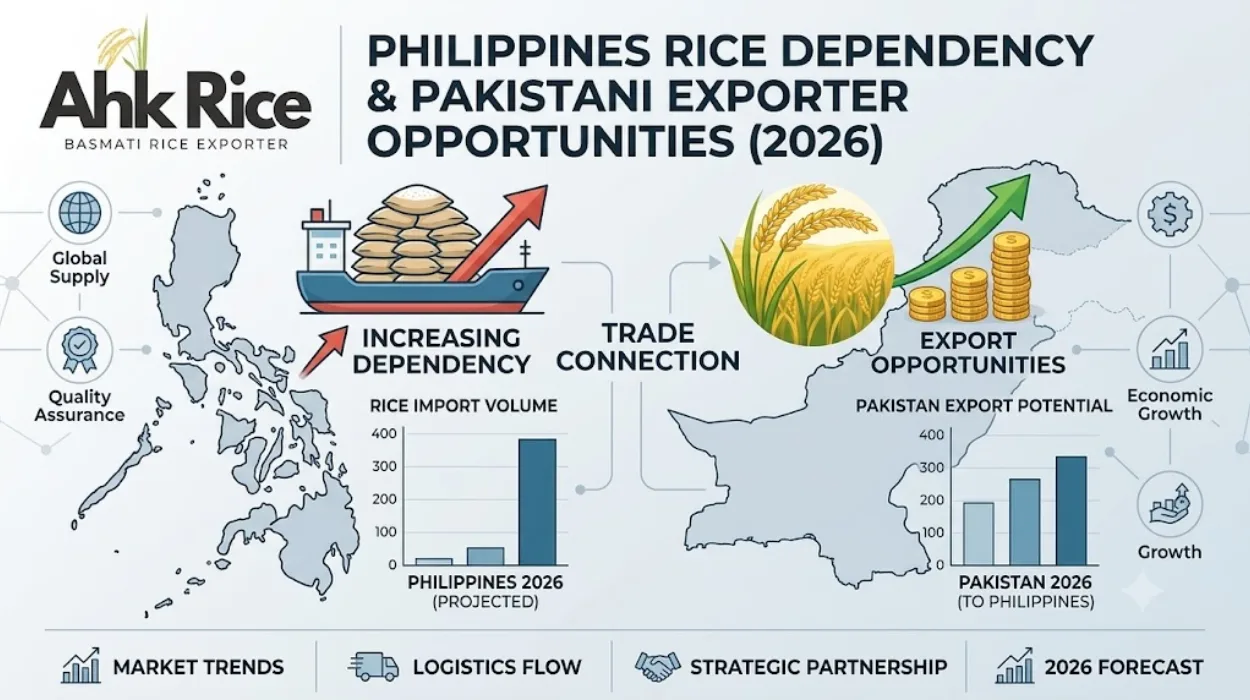
Rice remains the most important staple food in the Philippines. The country continues to depend on imported rice because domestic production does not fully meet annual consumption requirements. Here is why: population growth, weather disruptions, land limitations, and rising food demand keep imports essential for national food security.
What is the Philippines rice import dependency?
The Philippines imports more rice than any other country in Southeast Asia because domestic consumption exceeds local production requirements.
Philippines rice import dependency refers to the gap between rice consumption and rice production. The country cultivates rice across major agricultural regions including Central Luzon, Cagayan Valley, Western Visayas, and Mindanao. Despite large cultivation areas, annual production remains below national demand.
Rice serves as the primary food source for over 115 million people. Population growth increases annual consumption. Urbanization also changes purchasing patterns because consumers increasingly buy commercially packaged rice instead of relying on local production networks.
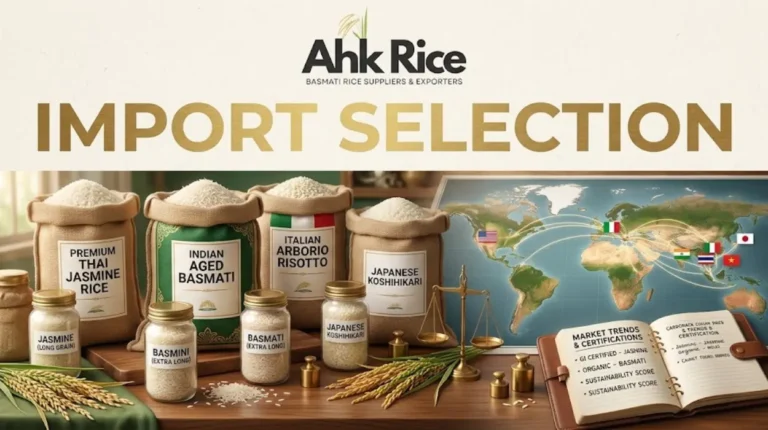
The Philippines imports rice from several exporting countries. Examples include Vietnam, Thailand, Pakistan, India, and Myanmar. Import dependency does not indicate agricultural weakness. It reflects the need to balance supply and demand throughout the year.
Government agencies monitor rice inventories closely because stable rice availability directly affects food inflation and household spending.
With import dependency defined, the next question is how the Philippine rice import system operates.
How does the Philippines rice import system work?
Private importers source rice internationally, government agencies regulate standards, and imported rice enters through designated ports before distribution.
The rice import system connects international suppliers with domestic wholesalers. Importers procure rice from exporting countries and arrange shipping schedules according to market demand.
The process follows several steps:
- Obtain import authorization.
- Source rice from approved exporters.
- Inspect grain quality.
- Test food safety compliance.
- Load rice into export containers.
- Ship cargo to Philippine ports.
- Clear customs requirements.
- Verify import documentation.
- Deliver rice to wholesalers.
Major ports receive imported rice shipments. Examples include Manila, Batangas, Cebu, and Davao. These ports support nationwide distribution networks.
Government agencies inspect imported rice before market entry. Testing includes moisture levels, grain quality, pest control compliance, and food safety verification.
Rice imports stabilize supply during harvest gaps. Seasonal fluctuations affect local production because typhoons and weather disruptions reduce harvest volumes in specific regions.
With the import process established, the next question involves the factors driving continued dependency.
Why does the Philippines continue importing rice?
Population growth, weather risks, production limitations, and consumption demand create a structural need for imported rice.
Rice consumption exceeds local production in many years. Demand expands continuously because population growth adds millions of consumers over time.
Weather remains a major factor. Typhoons affect agricultural regions regularly. Flooding damages rice fields and reduces harvest output. Drought conditions also affect irrigation systems and grain development.
Land availability creates another challenge. Urban expansion converts agricultural land into residential and commercial developments. Reduced cultivation areas limit production growth.
Production costs also influence competitiveness. Inputs such as fertilizer, fuel, machinery, and labor increase farming expenses. Higher costs affect domestic rice pricing.
Import programs help stabilize market supply. Consistent availability reduces sudden shortages and limits extreme price volatility.
Understanding dependency reveals why exporters monitor the Philippine market closely. The next question explores the key components shaping import demand.
What are the key components of the Philippines rice import market?
Consumer demand, government regulation, quality standards, logistics infrastructure, and international suppliers determine market performance.
Consumer Demand
Consumer demand remains the largest market driver. Filipino households purchase rice daily. Demand exists across retail, wholesale, foodservice, hospitality, and institutional sectors.
Different consumer groups prefer different grain characteristics. Examples include long-grain rice, fragrant rice, premium rice, and economical rice.
Government Regulation
Government agencies regulate import requirements. Regulations cover food safety, labeling, inspections, and customs compliance.
Policy decisions affect import volumes. Tariff adjustments influence sourcing strategies and market pricing.
Quality Standards
Quality standards determine import acceptance. Importers evaluate grain length, purity, broken percentage, moisture content, and appearance.
Quality verification protects consumers and maintains consistency throughout the supply chain.
Logistics Infrastructure
Logistics systems connect exporters and buyers. Efficient ports, warehouses, transportation networks, and distribution centers improve market performance.
Shipping schedules affect inventory planning because importers must maintain stable stock levels throughout the year.
International Suppliers
Exporting countries provide alternative sourcing options. Examples include Vietnam, Thailand, Pakistan, India, and Myanmar.
Supplier diversification reduces dependency on a single origin and strengthens supply resilience.
With market components identified, the next question examines opportunities for Pakistani exporters.
What opportunities exist for Pakistani rice exporters?
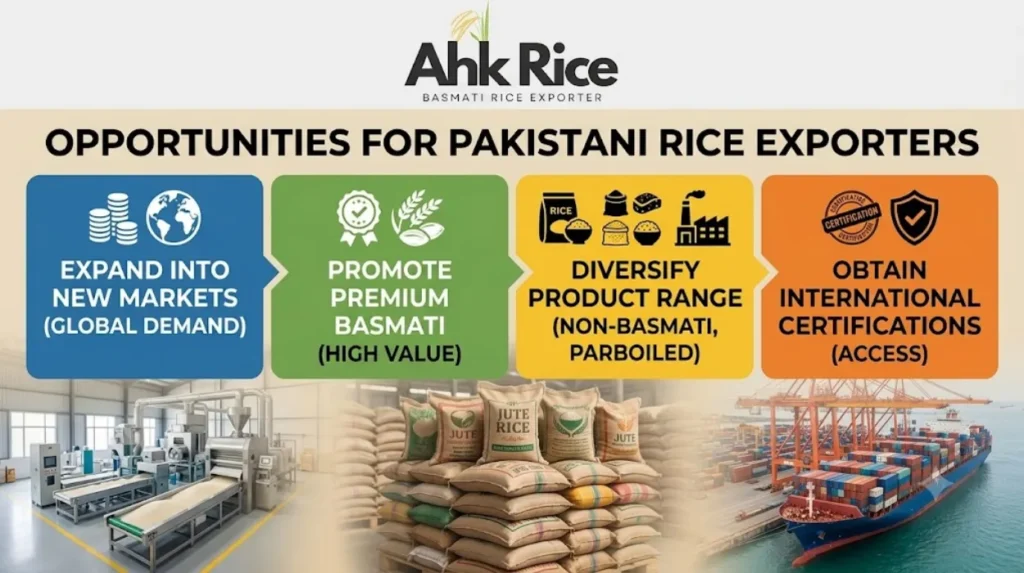
Growing import demand, supplier diversification, premium rice segments, and value-added packaging create export opportunities for Pakistan.
Pakistan ranks among the world’s major rice exporters. Punjab serves as the country’s primary rice cultivation region because fertile soil and irrigation infrastructure support large-scale production.
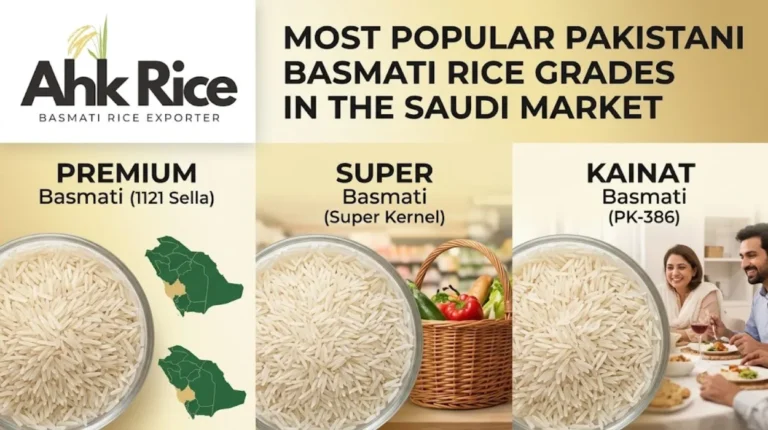
Pakistani rice includes several export varieties. Examples include 1121 Basmati, Super Kernel Basmati, 1509 Basmati, IRRI-6, and PK-386.
How is Pakistani rice grown and processed?
Pakistani rice follows a structured cultivation and processing chain that ensures export quality.
Rice cultivation begins with seed selection. Farmers cultivate certified seed varieties according to agronomic recommendations.
The processing sequence includes:
- Harvest the mature paddy.
- Clean the harvested paddy.
- Dry the grain to target moisture.
- De-husk the paddy.
- Separate impurities.
- Polish the rice.
- Grade by size.
- Sort by colour.
- Pack for export shipment.
Quality laboratories inspect grain specifications before export. Testing covers moisture, purity, broken percentage, and contamination control.
Which Pakistani rice grades are available?
White rice, steam rice, sella rice, golden sella rice, and parboiled rice represent the main export grades.
White rice undergoes milling and polishing without parboiling.
Steam rice receives controlled steaming treatment before milling.
Sella rice undergoes parboiling, which improves grain strength and shelf stability.
Golden Sella rice receives a specific parboiling process that produces a golden appearance and strong cooking performance.
Parboiled rice serves institutional buyers because grain breakage remains lower during handling and cooking.
The Philippine market increasingly values consistency, quality, and dependable supply chains. Pakistani exporters satisfy these requirements through standardized processing systems.
With export opportunities explained, the next question focuses on importing markets and trade flows.
Which international markets import Pakistani rice?
Asia, Africa, the Middle East, Europe, North America, and Oceania import Pakistani rice through established trade channels.
Pakistani rice exports reach more than 100 countries worldwide (source: Rice Exporters Association of Pakistan, 2025).
Major importing regions include:
- Gulf Cooperation Council countries
- East African countries
- West African countries
- European Union countries
- North American markets
- Southeast Asian markets
Examples include Saudi Arabia, United Arab Emirates, Qatar, Oman, Kenya, South Africa, United Kingdom, Canada, and Australia.
Market preferences vary by region. Premium consumers often prefer aromatic Basmati varieties. Institutional buyers often procure non-Basmati grades for large-scale consumption.
The Philippines represents a growing Southeast Asian destination because food security remains a national priority.
Understanding export destinations leads naturally to certification requirements.
Which certifications apply to rice exports for the Philippines?
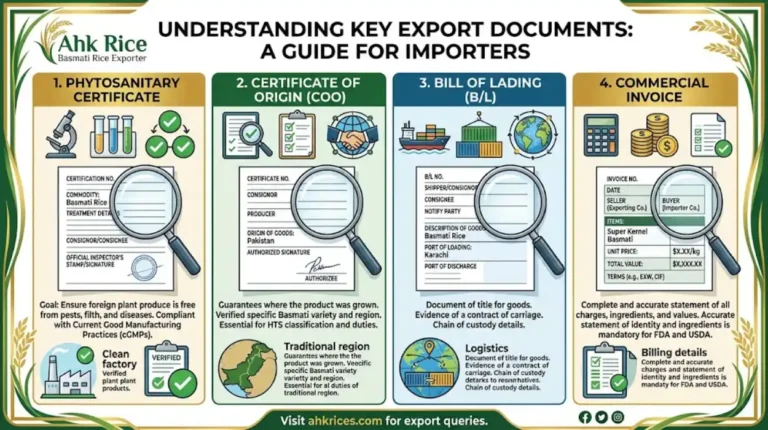
Food safety, quality assurance, phytosanitary compliance, and export documentation certifications support international rice trade.
Rice exporters follow certification systems to satisfy import regulations and buyer requirements.
Common certifications include:
- Phytosanitary Certificate
- Certificate of Origin
- Fumigation Certificate
- ISO 22000
- HACCP
- Halal Certification
- Quality Inspection Reports
- Food Safety Management Certification
Phytosanitary certification verifies that rice shipments meet plant health requirements.
HACCP identifies and controls food safety risks throughout processing operations.
ISO 22000 establishes structured food safety management procedures.
Halal certification supports buyers serving Muslim consumers.
Importers evaluate documentation before procurement decisions because certification reduces supply chain risk and supports compliance verification.
With certification requirements established, the final question addresses common misconceptions.
What misconceptions exist about Philippines rice imports?
Import dependency does not indicate agricultural failure, imported rice does not replace local farming, and supplier diversification improves food security.
One misconception claims imports weaken domestic agriculture. Imports actually supplement supply when consumption exceeds production.
Another misconception suggests imported rice always costs less. Price differences depend on quality specifications, logistics expenses, tariffs, and market conditions.
Some observers believe one supplier can satisfy all demand. Diversified sourcing improves resilience because weather disruptions affect producing countries differently.
Another misunderstanding involves premium rice demand. Consumers purchase different grades based on income levels, cooking preferences, and regional habits.
Rice import dependency reflects a food security strategy. The objective remains stable supply, predictable pricing, and continuous availability for consumers.
The Philippines will continue balancing domestic production and international sourcing, which keeps rice imports central to the country’s food system in 2026.
Readers seeking a detailed understanding of rice specifications that align with Philippine buyer preferences should continue with the guide on rice varieties commonly sourced for the market.
Frequently Asked Questions
What is rice import dependency?
Rice import dependency measures how much imported rice a country requires to meet domestic consumption when local production falls short.
Why does the Philippines import rice?
The Philippines imports rice because national demand exceeds domestic production. Population growth and weather-related production disruptions increase import requirements.
Which countries export rice to the Philippines?
Major rice suppliers include Vietnam, Thailand, Pakistan, India, and Myanmar.
What Pakistani rice varieties are exported internationally?
Common export varieties include 1121 Basmati, Super Kernel Basmati, 1509 Basmati, IRRI-6, and PK-386.
What certifications are important for rice exports?
Important certifications include Phytosanitary Certificate, HACCP, ISO 22000, Halal Certification, Certificate of Origin, and Fumigation Certificate.
Why do importers prefer certified rice suppliers?
Certified suppliers follow documented food safety, quality control, and compliance procedures that reduce procurement risk and improve supply consistency.