How Qatari Businesses Source Bulk Pakistani Sella Basmati Rice
Qatari importers source bulk Pakistani Sella Basmati Rice through verified exporters, product sampling, specification approval, contract confirmation, and container shipment. Here is why: Pakistani Sella Basmati offers long grain length, strong cooking performance, stable supply, and competitive pricing for Qatar’s food service and retail sectors.
Qatar imports significant quantities of Pakistani rice every year because restaurants, catering companies, wholesalers, and retailers require consistent grain quality and reliable supply chains (source: REAP export data, December 2025). Businesses evaluating suppliers often begin by understanding the wider market role of Pakistani rice through this guide on the role of Pakistani Sella Basmati Rice in Qatar’s food supply chain.
Many buyers compare different processing methods before selecting a grade. Understanding the differences between White, Steam, and Sella rice helps procurement teams match product specifications with their target customers. That comparison becomes important before final supplier selection.
AHK Rice supports Qatari buyers with specification-based sourcing, quality inspection, export documentation, and containerized shipments. AHK Rice works with importers, distributors, food service operators, and private-label brands seeking long-term supply partnerships.
What Is the Best Solution for Sourcing Bulk Pakistani Sella Basmati Rice in Qatar?
The best solution is sourcing directly from a Pakistani exporter offering verified specifications, pre-shipment inspection, approved samples, export documentation, and predictable shipping schedules. Direct procurement reduces procurement risk, improves consistency, and provides better pricing than sourcing through intermediaries.
Qatari businesses face several sourcing challenges. Product inconsistency, delayed shipments, specification mismatches, and poor communication can create operational problems. Restaurants and wholesalers cannot afford disruptions because rice remains a staple inventory item.
Direct sourcing solves these challenges. Direct exporters control procurement, milling, grading, quality testing, packaging, and logistics coordination. Buyers gain visibility into the entire supply chain.
AHK Rice supplies multiple Sella Basmati specifications suitable for Qatar. AHK Rice helps buyers select the correct grade according to retail, catering, wholesale, or institutional requirements.
1121 Golden Sella Basmati Rice
1121 Golden Sella remains one of the most demanded grades in Qatar. The grain achieves exceptional elongation after cooking. The variety performs well in biryani, mandi, buffet catering, and premium restaurant applications.
Specification Table
| Specification | Value |
|---|---|
| Grain Length | 8.30 mm+ |
| Moisture | 13% Max |
| Broken Grains | 2%–5% |
| Purity | 95%–100% |
| Crop Origin | Punjab, Pakistan |
| Shelf Life | 18–24 Months |
| Packaging | 5kg–50kg |
1121 Creamy Sella Basmati Rice
1121 Creamy Sella offers a lighter appearance while maintaining excellent cooking performance. Retail importers often select this grade because consumers recognize its attractive presentation.
Super Kernel Sella Basmati Rice
Super Kernel Sella serves buyers seeking traditional Basmati aroma and competitive pricing. Many wholesalers distribute this grade across value-conscious segments.
AHK Rice provides all major export grades with customizable packaging and labeling options.
With grade selection established, the next question concerns supplier selection and export capabilities.
Why Choose AHK Rice as a Pakistani Sella Basmati Rice Exporter?
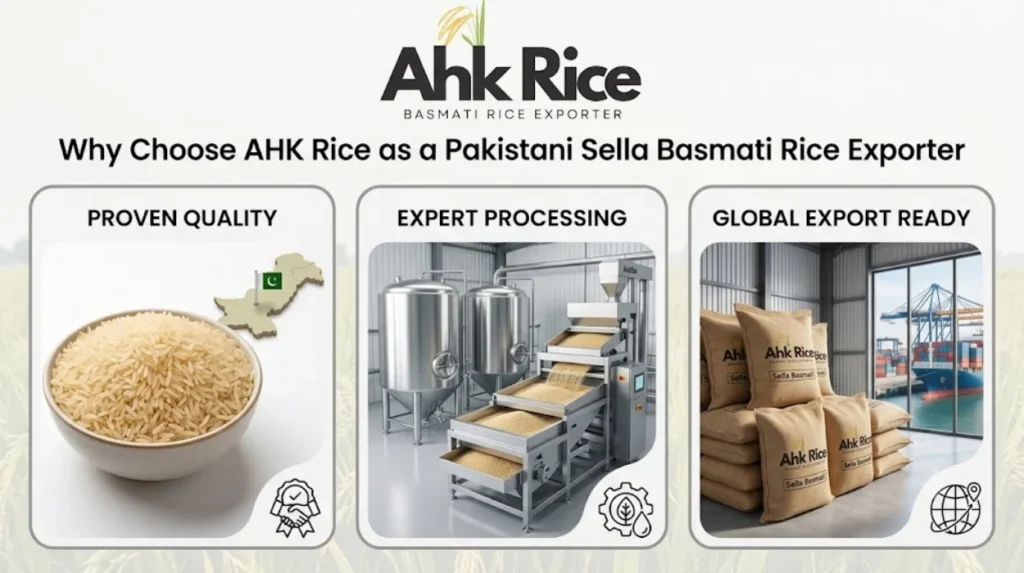
AHK Rice offers specification-based sourcing, multiple Sella grades, quality testing, export documentation, flexible packaging, container management, and dedicated customer support. These capabilities help Qatari importers reduce procurement uncertainty and improve supply reliability.
Supplier selection directly impacts profitability. Consistent quality protects customer satisfaction. Reliable shipping protects inventory planning.
AHK Rice follows a structured production workflow.
Processing Steps at AHK Rice
- Clean the harvested paddy.
- Parboil the grain.
- Dry the rice.
- De-husk the paddy.
- Polish the kernels.
- Grade by size.
- Sort by colour.
- Inspect quality parameters.
- Load export packaging.
This process helps maintain consistency across shipments.
Quality Controls
- Moisture testing
- Grain length verification
- Broken percentage inspection
- Purity verification
- Colour sorting
- Packaging inspection
- Container loading checks
AHK Rice also provides buyers with access to specification sheets, laboratory reports, and shipment documentation.
Export Documents Provided
- Commercial Invoice
- Packing List
- Certificate of Origin
- Phytosanitary Certificate
- Bill of Lading
- Fumigation Certificate
- Quality Inspection Report
Qatari buyers often compare rice specifications before finalizing orders. A detailed comparison between White, Steam, and Sella varieties can help procurement teams identify the most suitable grade for their market requirements through this analysis of White, Steam, and Sella Basmati rice options for Qatar.
With supplier qualifications clarified, the next consideration becomes expected business outcomes.
What Results Can Qatari Businesses Expect from Bulk Pakistani Sella Basmati Rice?
Businesses typically achieve stronger customer satisfaction, better inventory stability, improved cooking performance, and competitive margins. Premium Sella grades deliver consistent grain elongation, attractive appearance, and longer storage life across wholesale and food-service channels.
Restaurants prioritize cooking consistency. Long grain elongation creates visual appeal and portion efficiency.
Catering businesses require reliable batch performance. Consistent cooking reduces operational variability during large-scale meal preparation.
Retailers focus on consumer satisfaction. Attractive grain appearance influences repeat purchases.
Golden Sella generally offers longer storage capability than Steam rice. In Gulf warehouse conditions, Golden Sella may maintain commercial quality for up to 24 months, while many Steam grades are best distributed within 12–18 months. This distinction matters for importers managing larger inventory cycles.
AHK Rice supports these outcomes through standardized grading procedures and export-focused quality controls.
Typical Buyer Segments
Restaurants
Restaurants prioritize grain length, aroma, and cooking expansion.
Catering Companies
Catering companies prioritize consistency and bulk purchasing efficiency.
Wholesalers
Wholesalers prioritize competitive pricing and supply continuity.
Retail Brands
Retail brands prioritize packaging quality and consumer presentation.
AHK Rice serves each segment with customized specifications and packaging solutions.
With expected results defined, buyers typically evaluate pricing considerations next.
What Factors Affect the Cost of Bulk Pakistani Sella Basmati Rice?
Rice prices depend on variety, crop conditions, purity levels, broken percentage, packaging specifications, container quantities, and freight rates. Buyers evaluating total landed cost should assess product specifications alongside logistics expenses.
No single price applies to every shipment. Specification differences significantly influence pricing.
Main Pricing Factors
Rice Variety
1121 Golden Sella generally commands higher prices than standard varieties because of its grain length and cooking characteristics.
Purity Percentage
Higher purity levels require more intensive grading and sorting processes.
Broken Percentage
Lower broken percentages increase product value and processing costs.
Packaging Type
Printed retail packaging costs more than standard PP bags.
Container Quantity
Larger orders often achieve better freight efficiency.
Freight Conditions
Shipping costs fluctuate according to fuel prices and international logistics conditions.
Typical Shipping Transit Times to Qatar
| Route | Estimated Days |
|---|---|
| Karachi to Hamad Port | 8–12 Days |
| Documentation Processing | 2–4 Days |
| Container Loading | 2–3 Days |
| Customs Clearance | 1–3 Days |
| Total Typical Lead Time | 13–22 Days |
AHK Rice coordinates shipment scheduling and export documentation to reduce delays during transit.
Pricing evaluation naturally leads to the final procurement process.
How Do Qatari Businesses Get Started with Bulk Rice Procurement?
The recommended process includes specification selection, sample approval, quotation review, contract confirmation, production scheduling, shipment execution, and post-dispatch support. Structured procurement minimizes commercial risk and accelerates order completion.
The sourcing process begins with clear specifications. Buyers define grade requirements, packaging preferences, and volume targets.
Sample Process
AHK Rice follows a structured sampling procedure.
Step 1: Request Specifications
Provide required grade, purity level, packaging, and order quantity.
Step 2: Receive Sample Options
AHK Rice prepares representative product samples matching requested specifications.
Step 3: Laboratory Review
Buyers evaluate grain length, moisture, aroma, colour, and cooking performance.
Step 4: Approve Final Specification
Approved samples become the production reference standard.
Step 5: Confirm Commercial Terms
Finalize pricing, payment terms, shipment schedule, and packaging requirements.
Sample Costs
| Sample Type | Typical Cost |
|---|---|
| Small Courier Sample | Usually Free Product |
| International Courier Charges | Buyer Pays Freight |
| Multiple Grade Samples | Based on Quantity |
| Customized Retail Packaging Samples | Additional Cost May Apply |
Sample approval reduces procurement risk because production follows an agreed reference specification.
Order Execution Process
- Select the rice grade.
- Approve the sample.
- Confirm the quotation.
- Finalize the contract.
- Schedule production.
- Inspect finished goods.
- Load containers.
- Dispatch shipment.
- Receive export documents.
AHK Rice maintains communication throughout each stage. AHK Rice provides updates during production, inspection, loading, and shipment. AHK Rice also supports repeat procurement programs for long-term buyers. AHK Rice focuses on building sustainable supply relationships rather than transactional sales. AHK Rice helps importers align specifications with market demand. AHK Rice continues supporting buyers after shipment dispatch.
Businesses seeking reliable Pakistani Sella Basmati Rice sourcing can begin by discussing specifications, sample requirements, and shipment plans through the official AHK Rice website and submit their inquiry through the dedicated quote request page at request a quote.
Frequently Asked Questions
How much rice fits in a 20-foot container?
A standard 20-foot container typically loads around 24 to 26 metric tons depending on packaging configuration. Retail packs may reduce loading capacity slightly. Bulk PP bag shipments generally maximize container utilization. Exporters calculate exact loading plans before shipment. Container optimization helps reduce freight cost per ton.
How long does it take to receive a rice sample in Qatar?
Sample delivery usually takes between 3 and 7 business days depending on courier service and customs processing. Delivery timing also depends on documentation requirements. Express courier services often provide faster transit. Buyers should allow additional time during peak shipping periods. Early sample requests support faster procurement decisions.
Which Sella Basmati grade is most popular in Qatar?
1121 Golden Sella is commonly preferred because of its extra-long grain length and excellent cooking expansion. Restaurants and catering businesses frequently choose this grade. Retail buyers also value its visual appearance. Consumer recognition supports repeat purchases. Premium positioning often justifies higher pricing.
What certifications should rice exporters provide?
Professional exporters generally provide phytosanitary certificates, certificates of origin, packing lists, invoices, and quality reports. Additional certifications may depend on customer requirements. Documentation supports customs clearance and regulatory compliance. Buyers should verify document requirements before shipment. Proper paperwork reduces import delays.
Why do buyers approve samples before placing large orders?
Sample approval establishes a reference standard for production. Buyers can verify grain quality, colour, cooking performance, and specifications. This process reduces misunderstandings between suppliers and importers. Approved samples improve shipment consistency. Commercial risk decreases significantly after specification confirmation.