1121 Basmati Sella Rice Export Pricing Guide for UAE Rice Importers
1121 Basmati Sella Rice export pricing for UAE importers depends on paddy costs, processing grade, packaging specifications, freight charges, and import logistics. Here is why: Pakistan supplies the majority of premium Basmati rice to Gulf markets, and every stage from cultivation to CIF delivery directly affects the final landed cost.
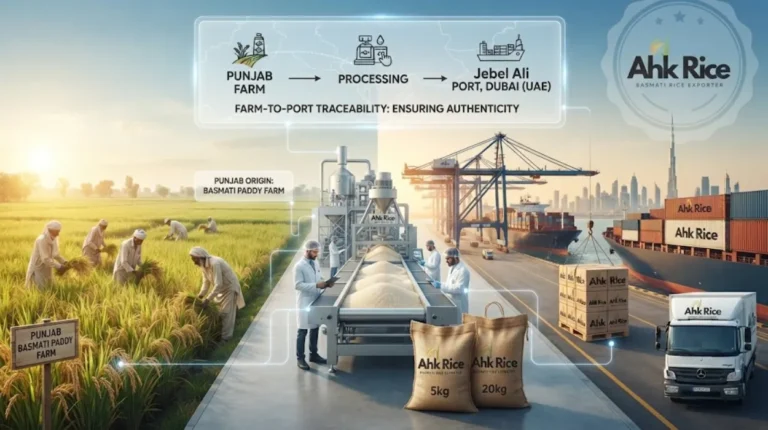
1121 Basmati Sella Rice remains one of the most imported premium rice varieties in the UAE. UAE wholesalers, retailers, food service companies, and re-export traders source this rice because of its extra-long grain, high cooking yield, and strong aroma. Pakistan cultivates 1121 Basmati in Punjab’s rice-growing belt, where climate and soil conditions support premium grain development.
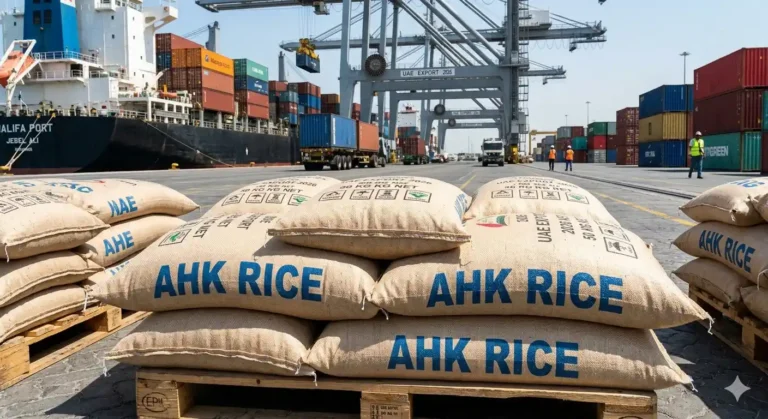
Rice importers evaluate pricing through FOB Pakistan and CIF UAE structures. FOB pricing covers costs until the shipment loads at the Pakistani port. CIF pricing includes freight and insurance until arrival at UAE ports. Understanding these components helps buyers compare supplier quotations accurately.
What Is 1121 Basmati Sella Rice?
1121 Basmati Sella Rice is a parboiled premium Basmati variety with grain lengths exceeding 8.30 mm before cooking and significantly longer expansion after cooking.
1121 Basmati originated through agricultural breeding programs designed to improve grain length and yield. Farmers cultivate the crop primarily in Punjab, Pakistan. Harvesting occurs between October and November after full maturity.
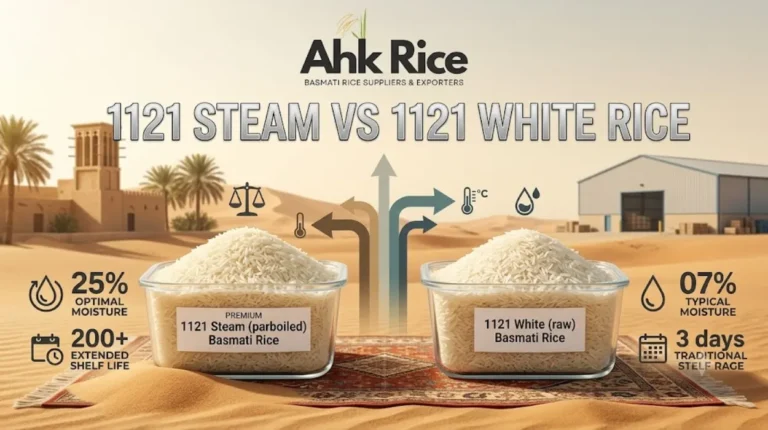
Sella rice undergoes a parboiling process before milling. Parboiling strengthens the grain structure and improves breakage resistance. The process also creates the golden or cream-colored appearance commonly seen in export markets.
UAE buyers prefer Sella rice because it performs consistently in restaurants, catering operations, and bulk food service applications. The grain remains separate after cooking and retains visual appeal during holding periods.
With the product defined, the next question is how the Sella processing system works.
How Does 1121 Basmati Sella Rice Processing Work?
1121 Basmati Sella Rice follows a structured process consisting of cultivation, harvesting, drying, parboiling, milling, grading, sorting, packing, and export inspection.
Step-by-Step Processing Flow
- Clean the harvested paddy.
- Soak the paddy in controlled water tanks.
- Steam the soaked grain.
- Dry the parboiled paddy.
- Dehusk the grain.
- Mill the rice kernels.
- Grade by length and quality.
- Sort through color sorting systems.
- Pack according to export specifications.
Parboiling changes the internal structure of the grain. The process improves durability during transportation. Exporters experience lower breakage percentages after milling.
Modern rice mills use optical sorting equipment. These systems remove discolored kernels, foreign materials, and defective grains. Quality control teams inspect moisture, purity, and grain length before shipment.
Export facilities test every production lot before loading. Testing includes moisture content, broken percentage, foreign matter, and cooking performance verification.
With processing explained, understanding the grades becomes important because grade selection directly influences export pricing.
What Grades of 1121 Basmati Sella Rice Are Available?
Export grades range from premium head rice to broken rice categories, with price differences driven by grain integrity and purity levels.
1121 Super Premium Sella
This grade contains maximum head rice and minimum defects. Importers serving premium retail channels commonly procure this specification. Grain appearance remains highly uniform.
1121 Premium Sella
This grade balances quality and commercial value. UAE wholesalers frequently source this category because it meets retail and food service requirements simultaneously.
1121 Standard Sella
This specification contains a slightly higher broken percentage. Food distributors often choose this grade for value-focused market segments.
1121 Sortexed Sella
This grade passes advanced color sorting systems. Uniformity improves visual appearance and consumer acceptance.
1121 Broken Sella
This category serves industrial processing and specialized food manufacturing applications. Pricing remains lower than head rice grades.
| Grade | Broken % | Common Use |
|---|---|---|
| Super Premium | 1-2% | Premium retail |
| Premium | 3-5% | Wholesale distribution |
| Standard | 5-10% | Food service |
| Sortexed | Variable | Export retail |
| Broken | Above 10% | Processing industry |
With grade differences established, the next topic is export pricing structure.
What Factors Influence Export Pricing for UAE Buyers?
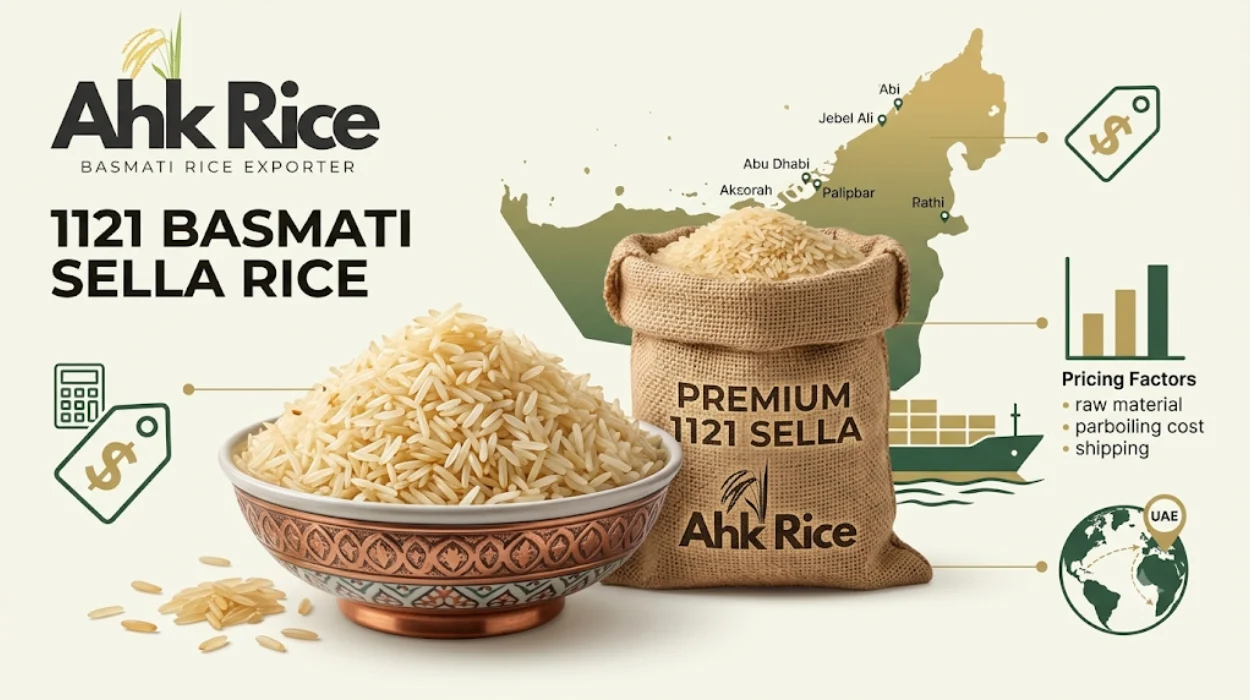
Paddy costs, milling yields, processing grade, packaging, freight, insurance, and market demand determine final export prices.
Paddy Procurement Costs
Paddy represents the largest cost component. Harvest season prices influence export quotations throughout the marketing year.
Processing Expenses
Processing includes soaking, steaming, drying, milling, grading, sorting, and packing. Energy costs directly affect manufacturing expenses.
Packaging Specifications
Packaging changes pricing. Examples include 1 kg retail bags, 5 kg retail bags, 20 kg PP bags, 25 kg PP bags, and 40 kg woven sacks.
Freight Charges
Ocean freight affects CIF pricing. Shipping rates fluctuate according to fuel prices, vessel availability, and seasonal demand.
Exchange Rates
Currency movements influence international trade. Pakistani Rupee and US Dollar exchange rates affect export calculations.
Market Demand
Demand from the UAE, Saudi Arabia, Oman, Qatar, and Kuwait impacts regional pricing trends (source: REAP export data, December 2025).
Readers seeking a deeper understanding of FOB and landed cost calculations should review our article discussing how Pakistan export costs and UAE delivery expenses interact throughout the rice supply chain.
With pricing factors explained, certification requirements become the next important consideration.
Which Certifications Apply to 1121 Basmati Sella Rice Exports?
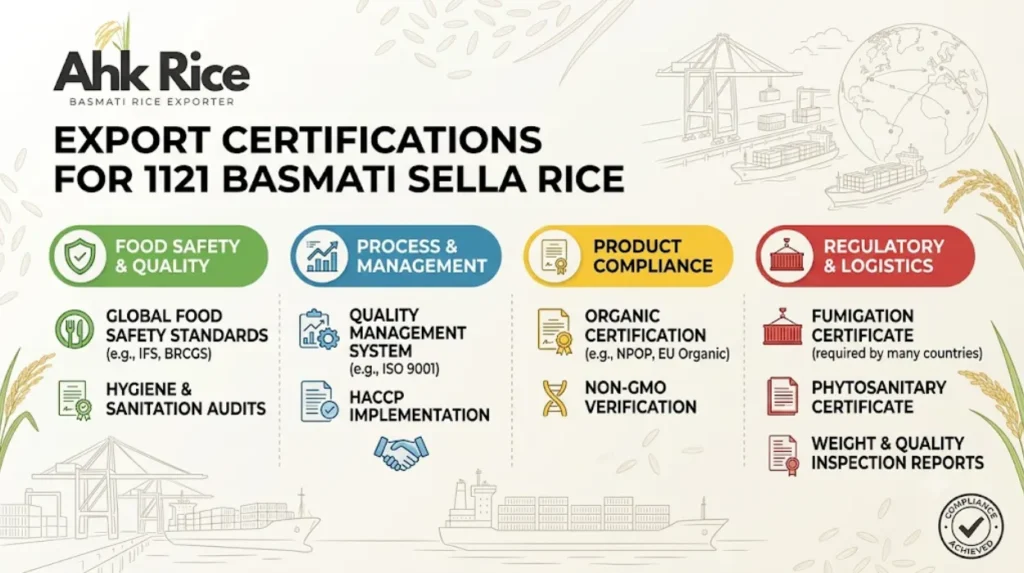
Export shipments commonly require food safety, quality, phytosanitary, and origin certifications before entering UAE markets.
Food Safety Certifications
Food safety systems verify controlled production standards. Examples include ISO 22000, HACCP, and food safety management certifications.
Quality Certifications
Quality certifications verify production consistency. Buyers use these documents during supplier evaluation.
Phytosanitary Certification
Government authorities issue phytosanitary certificates after inspection. The document confirms compliance with plant health regulations.
Certificate of Origin
Certificate of Origin documentation confirms Pakistan as the production source country.
Laboratory Testing Reports
Laboratories test moisture, purity, broken percentage, and contamination levels before export clearance.
Certification requirements vary by importer category. Retail distributors often require more documentation than bulk commodity traders.
With compliance requirements covered, the next section examines the benefits driving UAE demand.
Why Do UAE Importers Prefer 1121 Basmati Sella Rice?
Long grain length, high cooking expansion, storage stability, and strong consumer demand make 1121 Sella a preferred import category.
1121 Sella Rice expands significantly after cooking. Higher expansion ratios improve serving efficiency for restaurants and catering companies.
1121 Sella Rice resists breakage better than white rice. Improved durability reduces handling losses during transportation and storage.
1121 Sella Rice maintains quality during long-distance shipping. Gulf climate conditions support commercial distribution when proper storage standards are maintained.
1121 Sella Rice serves multiple customer groups. Examples include supermarkets, restaurants, catering companies, wholesalers, and re-export businesses.
With benefits established, examining practical applications provides additional market context.
What Are the Main Use Cases for 1121 Basmati Sella Rice in the UAE?
Food service, retail distribution, hospitality operations, catering companies, and regional re-export businesses represent the largest use categories.
Hospitality Industry
Hotels use premium Basmati rice for buffet operations and specialty cuisine preparation.
Restaurant Sector
Restaurants select long-grain rice because presentation quality influences customer perception.
Catering Operations
Large catering companies prioritize cooking yield and grain separation performance.
Retail Distribution
Retail brands package rice into consumer-sized formats for supermarket sales.
Re-Export Trade
UAE traders distribute imported rice across Gulf and African markets through established logistics networks.
These applications explain sustained import demand and lead naturally to common market misconceptions.
What Misconceptions Exist About 1121 Basmati Sella Rice Pricing?
Many buyers assume freight determines pricing, but paddy costs and milling yields usually create larger price variations.
Some buyers compare quotations without checking grade specifications. Different broken percentages create different values even when product names appear identical.
Some buyers evaluate only FOB pricing. Complete purchasing decisions require freight, insurance, customs, and delivery cost analysis.
Some buyers assume all Sella rice grades perform equally. Premium grades deliver better appearance, lower breakage, and stronger retail presentation.
Some buyers focus only on the lowest quotation. Quality consistency often determines long-term commercial performance more effectively than initial purchase price.
Understanding these misconceptions helps importers evaluate supplier quotations more accurately and compare offers using identical specifications.
1121 Basmati Sella Rice remains a leading premium rice category for UAE importers because of its grain length, cooking performance, and commercial versatility. Export pricing depends on cultivation costs, processing standards, grade selection, packaging requirements, freight charges, and certification compliance. Importers who compare identical grades, packaging formats, and delivery terms gain the most accurate understanding of FOB Pakistan and CIF UAE pricing structures.
Frequently Asked Questions
What is the difference between FOB and CIF pricing?
FOB pricing covers costs until cargo loads at the Pakistani port. CIF pricing includes freight and insurance until the shipment reaches the UAE destination port.
Why is 1121 Basmati Sella Rice popular in the UAE?
1121 Basmati Sella Rice offers long grain length, excellent cooking expansion, strong grain separation, and suitability for hospitality and catering operations.
Which Pakistani region grows most 1121 Basmati Rice?
Punjab produces the majority of Pakistan’s 1121 Basmati Rice due to favorable climate, irrigation systems, and fertile agricultural land.
What certifications are required for UAE rice imports?
Common requirements include Phytosanitary Certificate, Certificate of Origin, laboratory test reports, and food safety certifications such as HACCP or ISO 22000.
Which grade is best for UAE wholesalers?
Premium and Sortexed grades are commonly selected because they balance quality, appearance, and commercial pricing.