Premium Basmati Rice Varieties Pakistani Exporters Supply to Qatar
Premium Pakistani Basmati rice remains the preferred imported aromatic rice for Qatar because it delivers long grain length, consistent cooking performance, premium fragrance, and reliable export quality. Here is why: Pakistan cultivates globally recognized Basmati varieties under suitable climatic conditions, follows internationally accepted milling and quality standards, and supplies multiple processing grades for different food service and retail markets.
Qatar’s premium food sector continues expanding through retail chains, hotels, restaurants, catering companies, and specialty food distributors. High-income consumers demand rice with consistent texture, aroma, and appearance. Pakistani exporters satisfy this demand by supplying several premium Basmati varieties in retail and bulk packaging while complying with international food safety requirements.
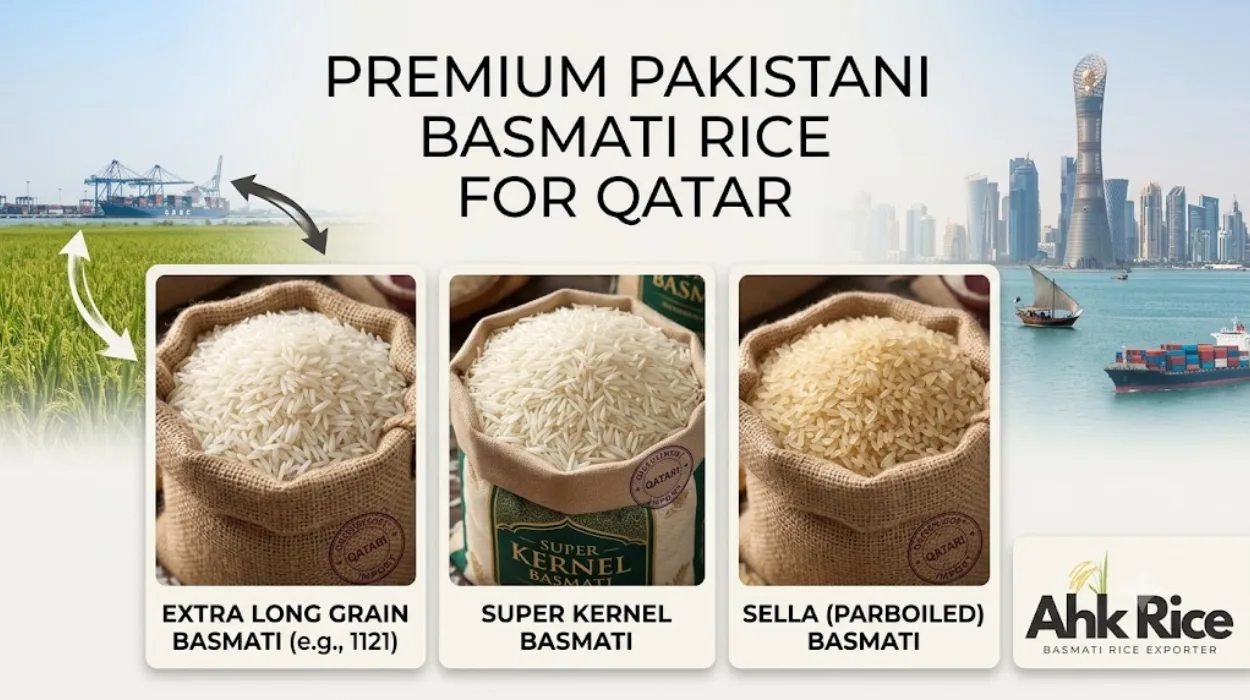
Pakistani exporters process rice through controlled harvesting, milling, grading, sorting, laboratory testing, packaging, and export documentation before dispatching shipments. Companies such as AHK Rice supply varieties including 1121 Basmati, Super Kernel Basmati, and 1509 Basmati with customized packaging and complete export documentation for international buyers.
What are the premium Basmati rice varieties Pakistani exporters supply to Qatar?
Premium Pakistani exporters supply 1121 Basmati, Super Kernel Basmati, 1509 Basmati, Traditional Basmati, Steam Basmati, Sella Basmati, Golden Sella Basmati, and White Basmati because each variety serves specific retail, hospitality, wholesale, and catering requirements in Qatar.
Premium Basmati rice refers to aromatic long-grain rice cultivated within Pakistan’s traditional Basmati-growing belt. The crop develops its fragrance through regional soil composition, irrigation systems, seasonal temperatures, and post-harvest aging.
Pakistani exporters classify rice according to grain variety and processing method. These classifications allow buyers to select products based on cooking characteristics, appearance, storage requirements, and target consumers.
1121 Basmati Rice
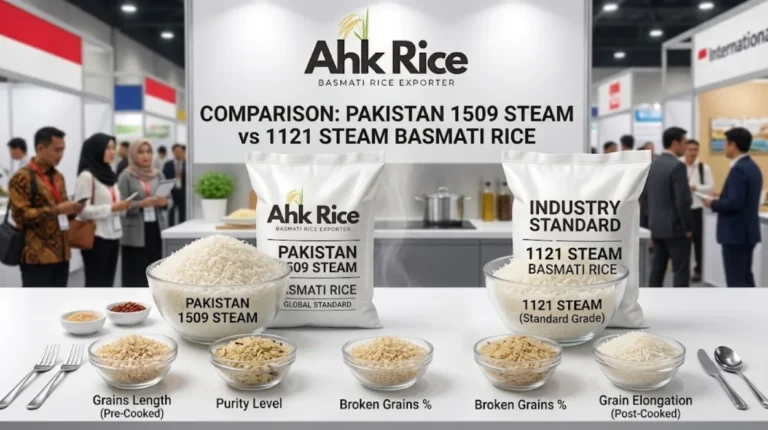
1121 Basmati produces one of the world’s longest rice grains. Average grain length exceeds 8.30 mm before cooking and extends significantly after cooking. Hotels and premium restaurants prefer this variety because it creates attractive plate presentation.
Super Kernel Basmati Rice
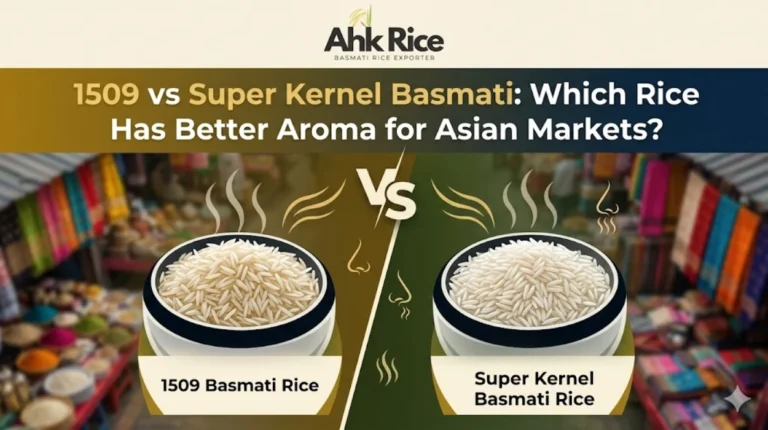
Super Kernel Basmati delivers a balanced combination of aroma, softness, and traditional appearance. Retail brands frequently select this variety because consumers recognize its authentic Basmati characteristics.
1509 Basmati Rice
1509 Basmati matures earlier than traditional varieties. Exporters supply it for buyers seeking premium quality with competitive pricing and reliable cooking performance.
Processing Grades
Pakistani exporters supply several processing grades, including:
- White Rice
- Steam Rice
- Creamy Sella Rice
- Golden Sella Rice
- Brown Basmati Rice
- Extra Long Grain Grade
- Sortex Premium Grade
Each processing grade serves different market requirements across retail shelves, food manufacturers, institutional kitchens, and catering companies.
With the available varieties established, the next question explains how Pakistani exporters process premium Basmati rice before shipment.
How do Pakistani exporters process premium Basmati rice for Qatar?
Premium Basmati rice passes through 9 controlled processing stages before export, ensuring food safety, grain consistency, moisture stability, and international quality compliance for commercial shipments.
Rice quality depends on processing as much as cultivation. Every processing stage removes impurities while protecting grain integrity.
Processing Steps
- Harvest mature paddy.
- Clean foreign materials.
- Dry the harvested grain.
- Store under controlled conditions.
- De-husk the paddy.
- Polish the rice.
- Grade by length.
- Sort using optical color sorters.
- Package and prepare export documentation.
Each stage improves consistency and reduces defects before shipment.
Modern processing facilities inspect grain appearance, moisture percentage, broken grain ratio, damaged kernels, and foreign matter before packaging.
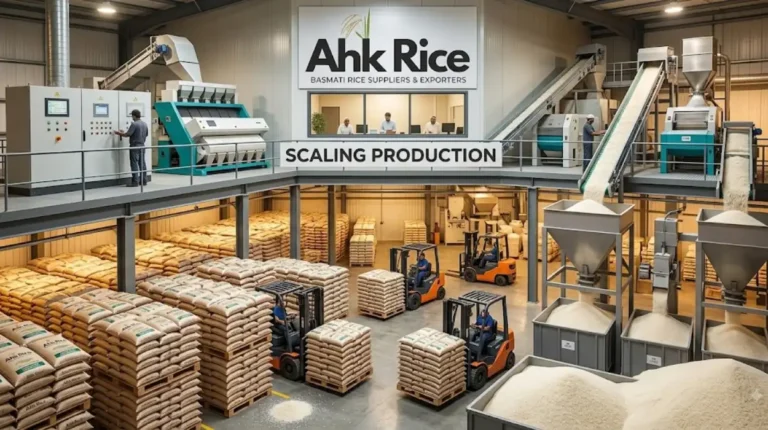
AHK Rice follows end-to-end processing that includes milling, grading, sorting, laboratory inspection, customized packaging, container loading, and export documentation.
With processing explained, understanding the components that define premium quality becomes easier.
What components determine premium Basmati rice quality?
Premium Basmati quality depends on grain length, aroma, purity, moisture content, broken percentage, aging period, milling quality, packaging integrity, and laboratory verification before export.
International buyers evaluate several measurable specifications before placing purchase orders.
Physical Characteristics
| Specification | Premium Value |
|---|---|
| Grain Length | 8.30 mm+ |
| Moisture | 12–14% |
| Broken Rice | Low export specification |
| Purity | High Sortex standard |
| Aroma | Natural Basmati fragrance |
| Foreign Matter | Controlled through inspection |
| Packaging | Customized export bags |
Grain length influences appearance after cooking.
Moisture determines storage stability.
Broken percentage affects commercial grade.
Packaging protects product quality during sea transportation.
Each specification contributes to buyer satisfaction and consistent import quality.
With quality components defined, the next section explains the practical advantages these specifications provide.
Why do Qatari buyers choose premium Pakistani Basmati rice?

Premium Pakistani Basmati offers excellent cooking expansion, natural aroma, attractive presentation, long storage stability, multiple processing options, and reliable export consistency for commercial food businesses and retail consumers.
Restaurants value grain elongation because presentation influences customer satisfaction.
Hotels require consistent cooking because buffet operations prepare large quantities daily.
Retail consumers purchase aromatic rice because fragrance remains an important purchasing factor.
Food distributors prefer multiple packaging sizes because different customers require different quantities.
Premium processing also reduces broken grains and improves shelf appearance.
These benefits explain why premium Basmati remains a preferred imported rice category within Qatar.
With the benefits established, practical applications become the next logical topic.
Where is premium Pakistani Basmati rice used in Qatar?
Premium Pakistani Basmati serves retail supermarkets, luxury hotels, restaurants, catering companies, wholesalers, food manufacturers, and institutional kitchens throughout Qatar’s food industry.
Different sectors purchase different varieties according to cooking requirements.
Retail
Retail stores package premium rice into consumer-friendly sizes ranging from 1 kg to 10 kg.
Hospitality
Luxury hotels prefer extra-long grain varieties because presentation supports premium dining experiences.
Restaurants
Restaurants choose consistent cooking performance for biryani, mandi, kabsa, pulao, and grilled meat meals.
Catering
Large catering companies often purchase bulk packaging between 25 kg and 50 kg for operational efficiency.
Each application requires different grain specifications while maintaining premium quality expectations.
Understanding these applications also helps explain common misconceptions surrounding Pakistani Basmati.
What misconceptions exist about premium Pakistani Basmati rice?
Premium Pakistani Basmati is not limited to one variety, one processing method, or one price category because exporters supply multiple grades for different commercial requirements.
Many buyers assume every Basmati variety cooks identically.
Each variety actually differs in grain length, maturity period, cooking expansion, aroma intensity, and commercial application.
Some buyers believe Golden Sella always represents higher quality than White Rice.
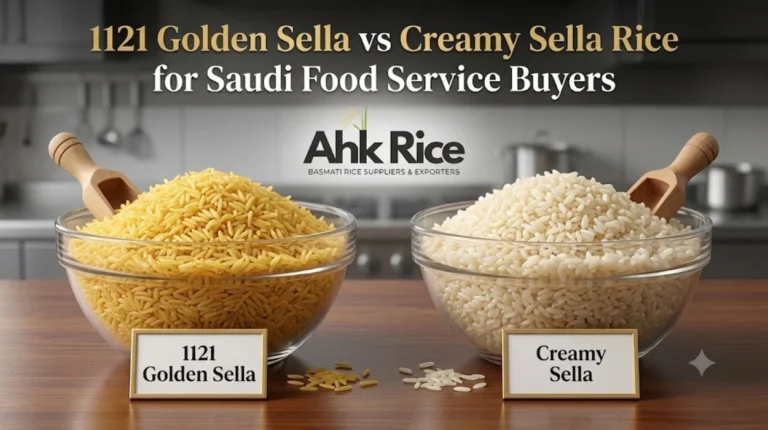
Golden Sella offers longer storage and firmer texture. White Rice provides softer texture and brighter appearance.
Some importers also assume all exporters supply identical specifications.
Professional exporters classify rice according to measurable quality standards including grain length, broken percentage, moisture level, and purity.
Understanding these differences helps buyers select appropriate grades rather than relying on general assumptions.
This understanding naturally leads readers toward evaluating Qatar’s broader premium food import trends.
During this stage of the article, readers benefit from deeper market analysis about Qatar’s changing premium food sector. Qatar’s Growing Premium Food Import Market and Rice Demand Outlook.
Frequently Asked Questions
What is the most popular Pakistani Basmati variety exported to Qatar?
1121 Basmati Rice remains the most popular premium variety because it offers extra-long grains, strong aroma, and excellent cooking elongation.
Which processing grade is best for catering companies?
Golden Sella Basmati is widely selected for catering because it maintains grain firmness during large-scale cooking and extended holding times.
What certifications do premium Pakistani rice exporters commonly maintain?
Professional exporters commonly comply with ISO 22000, HACCP, Halal certification, phytosanitary requirements, fumigation standards, and quality inspection procedures required by importing countries.
How is premium Basmati different from ordinary long-grain rice?
Premium Basmati develops a distinctive natural aroma, produces longer cooked grains, and follows stricter grading and quality inspection procedures.
Where should the MOFU internal link be inserted?
Insert the MOFU article naturally at the end of the “What misconceptions exist about premium Pakistani Basmati rice?” section, where readers begin seeking market demand insights before moving toward supplier evaluation. This placement creates a logical informational journey from product education (TOFU) to market analysis (MOFU).