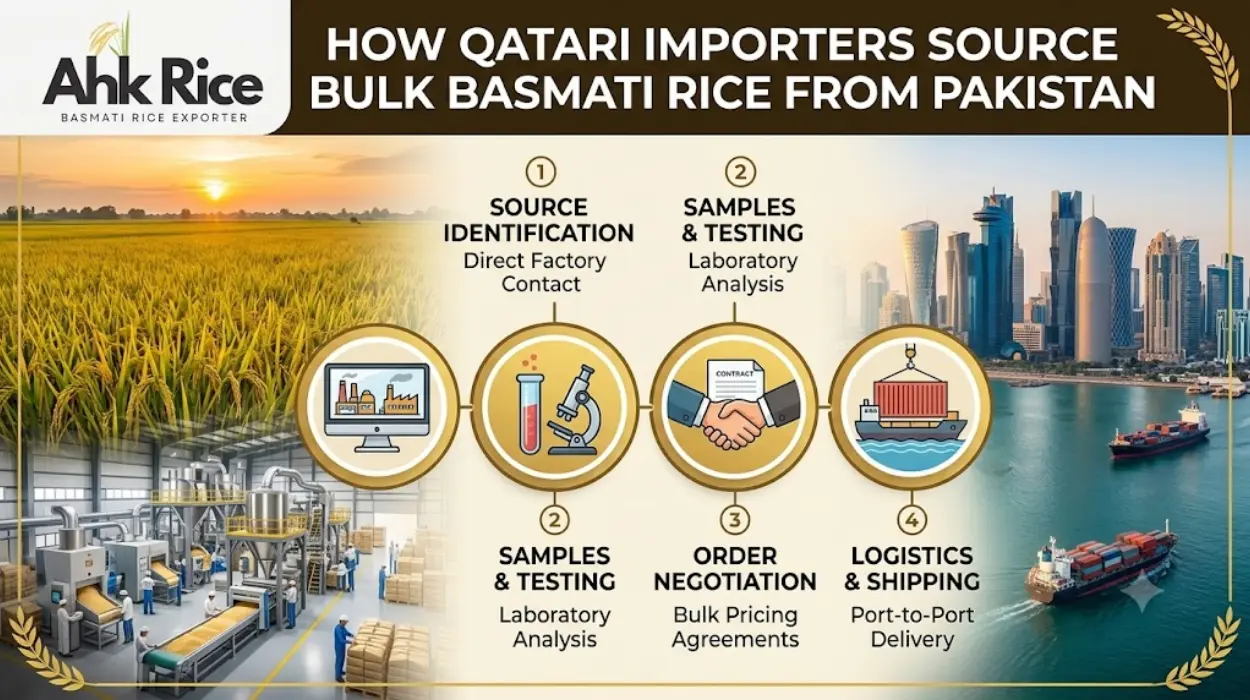
How Qatari Importers Source Bulk Basmati Rice from Pakistan
Qatari importers achieve the best purchasing results by sourcing directly from established Pakistani exporters that control milling, quality inspection, export documentation, and shipping. Direct procurement reduces unnecessary trading costs, improves product consistency, and ensures reliable delivery schedules. Businesses seeking a broader understanding of the regional trade landscape should first explore our guide on Pakistan–Qatar Rice Trade Growth and GCC Import Opportunities before making purchasing decisions.
Bulk Basmati rice remains one of Pakistan’s strongest agricultural exports because the country cultivates premium aromatic varieties with globally recognized quality. Buyers require dependable suppliers that consistently mill, inspect, certify, pack, and dispatch every shipment according to international specifications.
The first step toward reliable procurement begins with AHK Rice, a Pakistani exporter supplying premium Basmati rice with complete export support, quality verification, and customized packaging for commercial buyers throughout Qatar and the GCC.
What is the best solution for sourcing bulk Basmati rice from Pakistan?
The most reliable solution is selecting a Pakistani exporter that manages cultivation partnerships, modern milling, laboratory testing, export documentation, container loading, and after-sales support. This approach minimizes supply risks, maintains consistent specifications, shortens procurement cycles, and improves long-term purchasing confidence for commercial importers.
International rice procurement involves much more than comparing prices. Product consistency determines whether restaurants, wholesalers, supermarkets, and food distributors receive identical grain quality throughout the year.
AHK Rice manages the export process from procurement to shipment. This integrated approach helps buyers avoid dealing with multiple intermediaries.
Why direct sourcing performs better
- Reduces procurement costs
- Improves quality consistency
- Simplifies communication
- Speeds documentation
- Reduces shipment delays
- Supports customized packaging
- Maintains long-term supply stability
Product specifications
Standard Export Specifications
| Specification | Typical Value |
|---|---|
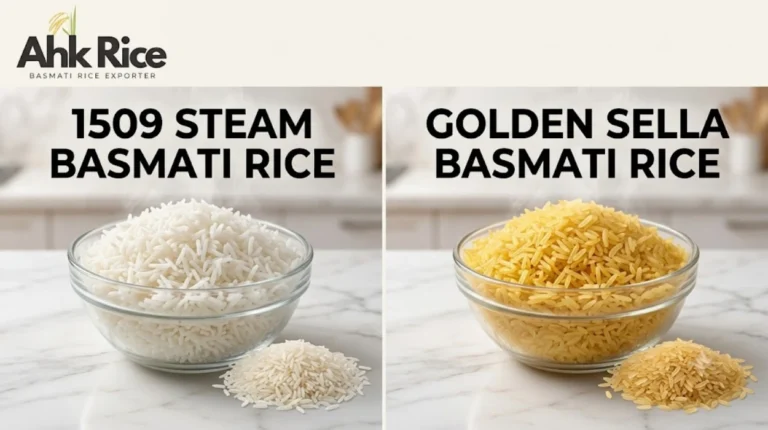
| Variety | 1121, Super Kernel, 1509 |
| Grain Length | 8.30 mm+ |
| Moisture | 12–14% |
| Broken Grains | 1–5% |
| Foreign Matter | Minimal |
| Packaging | 1–50 kg |
| Shelf Life | 18–24 Months |
AHK Rice verifies every production batch before dispatch. Independent inspections further strengthen buyer confidence.
With the sourcing process established, the next question concerns selecting the right export partner.
Why should Qatari importers choose AHK Rice?
AHK Rice combines modern processing, export experience, quality assurance, flexible packaging, competitive pricing, and responsive communication. Commercial buyers benefit from reliable specifications, transparent documentation, consistent shipment schedules, and professional support throughout every purchasing stage from inquiry to delivery.
Choosing an exporter means evaluating operational capability rather than marketing claims.
AHK Rice follows structured processing methods.
Processing stages
- Clean the harvested paddy.
- De-husk the grain.
- Dry the rice.
- Mill the kernels.
- Polish the grains.
- Grade by size.
- Sort using colour sorters.
- Inspect every batch.
- Pack according to buyer specifications.
Each stage improves consistency before export.
Quality control includes
- Moisture testing
- Length grading
- Colour sorting
- Broken percentage verification
- Metal detection
- Laboratory inspection
- Fumigation
- Container inspection
- Export certification
Importers also benefit from reviewing our comparison guide on Preferred Pakistani Basmati Rice Grades in Qatar’s Wholesale Market, which explains which grades suit different wholesale applications.
With supplier selection complete, buyers naturally ask about expected commercial results.
What results can importers expect after choosing the right exporter?
Professional sourcing produces consistent grain quality, improved customer satisfaction, predictable inventory planning, lower rejection rates, stable supply, and stronger long-term profitability. Reliable exporters reduce operational uncertainty while supporting business growth across wholesale, retail, hospitality, and food service sectors.
Consistent specifications reduce complaints from customers.
Restaurants receive identical cooking performance.
Retailers receive attractive packaging.
Distributors experience fewer rejected consignments.
Hotels maintain consistent menu quality.
These operational improvements create measurable commercial value.
Commercial outcomes
| Business Goal | Expected Benefit |
|---|---|
| Consistent Supply | Stable inventory |
| Better Quality | Fewer customer complaints |
| Lower Risk | Reduced shipment rejection |
| Efficient Logistics | Faster replenishment |
| Strong Partnership | Long-term procurement stability |
AHK Rice supports repeat orders through consistent production planning.
Understanding commercial results naturally leads buyers toward pricing considerations.
What affects the cost of bulk Basmati rice imports?
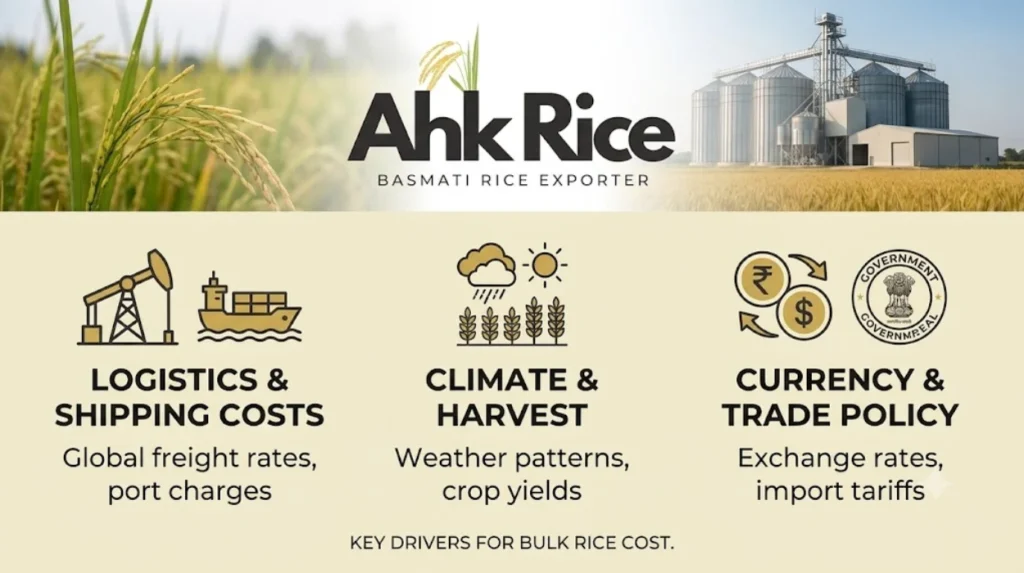
Bulk rice pricing depends on variety, processing method, grain length, packaging requirements, seasonal harvest conditions, freight charges, certifications, order quantity, and destination port. Understanding these variables helps buyers negotiate competitive contracts while maintaining desired product quality.
No two export quotations are identical.
Several commercial factors influence pricing.
Major pricing factors
- Rice variety
- Processing grade
- Packaging size
- Printing requirements
- Order volume
- Freight rates
- Insurance
- Seasonal availability
- Export documentation
- Destination port
Higher volumes generally reduce unit costs.
Private-label packaging increases production expenses.
Premium grades command higher prices because they require stricter sorting and grading.
With pricing understood, buyers should examine the complete procurement procedure.Contact AHK Rice today and submit your requirements through the quotation request form to receive a tailored export proposal.
Frequently Asked Questions
How long does it take to ship bulk Basmati rice from Pakistan to Qatar?
Bulk Basmati rice shipments usually reach Qatar within 10–18 days by sea, depending on the shipping schedule and customs clearance. AHK Rice coordinates production, documentation, and container dispatch before loading. Buyers receive shipping updates throughout the process. Advance production planning helps avoid delays during peak export seasons.
What documents are required to import Basmati rice into Qatar?
A standard export shipment includes the Commercial Invoice, Packing List, Bill of Lading, Certificate of Origin, Phytosanitary Certificate, Fumigation Certificate, and Quality Certificate. Additional documents can be arranged when required by Qatari authorities or private buyers. Complete documentation helps ensure faster customs clearance and smoother import procedures.
Can I request rice samples before placing a bulk order?
Yes. AHK Rice provides product samples before confirming commercial orders. Sample requests normally include courier charges ranging from USD 40–80, depending on the destination and package weight. Buyers can evaluate grain length, aroma, cooking performance, and packaging quality before proceeding with a container purchase.
Which Pakistani Basmati rice variety is most popular in Qatar?
1121 Basmati Rice remains the preferred choice for wholesalers, supermarkets, hotels, restaurants, and catering companies because of its extra-long grain, rich aroma, and excellent cooking performance. Super Kernel and 1509 Basmati are also supplied for buyers seeking different price points or market preferences. The ideal variety depends on your customer segment and budget.
Why should importers work directly with AHK Rice?
Working directly with AHK Rice reduces intermediary costs and improves communication throughout the procurement process. Buyers receive consistent product specifications, competitive pricing, flexible packaging options, professional export documentation, and dependable shipment schedules. Long-term partnerships also ensure stable supply, faster quotations, and responsive after-sales support for repeat commercial orders.