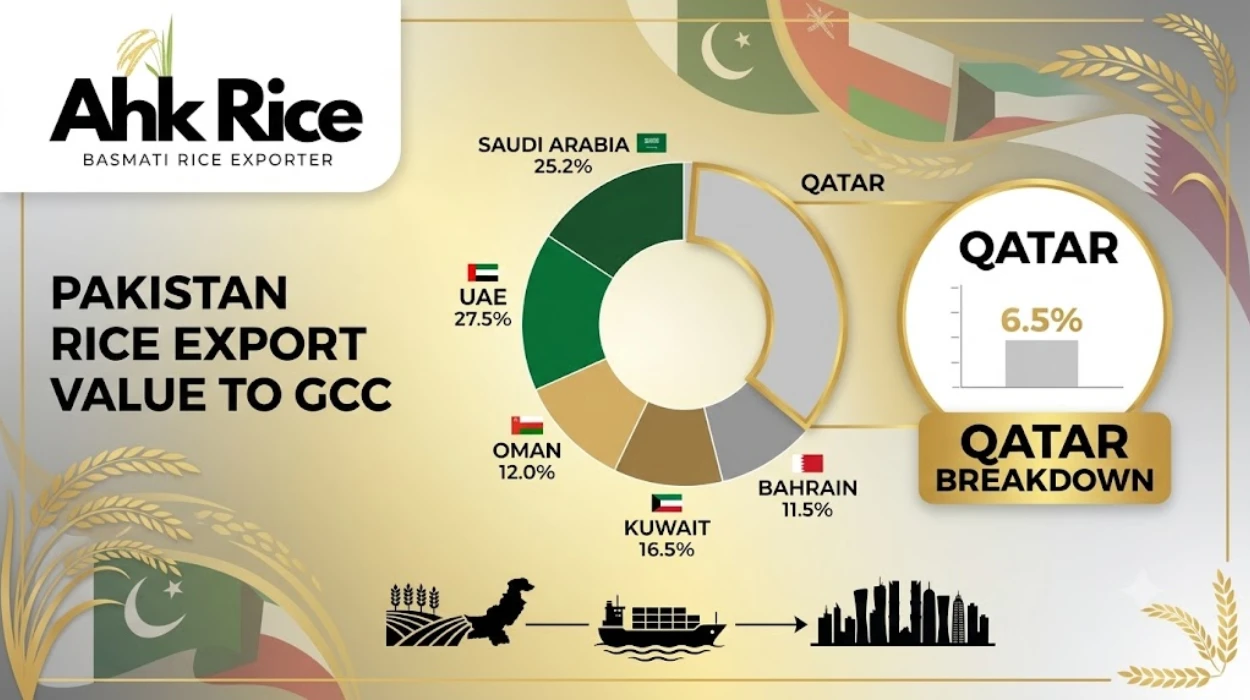
Pakistan Rice Export Value to GCC Countries: Qatar Breakdown
Pakistan remains one of the largest rice suppliers to GCC countries, and Qatar represents one of the fastest-growing premium Basmati markets. Strong trade relationships, consistent production, and premium-quality rice continue driving export value across the Gulf region. Here is why: Pakistan cultivates internationally recognized Basmati varieties, operates modern milling facilities, and exports through established logistics networks that satisfy GCC food security requirements.
Pakistan exports rice to more than 150 countries. GCC countries account for a significant share of premium Basmati demand because consumers prefer aromatic long-grain rice for households, restaurants, hotels, and catering businesses. According to Pakistan Bureau of Statistics and REAP export data, Gulf markets consistently rank among Pakistan’s highest-value rice destinations.
AHK Rice operates within this export ecosystem by processing, grading, packaging, and exporting premium Pakistani Basmati rice from Punjab to buyers across international markets. Understanding export value begins with understanding how the entire rice supply chain functions.
Readers interested in the purchasing preferences of Gulf buyers should also read our guide explaining how different Pakistani rice varieties satisfy regional demand.
What does Pakistan’s rice export value to GCC countries mean?
Pakistan’s rice export value measures the total monetary worth of rice shipped to GCC countries during a specific period. Export value reflects shipment volume, product quality, international prices, buyer demand, and trade agreements rather than production alone.
Export value differs from export volume. Export volume measures metric tons. Export value measures total revenue generated from exported rice.
Pakistan exports several rice categories including:
- Premium Basmati rice
- Non-Basmati long grain rice
- IRRI rice
- Parboiled rice
- White rice
Premium Basmati contributes a larger export value because buyers pay higher prices for aroma, grain length, cooking performance, and consistency.
The GCC consists of six countries:
- Qatar
- Saudi Arabia
- United Arab Emirates
- Kuwait
- Oman
- Bahrain
Each market imports different grades depending on consumer habits, hospitality demand, and wholesale distribution channels.
Pakistan’s rice industry combines agriculture, processing, quality control, logistics, and international trade into one integrated export system. That complete system explains why export value continues growing across Gulf markets.
With export value clearly defined, the next question becomes how Pakistan generates that value through its production and export process.
How does Pakistan export rice to GCC countries?
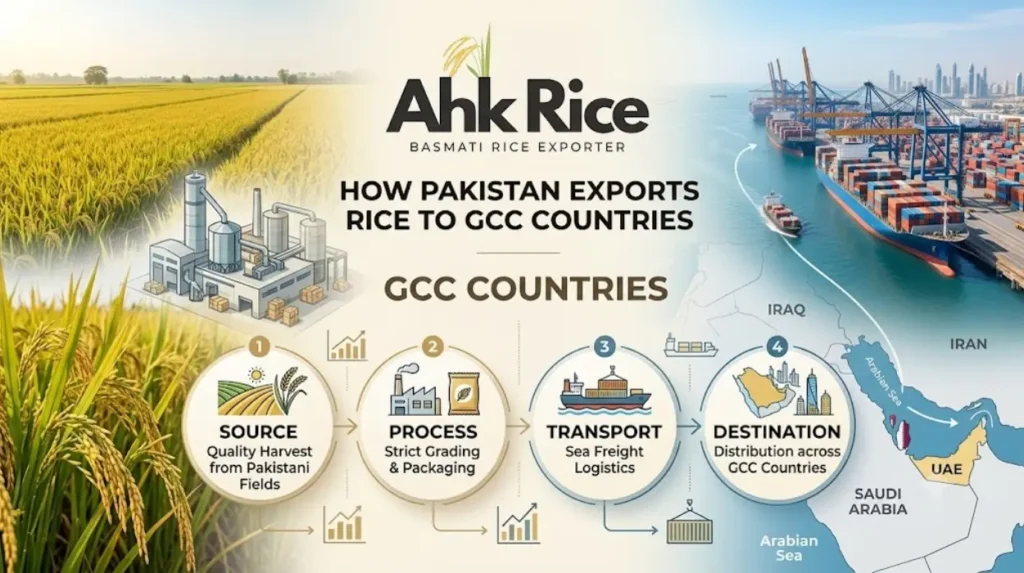
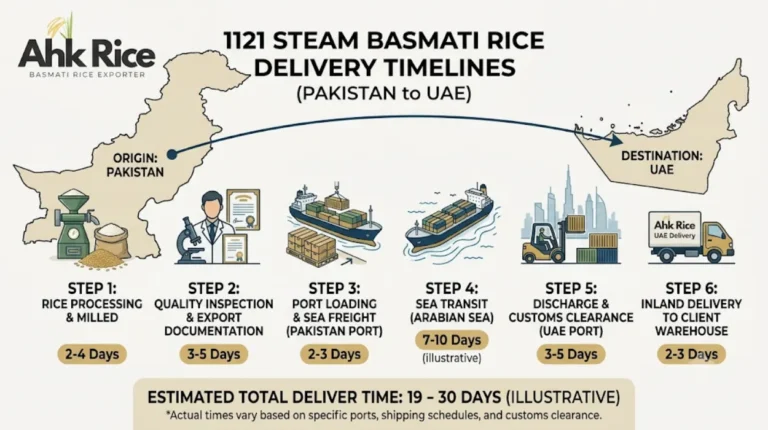
Pakistan exports rice through a structured supply chain consisting of cultivation, harvesting, milling, grading, quality inspection, certification, packaging, customs clearance, container loading, and international shipping. Every stage adds measurable commercial value.
Rice cultivation
Punjab produces most Pakistani Basmati rice because fertile soil, canal irrigation, and seasonal climate support premium grain development.
Farmers cultivate varieties including:
Each variety serves different international markets.
Rice processing
Modern rice mills follow defined production stages.
- Harvest the mature paddy.
- Clean the raw paddy.
- Dry the harvested grain.
- De-husk the rice.
- Mill the kernels.
- Polish the rice.
- Sort by size.
- Grade by quality.
- Inspect and test every batch.
Each processing stage improves consistency and export quality.
Quality verification
Exporters test important specifications including:
- Moisture percentage
- Grain length
- Broken percentage
- Foreign matter
- Damaged kernels
- Chalkiness
- Cooking expansion
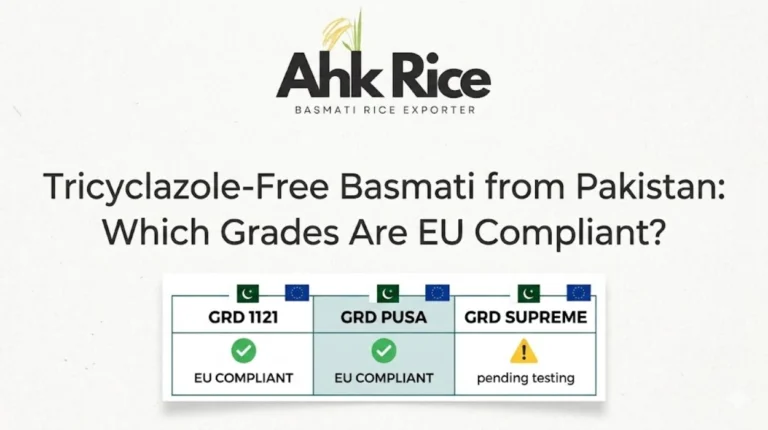
Independent laboratories verify export compliance before shipment.
Export logistics
After inspection, exporters:
- Package the rice
- Label every bag
- Load containers
- Complete customs documentation
- Dispatch cargo
- Ship through Karachi ports
Containerized shipping ensures product protection during international transit.
The export process explains how quality becomes commercial value.
What are the key components that determine Pakistan’s rice export value?
Production capacity, rice varieties, processing quality, export certifications, logistics efficiency, buyer demand, and international pricing determine Pakistan’s rice export value. Together, these components influence export competitiveness, shipment reliability, and long-term trade growth across GCC countries, including Qatar.
Pakistan’s rice export industry functions as an interconnected supply chain. Every component contributes to the final export price and customer satisfaction. Higher-quality processing and reliable delivery increase buyer confidence and strengthen long-term trade relationships.
Rice varieties
Pakistan exports several commercial rice varieties. Each variety serves a specific consumer segment and price range.
| Rice Variety | Primary Export Market | Typical Use |
|---|---|---|
| 1121 Basmati | Qatar, UAE, Saudi Arabia | Premium retail and hospitality |
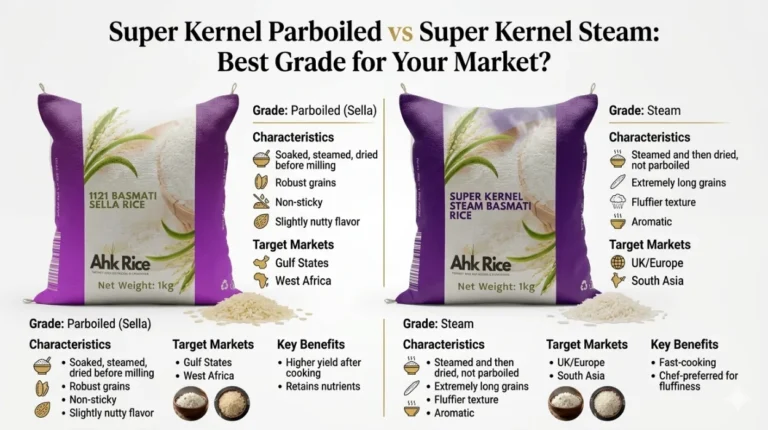
| Super Kernel Basmati | Middle East, Europe | Retail brands and restaurants |
| 1509 Basmati | GCC, Africa | Food service and wholesale |
| IRRI-6 | Africa and Asia | Bulk consumption |
| IRRI-9 | Middle East and Africa | Commercial distribution |
1121 Basmati commands the highest export value because of its 8.30 mm+ average grain length before cooking and excellent elongation after cooking.
Processing quality
Modern rice mills increase export value by maintaining consistent specifications.
Key processing features include:
- Colour sorting
- Moisture control
- Length grading
- Broken separation
- Metal detection
- Quality inspection
- Hygienic packaging
Each processing stage improves product consistency and reduces buyer complaints.
Export logistics
Efficient logistics reduce transit delays and protect product quality.
Export logistics include:
- Container loading
- Port handling
- Customs clearance
- Shipping documentation
- International freight
- Destination delivery
Reliable logistics support uninterrupted food supply across GCC markets.
International demand
Population growth, tourism, and hospitality expansion continue increasing rice consumption throughout GCC countries.
Examples include:
- Luxury hotels
- Catering companies
- Hypermarkets
- Food distributors
- Restaurant chains
These industries prefer consistent long-grain Basmati because cooking performance directly affects customer satisfaction.
Understanding export components explains market performance. The next section examines why Qatar remains one of Pakistan’s most valuable rice destinations.
Why is Qatar an important market for Pakistani rice exports?
Qatar imports premium-quality Pakistani Basmati because consumers value aroma, grain length, and cooking quality. Strong purchasing power, a growing hospitality industry, and dependable trade relationships continue supporting Pakistan’s export value in the Qatari market.
Qatar imports significant quantities of premium rice for household consumption and commercial food businesses. The country’s limited agricultural land creates consistent demand for imported food products.
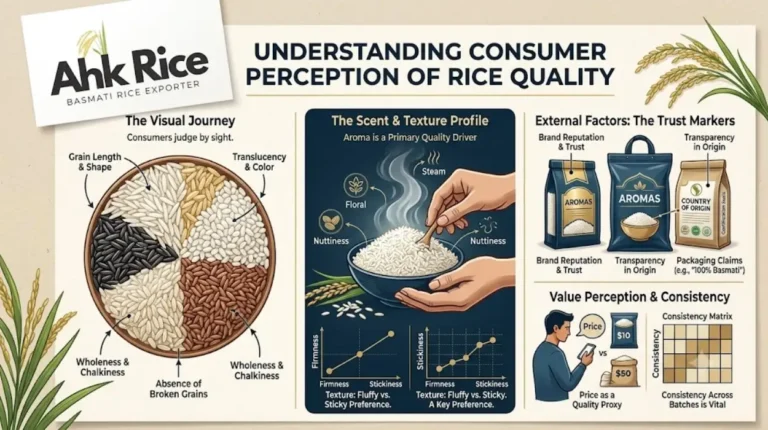
Hotels, restaurants, and catering companies prefer Pakistani Basmati because cooked grains remain long, separate, and aromatic.
Household demand
Consumers commonly purchase:
- Extra Long Grain 1121
- Super Kernel Basmati
- Steam Basmati
- Golden Sella Basmati
Premium retail packaging dominates supermarkets, while larger bags supply wholesalers and food service businesses.
Hospitality demand
The hospitality sector uses premium rice for:
- Biryani
- Kabsa
- Mandi
- Pilaf
- Buffet catering
Consistent cooking quality reduces waste and improves customer satisfaction.
Import preferences
Qatari buyers typically evaluate:
- Grain length
- Aroma
- Purity
- Broken percentage
- Moisture level
- Packaging quality
- Delivery reliability
These specifications influence purchasing decisions more than price alone.
Qatar illustrates how premium quality creates export value. The following section explains the broader benefits of Pakistan’s rice exports across GCC countries.
What benefits do Pakistan’s rice exports provide to GCC countries?
Pakistan’s rice exports strengthen food security, diversify supply chains, stabilize commercial availability, support hospitality businesses, and provide consumers with premium-quality rice throughout GCC markets.
Rice remains a staple food across Gulf countries. Reliable imports reduce supply disruptions and satisfy growing consumer demand.
Food security
Consistent imports ensure stable supplies throughout the year.
Governments and private importers maintain inventories to support uninterrupted food distribution.
Product diversity
Pakistani exporters supply multiple grades suitable for different buyers.
Examples include:
- Premium retail packs
- Wholesale sacks
- Catering-grade rice
- Restaurant specifications
- Private label products
Product diversity allows distributors to serve different customer segments efficiently.
Competitive pricing
Efficient cultivation and large-scale production help Pakistan remain competitive in international markets.
Premium Basmati offers strong value through cooking performance, aroma, and grain elongation.
Long-term partnerships
Consistent quality encourages repeat purchasing.
Long-term relationships reduce sourcing risks and improve planning for both exporters and importers.
These advantages explain sustained GCC demand. The next section explores common misconceptions surrounding Pakistan’s rice export industry.
What is Pakistan’s rice export value to GCC countries?
Pakistan’s rice export value to GCC countries represents the total monetary value of rice exported to Qatar, Saudi Arabia, the United Arab Emirates, Kuwait, Oman, and Bahrain within a specific period. Export value depends on shipment volume, international prices, rice quality, and buyer demand rather than export quantity alone.
Why is Qatar an important destination for Pakistani rice exports?
Qatar imports large volumes of premium Pakistani Basmati rice because consumers prefer aromatic long-grain rice for everyday meals and traditional dishes. The country’s hospitality industry, supermarkets, wholesalers, and catering companies create consistent demand for high-quality rice throughout the year.
Which Pakistani rice varieties are most commonly exported to Qatar?
The most widely exported varieties include:
- 1121 Basmati Rice
- Super Kernel Basmati Rice
- 1509 Basmati Rice
- 1121 Golden Sella Basmati Rice
- 1121 Steam Basmati Rice
Each variety serves different retail, wholesale, restaurant, and catering requirements based on cooking performance and price.
What trends are expected for Pakistan’s rice exports to GCC countries?
Demand is expected to remain strong because GCC countries continue investing in food security, hospitality, and population growth. Premium Basmati varieties, improved processing technology, and reliable export logistics are expected to support continued growth in Pakistan’s rice exports across the Gulf region.