Best Packaging Options for Supplying 1121 Rice to Saudi Mandi Chains
The best packaging option for supplying 1121 rice to Saudi Mandi chains is 40 kg and 45 kg food-grade PP woven bags with inner liners, supported by palletized container loading and export-grade moisture control. Here is why: Saudi restaurant buyers prioritize product protection, handling efficiency, storage stability, and cost-effective transportation. Packaging directly affects grain quality, shelf life, restaurant operations, and procurement costs.
Saudi Mandi restaurants continue to increase imports of Pakistani 1121 Basmati because of its extra-long grain expansion and consistent cooking performance. Buyers who already understand why Saudi restaurants prefer extra-long grain varieties can review our detailed guide explaining the demand for premium Mandi rice characteristics.
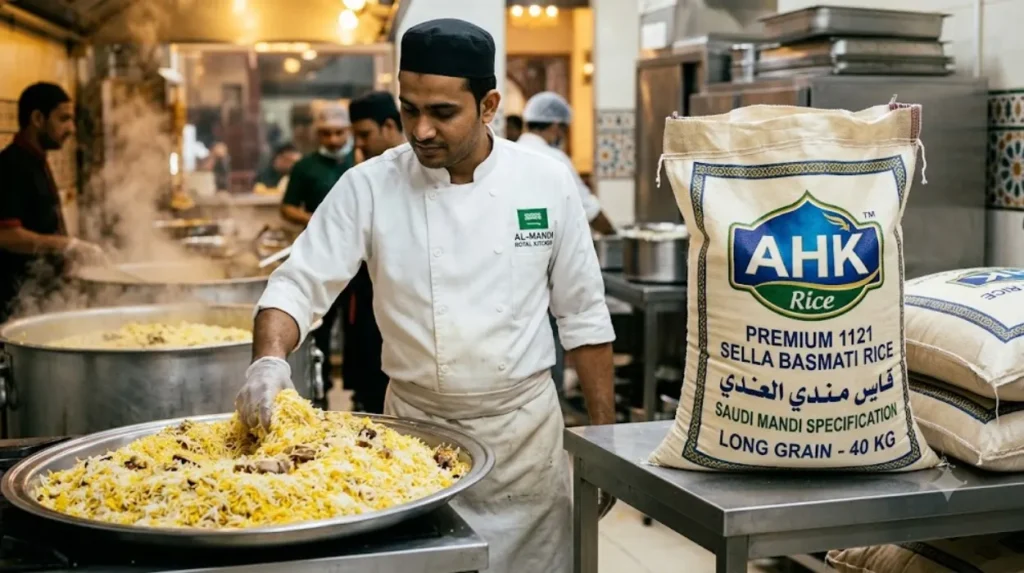
AHK Rice supplies 1121 Basmati rice to Saudi Arabia using commercial packaging specifications designed for restaurant chains, food service distributors, wholesalers, and procurement companies. While rice quality remains critical, packaging often determines whether the shipment arrives in ideal condition or suffers losses during transport and storage.
For buyers comparing processing options before selecting packaging, our analysis of different processing methods explains how packaging requirements vary between Steam and Sella specifications through a Saudi restaurant supply perspective.
What is the best packaging solution for supplying 1121 rice to Saudi Mandi chains?
40 kg PP bags, 45 kg PP bags, food-grade inner liners, palletized loading, moisture protection, and container optimization provide the most reliable packaging solution for Saudi Mandi restaurant supply chains.
Saudi Mandi chains require packaging that protects grain length, prevents moisture absorption, reduces handling damage, and maximizes container utilization. Packaging must also support warehouse storage under Gulf climate conditions.
Packaging requirements vary according to the processing method selected. Buyers evaluating different specifications can review our comparison of Steam and Sella rice for Saudi restaurant operations to understand which option aligns with their storage, handling, and cooking requirements.
1121 Steam Rice Packaging
1121 Steam Basmati Rice requires stronger moisture protection because steam rice contains less structural hardness than Sella rice. AHK Rice loads Steam rice in food-grade woven polypropylene bags with polyethylene inner liners.
Steam Rice Export Packaging Specifications
| Specification | Value |
|---|---|
| Bag Sizes | 5 kg, 10 kg, 20 kg, 40 kg, 45 kg, 50 kg |
| Bag Material | PP woven food-grade |
| Inner Liner | PE moisture barrier |
| Container Type | 20 ft and 40 ft |
| Pallet Option | Available |
| Shelf Life | 12–18 months |
Steam rice delivers premium appearance and softer texture. Saudi premium restaurant groups often select this packaging format for faster inventory turnover.
1121 Sella Rice Packaging
1121 Golden Sella and White Sella rice tolerate longer storage periods because the parboiling process strengthens grain structure.
Sella Rice Export Packaging Specifications
| Specification | Value |
| Bag Sizes | 20 kg, 40 kg, 45 kg, 50 kg |
| Bag Material | Heavy-duty PP woven |
| Inner Liner | Food-grade PE liner |
| Shelf Life | 18–24 months |
| Container Loading | Optimized for bulk distribution |
| Export Markets | Saudi Arabia, UAE, Iraq, Qatar |
Golden Sella lasts longer than Steam. In a 40°C warehouse environment common in Gulf markets, Golden Sella maintains quality for approximately 24 months while Steam rice performs best within 18 months. For Saudi catering buyers operating centralized warehouses, Golden Sella often becomes the preferred specification.
AHK Rice supports custom branding, private labeling, and retail-ready packaging for Saudi distributors. AHK Rice also provides Arabic-language bag printing according to importer requirements.
With packaging formats established, the next question becomes the operational results Saudi buyers can expect.
What results can Saudi Mandi chains expect from the right packaging?
Lower grain breakage, longer shelf life, reduced warehouse losses, improved inventory control, and consistent cooking performance are the primary outcomes of export-grade rice packaging.
Packaging affects profitability throughout the supply chain. Saudi restaurant operators evaluate packaging based on operational results rather than appearance alone.
Reduced Grain Breakage
1121 Basmati grains regularly exceed 8.30 mm before cooking. Long grains remain vulnerable during transport.
AHK Rice uses reinforced stitching and export-grade bag materials to reduce transit damage. Lower breakage rates preserve visual presentation in traditional Saudi Mandi dishes where grain separation influences customer perception.
Improved Warehouse Performance
Saudi food distributors often store rice for several months before distribution.
Food-grade liners create an effective moisture barrier. Stable moisture levels help maintain grain appearance, cooking behavior, and aroma consistency.
Better Inventory Management
Restaurant chains prefer standardized packaging because inventory counting becomes simpler.
Forty-kilogram and forty-five-kilogram packaging formats align with common restaurant consumption patterns. Warehouse teams can manage stock rotation efficiently while reducing repacking labor.
Consistent Cooking Outcomes
Packaging preserves the original moisture specification established during milling.
AHK Rice inspects, tests, certifies, and verifies moisture before dispatch. Stable moisture levels help kitchen teams achieve consistent grain elongation and texture.
Protection During International Shipping
Saudi Arabia imports significant rice volumes through major logistics gateways including Jeddah and Dammam. Rice shipments encounter varying humidity levels throughout the logistics chain.
Container-grade packaging minimizes environmental exposure. Reduced contamination risk protects product value until final delivery.
AHK Rice applies nine processing steps before export dispatch:
- Clean the paddy.
- De-husk the grain.
- Dry the rice.
- Polish the kernels.
- Grade by size.
- Sort by colour.
- Test moisture levels.
- Inspect export quality.
- Load export containers.
These controls support consistent product performance after arrival.
With operational benefits defined, buyers naturally focus on packaging costs and commercial considerations.
What factors affect the cost of packaging 1121 rice for Saudi Arabia?
Bag material, bag size, liner quality, private labeling, palletization, container utilization, and freight rates directly influence final packaging costs.
Packaging cost represents a small percentage of shipment value but significantly affects logistics efficiency.
Bag Material Selection
Standard PP woven bags provide the most economical solution.
Premium laminated bags increase durability and visual presentation. Saudi retail distributors often choose laminated packaging for branded consumer products.
Packaging Size
Larger bags reduce packaging cost per metric ton.
Forty-kilogram and forty-five-kilogram formats remain common among Saudi restaurant buyers because handling efficiency balances operational practicality.
Typical Commercial Packaging Cost Impact
| Packaging Type | Relative Cost |
| Standard PP Bag | Lowest |
| PP + PE Liner | Moderate |
| Laminated PP Bag | Higher |
| Retail Printed Packaging | Highest |
Private Label Requirements
Saudi importers increasingly request custom branding.
AHK Rice offers Arabic printing, company logos, barcode integration, and private-label packaging solutions. Customized packaging increases unit cost but improves market positioning.
Palletization
Palletized shipments improve warehouse handling efficiency.
Pallet costs increase upfront expenses but reduce unloading time and product damage risk.
Freight Market Conditions
Ocean freight influences delivered cost significantly.
Pakistan-to-Saudi shipping routes remain among the most active rice export corridors (source: REAP Export Data, December 2025). Freight rates fluctuate according to vessel availability and seasonal demand.
Price per Metric Ton Perspective
Packaging generally contributes a limited portion of overall procurement cost.
Rice grade, processing type, crop quality, and freight conditions remain larger cost drivers than packaging itself.
AHK Rice works with importers to balance protection, branding, and cost efficiency according to procurement objectives.
Having reviewed costs, buyers usually want to understand shipping timelines before placing an order.
How long does shipping take from Pakistan to Saudi Arabia?
Approximately 7–18 days depending on destination port, shipping line schedules, customs processing, and container availability.
Transit time directly affects inventory planning.
Jeddah Islamic Port
Typical shipping duration ranges between 10 and 14 days.
Jeddah serves western Saudi Arabia and supports large-scale food distribution networks.
Dammam Port
Typical shipping duration ranges between 7 and 12 days.
Dammam supports eastern Saudi Arabia and GCC distribution operations.
Riyadh Distribution Networks
Container shipments typically move through seaports before inland transportation.
Combined transit and domestic logistics generally require 12–18 days.
Factors Influencing Shipping Time
- Container availability affects vessel booking schedules.
- Customs clearance affects final delivery timing.
- Port congestion affects discharge operations.
- Seasonal demand affects carrier capacity.
AHK Rice coordinates shipment scheduling to align with importer inventory requirements. AHK Rice also provides regular logistics updates throughout the export process.
With logistics expectations clear, the final decision often depends on sampling and supplier evaluation.
How can Saudi buyers start sourcing packaged 1121 rice from AHK Rice?
Request samples, review specifications, verify certifications, approve packaging, confirm shipment details, and place a commercial order.
Professional rice procurement begins with sampling rather than full container purchases.
Sample Evaluation Process
AHK Rice supplies representative samples matching commercial production specifications.
Buyers can evaluate grain length, cooking performance, aroma, moisture level, and packaging quality before procurement decisions.
Sample Costs
Typical Sample Structure
| Item | Typical Range |
| Product Sample | Usually free |
| Courier Charges | USD 40–120 |
| Laboratory Testing | Optional |
| Custom Packaging Sample | Quoted separately |
Courier costs vary according to destination city and package weight.
Documentation Package
AHK Rice provides:
- Commercial Invoice
- Packing List
- Certificate of Origin
- Phytosanitary Certificate
- Fumigation Certificate
- Quality Inspection Reports
- Bill of Lading
These documents support Saudi import compliance requirements.
Available Processing Grades
AHK Rice supplies seven processing grades:
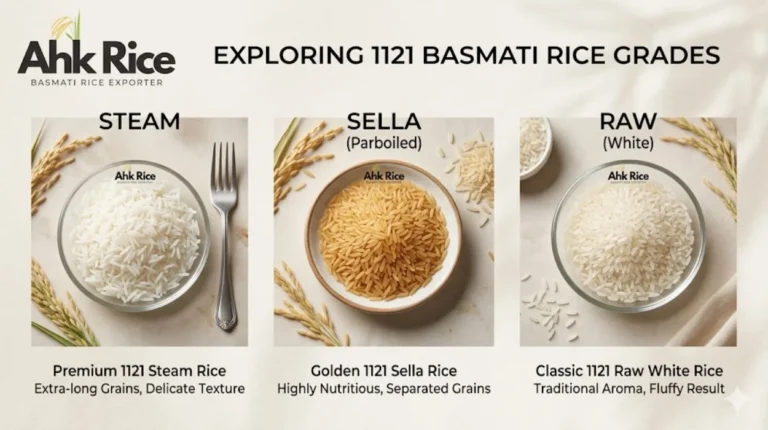
- 1121 Steam Rice
- 1121 Golden Sella Rice
- 1121 White Sella Rice
- 1121 Creamy Sella Rice
- 1121 Brown Rice
- 1121 Extra Long Grain Premium
- 1121 Sortex Premium Export Grade
Each grade serves different Saudi market segments.
Why Saudi Buyers Choose AHK Rice
- AHK Rice maintains direct export operations from Pakistan.
- AHK Rice performs quality inspections before dispatch.
- AHK Rice offers customized packaging solutions.
- AHK Rice supports private-label requirements.
- AHK Rice coordinates export documentation.
- AHK Rice provides commercial sampling before order confirmation.
The correct packaging protects rice quality, simplifies restaurant operations, reduces losses, and improves supply chain performance. Saudi Mandi chains seeking reliable 1121 rice packaging solutions can begin their procurement process today through /request-a-quote/.
Frequently Asked Questions
What packaging size is most commonly used for supplying 1121 rice to Saudi Mandi restaurants?
Saudi Mandi restaurants most commonly use 40 kg and 45 kg packaging because these sizes balance storage efficiency, handling convenience, and transportation costs. These formats are widely preferred by restaurant chains, catering companies, and food service distributors across Saudi Arabia.
Which packaging material is best for exporting 1121 rice to Saudi Arabia?
Food-grade PP woven bags with PE inner liners are considered the best option for exporting 1121 rice to Saudi Arabia. This packaging protects the rice from moisture, preserves grain quality during transit, and supports longer warehouse storage under Gulf climate conditions.
How long can packaged 1121 rice be stored in Saudi warehouses?
Storage life depends on the rice grade and packaging quality. 1121 Steam Rice typically maintains quality for 12–18 months, while 1121 Golden Sella Rice can remain in excellent condition for 18–24 months when stored in dry warehouse conditions and protected from direct moisture exposure.
How much does it cost to receive a rice sample before placing a bulk order?
AHK Rice generally provides product samples without charging for the rice itself. Buyers usually pay only the courier expense, which typically ranges from USD 40 to USD 120, depending on the destination city, shipment weight, and courier service selected.
What documents are required when importing packaged 1121 rice into Saudi Arabia?
Saudi importers commonly require a Commercial Invoice, Packing List, Certificate of Origin, Phytosanitary Certificate, Fumigation Certificate, Quality Inspection Report, and Bill of Lading. These documents help support customs clearance and regulatory compliance for rice imports into Saudi Arabia.