How Is Pakistani Basmati Rice Different from Indian Rice in the Saudi Market?
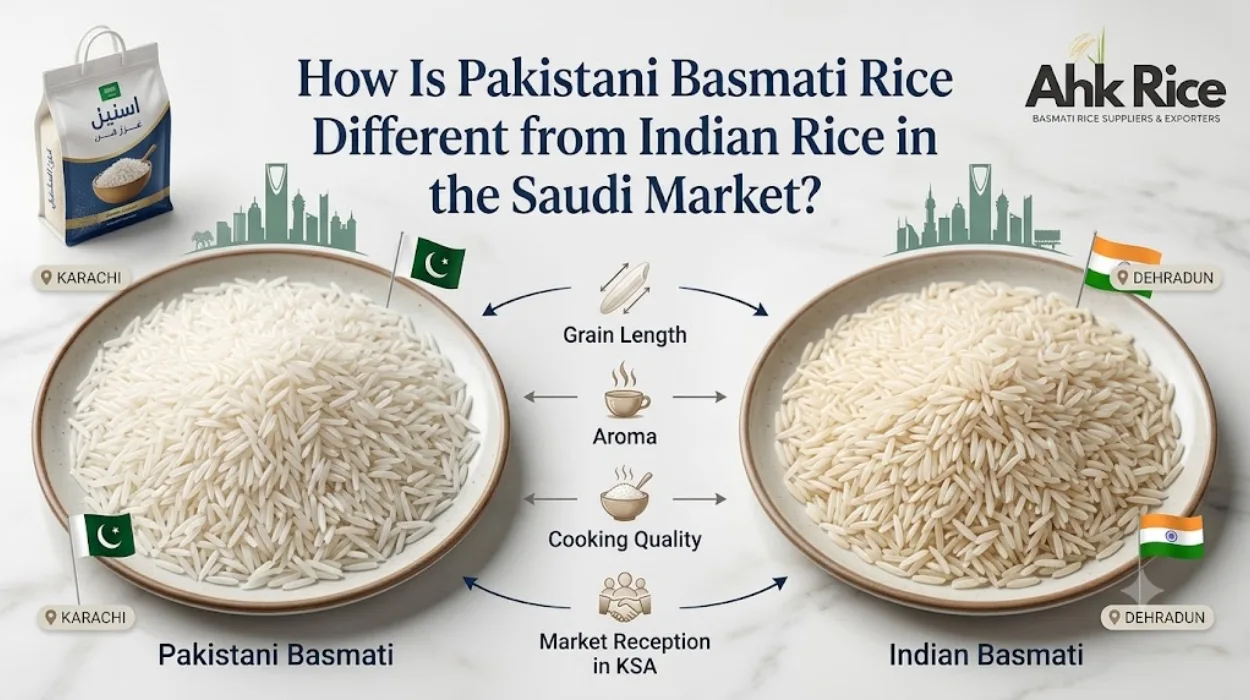
Pakistani Basmati rice differs from Indian rice in the Saudi market through grain characteristics, aroma profile, processing preferences, pricing structure, and end-use applications. Pakistani varieties dominate traditional Saudi dishes such as Mandi, Kabsa, and Madghout because they deliver longer grain elongation after cooking, a stronger natural aroma, and competitive import pricing. Here is why: Saudi importers prioritize appearance, cooking performance, and consistency, and Pakistani Basmati varieties align closely with these requirements (source: REAP export data, December 2025).
Saudi Arabia remains one of the largest import destinations for Pakistani Basmati rice. Pakistani exporters supply premium varieties including 1121 Basmati, Super Kernel Basmati, and 1509 Basmati. Indian exporters supply varieties such as Pusa Basmati and Traditional Basmati. Both origins compete directly in wholesale, retail, hospitality, and catering channels across the Kingdom.
Understanding the differences requires examining cultivation regions, grain specifications, processing methods, certifications, and buyer preferences.
What Is the Difference Between Pakistani Basmati Rice and Indian Rice in Saudi Arabia?
Pakistani Basmati offers longer cooked grain length, stronger aroma retention, and competitive pricing, while Indian rice provides broader volume availability and wider variety segmentation for different buyer categories.
Pakistani Basmati rice refers to aromatic long-grain rice cultivated primarily in Punjab, Pakistan. Major growing districts include Gujranwala, Hafizabad, Sheikhupura, Narowal, Sialkot, and Okara. These regions sit within the traditional Basmati belt and benefit from fertile alluvial soils and canal irrigation systems.
Indian rice exported to Saudi Arabia includes several Basmati and non-Basmati categories. Indian Basmati production concentrates in Punjab, Haryana, Uttarakhand, Uttar Pradesh, and Jammu regions.
Saudi buyers compare rice using measurable factors rather than country names alone.
Grain Length Comparison
Pakistani 1121 Basmati typically achieves raw grain lengths between 8.20 mm and 8.50 mm after grading and sorting.
Indian Pusa Basmati generally ranges between 7.60 mm and 8.30 mm, depending on the specific variety and grade.
Longer grains create stronger visual appeal in Saudi food service applications. Mandi restaurants prefer elongated cooked grains because presentation affects customer perception.
Aroma Comparison
Pakistani Basmati contains natural aromatic compounds developed through regional soil composition, climate conditions, and traditional cultivation practices.
Saudi wholesalers often classify Pakistani Basmati as having a deeper traditional aroma profile. Indian Pusa varieties frequently emphasize uniformity and yield performance.
Market Position Comparison
Pakistani rice holds a strong position in premium Mandi and Kabsa segments.
Indian rice maintains substantial market share in retail chains, institutional supply contracts, and large-volume procurement programs.
With the core market differences established, the next question is how both rice types reach Saudi buyers through cultivation and processing systems.
How Are Pakistani and Indian Rice Produced Before Export?
Both countries follow cultivation, harvesting, milling, grading, and export procedures, but processing specifications differ according to target market requirements and buyer preferences.
Rice quality begins in the field rather than the factory.
How Is Pakistani Basmati Rice Processed?
Pakistani exporters typically follow these processing steps:
- Harvest the mature paddy.
- Clean the harvested paddy.
- Dry the paddy to target moisture levels.
- De-husk the grain.
- Separate broken kernels.
- Polish the rice.
- Grade by length.
- Sort using optical color sorters.
- Inspect and test quality.
- Pack according to buyer specifications.
- Load export containers.
- Dispatch shipments to destination ports.
Each step influences appearance, purity, and cooking performance.
How Is Indian Rice Processed?
Indian processors use similar industrial systems.
Major processing stages include:
- Harvest the paddy.
- Clean foreign materials.
- Dry the grain.
- De-husk the rice.
- Polish according to specification.
- Grade by kernel size.
- Sort defective kernels.
- Inspect quality parameters.
- Pack export orders.
- Ship through export terminals.
Saudi importers frequently specify maximum broken percentages, moisture limits, and grain length requirements before production begins.
Processing creates the final product, but grain characteristics determine why buyers select one origin over another.
What Grain Characteristics Matter Most to Saudi Buyers?
Cooked grain elongation, aroma intensity, low breakage, white appearance, and consistency determine purchasing decisions across Saudi wholesale and food-service sectors.
Saudi consumers place high value on rice presentation.
Cooked Grain Elongation
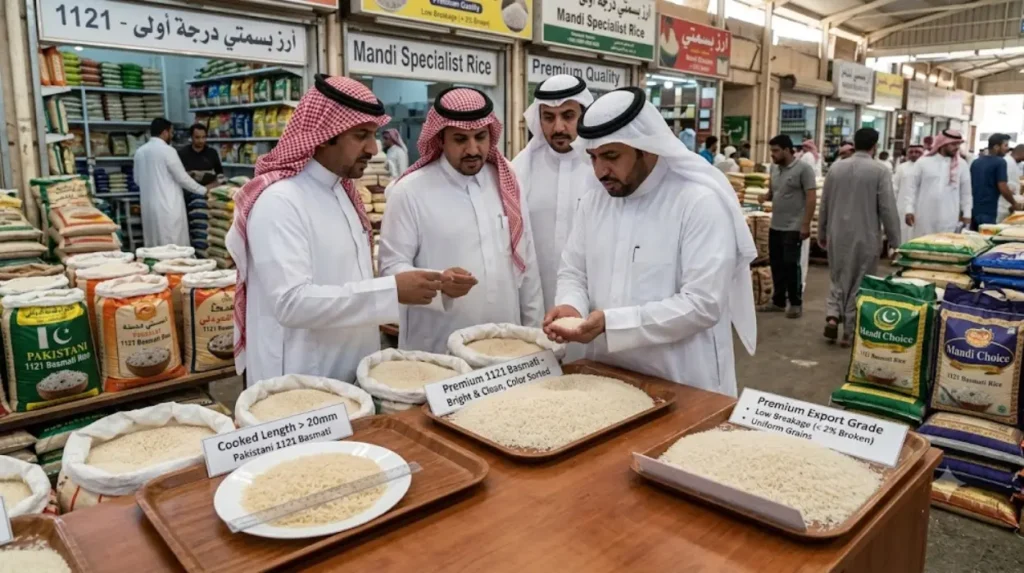
Pakistani 1121 Basmati can achieve cooked lengths exceeding 20 mm under proper cooking conditions.
Long grain elongation creates the fluffy appearance expected in premium Mandi dishes.
Indian premium Basmati varieties also elongate significantly. However, Saudi traders frequently market Pakistani 1121 as a specialist Mandi rice because of its visual performance.
Grain Uniformity
Uniform grains cook evenly.
Restaurants serving hundreds of meals daily require consistent batches. Grading systems remove shorter kernels and broken grains to improve uniformity.
Color and Appearance
Saudi retail buyers prefer bright, clean grains.
Color sorting technology removes discolored kernels and impurities before export.
Breakage Levels
Premium export grades commonly maintain broken percentages below 2% to 5%, depending on contract specifications.
Lower breakage improves presentation and increases buyer confidence.
Grain performance influences purchasing decisions, but certifications also determine market acceptance.
Which Certifications Apply to Rice Imported Into Saudi Arabia?
Saudi importers typically require food safety certifications, phytosanitary compliance, quality testing reports, and export documentation that verifies product conformity.
Certification protects both importers and consumers.
Food Safety Certifications
Common certifications include:
- ISO 22000
- HACCP
- BRCGS
- Halal certification
- Food safety management systems
Many Saudi distributors require multiple certifications before approving suppliers.
Export Documentation
Required export documents commonly include:
- Commercial Invoice
- Packing List
- Certificate of Origin
- Phytosanitary Certificate
- Bill of Lading
- Quality Inspection Report
Saudi authorities inspect documentation before customs clearance.
Quality Testing Parameters
Laboratories typically test:
- Moisture content
- Grain length
- Broken percentage
- Purity levels
- Foreign matter
- Damaged kernels
Verified quality specifications reduce disputes between buyers and suppliers.
Certification establishes compliance, but understanding available rice grades explains purchasing decisions more clearly.
What Rice Grades Are Most Popular in the Saudi Market?
1121 Basmati, Super Kernel Basmati, 1509 Basmati, Golden Sella, Steam Rice, and White Rice grades account for the majority of premium rice imports used in Saudi Arabia.
Saudi buyers purchase different grades for different applications.
1121 Basmati Rice
1121 Basmati represents the premium segment.
Key characteristics include:
- 8.20–8.50 mm raw grain length
- Strong aroma
- Exceptional elongation
- Premium appearance
Mandi restaurants frequently specify this grade.
Super Kernel Basmati Rice
Super Kernel Basmati remains popular in traditional retail markets.
Key characteristics include:
- Long slender grains
- Traditional aroma
- Strong cooking performance
- Competitive pricing
Saudi families often recognize this variety from established retail brands.
1509 Basmati Rice
1509 Basmati provides a balance between quality and cost.
Key characteristics include:
- Long grain structure
- Fast cooking
- Good elongation
- Value-oriented pricing
Large catering operations frequently source this grade.
Golden Sella Rice
Golden Sella undergoes parboiling before milling.
Key characteristics include:
- Golden color
- Strong grain strength
- Extended storage stability
- High resistance to breakage
Saudi catering companies often select Golden Sella for bulk cooking.
Readers comparing these premium categories can explore how Saudi traders evaluate grain performance, pricing, and profitability through a detailed comparison of Pakistani and Indian options in our guide to 1121 Golden Sella and Indian Pusa selections for commercial procurement.
Grade selection explains purchasing patterns, which leads directly to the benefits Saudi buyers receive from Pakistani rice.
What Benefits Does Pakistani Basmati Rice Provide in Saudi Arabia?
Higher grain elongation, strong aroma retention, premium presentation, and competitive export pricing make Pakistani Basmati attractive for restaurants, retailers, and import distributors.
Benefits vary according to buyer category.
Benefits for Restaurants
Restaurants value:
- Long cooked grains
- Consistent cooking
- Attractive presentation
- Traditional aroma
Premium rice improves customer experience.
Benefits for Retailers
Retailers value:
- Consumer recognition
- Repeat purchases
- Premium positioning
- Shelf appeal
Recognized rice varieties support long-term brand performance.
Benefits for Importers
Importers value:
- Stable specifications
- Export availability
- Multiple packaging options
- Competitive procurement costs
Predictable supply chains simplify inventory planning.
Benefits explain popularity, but several misconceptions continue to influence purchasing decisions.
What Misconceptions Exist About Pakistani and Indian Rice?
Many buyers assume all Basmati rice performs identically, but grain length, aroma, processing method, and grade specifications create significant differences in cooking results and commercial value.
Misunderstandings often create procurement errors.
Misconception: All Basmati Rice Is the Same
Different varieties produce different results.
1121 Basmati behaves differently from Super Kernel Basmati. Pusa Basmati behaves differently from traditional varieties.
Specification sheets provide more useful information than origin labels alone.
Misconception: Higher Price Means Better Quality
Quality depends on application.
A premium restaurant requires different specifications than an institutional kitchen.
Selecting the correct grade matters more than selecting the highest price.
Misconception: White Rice and Golden Sella Perform Equally
Golden Sella undergoes parboiling.
Parboiling strengthens kernels and improves durability during large-scale cooking.
In a Saudi catering facility serving thousands of meals daily, Golden Sella maintains grain separation more effectively. In household cooking environments, premium white rice often delivers stronger aroma expression.
Understanding these misconceptions leads to a clearer view of how Saudi buyers make procurement decisions.
Why Does Saudi Arabia Continue to Import Large Volumes of Pakistani Basmati Rice?
Saudi buyers prioritize aroma, grain elongation, cooking performance, and value, and Pakistani Basmati consistently satisfies these requirements across retail, hospitality, and food-service sectors.
Pakistani Basmati aligns closely with traditional Saudi rice consumption patterns. Long grains support premium presentation. Aromatic characteristics complement regional cuisine. Multiple grades allow buyers to match specifications with budgets.
Saudi import demand continues to focus on varieties such as 1121 Basmati, Super Kernel Basmati, and Golden Sella because these products perform well in Mandi, Kabsa, and large-scale catering applications (source: REAP export data, December 2025).
As Saudi rice demand expands through hospitality growth, population growth, and food-service development, competition between Pakistani and Indian rice suppliers remains centered on measurable specifications rather than country origin alone. Grain length, aroma, processing quality, certification compliance, and cooking performance continue to determine purchasing decisions in 2026.
Frequently Asked Questions
Is Pakistani Basmati rice more popular than Indian rice in Saudi Arabia?
Pakistani Basmati rice holds a strong position in the Saudi market, especially for Mandi, Kabsa, and catering applications. Saudi importers value its long grain length, strong aroma, and excellent cooked grain elongation. Indian rice also has significant market share, particularly in retail and institutional supply channels.
Why do Saudi restaurants prefer 1121 Basmati rice?
Saudi restaurants prefer 1121 Basmati because it produces very long cooked grains and an attractive presentation. The variety performs well in traditional dishes such as Mandi and Kabsa. Its aroma and grain separation also improve the dining experience.
What is the difference between Golden Sella rice and White Basmati rice?
Golden Sella rice undergoes a parboiling process before milling, while White Basmati rice is milled directly after de-husking. Golden Sella offers stronger grain strength and longer storage stability. White Basmati provides a lighter color and a more pronounced natural aroma.
Which Pakistani Basmati varieties are commonly exported to Saudi Arabia?
The most commonly exported Pakistani varieties include 1121 Basmati, Super Kernel Basmati, and 1509 Basmati. Each variety serves different market segments. Saudi importers select specific grades based on pricing, cooking performance, and end-use requirements.
What certifications are required for exporting rice to Saudi Arabia?
Saudi importers generally require certifications and documents such as ISO 22000, HACCP, Halal certification, Phytosanitary Certificates, Certificates of Origin, and quality inspection reports. These documents verify food safety, quality standards, and regulatory compliance.