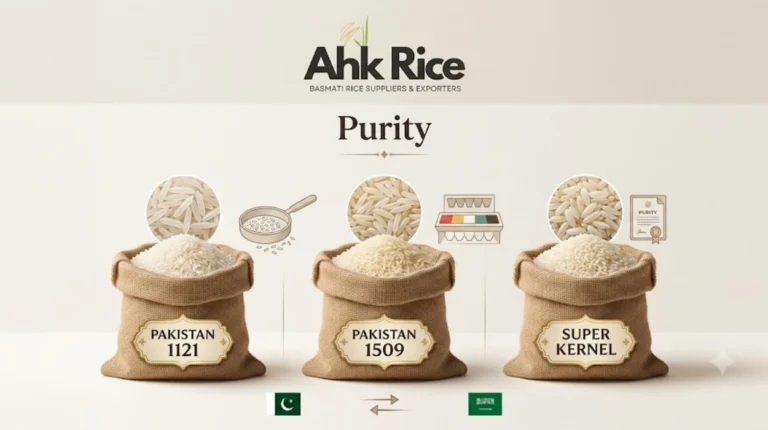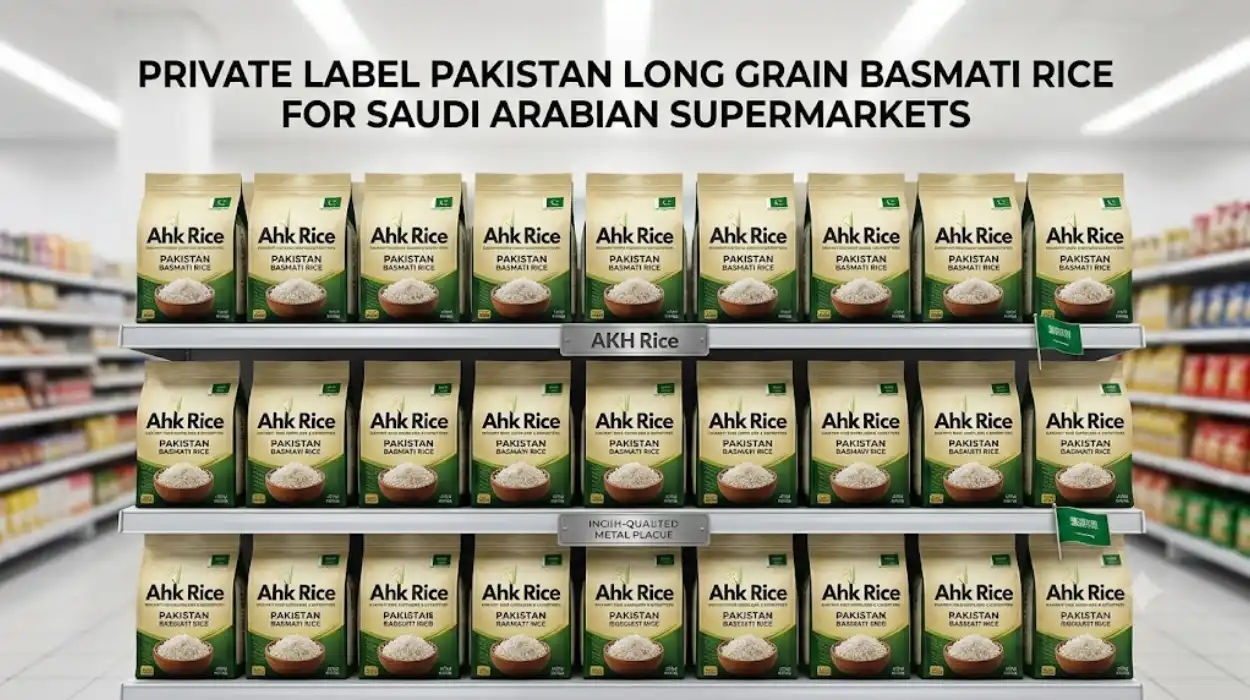
Private Label Pakistan Long Grain Basmati Rice for Saudi Arabian Supermarkets
Private label Pakistan long grain Basmati rice is the most effective way for Saudi Arabian supermarkets to build a differentiated rice category while maintaining quality consistency and competitive pricing. Here is why: Pakistan produces globally recognized Basmati varieties, offers flexible private label packaging, and supplies retail-ready specifications that match Saudi consumer preferences for long grains, aroma, and cooking performance.
Saudi retailers continue to increase shelf space for premium Basmati products because consumers actively compare grain appearance, elongation ratio, aroma retention, and packaging quality. Buyers evaluating private label opportunities should first understand how Saudi consumers assess grain quality. Our guide on grain characteristics and purchasing behavior explains this in detail: How grain size and appearance influence purchasing decisions in Saudi retail environments. Understanding those preferences helps supermarkets select the correct specification before launching a private label product.
Private label programs from allow supermarket chains, wholesalers, and retail distributors to source customized Pakistan long grain Basmati rice under their own brand while maintaining export-grade quality controls. AHK Rice works directly with retail buyers to develop specifications that align with Saudi market requirements and retail positioning strategies.
What is the best private label rice solution for Saudi Arabian supermarkets?
1121 Basmati, Super Kernel Basmati, customized retail packaging, export certification, and Saudi-focused specifications provide the strongest private label solution for supermarket brands.
Saudi supermarkets require more than rice supply. Retailers need product consistency, attractive shelf presentation, reliable inventory planning, and predictable consumer acceptance.
1121 White Basmati Rice
1121 White Basmati Rice delivers some of the longest grain lengths available in commercial rice trade. Grain length typically measures 8.30–8.50 mm before cooking and expands significantly after cooking.
1121 White Basmati Rice suits premium supermarket shelves because consumers can immediately identify the long grain appearance through transparent packaging windows.
Super Kernel White Basmati Rice
Super Kernel White Basmati Rice remains popular among Saudi families seeking traditional aroma and cooking characteristics.
Saudi retail buyers often compare these two varieties before finalizing procurement decisions. A detailed grain comparison for retail markets is available in our analysis of how different Basmati varieties perform across Saudi supermarket categories: comparison of premium retail grain specifications for Saudi consumers.
Why AHK Rice Supports Private Label Programs
AHK Rice manages private label projects through a structured export process.
AHK Rice follows 9 processing steps:
- Clean the paddy.
- De-husk the grain.
- Dry the rice.
- Polish the kernels.
- Grade the rice.
- Sort by length.
- Colour sort impurities.
- Inspect the final lot.
- Load export containers.
AHK Rice also offers 7 processing grades:
- Extra Long Grain.
- Premium Grade.
- Sortex Grade.
- Retail Grade.
- Catering Grade.
- Economy Grade.
- Custom Specification Grade.
These capabilities help retailers align products with specific customer segments.
With the ideal private label solution established, the next question is what business results Saudi supermarkets can expect.
What results can Saudi supermarkets expect from private label Pakistan Basmati rice?
Higher margins, stronger brand recognition, repeat purchases, and category differentiation are the primary outcomes achieved through private label Basmati programs.
Private label products help supermarkets control pricing strategy. Retailers reduce direct brand competition because customers purchase the store’s own label rather than comparing multiple international brands.
Pakistan Basmati rice continues to maintain strong export demand across Gulf markets due to its aroma and cooking performance (source: REAP export data, December 2025).
AHK Rice helps retailers standardize quality through batch-specific inspection and certification. Consistent grain appearance improves consumer confidence and repeat purchases.
Brand Differentiation
Private label rice creates shelf exclusivity. Competing supermarkets cannot offer the same packaging, branding, or product identity.
Saudi consumers often associate premium packaging with premium quality. Retail-ready packaging improves visibility and reinforces trust during purchasing decisions.
Inventory Stability
AHK Rice supports scheduled shipments throughout the year. Retailers maintain inventory consistency and reduce stockout risks.
Inventory planning becomes particularly important during Ramadan and Hajj seasons because rice demand increases substantially across Gulf retail channels.
Quality Assurance
AHK Rice performs quality verification before shipment.
Key quality controls include:
- Moisture testing.
- Grain length verification.
- Broken percentage analysis.
- Sortex inspection.
- Packaging verification.
- Weight confirmation.
- Export documentation review.
These procedures reduce disputes and support smooth customs clearance.
With expected outcomes clarified, buyers naturally evaluate pricing and cost factors before proceeding.
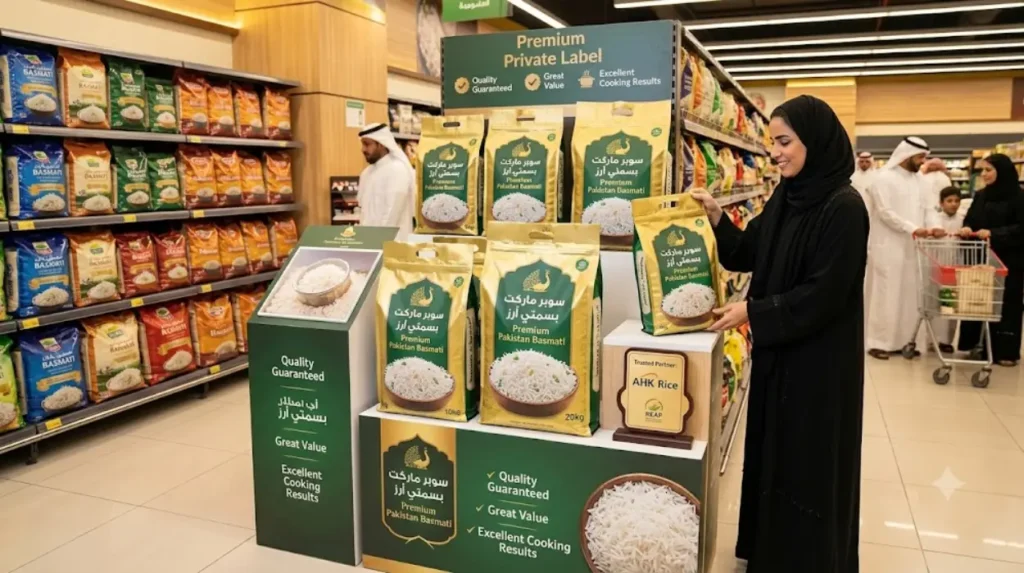
What determines the cost of private label Pakistan long grain Basmati rice?
Rice variety, grain specification, packaging design, order volume, shipping destination, and certification requirements directly affect final pricing.
Private label pricing varies according to specification.
Rice Variety
1121 White Basmati generally commands higher prices because of its longer grain length and premium retail positioning.
Super Kernel White Basmati often serves mid-premium retail segments where consumers prioritize aroma and value.
Packaging Requirements
Private label packaging influences production costs.
Common retail formats include:
- 1 kg printed bags.
- 2 kg printed bags.
- 5 kg laminated bags.
- 10 kg retail bags.
- 20 kg family packs.
Custom printing, metallic finishes, multilingual labels, and premium packaging materials increase unit costs.
Certification Requirements
Saudi importers often request compliance documentation.
Required export documents may include:
- Commercial Invoice.
- Packing List.
- Certificate of Origin.
- Phytosanitary Certificate.
- Health Certificate.
- Fumigation Certificate.
- Bill of Lading.
Additional testing requirements can increase project costs.
Shipping Costs by Market
Container freight rates fluctuate throughout the year. Transit times remain a key purchasing factor.
Shipping schedules depend on vessel availability, customs processing, and seasonal demand.
Shelf Life Considerations
White Basmati rice generally maintains quality for 24 months under proper storage conditions.
In warehouse environments exceeding 40°C, proper palletization and ventilation become critical. Retailers storing inventory for extended periods should maintain controlled warehouse practices.
Cost evaluation becomes easier once buyers understand the complete onboarding and sampling process.
How does the private label sample process work?
Product samples, packaging approval, specification confirmation, production planning, and shipment scheduling form the standard private label onboarding process.
AHK Rice follows a structured process designed for retail procurement teams.
Step 1: Define Product Specifications
Buyers specify:
- Rice variety.
- Grain length.
- Broken percentage.
- Packaging size.
- Private label artwork.
- Annual volume forecast.
These details establish production requirements.
Step 2: Receive Product Samples
AHK Rice prepares representative product samples matching requested specifications.
Courier costs vary according to destination and package weight.
Step 3: Approve Packaging
Retail teams review:
- Packaging design.
- Label compliance.
- Barcode placement.
- Nutritional information.
- Arabic language requirements.
Approval prevents costly production delays.
Step 4: Confirm Production
AHK Rice schedules milling, grading, sorting, and packaging after receiving final approval.
Production planning ensures specification consistency throughout the order.
Step 5: Conduct Inspection
Independent inspections can be arranged before shipment.
Inspection activities include:
- Verifying grain quality.
- Confirming packaging accuracy.
- Checking container loading.
- Reviewing export documentation.
These inspections provide additional confidence for first-time buyers.
With the sample process explained, the final consideration is how buyers can launch a private label program efficiently.
How can Saudi supermarkets get started with AHK Rice?
Define specifications, review samples, approve packaging, confirm volume requirements, and schedule shipment planning to launch a private label rice program successfully.
Saudi retailers achieve the best outcomes when procurement teams establish clear specifications before requesting quotations.
AHK Rice supports private label projects for supermarket chains, distributors, wholesalers, and retail groups seeking long-term supply partnerships.
AHK Rice helps buyers select the correct variety according to consumer expectations, price targets, and shelf positioning. AHK Rice also supports packaging customization, export compliance, inspection coordination, and logistics planning. AHK Rice manages communication throughout production and shipment stages. AHK Rice focuses on consistency because retail brands depend on repeat consumer satisfaction. AHK Rice works with Saudi buyers to develop specifications that support long-term growth. AHK Rice continues to invest in quality systems that align with evolving Gulf retail standards.
Private label Pakistan long grain Basmati rice provides Saudi supermarkets with greater brand control, stronger margins, and a differentiated product offering. Buyers seeking customized retail packaging, export-grade quality assurance, and reliable supply planning can begin their sourcing process through a quotation request.
Frequently Asked Questions
How long does it take to ship private label Pakistan Basmati rice to Saudi Arabia?
Shipping times depend on the destination port and vessel schedule. Most shipments reach Jeddah within 15–22 days and Dammam within 18–25 days after container dispatch. Customs clearance and seasonal demand can affect total delivery time.
What is the minimum order quantity for private label Basmati rice?
The minimum order quantity usually depends on packaging requirements and product specifications. Most private label projects start with a 20-foot container, while larger supermarket programs often use 40-foot containers for better freight efficiency and lower per-unit costs.
Which Basmati rice variety is best for Saudi Arabian supermarkets?
1121 White Basmati Rice is preferred for premium retail shelves because of its extra-long grain length and attractive cooked appearance. Super Kernel White Basmati Rice remains popular among consumers who value traditional Basmati aroma and balanced pricing.
Can AHK Rice provide custom supermarket packaging?
Yes. AHK Rice offers customized packaging solutions including 1 kg, 2 kg, 5 kg, 10 kg, and 20 kg retail packs. Buyers can add their own brand name, logo, barcode, Arabic labeling, nutritional information, and packaging design elements.
What documents are required for exporting Basmati rice to Saudi Arabia?
Most shipments require a Commercial Invoice, Packing List, Certificate of Origin, Phytosanitary Certificate, Health Certificate, Fumigation Certificate, and Bill of Lading. Additional documentation may be required depending on importer requirements and current Saudi regulations.