Super Kernel Steam Rice CIF UAE Pricing Explained for Food Distributors and Wholesalers
The most effective way to evaluate Super Kernel Steam Rice CIF UAE pricing is to compare total landed cost, supply consistency, quality specifications, and logistics performance rather than focusing only on the quoted price per metric ton.
Food distributors and wholesalers in the UAE purchase rice in highly competitive markets where margins depend on procurement efficiency. A difference of USD 20–40 per metric ton can significantly affect profitability across multiple container loads. Understanding how CIF pricing works helps importers compare suppliers accurately and make better purchasing decisions.
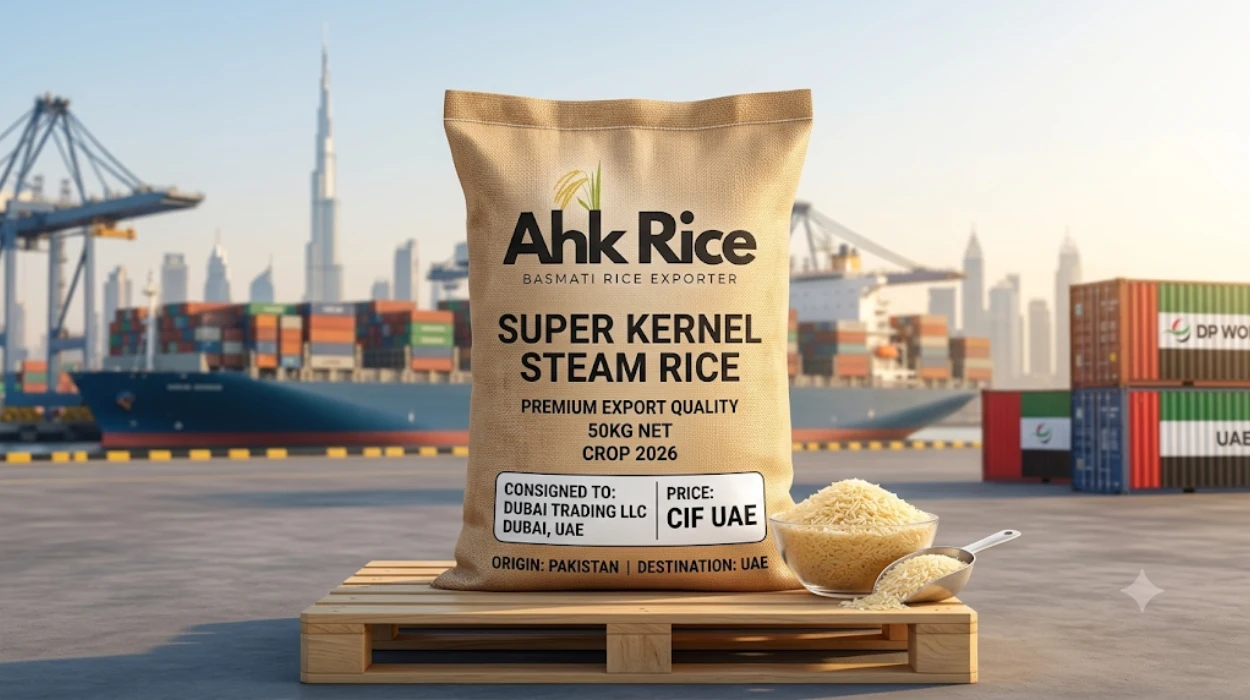
Super Kernel Steam Rice is a long-grain aromatic rice variety grown primarily in Punjab, Pakistan. It is known for its pleasant aroma, soft texture after cooking, and strong acceptance in Middle Eastern, African, and Asian markets. Unlike FOB pricing, which covers costs until cargo is loaded at the export port, CIF pricing includes freight and insurance up to the destination port in the UAE.
As a Pakistani export AHK Rice export services support buyers with processing, grading, packaging, documentation, freight coordination, and shipment management. For importers evaluating procurement options, understanding CIF pricing components is essential before negotiating contracts or comparing quotations.
Many buyers first study market fundamentals through educational resources explaining cultivation, milling, grading, export specifications, and trade standards. A useful starting point is our guide on understanding Super Kernel Steam Rice quality characteristics and export grades, which provides the technical foundation needed before evaluating CIF quotations.
What Does Super Kernel Steam Rice CIF UAE Pricing Include?
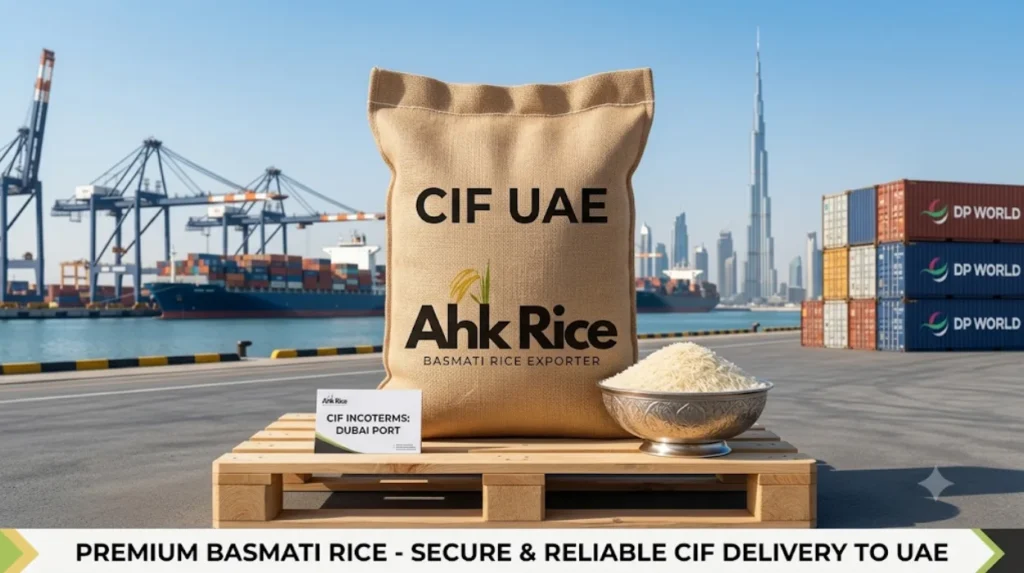
CIF pricing combines rice value, marine insurance, and international freight costs into a single import price, allowing UAE distributors to compare suppliers using a more complete landed-cost perspective rather than evaluating FOB rice prices alone without transportation expenses included.
CIF stands for Cost, Insurance, and Freight. Under CIF terms, the exporter is responsible for arranging transportation and insurance until the cargo reaches the agreed destination port.
For Super Kernel Steam Rice shipments to the UAE, CIF pricing generally includes:
- Rice procurement and processing
- Milling and grading
- Packaging materials
- Inland transportation
- Export documentation
- Port handling charges
- Ocean freight
- Marine insurance
The importer remains responsible for destination charges, customs clearance, VAT obligations, storage costs, and inland delivery after arrival.
A typical CIF quotation allows buyers to understand the approximate landed procurement cost before the shipment reaches ports such as Jebel Ali, Khalifa Port, or Sharjah Port.
How Is Super Kernel Steam Rice Processed Before Export?
Steam processing improves grain strength, enhances appearance, reduces breakage during milling, and increases storage stability. These characteristics make Super Kernel Steam Rice suitable for long-distance export markets where consistency and shelf life directly influence distributor profitability.
The production process begins with paddy cultivation in Punjab’s fertile agricultural regions.
After harvesting, paddy is cleaned and sorted to remove foreign materials.
The grains then undergo steam treatment. During this process, controlled heat and moisture strengthen the grain structure.
The rice is dried carefully to achieve target moisture levels.
After drying, the rice enters the milling stage where husk removal, polishing, grading, color sorting, and quality inspection are completed.
The final product is packed according to buyer specifications.
Common packaging options include:
- 5 kg retail bags
- 10 kg retail bags
- 20 kg bags
- 25 kg bags
- 40 kg bags
- 50 kg bags
Export documentation and container loading follow quality approval.
How Do Different CIF Pricing Approaches Compare?
Different pricing approaches create different risk profiles. Some buyers prioritize lower acquisition cost, while others prioritize freight stability, inventory predictability, and consistent quality standards that reduce operational disruptions after cargo reaches UAE distribution channels.
The most common procurement approaches include spot buying, seasonal contracting, and long-term supply agreements.
Super Kernel Steam Rice Procurement Comparison
| Attribute | Spot Purchase | Seasonal Contract | Long-Term Contract |
|---|---|---|---|
| Price Stability | Low | Medium | High |
| Supply Security | Medium | High | Very High |
| Freight Predictability | Low | Medium | High |
| Budget Planning | Limited | Good | Excellent |
| Inventory Control | Moderate | Good | Excellent |
| Quality Consistency | Variable | Strong | Very Strong |
| Operational Risk | Higher | Medium | Lower |
Spot purchases may provide opportunities during temporary market declines.
Long-term contracts generally offer greater planning accuracy and supply continuity.
For distributors managing large retail networks, stability often creates more value than short-term price fluctuations.
How Do UAE and African Markets Differ in Their Grade Preferences?
Market demand differs significantly between regions. UAE buyers generally prioritize appearance and consistency, while several African markets place greater emphasis on affordability, acceptable cooking performance, and value-oriented specifications that support broader consumer accessibility.
Different markets evaluate rice quality using different purchasing criteria.
UAE Market Preferences
The UAE market typically favors:
- Well-polished grains
- Uniform appearance
- Lower broken percentage
- Premium packaging
- Strong aroma
- Consistent cooking performance
Retail chains and foodservice distributors often request higher-grade specifications.
African Market Preferences
Many African importers focus on:
- Competitive pricing
- Good cooking expansion
- Medium polishing levels
- Larger volume purchases
- Flexible packaging options
The result is different pricing structures for similar rice varieties.
Regional Price Comparison
| Factor | UAE Market | African Market |
|---|---|---|
| Preferred Grade | Premium Steam | Standard Steam |
| Typical Packaging | Retail & Premium | Bulk Focused |
| Average CIF Value | Higher | Lower |
| Quality Expectations | Very High | High |
| Branding Importance | High | Moderate |
What Factors Influence CIF UAE Rice Pricing?
Rice pricing changes due to agricultural production, milling costs, freight rates, exchange rates, packaging requirements, seasonal demand, and export competition. Each variable affects total CIF value and ultimately determines distributor procurement costs within UAE markets.
Several variables influence CIF quotations.
Crop Conditions
Production volumes affect market availability.
Strong harvests generally improve supply levels.
Lower production creates upward pricing pressure.
Freight Rates
Ocean freight represents a significant component of CIF pricing.
Changes in shipping demand can affect overall import costs.
Packaging Specifications
Custom packaging increases production costs.
Printed retail bags generally cost more than plain export bags.
Quality Specifications
Factors include:
- Broken percentage
- Grain length
- Moisture level
- Purity level
- Polishing standard
Higher specifications typically command higher prices.
Currency Movements
Exchange rate fluctuations affect exporter and importer cost calculations.
What Are the Pros and Cons of Different Procurement Strategies?
Every sourcing strategy offers advantages and limitations. Buyers should evaluate operational goals, inventory cycles, storage capacity, customer requirements, and risk tolerance before selecting the procurement model that best supports business objectives.
Spot Buying
Advantages
- Immediate purchasing flexibility
- Potential access to temporary discounts
- No long-term commitment
Disadvantages
- Price volatility
- Freight uncertainty
- Supply availability risks
Seasonal Contracts
Advantages
- Better planning
- Improved pricing visibility
- Greater shipment coordination
Disadvantages
- Less flexibility
- Requires forecasting accuracy
Long-Term Agreements
Advantages
- Consistent quality
- Stable supply
- Better budgeting
Disadvantages
- Contract commitment
- Less ability to capitalize on temporary market drops
For example, a UAE wholesaler supplying supermarket chains may benefit from annual contracts because inventory continuity is often more valuable than short-term procurement savings.
Which Procurement Method Works Best for Different Buyers?
The optimal procurement strategy depends on business size, customer expectations, storage capacity, and purchasing frequency. Different distributor profiles achieve different outcomes because operational requirements vary substantially across wholesale and retail supply chains.
Small Importers
Best option:
- Spot purchases
- Smaller container volumes
- Flexible inventory strategy
Regional Distributors
Best option:
- Seasonal agreements
- Planned replenishment cycles
- Balanced pricing stability
National Distributors
Best option:
- Long-term contracts
- Forecast-driven purchasing
- Supply continuity focus
Private Label Retailers
Best option:
- Long-term partnerships
- Consistent specifications
- Custom packaging programs
The correct choice depends on operational objectives rather than the lowest quoted price.
What Decision Factors Should UAE Wholesalers Evaluate Before Buying?
Importers achieve better procurement outcomes when evaluating total business impact rather than focusing exclusively on CIF value. Quality reliability, logistics performance, and supplier capability often generate greater long-term value than marginal price differences.
Rice Procurement Decision Framework
| Decision Factor | Importance | Evaluation Focus |
|---|---|---|
| Product Quality | Very High | Consistency and grading |
| Supply Reliability | Very High | Shipment continuity |
| Freight Management | High | Delivery predictability |
| Packaging Capability | High | Market suitability |
| Documentation Support | High | Customs efficiency |
A supplier offering lower pricing but inconsistent quality can create greater operational costs than a supplier offering slightly higher but stable pricing.
Quality claims, certifications, inspection systems, and export experience should all be reviewed during supplier evaluation.
How Can Buyers Compare CIF Quotations Correctly?
The most accurate comparison method evaluates identical specifications, packaging formats, shipment schedules, and destination ports. Comparing incomplete quotations often produces misleading conclusions and procurement decisions that increase actual landed costs after importation.
Buyers should compare:
- Grain length
- Broken percentage
- Moisture content
- Packaging specification
- Container quantity
- Freight terms
- Insurance coverage
- Destination port
Without specification alignment, two quotations cannot be compared accurately.
Importers should also verify:
- Inspection procedures
- Quality control systems
- Export documentation support
- Container loading standards
- Historical shipment performance
These factors influence the true value of a CIF offer.
Super Kernel Steam Rice CIF UAE pricing reflects much more than the cost of rice itself. It includes freight, insurance, processing quality, packaging requirements, and export logistics. UAE distributors achieve stronger procurement outcomes when evaluating total landed value instead of focusing only on headline pricing.
The best procurement strategy depends on business objectives. Spot purchases support flexibility. Seasonal contracts improve planning. Long-term agreements provide supply stability and quality consistency. By comparing specifications, logistics capabilities, and supplier performance together, importers can make more informed sourcing decisions and reduce operational risk across their distribution networks.
Frequently Asked Questions
What is included in Super Kernel Steam Rice CIF UAE pricing?
CIF pricing includes rice value, export handling, freight charges, and marine insurance up to the destination port in the UAE. Destination customs duties and local delivery costs are normally excluded.
Why is CIF pricing higher than FOB pricing?
CIF pricing includes additional costs such as ocean freight and insurance, while FOB pricing ends when the cargo is loaded onto the vessel at the export port.
Which UAE market segments prefer Super Kernel Steam Rice?
Retail chains, foodservice distributors, wholesalers, restaurants, and private-label brands commonly purchase Super Kernel Steam Rice because of its aroma, appearance, and cooking performance.
What shelf life does Super Kernel Steam Rice typically offer?
Under proper storage conditions, Super Kernel Steam Rice generally maintains quality for 18–24 months, depending on packaging materials, moisture control, and warehouse conditions.
How can distributors reduce rice procurement risk?
Importers can reduce risk by verifying quality specifications, reviewing supplier export experience, using clear contracts, and selecting procurement models that align with inventory and sales forecasts.