How Does Moisture Content Affect the Shelf Life of Pakistan Basmati Rice in Saudi Arabia?
Pakistan Basmati rice retains its aroma, texture, and cooking quality for a longer period when its moisture content stays within internationally accepted export limits. Moisture directly affects grain stability during storage, shipping, and retail distribution in Saudi Arabia, where warm temperatures require strict moisture management throughout the supply chain.
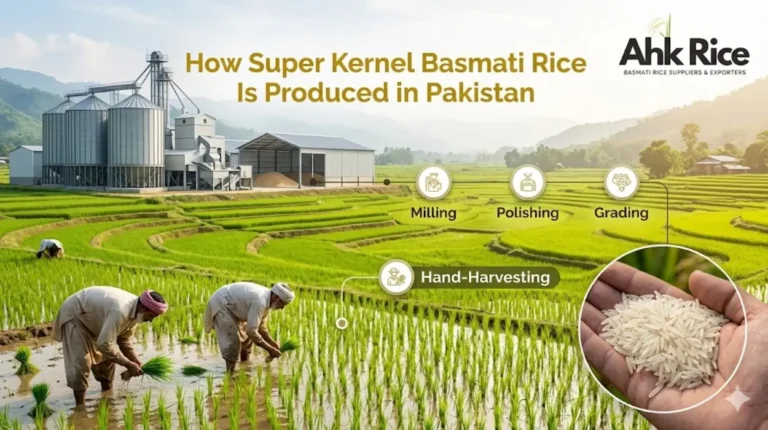
Pakistan is one of the world’s leading exporters of premium Basmati rice. Punjab produces the largest share of export-quality Basmati, including 1121 Basmati, Super Kernel Basmati, and 1509 Basmati. Rice destined for Saudi Arabia undergoes harvesting, drying, milling, grading, quality inspection, laboratory testing, and export packaging before shipment. Every stage influences the final moisture level, which determines shelf life, grain appearance, aroma retention, and consumer satisfaction.
What Is Moisture Content in Pakistan Basmati Rice?
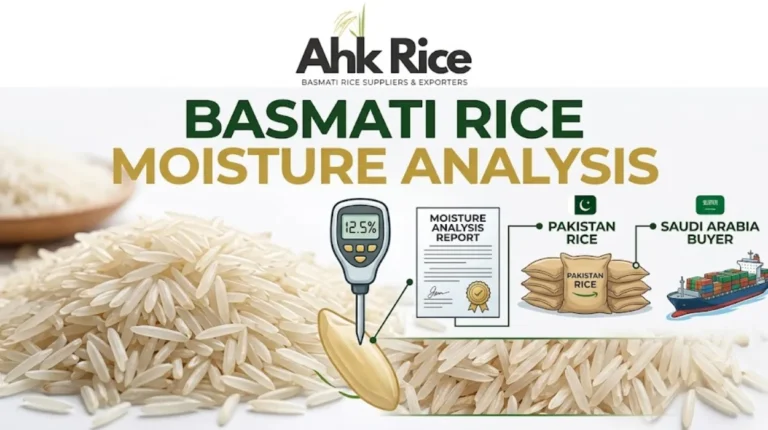
Moisture content is the percentage of water present inside a rice grain after harvesting, drying, milling, and packaging. Export-grade Pakistan Basmati rice generally maintains a moisture level between 12% and 14%, allowing the grain to remain stable during ocean transport, warehouse storage, and retail distribution across Saudi Arabia.
Moisture content measures the amount of water contained inside each grain. Laboratories calculate this value using calibrated moisture meters and oven-drying methods that comply with international grain testing standards.
For exported Basmati rice, moisture becomes one of the most important quality specifications alongside:
- Grain length
- Purity
- Broken percentage
- Foreign matter
- Chalkiness
- Colour
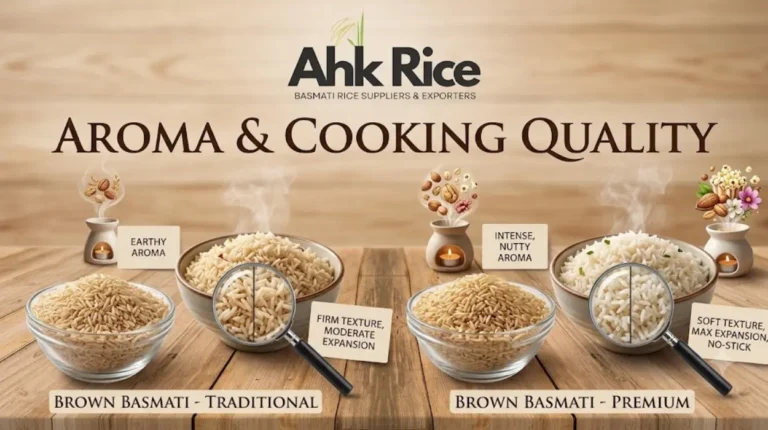
- Aroma
Every importing country specifies acceptable moisture limits within its purchasing contracts.
Why Is Moisture Measured Before Export?
Every shipment undergoes moisture testing because excessive water shortens storage life.
Laboratory reports verify that exported rice satisfies buyer specifications before container loading.
Common testing stages include:
- After drying
- Before milling
- After polishing
- Before packaging
- Before container sealing
Testing at several stages prevents quality variation during export.
How Does Moisture Content Affect the Shelf Life of Pakistan Basmati Rice in Saudi Arabia?
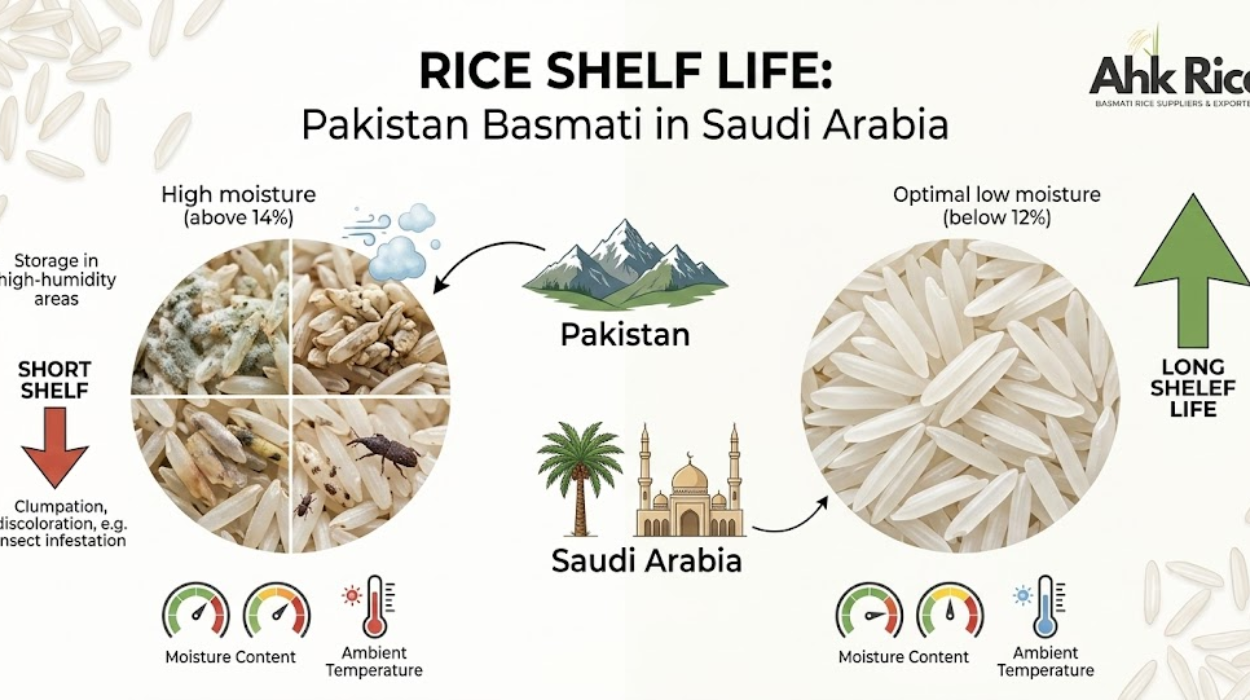
Proper moisture content preserves grain structure, natural aroma, cooking performance, and food safety throughout transportation and storage. Rice stored within recommended moisture limits maintains its export quality for up to 24 months under suitable warehouse conditions, while excessive moisture accelerates deterioration and microbial growth.
Shelf life refers to the period during which rice maintains acceptable quality without developing spoilage.
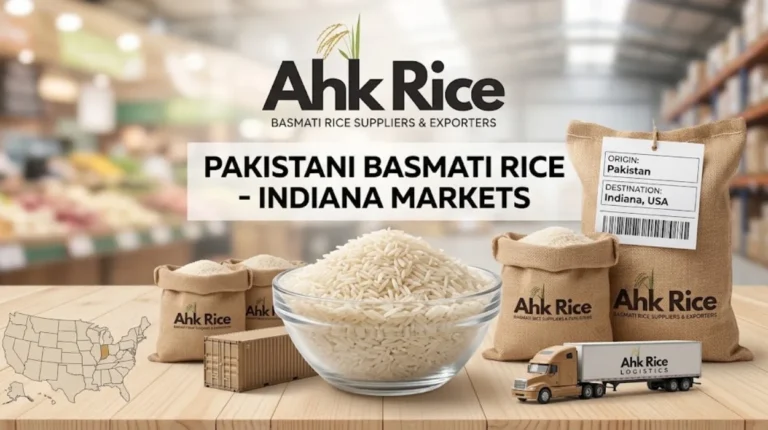
Saudi Arabia imports Pakistani Basmati through long-distance sea freight. Shipping from Pakistan generally takes between 10 and 20 days depending on the destination port, vessel schedule, and customs procedures. After arrival, rice continues moving through importer warehouses, wholesalers, supermarkets, restaurants, and consumers.
Each stage exposes rice to changing temperatures.
When moisture remains controlled:
- Grains remain firm.
- Aroma stays intact.
- Cooking quality remains consistent.
- Colour changes slowly.
- Packaging remains dry.
- Storage becomes safer.
When moisture rises beyond acceptable levels:
- Fungal activity increases.
- Insect infestation becomes easier.
- Grain discolouration appears faster.
- Off-odours develop.
- Clumping occurs inside bags.
- Shelf life decreases significantly.
These changes directly reduce export value.
How Is Moisture Content Controlled During Pakistan Basmati Rice Processing?
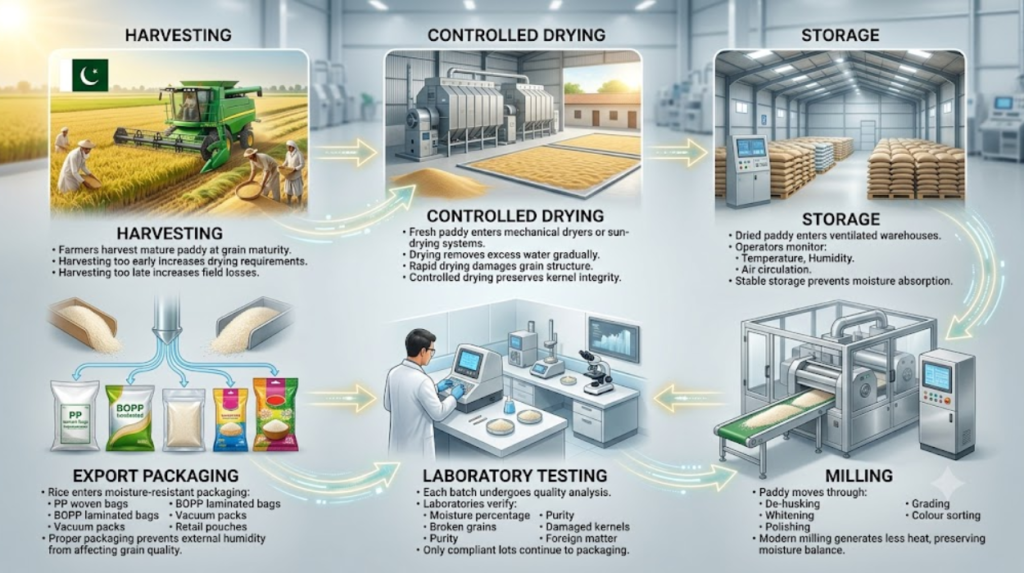
Rice processors regulate moisture through controlled drying, continuous laboratory testing, modern milling systems, calibrated storage facilities, and moisture-resistant packaging. Every processing stage aims to maintain stable grain moisture before international shipment to Saudi Arabia and other importing countries.
The processing method also influences how well rice retains its moisture during long-distance shipping. Readers who want a detailed comparison between steam-treated and golden sella rice can explore our guide on:
Moisture management starts immediately after harvesting.
Freshly harvested paddy contains much higher moisture than export requirements.
The processing sequence follows a systematic workflow.
Harvesting
Farmers harvest mature paddy when grain maturity reaches the recommended stage.
Harvesting too early increases drying requirements.
Harvesting too late increases field losses.
Controlled Drying
Fresh paddy enters mechanical dryers or sun-drying systems.
Drying removes excess water gradually.
Rapid drying damages grain structure.
Controlled drying preserves kernel integrity.
Storage
Dried paddy enters ventilated warehouses.
Warehouse operators monitor:
- Temperature
- Humidity
- Air circulation
Stable storage prevents moisture absorption.
Milling
The paddy moves through:
- De-husking
- Whitening
- Polishing
- Grading
- Colour sorting
Modern milling generates less heat, helping preserve moisture balance.
Laboratory Testing
Each batch undergoes quality analysis.
Laboratories verify:
- Moisture percentage
- Broken grains
- Purity
- Damaged kernels
- Foreign matter
Only compliant lots continue to packaging.
Export Packaging
Rice enters moisture-resistant packaging.
Examples include:
- PP woven bags
- BOPP laminated bags
- Vacuum packs
- Retail pouches
Proper packaging prevents external humidity from affecting grain quality.
What Factors Influence Moisture Stability During Export to Saudi Arabia?
Moisture stability depends on drying quality, warehouse humidity, container conditions, packaging materials, voyage duration, and handling procedures. Stable environmental control prevents moisture migration inside containers and protects Pakistan Basmati rice throughout international shipping to Saudi Arabia.
Moisture remains stable only when every stage of the export chain protects the rice.
Several environmental conditions influence final quality.
Warehouse Humidity
High warehouse humidity allows rice to absorb moisture from surrounding air.
Climate-controlled warehouses reduce this risk.
Shipping Containers
Export containers require:
- Dry floors
- Clean interiors
- Proper ventilation
- No water leakage
Container inspection forms part of standard export quality procedures.
Packaging Material
Packaging creates the final barrier against humidity.
Higher-quality laminated bags reduce moisture exchange during storage.
Climate Differences
Pakistan and Saudi Arabia experience different seasonal humidity patterns.
Rice moves between changing environments during shipment.
Stable packaging reduces environmental impact.
Storage Duration
Longer storage requires greater moisture stability.
Proper moisture management enables rice to retain quality for extended periods before retail sale.
What Are the Main Components That Determine Rice Shelf Life?
Shelf life depends on several interacting quality factors including moisture percentage, grain maturity, storage temperature, packaging quality, milling accuracy, and warehouse hygiene. Moisture remains the central factor because it directly influences biological activity, aroma preservation, and grain stability.
No single factor determines shelf life.
Multiple quality characteristics work together.
The most important components include:
Moisture Content
Maintains grain stability.
Temperature
Higher temperatures accelerate deterioration.
Relative Humidity
Humidity influences moisture absorption.
Grain Integrity
Whole grains store longer than damaged kernels.
Packaging Quality
High-barrier packaging reduces moisture transfer.
Warehouse Cleanliness
Clean storage prevents insects and contamination.
Each component supports long-term quality preservation.
What Benefits Does Correct Moisture Content Provide?
Correct moisture levels improve export quality, maintain aroma, preserve cooking performance, reduce storage losses, protect food safety, and increase buyer confidence. Stable moisture also supports efficient international logistics by reducing quality claims during transportation and long-term warehouse storage.
Export-quality Basmati delivers several measurable benefits when moisture remains controlled.
These benefits include:
- Longer shelf life
- Better cooking consistency
- Stronger natural aroma
- Lower insect activity
- Reduced mould development
- Improved grain appearance
- Better consumer satisfaction
- Reduced product waste
Each benefit contributes to maintaining consistent product quality across the Saudi Arabian supply chain.
Frequently Asked Questions
How does moisture content affect the shelf life of Pakistan Basmati rice?
Moisture content directly influences the shelf life of Pakistan Basmati rice. Export-grade rice maintained between 12% and 14% moisture retains its aroma, texture, and cooking quality for a longer period while reducing the risk of mould, insects, and spoilage.
What is the ideal moisture content for exporting Basmati rice to Saudi Arabia?
The ideal moisture content for Pakistan Basmati rice exported to Saudi Arabia is typically 12% to 14%, depending on buyer specifications and international export standards. This range supports safe transportation and long-term storage.
Why is moisture tested before Basmati rice is exported?
Moisture testing ensures that the rice meets contractual quality requirements and remains stable during shipping, warehousing, and retail distribution. It also helps prevent quality loss caused by excessive moisture.
How is moisture content measured in Pakistan Basmati rice?
Rice exporters measure moisture content using digital grain moisture meters and laboratory oven-drying methods. These tests are performed at multiple stages, including after drying, milling, and before export packaging.
Can high moisture content damage Basmati rice during storage?
Yes. High moisture content promotes mould growth, insect infestation, grain discolouration, unpleasant odours, and reduced shelf life. Maintaining the correct moisture level protects the rice throughout storage.
Does packaging help maintain the moisture content of Basmati rice?
Yes. Moisture-resistant packaging such as laminated BOPP bags, PP woven bags, and vacuum packs helps prevent moisture absorption from the surrounding environment during shipping and storage.
Which Pakistani Basmati rice varieties are commonly exported to Saudi Arabia?
Saudi Arabia imports several premium Pakistani Basmati varieties, including 1121 Basmati Rice, Super Kernel Basmati Rice, and 1509 Basmati Rice, each offering distinct grain length and cooking characteristics.
What certifications support the export quality of Pakistan Basmati rice?
Export-quality Pakistan Basmati rice is commonly supplied with certifications such as ISO 22000, HACCP, FSSC 22000, Halal Certification, Phytosanitary Certificate, Certificate of Origin, and SGS or Bureau Veritas inspection reports, depending on buyer requirements and destination regulations.
How long can properly stored Pakistan Basmati rice remain fresh?
When stored in cool, dry conditions with the correct moisture content, Pakistan Basmati rice typically maintains its quality for 18 to 24 months, depending on packaging, storage conditions, and handling throughout the supply chain.
Why is moisture management important for Saudi Arabian importers?
Moisture management preserves grain quality during sea freight and warehouse storage in Saudi Arabia. Proper moisture levels help maintain aroma, cooking performance, food safety, and overall product quality until the rice reaches consumers.