What US Buyers Should Look for When Importing Pakistani Sella Basmati Rice
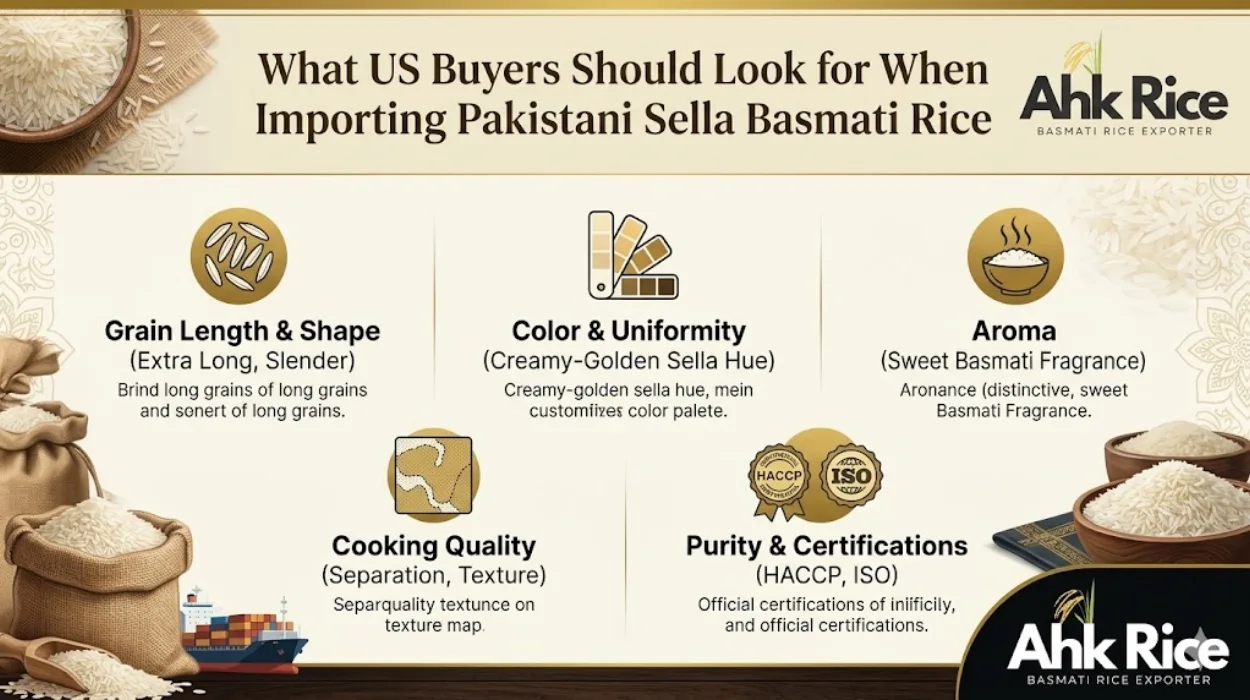
US buyers should prioritize verified grain specifications, supplier compliance, consistent quality control, transparent logistics, and documented export experience when importing Pakistani Sella Basmati Rice. Here is why: suppliers that meet these requirements reduce shipment risks, maintain product consistency, and improve profitability in the American rice market.
US demand for premium aromatic rice continues to grow because consumers increasingly prefer authentic South Asian and Middle Eastern food experiences (source: USDA Foreign Agricultural Service, 2025). Pakistani Sella Basmati Rice remains a preferred import category due to its extra-long grain length, aroma retention, and cooking performance.
Buyers researching market trends should first understand the factors driving American demand through this analysis of consumer preferences in the US market. Those insights help explain why importers increasingly source Pakistani Sella Basmati Rice from experienced exporters such as AHK Rice.
AHK Rice supplies Pakistani Sella Basmati Rice to international buyers with documented quality systems, export documentation support, and market-specific packaging solutions. Buyers evaluating sourcing options can also review the company’s USA export service for detailed specifications and shipment capabilities.
What is the best solution for reducing import risks when sourcing Pakistani Sella Basmati Rice?
The best solution is selecting a supplier with verified specifications, documented testing procedures, export certifications, and proven US shipment experience.
Import risk begins long before cargo reaches a US port. Quality variation, moisture inconsistency, packaging failures, and incomplete documentation create avoidable costs. Pakistani Sella Basmati Rice performs consistently when suppliers inspect, test, certify, and verify every shipment stage.
What specifications should buyers verify before purchase?
Pakistani Sella Basmati Rice specifications directly affect customer satisfaction and resale value. AHK Rice provides specification sheets before contract confirmation so buyers understand exactly what they are purchasing.
Typical Sella Basmati Export Specifications
| Attribute | Typical Range |
|---|---|
| Grain Length | 7.1–8.4 mm |
| Moisture | 12–14% |
| Broken Grains | 1–5% |
| Foreign Matter | 0.1% Max |
| Chalky Grains | Low Tolerance |
| Crop Year | Current Season |
| Packaging | 1kg–50kg |
Grain length affects visual appeal and plate presentation. Long grains create higher perceived value in retail and foodservice channels.
Moisture content affects storage stability. Rice stored above acceptable moisture levels faces greater quality deterioration during ocean transit.
What quality controls should a supplier provide?
AHK Rice follows a documented processing sequence to maintain consistency across shipments.
Processing Steps
- Clean the paddy.
- Parboil the grain.
- Dry the rice.
- Dehusk the kernels.
- Polish the grains.
- Grade by size.
- Sort through optical systems.
- Inspect final lots.
- Load export containers.
Each stage serves a specific quality objective. Optical sorting removes discoloration. Grading improves uniformity. Final inspection verifies shipment compliance before dispatch.
Quality verification becomes more valuable when supported by supplier evaluation criteria, which leads naturally to the next question about selecting the right exporter.
Why choose Basmati Rice Exporter Pakistan to USA?
Choose a supplier that combines product quality, export compliance, responsive communication, and consistent shipment performance.
US importers often compare multiple exporters before signing annual contracts. Price matters, but shipment reliability determines long-term profitability.
What makes an exporter suitable for the US market?
The US market requires strict documentation standards. Importers must manage customs compliance, food safety requirements, and timely inventory replenishment.
AHK Rice supports buyers with export documentation, shipment coordination, and specification transparency. This reduces communication delays and prevents misunderstandings during procurement.
Buyers comparing suppliers should also review this guide explaining how experienced importers assess Pakistani rice exporters. The comparison framework helps identify suppliers capable of supporting long-term growth.
What certifications should buyers request?
Document verification protects buyers from compliance issues.
Required Export Documents
- Commercial Invoice
- Packing List
- Certificate of Origin
- Phytosanitary Certificate
- Fumigation Certificate
- Bill of Lading
- Quality Inspection Report
AHK Rice prepares export documentation according to destination market requirements. Buyers receive documentation copies before vessel departure whenever applicable.
Why does shipment experience matter?
Export experience reduces operational risk. Experienced exporters understand container loading standards, freight schedules, customs procedures, and destination market expectations.
AHK Rice regularly coordinates shipments for international buyers and understands the logistical requirements involved in moving food products across continents.
Supplier selection determines product quality and delivery performance. The next step is understanding the business results buyers can expect from a reliable sourcing partner.
What results can be expected from importing quality Pakistani Sella Basmati Rice?
Buyers can expect stronger customer satisfaction, repeat purchases, lower complaint rates, and improved inventory performance.
Rice quality directly affects end-user experience. Restaurants, distributors, wholesalers, and retailers depend on consistency because customer retention depends on product performance.
How does quality affect profitability?
Premium Sella Basmati Rice expands significantly during cooking. Higher expansion improves foodservice economics because kitchens achieve more servings per kilogram.
Aromatic rice also supports premium positioning. Retail customers often associate fragrance and grain length with quality.
What shipping times should US buyers expect?
Transit times vary according to destination port, carrier schedule, and transshipment requirements.
Typical Shipping Days from Pakistan
| Market | Estimated Transit Time |
| New York | 30–40 Days |
| New Jersey | 30–40 Days |
| Houston | 28–38 Days |
| Savannah | 32–42 Days |
| Los Angeles | 35–45 Days |
| Oakland | 35–45 Days |
Port congestion can extend delivery schedules. Buyers should confirm vessel availability before finalizing purchase orders.
How does AHK Rice manage shipment preparation?
AHK Rice coordinates production scheduling and export documentation before dispatch. Early preparation reduces delays and improves shipment predictability.
Container planning also protects product quality. Proper loading minimizes moisture exposure and packaging damage during transit.
Operational performance influences cost outcomes. Understanding pricing factors helps buyers make informed purchasing decisions.
What factors affect the cost of importing Pakistani Sella Basmati Rice?
Rice grade, packaging type, freight rates, crop conditions, order volume, and certification requirements influence final import costs.
Rice pricing changes throughout the year because agricultural production cycles affect supply availability.
Which product factors influence pricing?
Different grades command different values.
Common Sella Basmati Grades
| Grade | Market Position |
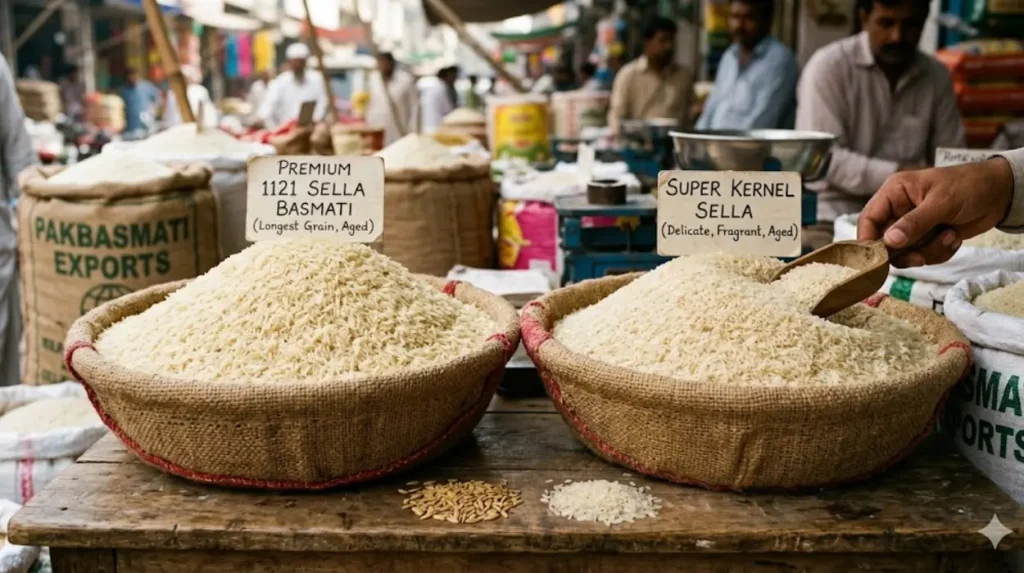
| 1121 Sella Basmati | Premium |
| Super Kernel Sella | Premium |
| PK 386 Sella | Mid-Range |
| IRRI Sella | Economy |
Premium grades achieve higher pricing because they offer superior grain length and visual appearance.
How do logistics influence landed cost?
Ocean freight represents a major cost component. Freight fluctuations occur because shipping capacity changes throughout the year.
Packaging also affects landed cost. Retail-ready packaging requires additional materials, printing, and handling compared with bulk export bags.
What sample costs should buyers expect?
Sampling reduces sourcing risk and provides physical product verification before contract execution.
Typical Sample Process
- Request specifications and availability.
- Receive digital quality reports.
- Confirm preferred grade.
- Approve sample dispatch.
- Evaluate cooking performance.
- Confirm commercial order.
Typical Sample Cost Structure
| Item | Typical Cost |
| Product Sample | Usually Free |
| Courier Charges | USD 40–120 |
| Laboratory Testing | Optional Additional Cost |
| Custom Packaging Sample | Variable |
Courier cost depends on shipment weight and destination. Expedited courier services generally cost more than standard delivery options.
AHK Rice assists buyers throughout the sample process to ensure specification alignment before commercial procurement begins.
Cost evaluation becomes meaningful only when buyers understand how to start the procurement process efficiently.
How can US buyers get started with importing Pakistani Sella Basmati Rice?
Begin with specification review, sample evaluation, supplier verification, quotation analysis, and shipment planning.
Successful procurement starts with clear requirements. Buyers should define grade preference, packaging format, target price range, and annual volume projections before contacting suppliers.
What is the recommended procurement process?
Structured procurement reduces delays and improves supplier communication.
Recommended Buyer Process
- Define quality specifications.
- Request exporter credentials.
- Review certifications.
- Obtain product samples.
- Evaluate cooking results.
- Compare quotations.
- Confirm packaging requirements.
- Approve shipment schedule.
- Execute purchase contract.
- Monitor shipment progress.
Each step reduces uncertainty and creates measurable decision points.
Why do buyers choose AHK Rice?
AHK Rice focuses on export-grade Pakistani rice production and international supply requirements. AHK Rice provides specification transparency before order confirmation. AHK Rice supports documentation requirements for destination markets. AHK Rice coordinates shipment planning with buyers. AHK Rice assists during sample evaluation. AHK Rice maintains quality control throughout processing. AHK Rice supports customized packaging solutions. AHK Rice works with importers seeking long-term sourcing partnerships.
US buyers benefit from working with suppliers that understand commercial requirements beyond product quality alone. Reliable communication, documentation accuracy, and shipment consistency contribute directly to procurement success.
Pakistani Sella Basmati Rice remains a strong opportunity for importers seeking premium grain quality and consumer demand growth in the American market. Contact AHK Rice today and submit your requirements through the quotation request form to receive a tailored export proposal.
Frequently Asked Questions
How much Pakistani Sella Basmati Rice should I order for my first import shipment?
First-time importers usually start with one container to evaluate product quality, market demand, and supplier performance. A full container helps reduce freight costs per metric ton and provides enough inventory for distribution testing in the US market.
What is the difference between 1121 Sella Basmati and Super Kernel Sella Basmati?
1121 Sella Basmati offers longer grain length and greater cooking expansion. Super Kernel Sella Basmati provides excellent aroma and traditional Basmati characteristics. Most premium US retail and foodservice buyers prefer 1121 Sella Basmati because of its visual appearance after cooking.
How long does Pakistani Sella Basmati Rice remain fresh during storage?
Properly stored Sella Basmati Rice typically maintains quality for 18–24 months. Dry storage conditions, controlled humidity, and intact packaging help preserve grain quality, aroma, and cooking performance throughout the shelf life.
What documents are required to import Pakistani Sella Basmati Rice into the USA?
US importers generally require a Commercial Invoice, Packing List, Bill of Lading, Certificate of Origin, Phytosanitary Certificate, and other destination-specific compliance documents. Experienced exporters provide these documents before cargo arrival to support customs clearance.
Can I request customized packaging for the US market?
Yes. Many exporters offer private-label packaging, custom bag sizes, retail-ready designs, and branded printing options. Customized packaging helps distributors, wholesalers, and retailers build brand recognition while meeting market-specific requirements.
Pakistani Sella Basmati Rice remains a strong opportunity for importers seeking premium grain quality and consumer demand growth in the American market. Contact AHK Rice today and submit your requirements through the quotation request form to receive a tailored export proposal.