1121 Creamy Sella Rice Delivery Lead Times for UAE Buyers
The fastest and most reliable delivery option for UAE buyers is ordering directly from a Pakistani exporter with integrated milling, processing, documentation, and shipping because it consistently reduces total lead time, documentation delays, and inventory risks compared with sourcing through multiple intermediaries.
The UAE remains one of the world’s largest importers of Pakistani Basmati rice, with consistent demand from supermarkets, wholesalers, hotels, catering companies, and foodservice distributors. Delivery timing directly affects warehouse planning, retail promotions, restaurant purchasing cycles, and seasonal demand. Buyers who understand every stage of the export process can minimise delays while improving supply chain efficiency.
Businesses planning future shipments should first understand how order volume affects procurement and production scheduling. Our guide on:
Planning import quantities for 1121 Creamy Sella Basmati rice explains how shipment size influences production timelines, freight planning, and inventory forecasting before placing export orders.
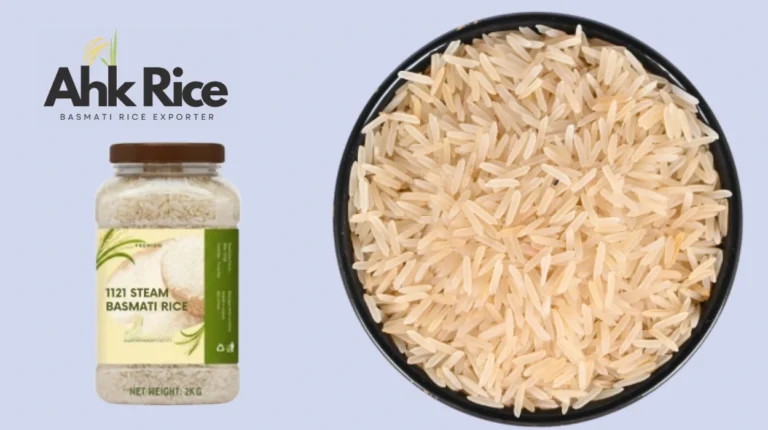
The first mention of 1121 Creamy Sella Rice deserves careful evaluation because lead time depends not only on shipping distance but also on paddy availability, milling schedules, export documentation, container booking, customs clearance, and destination handling. AHK Rice is a trusted Pakistani Basmati rice exporter based in Punjab, supplying 1121, Super Kernel, and 1509 varieties to more than 15 countries through complete processing, custom packaging, and end-to-end export management.
What determines delivery lead times for UAE buyers?
Delivery lead time depends on production scheduling, rice processing, packaging requirements, documentation, vessel availability, customs procedures, and inland transportation. Buyers that coordinate specifications before production begins generally receive shipments faster while reducing unexpected logistical interruptions throughout the export process from Pakistan to UAE destinations.
Delivery lead time is the total period between purchase confirmation and cargo arrival at the destination warehouse.
Several connected stages determine the overall timeline.
- Contract confirmation
- Raw paddy allocation
- Milling and grading
- Colour sorting
- Metal detection
- Packaging
- Quality inspection
- Export documentation
- Container booking
- Port handling
- Ocean freight
- UAE customs clearance
- Inland delivery
Each stage affects the next one.
In 2026, Pakistani exporters generally complete production before vessel loading rather than storing large finished inventories. This improves freshness while slightly extending production schedules for customised orders.
For UAE buyers, most shipments depart from Karachi ports before arriving at Jebel Ali, Khalifa Port, Sharjah, or other UAE terminals.
How do different supply approaches compare?
Different sourcing approaches provide different delivery speeds, pricing structures, flexibility, and operational control. Direct exporter partnerships usually offer shorter overall lead times, while trading intermediaries provide convenience but often increase documentation layers and production uncertainty during procurement and shipment coordination.
Three sourcing methods are commonly used.
- Direct exporter
- Trading company
- Local UAE stockist
Specification Comparison
| Attribute | Direct Pakistani Exporter | Trading Company | UAE Stockist |
|---|---|---|---|
| Production Control | Full | Limited | None |
| Custom Packaging | Yes | Sometimes | Rare |
| Delivery Visibility | High | Medium | High |
| Fresh Production | Yes | Depends | Existing Inventory |
| MOQ Flexibility | Medium | High | Low |
| Cost Efficiency | High | Medium | Lower Margin Advantage |
| Documentation Accuracy | High | Medium | High |
Direct exporters coordinate every production stage.
Trading companies often outsource milling and processing.
Local distributors offer immediate stock availability but limited packaging flexibility.
What delivery timelines should UAE buyers expect?
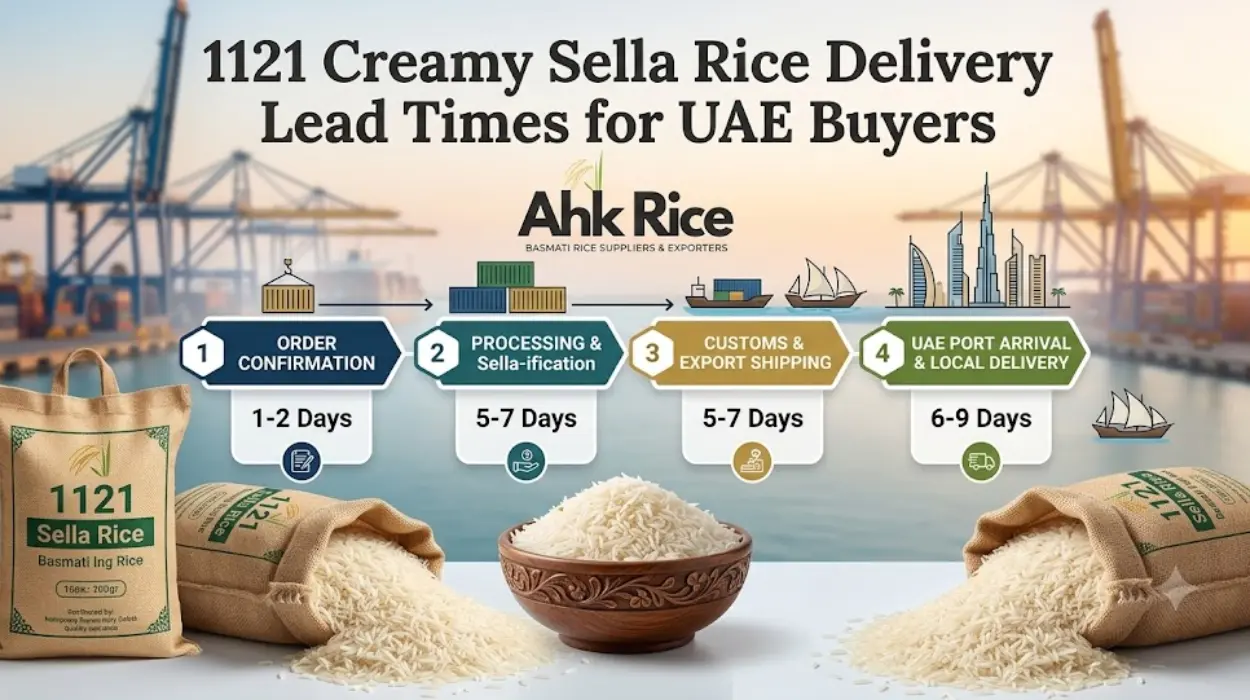
Most standard export orders require production, documentation, and shipping coordination before reaching UAE ports. Well-planned commercial shipments generally arrive within three to five weeks depending on production readiness, vessel schedules, and destination port operations throughout the logistics chain.
Typical 2026 timeline:
| Export Stage | Estimated Days |
|---|---|
| Order confirmation | 1–2 |
| Production planning | 2–4 |
| Milling & grading | 5–8 |
| Packaging | 2–3 |
| Export documents | 2–4 |
| Container booking | 2–5 |
| Ocean freight Pakistan–UAE | 5–8 |
| Customs & delivery | 2–4 |
Total estimated lead time:
20–35 days
Custom printed bags may require additional production time.
Special laboratory certifications may also extend documentation.
Which rice grades are preferred in different UAE market segments?
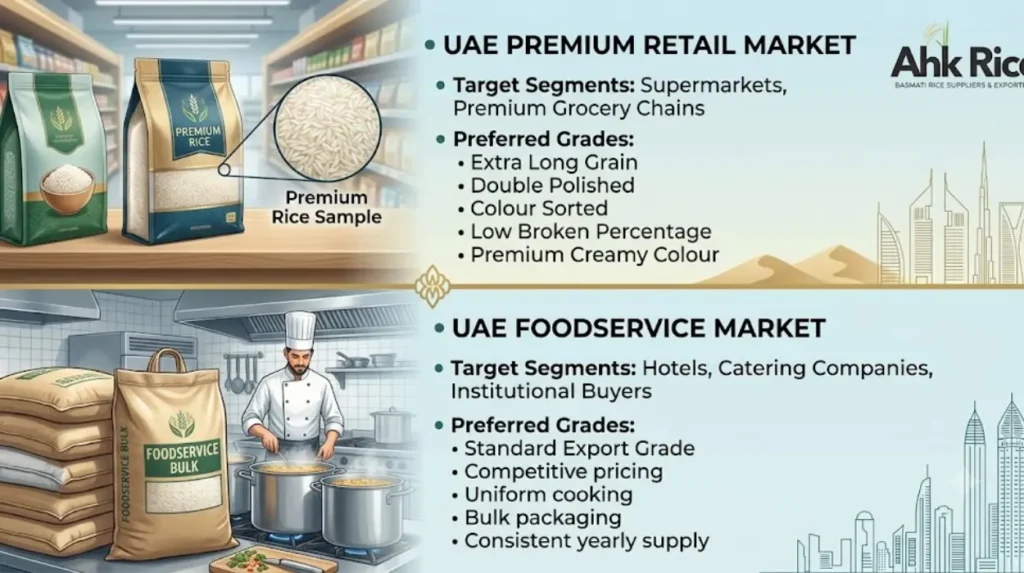
Different UAE customer groups purchase different grades according to application, cooking performance, and pricing. Premium retail markets prefer higher-quality grains, while institutional foodservice buyers frequently balance appearance, consistency, and commercial value for large-volume purchasing decisions.
UAE Premium Retail Market
Preferred grades include:
- Extra Long Grain
- Double Polished
- Colour Sorted
- Low Broken Percentage
- Premium Creamy Colour
These products target supermarkets and premium grocery chains.
UAE Foodservice Market
Preferred grades include:
- Standard Export Grade
- Competitive pricing
- Uniform cooking
- Bulk packaging
- Consistent yearly supply
Hotels and catering companies prioritise consistency over luxury packaging.
How does UAE compare with other export markets?
Regional export markets purchase similar products but evaluate specifications differently. UAE buyers typically emphasise delivery reliability and branding, whereas African wholesale markets often prioritise competitive pricing and flexible shipment volumes for commercial distribution networks.
Market Comparison
| Factor | UAE | East Africa |
|---|---|---|
| Preferred Grade | Premium Creamy Sella | Standard Creamy Sella |
| Packaging | Retail & Wholesale | Mainly Wholesale |
| Branding Demand | High | Medium |
| Delivery Priority | High | Medium |
| Repeat Contracts | Very High | High |
The UAE market rewards suppliers with predictable schedules.
African markets frequently prioritise price competitiveness.
How do prices compare with delivery options?
Rice prices depend on grade specifications, packaging, order quantity, freight rates, and contract timing. Buyers evaluating total landed cost instead of factory pricing achieve better purchasing decisions because logistics expenses influence final import costs significantly.
Indicative 2026 export pricing:
| Product | Average FOB Price (USD/MT) |
|---|---|
| Premium 1121 Creamy Sella | $1,080–1,250 |
| Standard 1121 Creamy Sella | $980–1,080 |
Freight fluctuations influence CIF pricing.
Larger shipment volumes usually reduce transportation cost per metric ton.
Buyers should compare:
- FOB price
- Freight
- Insurance
- Port charges
- Customs costs
- Inland transportation
The lowest FOB price does not always produce the lowest landed cost.
How does shelf life affect delivery planning?
Shelf life directly influences purchasing strategy because properly processed and packaged rice maintains quality for extended periods. Buyers scheduling inventory according to expected sales cycles reduce warehouse losses while preserving cooking consistency and grain appearance over time.
Shelf Life Comparison
| Packaging Type | Expected Shelf Life |
|---|---|
| PP Bags | Up to 18 months |
| BOPP Bags | Up to 24 months |
| Vacuum Packaging | Up to 24 months |
| Retail Laminated Packs | Up to 24 months |
Proper storage remains essential.
Recommended warehouse conditions include:
- Dry environment
- Good ventilation
- Controlled humidity
- Elevated pallets
- Pest management
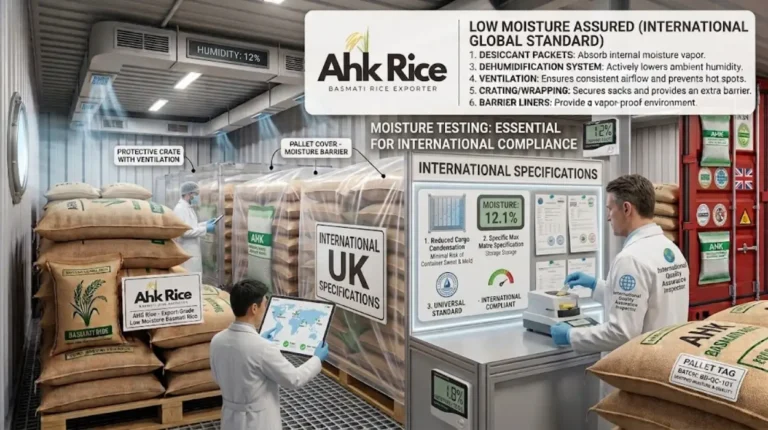
Higher moisture reduces storage stability.
What are the advantages and disadvantages of different delivery strategies?
Every procurement strategy offers measurable benefits and operational limitations. Buyers choosing procurement methods according to inventory requirements, sales forecasts, and seasonal demand achieve stronger supply continuity while reducing emergency purchasing costs during high-demand periods.
Strategy 1: Order Well Before Demand
Advantages
- Better production scheduling
- Stable pricing
- Greater packaging options
- Easier vessel booking
Disadvantages
- Higher inventory holding costs
Example:
A supermarket chain preparing Ramadan promotions secures production several weeks before seasonal demand.
Strategy 2: Maintain Standing Supply Contracts
Advantages
- Predictable deliveries
- Stable supplier relationship
- Easier inventory forecasting
Disadvantages
- Requires accurate annual planning
Example:
Restaurant distributors importing monthly containers reduce emergency purchases.
Strategy 3: Spot Purchasing
Advantages
- Flexible buying
- Immediate market response
Disadvantages
- Higher pricing risk
- Limited production availability
- Longer scheduling uncertainty
Example:
Importers purchasing after sudden demand spikes often compete for available production capacity.
Which delivery method works best for different buyers?
The best delivery strategy depends on purchasing frequency, inventory capacity, and customer demand patterns. Matching procurement methods with operational requirements improves stock availability while lowering logistics costs and reducing unnecessary warehouse storage throughout annual purchasing cycles.
Decision Framework
| Buyer Type | Best Solution | Main Benefit | Possible Limitation | Recommended Frequency |
|---|---|---|---|---|
| Retail Importer | Scheduled Contracts | Stable Inventory | Forecast Required | Monthly |
| Hotel Supplier | Rolling Shipments | Consistent Supply | Contract Commitment | Monthly |
| Foodservice Distributor | Mixed Strategy | Flexibility | Planning Complexity | Every 30–45 Days |
| Wholesale Trader | Bulk Seasonal Orders | Lower Unit Cost | Storage Space | Quarterly |
| New Importer | Small Trial Shipment | Lower Risk | Higher Cost per MT | Initial Order |
Each business has different purchasing priorities.
Selecting the appropriate strategy improves inventory turnover while reducing logistics disruptions.
How can buyers reduce delivery delays?
Most delivery delays can be prevented through detailed planning before production starts. Clear specifications, accurate documentation, realistic shipping schedules, and coordinated communication between exporter, freight forwarder, and importer create faster and more predictable deliveries for commercial rice shipments.
Best practices include:
- Confirm grade specifications early.
- Approve packaging artwork before production.
- Verify shipping marks.
- Confirm payment schedule promptly.
- Review export documentation before vessel departure.
- Reserve containers in advance.
- Monitor vessel schedules regularly.
- Coordinate customs clearance before cargo arrival.
These practices minimise avoidable delays while improving overall supply chain efficiency.
Reliable delivery for UAE buyers depends less on shipping distance and more on preparation before production begins. Exporters that control milling, grading, packaging, documentation, and logistics provide greater consistency than fragmented sourcing models. Comparing production capability, documentation quality, market-specific grade preferences, landed cost, and delivery planning allows importers to build a more resilient procurement strategy. Review the quality guarantees available before finalising your supplier selection:
Buy 1121 Creamy Sella Rice with Quality Guarantees Included.
Frequently Asked Questions
What is the average delivery lead time for 1121 Creamy Sella Rice to the UAE?
Most shipments from Pakistan to the UAE take approximately 20–35 days, depending on production schedules, container availability, shipping routes, customs clearance, and final delivery.
How can UAE buyers reduce delivery delays?
Buyers can reduce delays by confirming specifications early, approving packaging designs before production, submitting accurate documentation, and booking shipments in advance.
Which grade of 1121 Creamy Sella Rice is most popular in the UAE?
Premium supermarkets usually prefer extra-long, double-polished, colour-sorted grades, while wholesalers and foodservice businesses often choose standard export grades for better value.
Does order quantity affect delivery time?
Yes. Larger orders may require additional production and packaging time, while standard quantities can often be processed and shipped more quickly if production slots are available.
What factors influence the final delivery schedule?
Production planning, milling, packaging, export documentation, vessel schedules, customs clearance, and inland transportation all affect the total delivery timeline.
What is the shelf life of 1121 Creamy Sella Rice?
When stored in a cool, dry environment using suitable packaging, 1121 Creamy Sella Rice typically has a shelf life of 18 to 24 months.
Is buying directly from a Pakistani exporter better than using a trading company?
Direct exporters generally offer better production control, customised packaging, accurate documentation, and improved visibility throughout the export process, while trading companies may provide additional sourcing flexibility.
What documents are required for exporting 1121 Creamy Sella Rice to the UAE?
Common export documents include the commercial invoice, packing list, bill of lading, certificate of origin, phytosanitary certificate (when required), and other documents requested by UAE import regulations.
How much does 1121 Creamy Sella Rice cost per metric ton in 2026?
Indicative 2026 FOB prices generally range from USD 980–1,250 per metric ton, depending on grade, specifications, packaging, and order volume.
When should UAE importers place their orders?
Importers should ideally place orders several weeks before their required delivery date, especially before high-demand seasons such as Ramadan and major retail promotions, to secure production capacity and shipping schedules.