How Reliable Is Super Kernel Steam Rice Supply from Pakistan?
Super Kernel Steam Rice supply from Pakistan is highly reliable. Here is why: Pakistan harvests millions of tons of rice annually, maintains established export infrastructure, operates modern rice mills, and supplies more than 150 countries through organized export channels (source: Pakistan Bureau of Statistics, FY2024-25).
Super Kernel Steam Rice remains one of Pakistan’s most recognized Basmati rice varieties. Importers select it for its aroma, grain length, cooking performance, and consistent availability. Punjab province produces the majority of Super Kernel rice because its climate, irrigation systems, and fertile soil support high-quality Basmati cultivation.
Pakistan’s rice sector combines farming, processing, quality control, storage, transportation, and export operations into a connected supply chain. This structure supports year-round exports and consistent shipment schedules for international buyers.
What Is Super Kernel Steam Rice?
Super Kernel Steam Rice is a long-grain aromatic Basmati rice processed through steam treatment before milling, creating stronger grains, better cooking stability, and improved appearance.
Super Kernel Steam Rice belongs to the Basmati rice family. Farmers cultivate this variety primarily in Punjab, Pakistan. The grain develops a natural aroma and elongated structure during cultivation.
Steam processing differentiates this product from traditional white rice. Processors expose paddy rice to controlled steam before milling. This process strengthens the grain structure and reduces breakage during handling.
Super Kernel Steam Rice typically achieves grain lengths between 7.0 mm and 7.6 mm before cooking. The grain expands significantly after cooking and maintains a separate texture.
Major importing regions include the Middle East, Europe, North America, Africa, and Central Asia. Countries such as Saudi Arabia, UAE, Qatar, Oman, Iraq, the United Kingdom, and Canada regularly import Pakistani Basmati rice (source: REAP export data, December 2025).
With the definition established, the next question is how the supply chain operates from farm to export shipment.
How Does Super Kernel Steam Rice Supply Work?
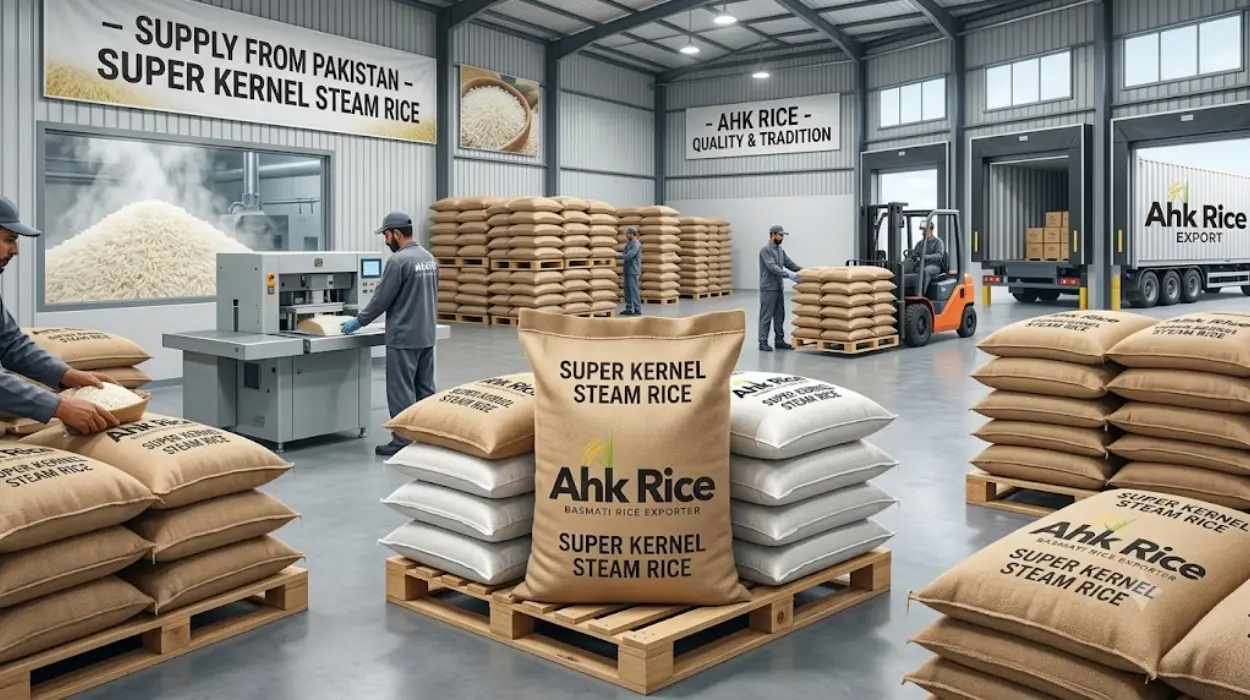
Super Kernel Steam Rice supply follows a structured process consisting of cultivation, harvesting, steaming, milling, grading, testing, packaging, and export dispatch.
The supply chain begins in rice-growing regions of Punjab. Farmers cultivate rice during the Kharif season using canal irrigation and groundwater systems.
How Is Super Kernel Rice Cultivated?
Farmers prepare fields during spring and early summer. Seedlings grow in nurseries before transplantation into flooded fields.
Rice plants mature over approximately 120 to 140 days. Farmers harvest the crop during autumn when moisture levels reach suitable harvesting conditions.
How Is Super Kernel Rice Processed?
Processors follow a defined sequence to prepare export-grade rice.
- Clean the paddy
- Dry the harvested grain
- Steam the paddy
- Cool the grain
- Store for stabilization
- Dehusk the rice
- Polish the kernels
- Sort by size
- Grade by quality
Each step improves uniformity and export suitability. Steam treatment strengthens kernels and improves cooking consistency.
How Is Rice Prepared for Export?
Exporters complete logistics procedures after processing.
- Inspect the rice
- Test laboratory samples
- Certify quality standards
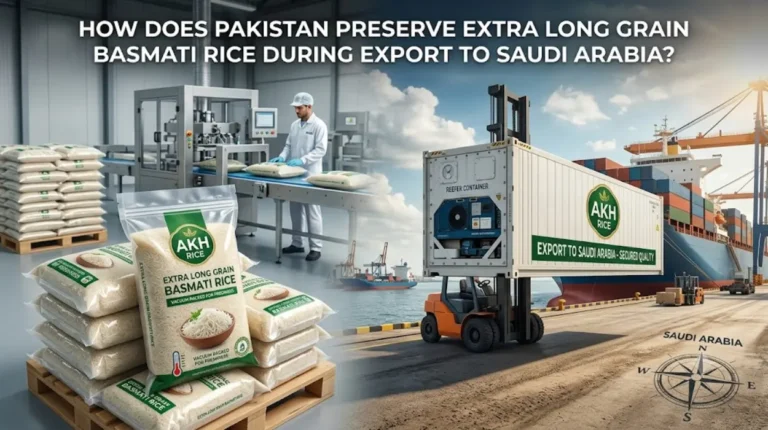
- Package the product
- Load containers
- Clear customs documentation
- Dispatch shipments
Export operations depend on coordinated transportation networks connecting mills with Karachi ports.
Understanding the supply chain leads naturally to the grades available in international markets.
What Grades of Super Kernel Steam Rice Are Available?
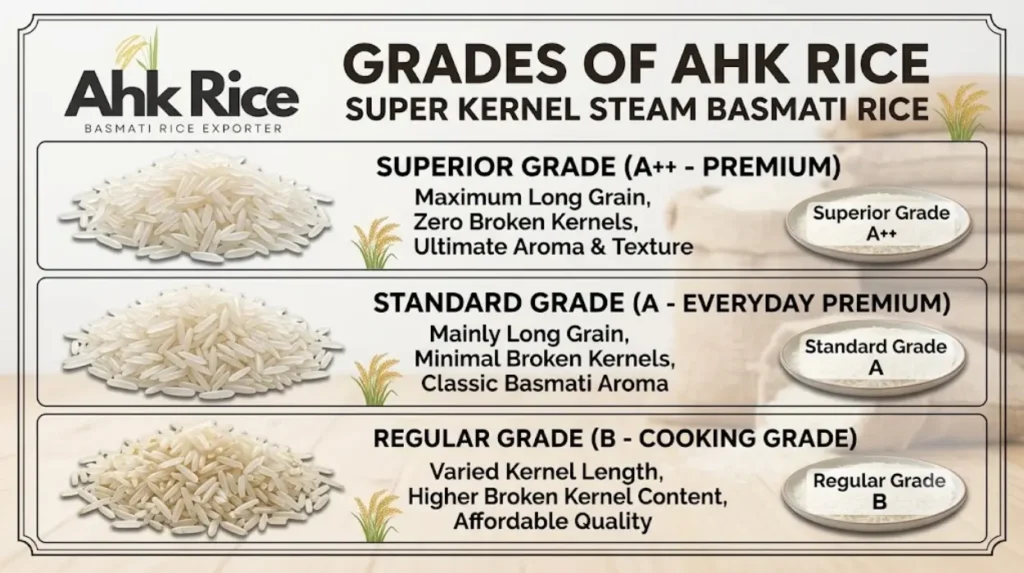
Exporters commonly supply multiple grades ranging from premium full-length kernels to broken rice specifications designed for different market requirements.
Rice grades help importers match product quality with consumer demand and pricing targets.
Premium Super Kernel Steam Rice
Premium grade contains the highest percentage of full kernels. Grain appearance remains uniform with minimal defects.
This grade serves retail brands, supermarkets, and premium foodservice sectors.
Standard Super Kernel Steam Rice
Standard grade balances quality and affordability. Grain length remains consistent while maintaining acceptable cooking performance.
Many distributors in Africa and the Middle East select this specification.
Broken Rice Grades
Broken rice contains fragmented kernels created during milling.
Common examples include:
- 5% Broken
- 10% Broken
- 15% Broken
- 25% Broken
- 100% Broken
Food processors and industrial buyers frequently purchase broken grades because cost efficiency remains important.
Typical Specification Table
| Attribute | Typical Range |
|---|---|
| Grain Length | 7.0–7.6 mm |
| Moisture | 12–14% |
| Purity | 95–100% |
| Broken Kernels | 0–25% |
| Foreign Matter | 0.1–0.5% |
| Crop Year | Current Harvest |
| Shelf Life | 18–24 Months |
With grade classifications explained, the next question concerns the benefits that drive international demand.
What Benefits Make Super Kernel Steam Rice Popular?
Long grain structure, cooking stability, aromatic characteristics, storage durability, and export consistency make Super Kernel Steam Rice a preferred international rice variety.
Super Kernel Steam Rice expands well during cooking. Longer grains improve visual presentation in restaurants, catering operations, and household meals.
Steam processing reduces kernel breakage. Lower breakage improves product appearance and increases usable yield for buyers.
Aromatic compounds create the characteristic Basmati fragrance. Consumers recognize this feature across multiple cuisines.
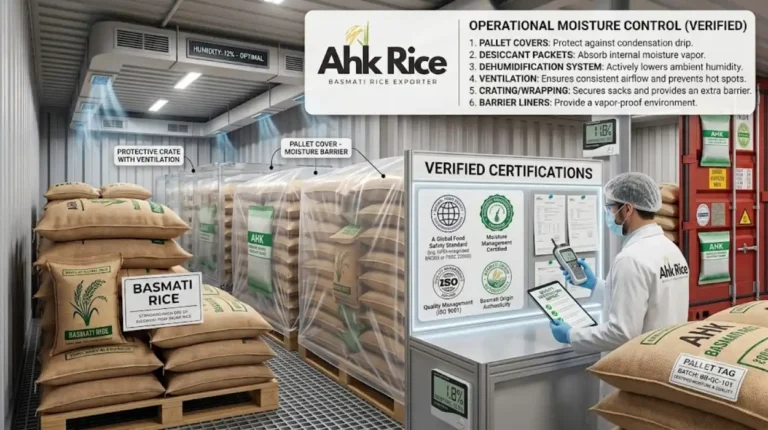
Storage performance remains strong. Steam-treated rice generally maintains quality longer than untreated white rice under proper warehouse conditions.
Steam rice lasts longer than standard white rice. In Gulf warehouses operating near 40°C, steam rice maintains quality for approximately 18 months. Traditional white rice often requires earlier consumption. Importers handling large inventories benefit from this advantage.
The product benefits explain demand growth, leading to the question of where this rice is consumed globally.
Which Markets Import Super Kernel Steam Rice from Pakistan?
The Middle East, Europe, North America, Africa, and Central Asia represent the largest import regions for Pakistani Super Kernel Steam Rice.
Saudi Arabia remains one of the largest destinations for Pakistani Basmati exports. Consumers prefer aromatic rice for traditional dishes.
The UAE functions as both a consumption market and a re-export hub. Large distributors import container volumes for regional distribution.
The United Kingdom imports substantial quantities because South Asian communities maintain strong demand for Basmati rice.
African markets increasingly source Pakistani rice due to competitive pricing and dependable supply chains.
Market Preferences
| Region | Preferred Grade |
|---|---|
| Saudi Arabia | Premium Steam |
| UAE | Premium and Standard |
| Iraq | Standard Steam |
| UK | Premium Retail Grade |
| Africa | Standard and Broken Grades |
Pakistan exported significant volumes of rice during FY2024-25, supported by growing global demand and improved production output (source: Pakistan Bureau of Statistics, FY2024-25).
Global demand highlights reliability, but certifications also influence buyer confidence.
What Certifications Support Reliable Supply?
Phytosanitary certification, food safety systems, quality testing, and export documentation help ensure reliable international rice trade.
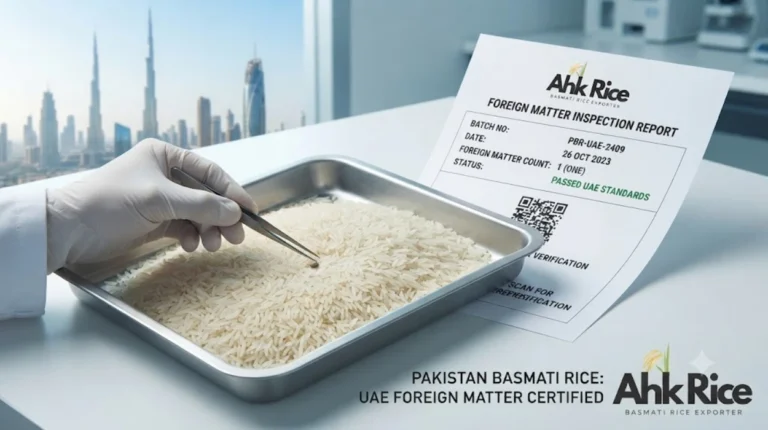
Quality verification begins before export loading. Laboratories inspect samples for moisture, purity, and contamination.
Common certifications include:
- Phytosanitary Certificate
- Fumigation Certificate
- Certificate of Origin
- Health Certificate
- ISO Standards
- HACCP Compliance
- Food Safety Management Systems
Import authorities use these documents to verify product compliance.
Quality programs require exporters to inspect, test, certify, and verify shipments before dispatch.
Certification standards support reliability, but misconceptions still affect buyer perceptions.
What Common Misconceptions Exist About Pakistani Super Kernel Steam Rice Supply?
The most common misconceptions involve seasonal availability, inconsistent quality, and export interruptions, yet established processing and storage systems support continuous supply.
Some buyers assume rice exports stop after harvest season. Modern storage facilities allow year-round shipment scheduling.
Some buyers believe all rice grades deliver identical quality. Grade specifications directly affect grain appearance, breakage levels, and cooking performance.
Some buyers assume steam rice and parboiled rice are identical. Steam processing and parboiling follow different procedures and produce different cooking characteristics.
Supply reliability depends on inventory planning, storage management, processing capacity, transportation networks, and export coordination. Pakistan’s rice industry maintains these systems through established commercial operations.
With misconceptions clarified, the reliability of Pakistani Super Kernel Steam Rice becomes easier to understand.
Pakistan provides a dependable Super Kernel Steam Rice supply through large-scale cultivation, structured processing systems, export-focused infrastructure, and recognized quality standards.
Super Kernel Steam Rice combines aromatic Basmati characteristics with the durability of steam processing. Farmers cultivate the crop in Punjab’s rice-growing regions. Processors follow controlled milling and grading procedures. Exporters dispatch shipments through established logistics networks.
International demand continues across the Middle East, Europe, Africa, North America, and Central Asia. Reliable cultivation, processing, certification, and export systems support consistent global availability.
Frequently Asked Questions
How long does Super Kernel Steam Rice remain suitable for storage?
Super Kernel Steam Rice typically maintains quality for 18 to 24 months when stored in dry warehouses below recommended humidity levels.
Which province grows most Super Kernel Steam Rice in Pakistan?
Punjab produces most Super Kernel Steam Rice because it contains major Basmati cultivation zones and extensive irrigation systems.
What makes steam rice different from white rice?
Steam rice undergoes controlled steaming before milling. This process strengthens kernels and reduces breakage.
Which countries import Super Kernel Steam Rice?
Saudi Arabia, UAE, Qatar, Oman, Iraq, the United Kingdom, Canada, and several African countries regularly import this rice.
What documents accompany rice exports?
Rice exports commonly include a phytosanitary certificate, fumigation certificate, certificate of origin, health certificate, and commercial shipping documents.