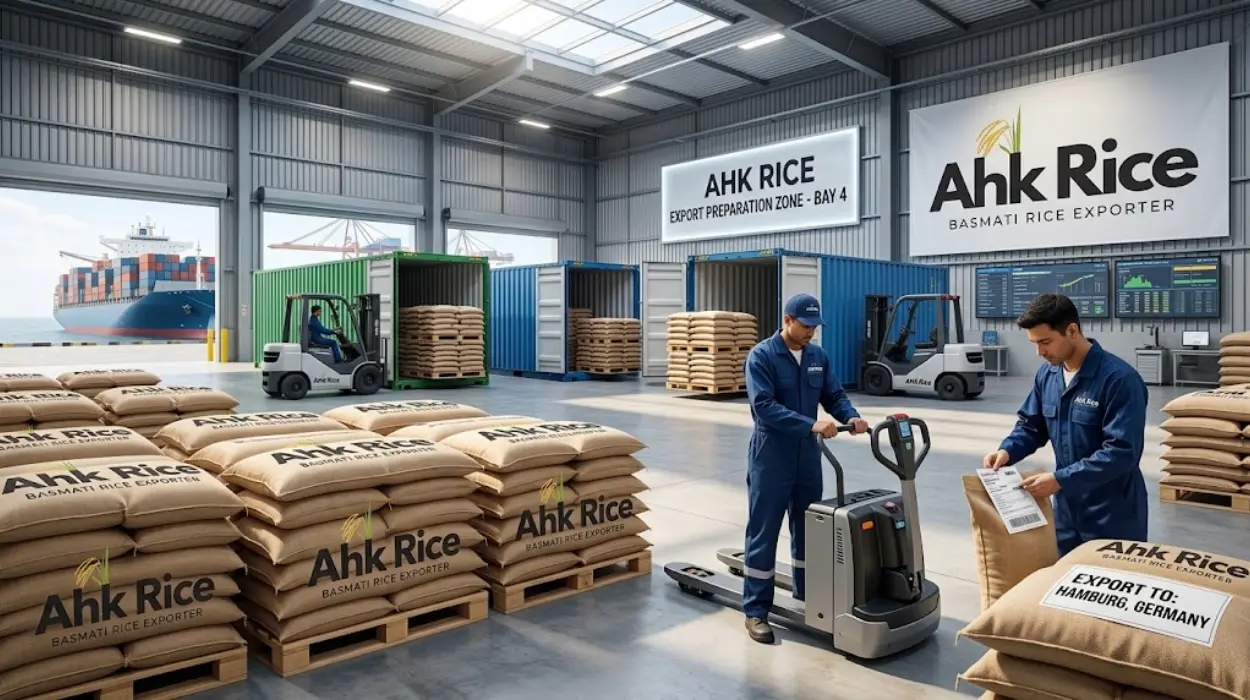
AHK Rice Prepares Export Shipments for Smooth Northern Ireland Delivery
AHK Rice prepares Northern Ireland rice shipments through controlled processing, inspection, documentation, container loading, and dispatch. Here is why: shipment preparation reduces specification errors, loading problems, documentation gaps, and avoidable delivery delays. Northern Ireland buyers need more than a competitive rice price. They need a shipment that matches the agreed grade, packaging, quality specification, and import documentation.
Shipment planning starts before the container reaches the port. Buyers should confirm the rice variety, processing grade, broken percentage, moisture requirement, packaging format, quantity, and destination. Northern Ireland imports also require attention to current UK customs and food-control requirements. Rice is classified under heading 1006 when it is husked, milled, polished, glazed, parboiled, or broken.
For background, buyers can review why shipment preparation matters for Northern Ireland food buyers before comparing supplier procedures. The decision becomes easier when preparation is treated as a controlled export process rather than a final loading activity.
What is the best solution for preparing a Northern Ireland rice shipment?
The best solution is a documented export workflow covering specification confirmation, sampling, laboratory checks, packaging, container inspection, loading, sealing, and document verification before dispatch.
Northern Ireland delivery begins with an agreed commercial specification. A buyer should receive the exact variety and grade before production is confirmed. Typical Pakistani Basmati options include 1121, Super Kernel, and 1509, with white, steam, sella, creamy sella, or brown processing depending on the order.
AHK Rice uses the product specification as the reference point for preparation. The agreed specification should identify grain type, processing method, broken percentage, moisture, foreign matter, packaging, quantity, and required documents.
How is the shipment prepared before container loading?
Shipment preparation should follow nine controlled stages: specification confirmation, paddy selection, milling, grading, sorting, testing, packaging, container inspection, and final loading.
- Confirm the specification against the buyer’s purchase order and agreed product sheet.
- Select the rice according to the approved variety and processing requirement.
- Mill the grain through the required dehusking, polishing, or parboiling process.
- Grade the rice according to length, broken percentage, appearance, and commercial specification.
- Sort the grain to remove foreign matter, discoloured grains, and other unwanted material.
- Test the rice against the agreed quality parameters before packing.
- Pack the rice into the agreed retail, wholesale, or foodservice packaging.
- Inspect the container for cleanliness, dryness, odour, damage, and suitability.
- Load and seal the container while recording the final shipment information.
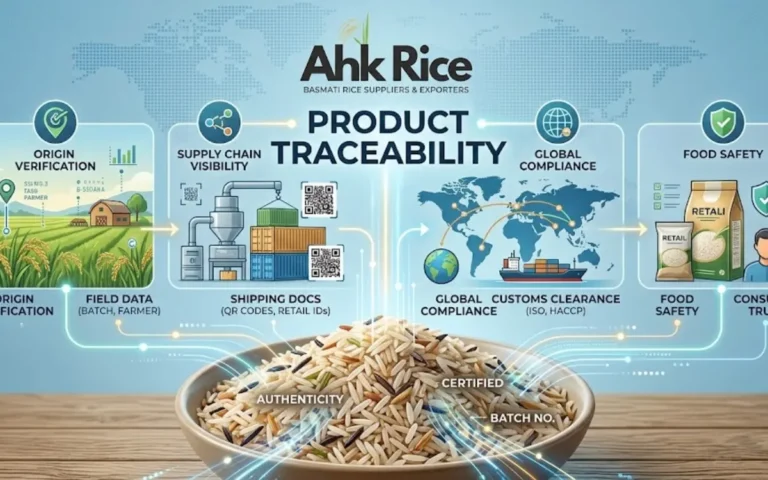
This sequence creates a traceable connection between the buyer’s specification and the physical cargo. It also gives the exporter defined checkpoints before the container leaves Pakistan.
Why should Northern Ireland buyers choose AHK Rice for export preparation?
AHK Rice combines Pakistani Basmati processing with shipment preparation, quality control, packaging coordination, and export documentation for commercial buyers.
AHK Rice provides an export-focused supply process rather than treating container loading as a separate final task. The service can be aligned with the buyer’s required variety, processing grade, packaging format, and destination requirements.
The main benefit is specification continuity. A buyer approves a defined product before shipment, and the same specification guides processing, grading, packing, inspection, and documentation.
Quality preparation also matters for Northern Ireland delivery because imported food must meet applicable UK requirements. UK guidance states that imported cereals from third countries must meet the same or equivalent food hygiene standards and procedures as food produced domestically.
Rice classification also matters for customs work. HMRC identifies milled, semi-milled, parboiled, broken, husked, polished, and glazed rice within heading 1006, with classification also considering grain size and length-to-width ratio.
The current UK rice regime can also involve import licensing and quota procedures. The 2026 RPA notices specifically identify rice import quotas and country-specific arrangements, including Pakistan-origin rice under relevant quota provisions.
That makes accurate commercial documents important. AHK Rice can prepare the shipment around the agreed commercial specification so the buyer and customs intermediary have consistent cargo information.
For buyers comparing preparation approaches, how Basmati rice containers are prepared before UK arrival provides the useful comparison stage before a purchasing decision.
What does the AHK Rice sample process include?

A practical sample process normally moves from buyer specification to sample approval, laboratory verification, commercial quotation, production confirmation, and container dispatch.
The first stage is specification collection. The buyer identifies the required variety, grade, packaging, quantity, destination, and preferred commercial term. A sample can then represent the exact product specification under consideration.
The second stage is sample preparation. AHK Rice prepares a representative rice sample against the requested grade. The buyer reviews grain appearance, cooking characteristics, broken percentage, colour, aroma, packaging presentation, and other agreed criteria.
The third stage is testing. Relevant quality parameters are checked against the agreed specification. The testing scope should be confirmed with the buyer because different markets and contracts can require different parameters.
The fourth stage is commercial confirmation. The buyer approves the sample and receives the commercial terms for the required quantity. Production then follows the approved specification rather than an informal product description.
What can a buyer expect to pay for samples?
Sample costs vary by product, packaging, courier destination, testing scope, and sample quantity; a working budget can range from US$25–US$150 before commercial freight.
A simple rice sample may involve approximately US$10–US$30 for preparation and packing. International courier charges can add approximately US$20–US$80. Additional laboratory testing can add approximately US$30–US$100 or more.
These figures are planning examples rather than fixed AHK Rice charges. Courier rates, laboratory requirements, sample weight, destination, and testing parameters change the final amount.
A commercial buyer should therefore request the actual sample cost before approval. The sample should also be labelled with the proposed variety and grade so the approved reference remains clear during production.
How long does shipping to Northern Ireland take?
A practical planning window is about 30–45 days from Pakistan dispatch to Northern Ireland delivery, depending on sailing schedules, transshipment, customs, and port conditions.
Sea freight is normally the practical route for commercial container quantities. The actual transit period depends on the selected Pakistani port, carrier, routing, transshipment arrangements, Northern Ireland port handling, customs clearance, and inland delivery.
A useful planning model is:
| Shipment stage | Indicative planning time |
|---|---|
| Specification and order confirmation | 1–3 days |
| Production and packing | 5–10 days |
| Container booking and loading | 2–5 days |
| Pakistan port handling | 2–5 days |
| Ocean transit and transshipment | 20–30 days |
| Northern Ireland clearance and delivery | 2–7 days |
| Indicative total | 30–45 days |
These are planning ranges, not guaranteed transit times. Vessel schedules can change after booking.
Northern Ireland has designated Points of Entry for agri-food goods, including Belfast Port, Larne Harbour, Warrenpoint Port, and Foyle Port.
The delivery plan should therefore be agreed around the actual destination and customs route. AHK Rice can use the buyer’s required delivery point when preparing the commercial shipment schedule.
What costs affect the final Northern Ireland rice shipment price?
The final delivered cost depends on rice grade, quantity, packaging, processing, inland haulage, ocean freight, insurance, customs charges, and destination handling.
Rice value is the largest variable. Premium 1121 or Super Kernel specifications can command different prices from standard commercial grades. Processing also changes cost because steam and sella production require additional processing stages.
Packaging creates another variable. Retail-ready printed bags normally cost more than standard bulk export packaging because artwork, printing, bag construction, and packing requirements differ.
Freight depends on container availability, route, carrier, season, fuel conditions, and destination. A Northern Ireland shipment can also involve port handling, customs clearance, documentation, and inland transport charges.
Import duty must be checked against the current tariff position and applicable quota or licensing arrangements. UK guidance states that agricultural food imports can be subject to customs duty and may require an import licence.
The 2026 rice quota notices show why buyers should verify the applicable arrangement before placing a shipment. Quota availability and application conditions can change during the year.
A buyer should therefore compare the landed cost, not only the FOB rice price. A lower product price can lose its advantage when freight, duty, clearance, or handling costs increase.
What results can Northern Ireland buyers expect?
A properly prepared shipment should provide specification consistency, cleaner documentation, controlled loading, predictable logistics planning, and fewer avoidable delivery issues.
Specification control gives the buyer a defined product reference. The approved sample and purchase specification establish what the production team must process and pack.
Container control reduces physical loading risks. The container should be clean, dry, structurally suitable, and free from contamination risks before loading.
Documentation control supports customs clearance. Commercial invoices, packing information, certificates, origin information, and other required documents should describe the shipment consistently.
Food import controls also make advance preparation important. UK guidance states that import procedures can include licensing and specific requirements depending on the agricultural product.
The buyer’s outcome is therefore broader than receiving rice. The commercial objective is receiving the correct rice, in the correct quantity, with consistent documentation, through a planned delivery route.
How should a buyer decide whether the shipment is ready?
Approve the shipment only after product specifications, sample acceptance, packaging, inspection, documentation, loading records, and delivery arrangements are aligned.
| Decision point | Buyer should confirm |
|---|---|
| Product | Variety and processing grade match the order |
| Quality | Agreed testing parameters are satisfied |
| Packaging | Bag size, material, artwork, and quantity are correct |
| Container | Clean, dry, sound, and suitable for food cargo |
| Documents | Commercial details match the physical shipment |
| Logistics | Port, route, destination, and delivery window are confirmed |
| Cost | Landed-cost assumptions are understood |
This framework prevents a common purchasing mistake: approving the rice while leaving logistics and documentation until the container is already being loaded.
How can Northern Ireland buyers get started with AHK Rice?
Start with the product specification, target quantity, packaging requirement, destination, and preferred delivery term, then approve the sample before commercial production.
AHK Rice can structure the quotation around the actual buying requirement. The buyer should provide the required Basmati variety, processing grade, packaging format, container quantity, delivery destination, and preferred Incoterm.
AHK Rice can then align the product specification with preparation and export planning. The sample stage provides the buyer with a physical reference before larger production begins.
AHK Rice also gives the buyer a clearer basis for comparing offers. Product price, processing, packaging, freight, documentation, and delivery should be assessed together.
AHK Rice shipment preparation is most valuable when the buyer needs a repeatable procurement process. The same specification can guide future orders and reduce ambiguity between purchasing, quality, logistics, and customs teams.
Northern Ireland buyers should also verify current import requirements before every shipment because tariff, quota, food-control, and customs procedures can change. The UK government’s 2026 rice notices demonstrate that rice quota arrangements are actively administered.
The decision is straightforward: choose a supplier that can connect product quality with export preparation, documentation, and delivery planning rather than quoting rice as an isolated commodity.
Frequently Asked Questions
How long does AHK Rice take to deliver rice to Northern Ireland?
A typical planning range is 30–45 days from Pakistan dispatch to Northern Ireland delivery.
The actual schedule depends on vessel availability and routing.
Port handling and customs can add additional time.
Inland delivery also depends on the final destination.
Buyers should confirm the shipment schedule before booking stock.
What Basmati grades can Northern Ireland buyers source?
AHK Rice supplies varieties including 1121, Super Kernel, and 1509.
Available processing options include white, steam, sella, and brown grades.
The final specification depends on the buyer’s commercial requirement.
Packaging can also be matched to retail or foodservice applications.
The approved sample should define the final product.
What documents are important for a rice shipment?
Commercial documentation should accurately identify the goods, quantity, origin, value, and shipment details.
Import licensing may apply to certain rice shipments.
Quota arrangements can also affect applicable import procedures.
Customs classification should match the actual rice product.
The buyer should verify current UK requirements before shipment.
How much does a rice sample cost?
A planning allowance of US$25–US$150 can cover basic sample preparation, courier, and selected testing.
The actual cost depends on destination and sample weight.
Laboratory analysis can increase the total.
Courier charges also vary by service and destination.
AHK Rice should confirm the actual sample cost before dispatch.
Why is container inspection important?
Container inspection helps protect packaged rice from avoidable contamination and loading problems.
The container should be clean and dry.
It should also be structurally suitable for food cargo.
Loading records should identify the shipment and seal information.
These checks create stronger control before ocean dispatch.
Is rice import licensing relevant to Northern Ireland?
Rice import requirements depend on the product, origin, quantity, tariff treatment, and current UK arrangements.
UK guidance identifies licensing requirements for certain agricultural imports.
Rice quota notices are issued during the year.
Pakistan-origin rice can be covered by specific quota provisions.
Buyers should verify the current position before placing orders.
What is the main advantage of AHK Rice shipment preparation?
The main advantage is connecting product specification, quality control, packing, loading, documentation, and logistics planning.
This gives buyers a clearer procurement workflow.
It also reduces ambiguity between approved samples and shipped goods.
Container preparation creates another quality checkpoint before dispatch.
The result is a more controlled commercial delivery process.