Buy Pakistan 1121 Basmati Rice with Controlled Moisture for Saudi Arabian Distribution
Saudi Arabian rice distributors cannot rely on price alone when selecting an export supplier. Moisture control directly affects storage stability, transportation safety, customer satisfaction, and retail shelf performance. Before evaluating suppliers, it helps to understand why export moisture standards matter in our guide on:
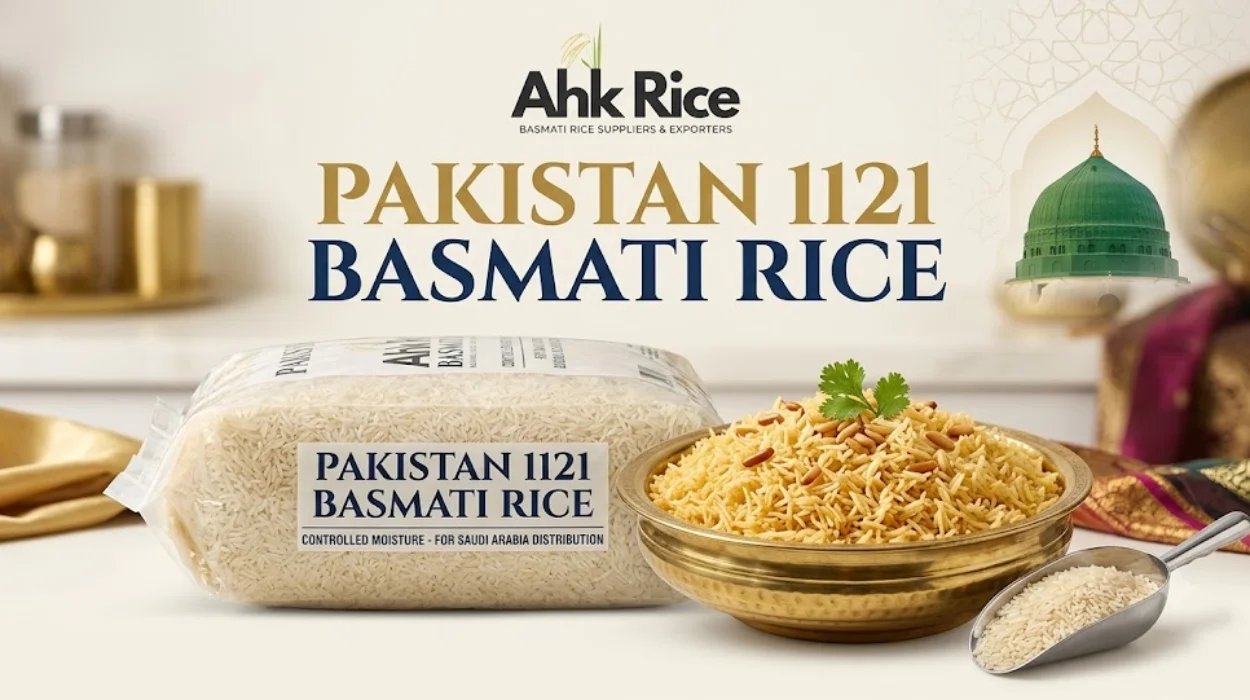
The ideal moisture content for Pakistan 1121 Basmati rice exported to Saudi Arabia. When commercial buyers are ready to source consistently, AHK Rice provides controlled-moisture Pakistan 1121 Basmati rice produced specifically for Saudi Arabian distribution networks.
Saudi Arabia remains one of the largest import markets for premium Pakistani Basmati rice in 2026. Importers supplying supermarkets, wholesalers, catering companies, hotels, restaurants, and food service distributors require stable grain quality that performs consistently after weeks of ocean transportation and extended warehouse storage. Moisture variation creates unnecessary commercial risks, making professional moisture management an essential export specification rather than an optional quality feature.
What is the best solution for buying Pakistan 1121 Basmati rice with controlled moisture for Saudi Arabian distribution?
The most reliable solution is purchasing Pakistan 1121 Basmati rice from an exporter that measures, controls, documents, and verifies moisture throughout processing, packing, container loading, and shipment. Consistent moisture specifications reduce storage losses, preserve grain quality, improve customer satisfaction, and simplify commercial distribution across Saudi Arabia.
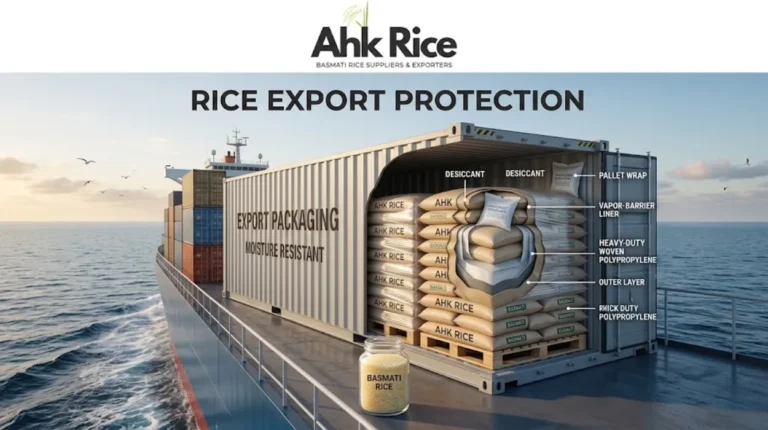
Controlled moisture is one of the most important technical specifications for commercial rice imports. Excess moisture increases the possibility of condensation during sea transport, encourages quality deterioration during long warehouse storage, and may reduce milling appearance. Moisture that is too low may increase broken grain percentages during handling.
AHK Rice follows controlled processing procedures that keep export moisture within agreed contractual specifications suitable for international shipping. Moisture is verified using calibrated digital testing equipment before packing and before containers are sealed.
Saudi distributors also evaluate processing methods before placing purchase orders. Buyers comparing steam and white rice storage performance should also review our guide explaining
The objective is not simply exporting rice. The objective is delivering rice that reaches Saudi Arabia in the same commercial condition in which it left Pakistan.
Why choose AHK Rice for controlled-moisture Pakistan 1121 Basmati exports?

AHK Rice combines quality control, export documentation, laboratory verification, consistent processing, flexible packaging, and dependable shipping schedules. Commercial buyers receive traceable export specifications designed specifically for Saudi Arabian import requirements while maintaining consistent product quality across repeat shipments throughout the year.
Choosing an exporter means evaluating far more than product availability.
AHK Rice focuses on maintaining consistency from procurement through shipment. Every production batch follows documented inspection procedures covering moisture, purity, grain length, broken percentage, foreign matter, and packaging quality.
The AHK Rice export program includes:
- Controlled moisture verification
- Multiple quality inspections
- Food-grade packaging
- Export documentation
- Container loading supervision
- Batch traceability
- Commercial specification matching
- Flexible private label options
Saudi distributors often manage multiple warehouse locations and regional retail networks. Consistent specifications simplify inventory management because every shipment behaves similarly during storage and distribution.
Another advantage of AHK Rice is flexibility. Buyers may require different packaging depending on their sales channels.
Available packaging commonly includes:
- 1 kg
- 2 kg
- 5 kg
- 10 kg
- 20 kg
- 25 kg
- 40 kg
- 50 kg PP bags
- Non-woven bags
- BOPP laminated bags
- Private label packaging
Each packaging option is selected according to market positioning and customer preferences.
What results can Saudi Arabian distributors expect?
Importers purchasing professionally controlled-moisture rice generally experience improved storage performance, reduced quality complaints, better product presentation, stronger consumer confidence, and more predictable inventory management across wholesale, retail, hospitality, and food service distribution channels throughout Saudi Arabia.
Commercial performance depends on consistency.
Proper moisture control contributes to:
- Better grain appearance
- Reduced storage risks
- Improved cooking consistency
- Stable aroma retention
- Lower handling losses
- Better shelf presentation
- Higher customer satisfaction
These outcomes directly affect profitability.
For example, a supermarket chain distributing premium 1121 Basmati across several cities benefits when every shipment delivers identical cooking performance and visual quality. Uniform specifications reduce customer complaints while strengthening brand reputation.
Similarly, hospitality distributors supplying hotels and restaurants require consistent grain expansion and cooking behavior. Moisture consistency helps maintain those expectations across repeated orders.
AHK Rice works with buyers to establish contractual specifications before production begins instead of adjusting quality after processing.
How does the sampling process work before placing a commercial order?
Professional sampling allows buyers to verify quality before committing to container purchases. Samples include physical inspection, specification confirmation, cooking evaluation, and laboratory verification where required, giving importers confidence before production and shipment begin.
Sampling reduces commercial uncertainty.
The standard export sampling process generally includes:
Step 1: Requirement discussion
The buyer specifies:
- Rice variety
- Processing type
- Grain length
- Moisture target
- Packaging
- Destination port
- Quantity
Step 2: Sample preparation
AHK Rice prepares representative samples from current production matching the requested specifications whenever possible.
Step 3: Courier dispatch
Samples are normally shipped using international courier services.
Typical sample weight:
- 500 g
- 1 kg
- 2 kg
Step 4: Buyer evaluation
Importers typically inspect:
- Grain length
- Aroma
- Colour
- Moisture
- Broken percentage
- Cooking quality
- Elongation
- Taste
Step 5: Commercial confirmation
Once specifications are approved, production scheduling begins according to the agreed contract.
Sample costs
Although policies differ by exporter, commercial practice during 2026 generally includes:
- Product sample: often provided free for qualified buyers.
- International courier charges: usually paid by the buyer or adjusted in the first commercial order.
- Laboratory testing (if requested): charged separately according to the selected laboratory.
For large commercial buyers placing container orders, many exporters credit sampling costs against the first shipment.
What factors affect the final price?
The final export price depends on rice grade, processing method, crop availability, packaging, quantity, certification requirements, freight conditions, currency movements, and destination port. Buyers comparing quotations should evaluate total commercial value rather than focusing only on the lowest unit price.
Rice pricing changes throughout the export season.
Major pricing factors include:
Rice variety
Premium export grades command higher prices than standard commercial grades.
Processing method
Steam, white, and sella processing involve different production costs.
Moisture specification
Controlled moisture requires additional monitoring and quality control procedures.
Packaging
Retail packaging costs more than bulk export bags.
Order quantity
Full container loads generally provide better pricing than smaller shipments.
Shipping destination
Freight rates differ between:
- Jeddah Islamic Port
- King Abdulaziz Port (Dammam)
- Yanbu Commercial Port
Certification
Some buyers request additional inspection or certification depending on commercial requirements.
Market conditions
Exchange rates, freight availability, seasonal demand, and crop supply all influence export quotations.
Rather than selecting the cheapest quotation, experienced Saudi distributors compare specification consistency, documentation quality, exporter reliability, and shipment performance.
How long does shipping take from Pakistan to Saudi Arabia?
Shipping schedules vary by destination port, vessel availability, customs processing, and carrier routing. Buyers should plan procurement using realistic transit estimates rather than minimum advertised shipping times to maintain uninterrupted inventory throughout their distribution network.
Typical 2026 transit estimates after vessel departure are:
| Saudi Destination | Typical Sea Transit |
|---|---|
| Jeddah | 10–15 days |
| Dammam | 12–18 days |
| Riyadh (via Dammam + inland transport) | 15–22 days |
| Yanbu | 12–17 days |
Production lead time before shipment generally ranges from 10 to 20 days, depending on:
- Order quantity
- Packaging requirements
- Printing approval
- Seasonal demand
- Container availability
AHK Rice provides shipment schedules before production begins so distributors can coordinate warehouse planning and inventory replenishment.
How does AHK Rice ensure quality before export?
Reliable exporters verify product quality at multiple stages rather than inspecting only the finished goods. Continuous monitoring improves consistency, reduces shipment risk, and ensures contractual specifications remain accurate throughout procurement, processing, packing, loading, and export documentation.
Quality assurance typically includes:
- Paddy selection
- Cleaning
- Milling
- Colour sorting
- Grading
- Moisture testing
- Metal detection
- Packaging inspection
- Container inspection
- Final loading verification
Every stage contributes to maintaining commercial export quality.
AHK Rice also provides documentation supporting international trade requirements according to buyer specifications and destination market needs.
How can Saudi Arabian buyers start importing from AHK Rice?
The purchasing process begins with specification discussion, followed by sampling, quotation approval, production scheduling, quality verification, shipment preparation, and delivery. Clear communication during every stage reduces commercial risk while supporting long-term supply relationships between exporter and importer.
The procurement process is straightforward.
First, define your product specifications, expected quantity, destination port, packaging, and delivery schedule.
Next, evaluate the sample and technical specifications.
After commercial approval, AHK Rice prepares production according to the agreed export contract.
Quality inspections continue throughout processing until containers are loaded and export documentation is completed.
Once the shipment departs, buyers receive the required commercial documents for customs clearance and cargo tracking.
Saudi Arabian distributors increasingly prioritize exporters capable of supplying consistent quality over multiple seasons rather than searching for the lowest short-term price. Controlled moisture, verified specifications, dependable logistics, and transparent communication help reduce operational risks while improving customer satisfaction.
Frequently Asked Questions
How does controlled moisture improve Pakistan 1121 Basmati rice during shipping to Saudi Arabia?
Controlled moisture helps preserve grain quality during sea transport by reducing the risk of condensation, maintaining appearance, minimizing breakage, and supporting longer warehouse storage after arrival.
Why is Pakistan 1121 Basmati rice preferred in the Saudi Arabian market?
Pakistan 1121 Basmati rice is valued for its extra-long grains, distinctive aroma, excellent cooking elongation, and consistent quality, making it popular in retail, hospitality, and food service sectors.
How long does it take to ship Pakistan 1121 Basmati rice from Pakistan to Saudi Arabia?
Sea freight typically takes 10–18 days depending on the destination port, while production and export preparation generally require an additional 10–20 days before shipment.
Can I request a sample before placing a bulk order?
Yes. Most exporters, including AHK Rice, provide product samples so buyers can evaluate grain quality, moisture, cooking performance, and packaging before confirming a commercial order.
What packaging options are available for Saudi Arabian distributors?
Exporters commonly offer 1 kg, 2 kg, 5 kg, 10 kg, 20 kg, 25 kg, 40 kg, and 50 kg packaging, along with private-label, BOPP laminated, and non-woven bag options.
What factors affect the export price of Pakistan 1121 Basmati rice?
Pricing depends on rice grade, processing method, moisture specification, packaging type, order quantity, certifications, freight costs, and seasonal market conditions.
What quality checks are performed before export?
Quality inspections typically include moisture testing, grain length verification, broken percentage analysis, purity checks, color sorting, packaging inspection, and final container loading verification.
Why should Saudi Arabian importers choose AHK Rice?
AHK Rice offers controlled moisture processing, consistent quality standards, flexible packaging, export documentation, reliable shipping schedules, and dedicated support for long-term commercial buyers.