Why Do Premium Saudi Arabian Rice Brands Prefer Pakistan Basmati Rice with Lower Moisture Levels?
Premium Saudi Arabian rice brands prefer Pakistan Basmati rice with lower moisture levels because stable moisture protects grain quality during international shipping, extends shelf life, reduces storage risks, preserves aroma, and delivers consistent cooking performance that meets commercial food distribution standards in 2026.
Pakistan Basmati rice is one of the world’s most recognized aromatic rice categories. It is cultivated primarily in Punjab, where fertile alluvial soil, seasonal rainfall, and irrigation from the Indus River system create favorable growing conditions. Saudi Arabia remains one of the largest import markets for Pakistani Basmati rice because consumers value long grains, natural fragrance, and consistent cooking quality.
Moisture content has become one of the most important quality indicators in international rice trade. Importers, distributors, supermarkets, and private-label brands evaluate moisture before approving shipments because it directly influences storage stability, grain appearance, milling performance, and cooking consistency. Export specifications used throughout 2026 continue to emphasize moisture control as part of quality assurance programs.
Understanding why lower moisture matters requires examining rice production from cultivation through export, along with the standards that international buyers expect.
What Is Lower Moisture Pakistan Basmati Rice?
Lower moisture Pakistan Basmati rice contains a controlled amount of internal water that remains within internationally accepted export specifications. Stable moisture improves storage life, reduces quality deterioration during transportation, preserves grain strength, and maintains the natural aroma expected from premium Basmati rice varieties.
Moisture content refers to the percentage of water present inside a rice grain. Laboratories determine this value using calibrated moisture analyzers before packaging and shipment.
Export-quality Pakistani Basmati rice generally follows moisture specifications that remain at or below internationally accepted commercial limits. Maintaining this range protects rice during transportation from Pakistan to Saudi Arabia, where shipments often spend several weeks moving through ports, shipping containers, customs procedures, and warehouse storage.
Lower moisture does not mean dry or damaged rice. It means the grain contains enough internal moisture to maintain cooking quality while avoiding excessive water that increases storage risks.
Pakistan produces several major Basmati varieties, including:
1121 Basmati Rice
Known for exceptionally long grain length and high elongation after cooking.
Super Kernel Basmati Rice
Recognized for balanced aroma, slender grains, and traditional cooking characteristics.
1509 Basmati Rice
Valued for early maturity, long grains, and competitive commercial performance.
Each variety follows moisture specifications before export according to customer requirements and importing market standards.
How Does Moisture Control Work During Pakistan Basmati Rice Processing?
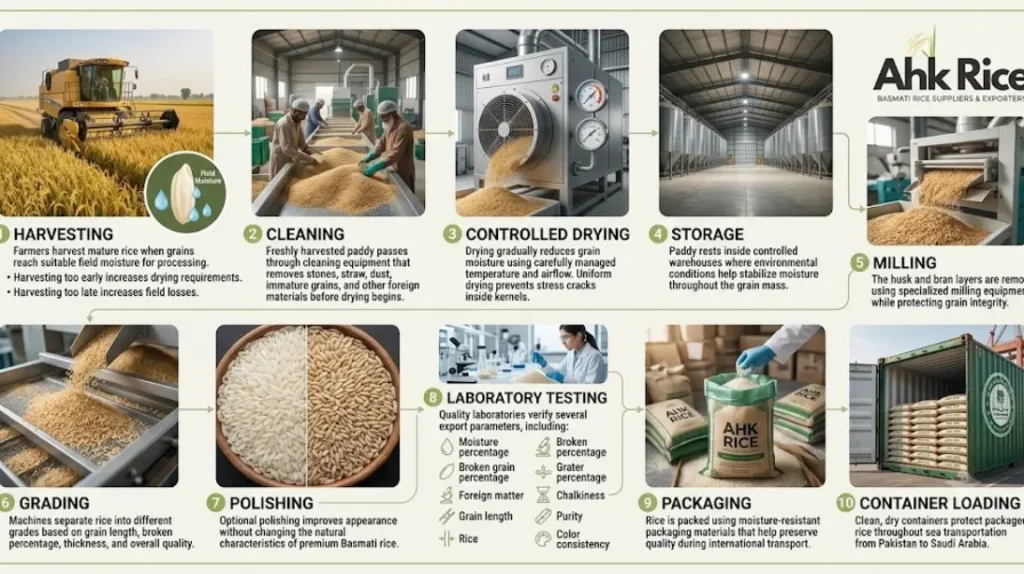
Moisture management begins immediately after harvesting and continues through drying, milling, grading, polishing, packaging, storage, laboratory testing, and container loading. Every production stage protects grain quality while maintaining moisture within export specifications for international food markets.
Rice moisture changes throughout production. Controlling it requires several connected processing stages instead of a single drying operation.
Harvesting
Farmers harvest mature rice when grains reach suitable field moisture for processing. Harvesting too early increases drying requirements. Harvesting too late increases field losses.
Cleaning
Freshly harvested paddy passes through cleaning equipment that removes stones, straw, dust, immature grains, and other foreign materials before drying begins.
Controlled Drying
Drying gradually reduces grain moisture using carefully managed temperature and airflow. Uniform drying prevents stress cracks inside kernels.
Storage
Paddy rests inside controlled warehouses where environmental conditions help stabilize moisture throughout the grain mass.
Milling
The husk and bran layers are removed using specialized milling equipment while protecting grain integrity.
Grading
Machines separate rice into different grades based on grain length, broken percentage, thickness, and overall quality.
Polishing
Optional polishing improves appearance without changing the natural characteristics of premium Basmati rice.
Laboratory Testing
Quality laboratories verify several export parameters, including:
- Moisture percentage
- Broken grain percentage
- Foreign matter
- Chalkiness
- Grain length
- Purity
- Color consistency
Packaging
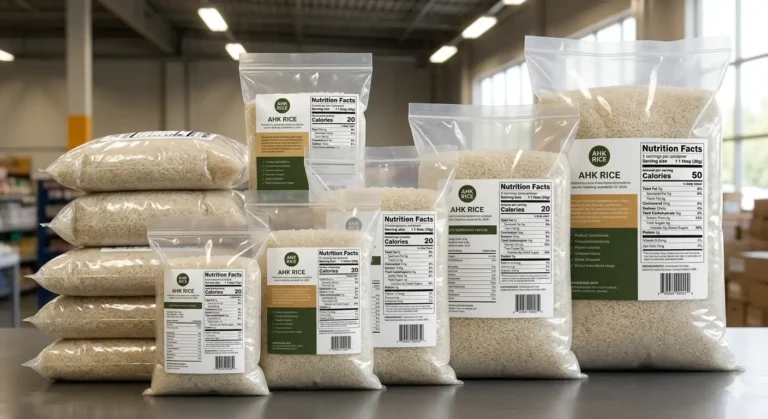
Rice is packed using moisture-resistant packaging materials that help preserve quality during international transport.
Container Loading
Clean, dry containers protect packaged rice throughout sea transportation from Pakistan to Saudi Arabia.
What Are the Key Components That Keep Moisture Levels Stable?
Stable moisture depends on agricultural practices, drying technology, warehouse management, laboratory verification, packaging quality, and container conditions. Each component contributes to preserving grain quality from cultivation until delivery in international export markets.
Moisture stability is not created by one machine. It results from an integrated production system.
Climate
Punjab experiences warm growing seasons followed by harvest conditions suitable for controlled drying.
Soil
Alluvial soil supports healthy grain development and uniform maturation across production fields.
Drying Equipment
Modern drying systems reduce moisture evenly instead of exposing rice to excessive heat.
Storage Warehouses
Controlled warehouses reduce exposure to environmental humidity before export.
Laboratory Equipment
Digital moisture analyzers produce consistent measurements according to recognized testing procedures.
Packaging Materials
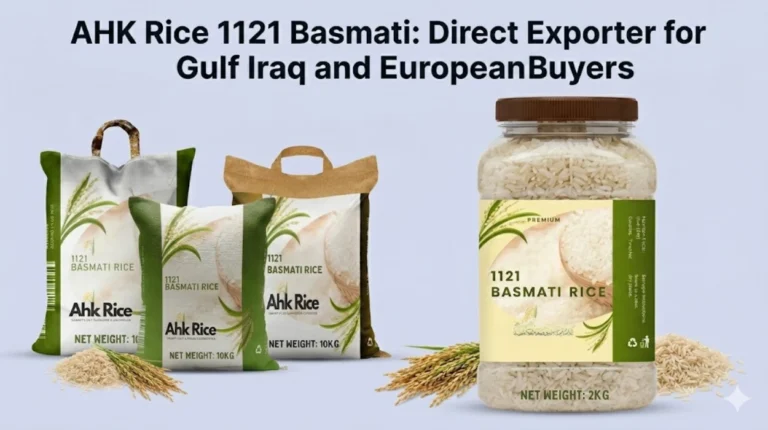
Examples include woven polypropylene bags, laminated bags, paper sacks, and customized retail packaging.
These materials reduce external moisture exposure during transportation.
Shipping Containers
Dry containers with proper ventilation reduce condensation during long-distance maritime transport.
Why Do Premium Saudi Arabian Rice Brands Value Lower Moisture Levels?
Premium Saudi Arabian rice brands prioritize lower moisture because stable grains maintain appearance, aroma, shelf life, cooking consistency, packaging quality, and consumer satisfaction throughout distribution, warehousing, retail sales, and food service operations across the Kingdom.
Saudi Arabia imports large quantities of Pakistani Basmati rice every year. Imported rice passes through multiple handling stages before reaching consumers.
These stages include:
- Port unloading
- Customs inspection
- Regional warehouses
- Wholesale distribution
- Retail stores
- Restaurants
- Hotels
- Catering companies
Each stage increases storage duration.
Stable moisture helps maintain product quality throughout this supply chain.
Premium brands also focus on customer expectations.
Consumers expect:
- Long grains
- Distinct aroma
- Uniform cooking
- Clean appearance
- Minimal broken kernels
- Consistent texture
Lower moisture supports these quality characteristics throughout commercial distribution.
What Benefits Does Lower Moisture Provide Throughout the Supply Chain?
Lower moisture supports longer storage stability, stronger grain structure, improved milling quality, reliable packaging performance, consistent cooking characteristics, reduced quality deterioration, and dependable commercial inventory management across domestic and international rice supply chains.
The benefits extend beyond transportation.
Better Storage Stability
Lower moisture slows biological activity that shortens storage life.
Strong Grain Structure
Properly stabilized grains resist handling damage during packaging and transport.
Better Appearance
Uniform moisture helps maintain cleaner grain color throughout storage.
Consistent Cooking
Consumers receive predictable cooking performance from batch to batch.
Improved Packaging
Moisture-controlled rice reduces condensation inside packaged products.
Longer Shelf Life
Stable moisture helps preserve product quality during extended commercial storage.
These advantages become increasingly important for supermarkets, wholesalers, food manufacturers, and hospitality businesses.
Where Is Lower Moisture Pakistan Basmati Rice Commonly Used?
Lower moisture Pakistan Basmati rice serves supermarkets, premium retail brands, restaurants, hotels, catering companies, food manufacturers, wholesale distributors, and private-label packaging businesses that require consistent quality throughout large commercial supply chains.
Saudi Arabia imports rice for many different applications.
Retail Brands
Packaged consumer products require consistent appearance across thousands of bags.
Hotels
Luxury hotels prepare large volumes of rice while maintaining uniform presentation.
Restaurants
Traditional restaurants depend on consistent grain expansion and aroma.
Catering Companies
Large-scale catering operations prepare hundreds or thousands of meals daily.
Food Manufacturers
Packaged ready-meal producers require stable raw materials for standardized production.
Wholesale Distribution
Distributors store inventory before supplying retailers across multiple regions.
Each application values predictable quality because consistency supports customer satisfaction.
What Certifications Support Pakistan Basmati Rice Exports?
International rice exports follow recognized quality management, food safety, phytosanitary, laboratory testing, and regulatory certification systems that verify compliance with importing country requirements and international commercial trade standards throughout the export process.
Certification demonstrates compliance with documented standards rather than product marketing claims.
Common certifications and regulatory documents include:
ISO Quality Management
Quality management systems standardize production procedures.
HACCP
Hazard Analysis and Critical Control Points identifies food safety risks and establishes preventive controls.
Phytosanitary Certificate
Government authorities verify plant health requirements before export.
Certificate of Origin
Confirms the country where the rice was produced.
Fumigation Certificate
Documents pest control treatment when required by importing regulations.
Laboratory Test Reports
Independent testing verifies quality parameters including moisture, broken percentage, purity, and foreign matter.
Saudi Arabian import regulations continue requiring documentation that supports food safety and product compliance during international trade.
What Common Misconceptions Exist About Lower Moisture Basmati Rice?
Several misconceptions confuse buyers about moisture levels. Lower moisture does not reduce cooking quality, eliminate aroma, or decrease grain performance. Controlled moisture preserves product stability while maintaining the characteristics expected from premium Pakistan Basmati rice.
One common misconception states that lower moisture produces dry rice.
This is incorrect.
Controlled moisture remains within specifications designed for storage and cooking performance.
Another misconception assumes all Basmati varieties use identical moisture standards.
Different customer specifications, processing methods, and commercial contracts define acceptable export parameters while remaining within recognized quality requirements.
Some buyers also believe aroma depends only on moisture.
Aroma develops from several factors including:
- Variety genetics
- Growing environment
- Harvest maturity
- Storage
- Processing
- Aging practices
Moisture preservation helps maintain aroma but does not create it independently.
Another misunderstanding assumes moisture testing occurs only before export.
Professional quality management includes testing throughout processing to monitor consistency from drying through final packaging.
Why Is Understanding Moisture Important Before Comparing Different Basmati Varieties?
Understanding moisture establishes the foundation for comparing Pakistan 1121, 1509, and Super Kernel Basmati rice because each variety combines different grain characteristics with moisture specifications that influence storage, transportation, cooking quality, and commercial performance.
Choosing between Basmati varieties involves more than grain length.
Importers also evaluate:
- Moisture
- Grain strength
- Aroma
- Cooking expansion
- Market preference
- Storage performance
- Commercial application
Understanding moisture first allows buyers to interpret technical specifications more accurately.
Readers interested in the detailed differences between Pakistan 1121, 1509, and Super Kernel varieties should continue with the companion guide on:
How moisture levels differ across the three major Basmati rice varieties supplied to Saudi Arabia, where each specification is compared side by side.
Frequently Asked Questions
Why do Saudi Arabian premium rice brands check moisture levels before importing Basmati rice?
Premium Saudi Arabian rice brands check moisture levels because controlled moisture helps maintain grain quality, extends shelf life, preserves aroma, and supports consistent cooking performance during storage and transportation.
What is the ideal moisture content for Pakistan Basmati rice exports?
Export-quality Pakistan Basmati rice is generally prepared within internationally accepted commercial moisture specifications to ensure safe transportation, storage stability, and product quality.
How is moisture measured in Pakistan Basmati rice?
Moisture is measured using calibrated digital moisture analyzers in quality control laboratories before packaging and shipment to verify compliance with export specifications.
Does lower moisture reduce the cooking quality of Basmati rice?
No. Properly controlled moisture preserves grain quality and helps maintain the cooking characteristics, texture, and aroma expected from premium Pakistan Basmati rice.
Which Pakistan Basmati rice varieties are commonly exported to Saudi Arabia?
The most commonly exported varieties include 1121 Basmati Rice, Super Kernel Basmati Rice, and 1509 Basmati Rice, each serving different commercial and consumer preferences.
Why is moisture control important during international shipping?
Moisture control reduces the risk of quality deterioration, protects grain appearance, minimizes storage issues, and helps maintain product consistency throughout the export supply chain.
What certifications support Pakistan Basmati rice exports?
Common export documentation includes ISO certification, HACCP, Phytosanitary Certificate, Certificate of Origin, Fumigation Certificate, and laboratory quality test reports.
Which industries in Saudi Arabia use lower moisture Pakistan Basmati rice?
Lower moisture Pakistan Basmati rice is widely used by supermarkets, hotels, restaurants, catering companies, wholesale distributors, food manufacturers, and private-label brands.
Does packaging help maintain rice moisture levels?
Yes. Moisture-resistant packaging protects rice from environmental humidity during transportation and storage, helping preserve its quality until it reaches the customer.
Why should importers understand moisture before comparing different Basmati varieties?
Understanding moisture helps importers accurately compare 1121, 1509, and Super Kernel Basmati rice based on storage performance, grain quality, cooking consistency, and commercial suitability.