Why Do Rice Buyers Monitor Broken Grain Percentages Before Purchasing?
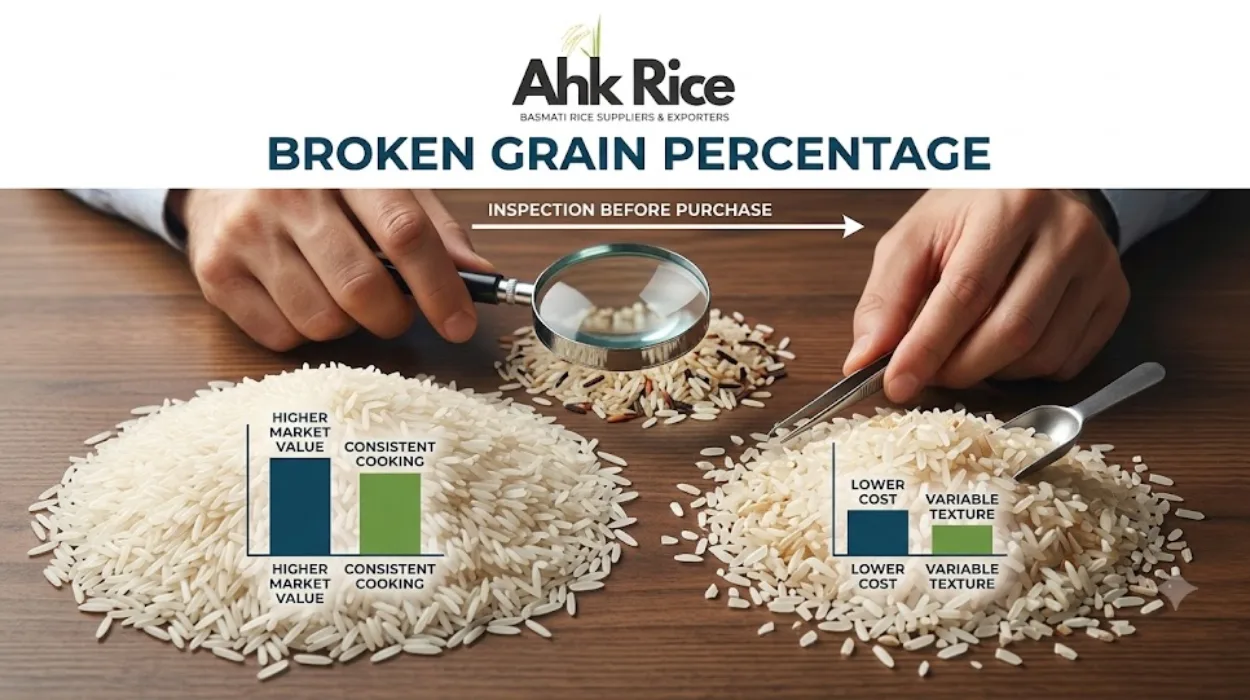
Broken grain percentage is one of the first quality specifications evaluated before purchasing rice because it directly measures the proportion of fractured kernels within a batch. In 2026, importers, wholesalers, food manufacturers, retailers, restaurant distributors, and government procurement agencies use broken percentage to estimate commercial value, milling efficiency, visual quality, cooking consistency, and compliance with international purchase specifications. Every export contract defines an acceptable broken limit because the percentage influences pricing, product classification, packaging decisions, and buyer expectations.
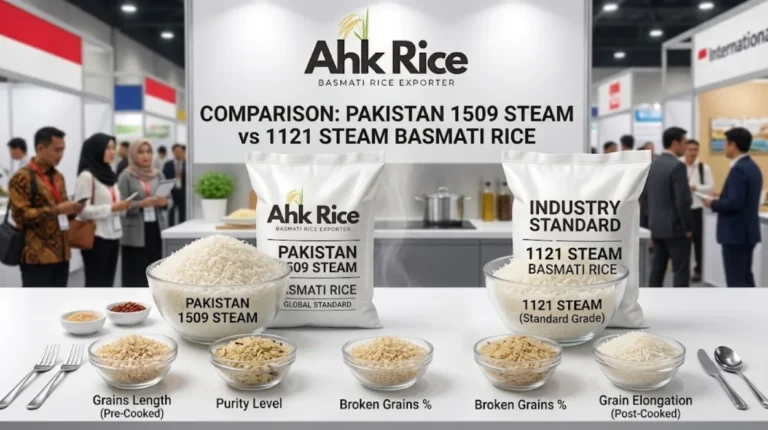
Pakistani Basmati rice remains one of the most traded premium rice categories in international markets due to its naturally extra-long grains, aroma, elongation after cooking, and export-grade processing. Buyers sourcing varieties such as 1121 Basmati, Super Kernel Basmati, and 1509 Basmati evaluate broken grain percentage alongside moisture, purity, grain length, foreign matter, chalkiness, and damaged kernels before approving shipments.
Understanding broken grain percentage helps buyers compare suppliers using measurable standards instead of relying on appearance alone. Learning how export grades are categorized according to broken percentages also supports more informed procurement decisions. A detailed explanation of export grading standards is available in our guide explaining:
How export Basmati grades are separated according to broken grain classifications.
What Is Broken Grain Percentage in Rice?
Broken grain percentage measures the weight of fractured rice kernels compared with the total weight of a rice sample. Export laboratories calculate this percentage through standardized grading procedures because it determines quality classification, commercial value, processing efficiency, and market suitability across international rice trade.
Broken rice consists of kernels shorter than the minimum whole-grain specification established by grading standards. The grains remain edible because only their physical structure changes during harvesting, drying, milling, polishing, transportation, or handling.
Broken percentage is expressed as a percentage of total sample weight. For example, a 100-kilogram lot containing 5 kilograms of broken kernels has a broken percentage of 5%.
International buyers specify maximum allowable broken percentages in purchase contracts. Common specifications include 1%, 2%, 5%, 10%, 15%, and 25%, depending on the product category and target market.
Different rice varieties maintain different market expectations. Premium Pakistani 1121 Basmati generally requires lower broken percentages than medium-grade commercial rice because buyers expect superior visual presentation and higher whole-grain recovery.
How Does Broken Grain Percentage Work During Rice Quality Evaluation?
Broken grain percentage works through standardized sampling, laboratory separation, weighing, and calculation procedures. Every export inspection follows measurable grading steps because accurate classification supports fair pricing, consistent contracts, international compliance, and reliable quality comparisons between suppliers and shipments.
Quality inspection begins with representative sampling.
Inspectors collect rice samples from multiple bags or different container positions. Sampling from different locations prevents one section of the shipment from representing the entire lot.
The sample enters laboratory grading.
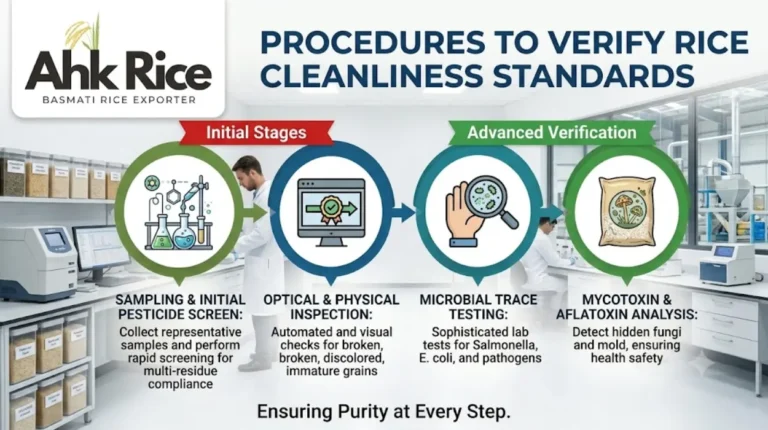
Technicians separate whole kernels from broken kernels using grading trays, calibrated sieves, optical sorting equipment, and manual verification.
Each category receives an individual weight.
The broken weight is divided by the total sample weight and multiplied by 100.
For example:
- Total sample weight: 1,000 grams
- Broken kernels: 20 grams
- Broken percentage: 2%
This numerical value becomes part of the export quality report together with moisture content, grain length, damaged kernels, foreign matter, immature grains, and purity measurements.
Standardized testing allows buyers in different countries to compare shipments using identical measurement methods instead of visual estimates.
What Causes Rice Kernels to Break During Processing?
Rice kernels break because mechanical pressure, internal grain stress, excessive drying, improper moisture management, milling force, transportation impact, and handling practices weaken grain structure. Every production stage influences final whole-grain recovery and export quality according to measurable processing conditions.
Harvest timing influences grain strength.
Rice harvested before physiological maturity contains weaker kernels that fracture more easily during milling.
Drying plays another important role.
Rapid moisture reduction creates internal stress inside kernels. Controlled drying reduces cracking before milling begins.
Storage conditions also affect grain durability.
Stable moisture levels help preserve kernel strength before processing.
The milling stage generates the highest mechanical pressure.
Rubber rollers remove husk layers.
Whitener machines remove bran.
Polishing machines improve appearance.
Incorrect machine calibration increases kernel breakage during these operations.
Transportation also contributes to physical damage.
Repeated loading, unloading, conveyor movement, and container vibration increase broken grain percentages when packaging does not provide sufficient protection.
What Components Influence Broken Grain Percentages?
Broken grain percentage depends on genetics, cultivation practices, harvesting, drying, storage, milling equipment, polishing settings, grading technology, packaging, transportation, and inspection accuracy. Each production component contributes directly to whole-kernel preservation throughout the international export supply chain.
Rice Variety
Different rice varieties possess different kernel structures.
Examples include 1121 Basmati, Super Kernel Basmati, 1509 Basmati, IRRI-6, and PK-386.
Extra-long Basmati grains require careful handling because their length increases mechanical stress during processing.
Harvest Management
Harvesting at the correct moisture level improves milling performance.
Delayed harvesting increases field exposure.
Premature harvesting reduces kernel strength.
Drying Systems
Mechanical dryers and controlled-air drying systems reduce moisture gradually.
Uniform drying minimizes internal cracking.
Milling Equipment
Modern processing plants use precision rollers, optical sorters, graders, polishers, and computerized control systems.
Proper machine adjustment preserves more whole kernels.
Packaging
Packaging protects finished rice during logistics.
Examples include laminated woven polypropylene bags, paper bags with liners, vacuum packaging, and retail consumer packs.
Strong packaging reduces physical impact during shipment.
Why Does Broken Grain Percentage Matter to Rice Buyers?
Broken grain percentage matters because it influences product appearance, cooking consistency, retail presentation, pricing, customer satisfaction, inventory value, export grading, and purchasing confidence. Buyers use measurable broken limits to match product specifications with commercial market requirements and consumer expectations.
Visual appearance affects purchasing decisions.
Retail consumers often associate longer whole grains with premium quality.
Restaurants evaluate serving presentation.
Whole kernels create more attractive rice dishes.
Food manufacturers calculate ingredient consistency.
Uniform grain size supports standardized production.
Importers compare suppliers objectively.
A shipment containing 2% broken rice represents a different commercial category than one containing 15% broken rice.
Government procurement agencies also establish quality specifications.
Public food programs often define maximum broken percentages before accepting imported rice.
Insurance claims become easier to evaluate because inspection reports provide measurable quality evidence before shipment.
Where Are Different Broken Grain Percentages Used?
Different broken grain percentages serve different commercial applications because every industry balances visual quality, processing requirements, product performance, and budget objectives. Export specifications align broken limits with the intended market rather than applying one universal standard to every shipment.
Retail supermarkets generally prefer lower broken percentages because consumers inspect grain appearance before purchase.
Restaurant chains evaluate presentation and cooked grain integrity.
Luxury hospitality businesses frequently select premium whole-grain specifications.
Food manufacturers often choose grades that balance processing efficiency with production costs.
Examples include frozen meals, ready-to-eat rice products, seasoned rice mixes, and canned rice dishes.
Rice flour producers intentionally purchase higher broken percentages because grinding removes visual differences between whole kernels and broken kernels.
Animal feed manufacturers also use broken rice as an energy ingredient.
Breweries and starch manufacturers utilize broken rice because chemical composition remains suitable for industrial processing.
Which Countries Monitor Broken Grain Specifications Most Closely?
Rice-importing countries monitor broken grain specifications through customs inspections, commercial contracts, laboratory testing, and food quality regulations. Standardized grading supports transparent international trade while protecting buyers, distributors, retailers, and consumers from inconsistent product quality.
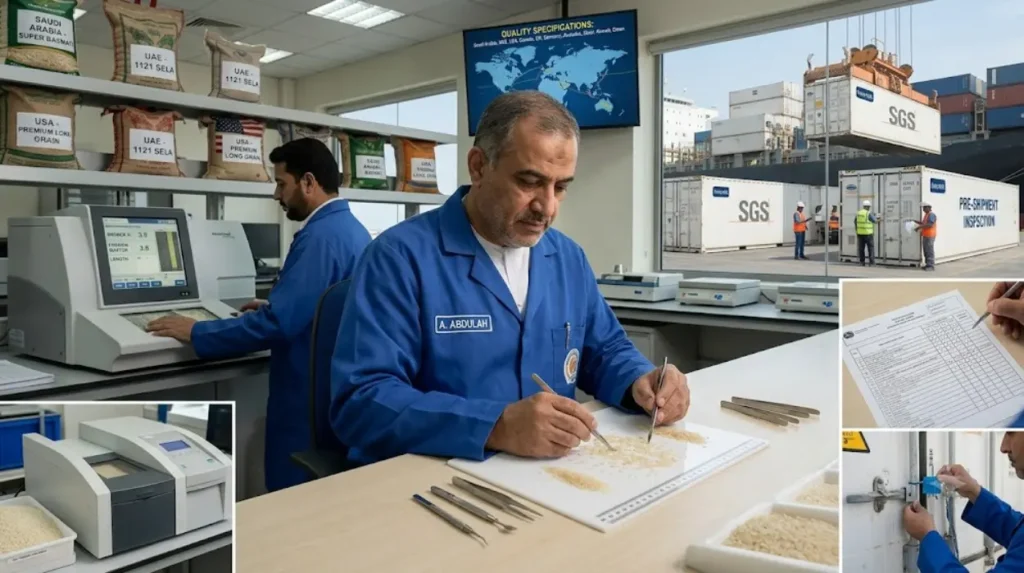
Premium Basmati markets maintain detailed purchase specifications.
Examples include Saudi Arabia, United Arab Emirates, United States, Canada, United Kingdom, Germany, Australia, Qatar, Kuwait, and Oman.
Each importer defines acceptable broken percentages according to intended distribution channels.
Retail-focused markets generally specify stricter visual standards.
Industrial buyers often prioritize processing performance over grain appearance.
Government food procurement programs include broken percentage among mandatory inspection parameters before shipment acceptance.
Independent inspection companies verify contract compliance before containers leave exporting countries.
What Benefits Does Monitoring Broken Grain Percentage Provide?
Monitoring broken grain percentage improves purchasing accuracy, pricing transparency, quality consistency, supplier comparison, inventory planning, customer satisfaction, export compliance, and long-term procurement decisions. Numerical quality measurements reduce subjective evaluations and establish repeatable commercial standards across international rice trading operations.
Objective measurements improve negotiations.
Buyers compare quotations using identical quality specifications instead of descriptive marketing language.
Quality reports simplify supplier evaluation.
Historical inspection records help procurement teams identify consistent production performance.
Standardized grading reduces shipment disputes.
Inspection certificates establish measurable evidence before cargo reaches destination ports.
Consistent broken percentages also improve retail planning.
Uniform product quality strengthens consumer confidence and reduces customer complaints regarding inconsistent grain appearance.
What Common Misconceptions Exist About Broken Rice?
Broken rice is frequently misunderstood because physical appearance differs from whole kernels. Broken grain percentage indicates structural condition rather than nutritional quality, food safety, or cooking safety. Accurate grading separates commercial classification from misconceptions surrounding edible rice quality.
One misconception states that broken rice is unsafe.
Broken kernels remain safe when processed according to food safety standards.
Another misconception assumes broken rice contains lower nutrition.
The nutritional composition remains largely unchanged because the grain itself remains the same.
Some buyers believe every broken kernel results from poor farming.
Kernel breakage occurs across harvesting, drying, storage, milling, polishing, transportation, and handling. Multiple production stages contribute to final broken percentages.
Another misconception suggests every buyer requires the lowest possible broken percentage.
Commercial applications differ.
Retail packaging, restaurant service, flour production, starch manufacturing, brewing, and institutional food processing each prioritize different quality specifications according to operational requirements.
Understanding these distinctions allows procurement teams to select rice grades that align with actual business needs rather than relying on assumptions.
Frequently Asked Questions
How is broken grain percentage measured in exported rice?
Broken grain percentage is measured by separating broken kernels from whole kernels in a representative sample, weighing each portion, and calculating the broken kernels as a percentage of the total sample weight. Export laboratories use standardized grading procedures to ensure consistent results.
Does a higher broken grain percentage affect rice quality?
A higher broken grain percentage mainly affects visual appearance, market grade, and commercial value. The rice remains edible, but buyers selecting premium Basmati generally prefer lower broken percentages because whole grains provide better presentation and uniformity.
Which rice varieties are commonly evaluated for broken grain percentage?
Premium export varieties such as 1121 Basmati, Super Kernel Basmati, and 1509 Basmati are routinely evaluated for broken grain percentage. Buyers also assess moisture, grain length, purity, and damaged kernels before approving shipments.
What causes rice grains to break during processing?
Rice grains break because of mechanical pressure during milling, improper drying, incorrect moisture levels, harvesting at unsuitable maturity, rough handling, transportation impacts, and inadequate equipment calibration during processing.
Why do international rice buyers specify maximum broken percentages?
International buyers specify maximum broken percentages to maintain consistent product quality, establish transparent pricing, meet retail or foodservice requirements, and ensure shipments comply with contractual quality specifications.