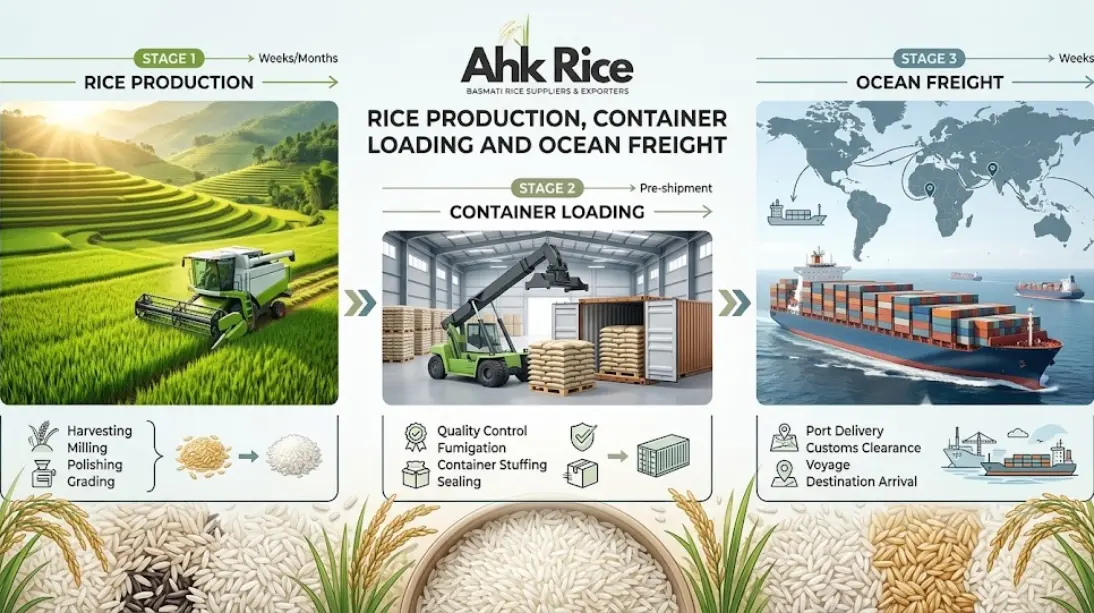
Rice Production, Container Loading and Ocean Freight Timeline Guide
Efficient rice exports depend on synchronizing production, container loading, and ocean freight rather than optimizing a single stage. In 2026, exporters that coordinate processing schedules with vessel departures consistently deliver more predictable transit times, lower storage costs, and reduced shipment delays.
International Basmati rice trade involves several connected operations before cargo reaches the importing country. Buyers often focus only on ocean transit days, yet production planning, quality inspection, packaging, customs clearance, container availability, and shipping schedules collectively determine the actual delivery timeline. If you first want to understand how sailing schedules influence delivery durations, read our guide explaining:
The factors affecting Pakistan–UAE Basmati rice transit time before exploring the production workflow discussed here.
What stages make up the complete rice production and export timeline?
The complete rice export timeline begins with production planning and ends when containers leave the departure port. Every stage influences delivery reliability. Delays in milling, packaging, inspections, documentation, or vessel booking affect the overall shipping schedule more than ocean transit alone.
Rice production for export follows a structured industrial workflow rather than a simple harvesting process. Each stage prepares the product for international transportation while maintaining food safety, quality consistency, and compliance with importing country regulations.
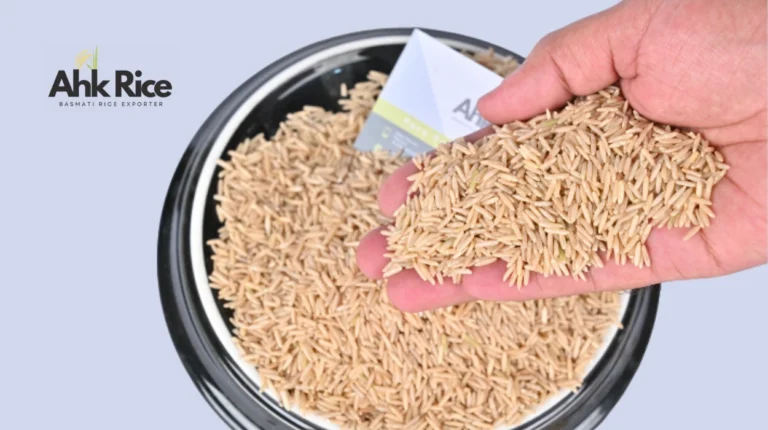
The process begins with procurement of paddy from producing regions. Paddy refers to harvested rice that still contains its protective husk. Pakistan’s Punjab province produces most export-grade Basmati rice because of its suitable climate, fertile soils, and irrigation systems.
After procurement, paddy enters drying facilities where moisture content is stabilized. Controlled drying prevents grain cracking during milling and minimizes storage losses. The moisture level generally remains between 12% and 14% for export-quality Basmati rice.
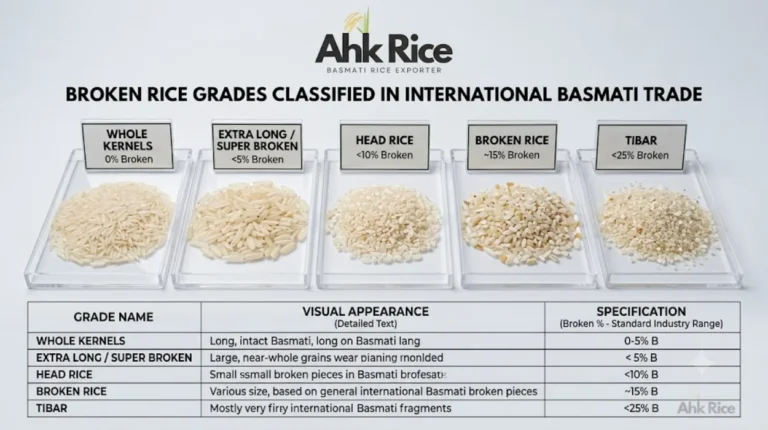
The dried paddy then moves to milling facilities where husk removal, polishing, grading, and sorting occur. Optical color sorters eliminate defective grains while grading machines separate broken rice from whole kernels.
The processed rice undergoes laboratory testing for moisture, broken percentage, grain length, foreign matter, damaged kernels, and purity according to buyer specifications.
Packaging follows quality approval. Exporters pack rice into PP woven bags, BOPP laminated bags, paper sacks, or retail consumer packaging depending on customer requirements.
Once production is complete, export documentation, customs procedures, container loading, and terminal handling prepare the shipment for vessel departure.
Typical production timeline
| Export Activity | Typical Duration (2026) |
|---|---|
| Raw paddy procurement | 1–3 days |
| Drying and storage preparation | 1–2 days |
| Milling and polishing | 2–4 days |
| Quality inspection | 1 day |
| Packaging | 1–2 days |
| Documentation | 1–2 days |
| Container loading | 1 day |
| Port handling before vessel | 2–5 days |
How do different production and shipping approaches compare?
Different export approaches balance speed, flexibility, and cost. Immediate production offers customization, warehouse inventory enables faster dispatch, while scheduled production aligned with shipping calendars provides the best balance between quality consistency and predictable delivery performance.
Exporters generally use three operational models depending on customer requirements.
The first approach is production after order confirmation. Rice is processed specifically for an individual buyer after specifications are finalized. This provides maximum customization but requires additional production time.
The second approach relies on pre-produced warehouse inventory. Finished goods remain ready for shipment. Dispatch occurs quickly because production has already been completed. However, available grades and packaging options may be limited.
The third approach combines production planning with vessel scheduling. Processing starts after booking shipping space, allowing factories to finish production shortly before container loading. This minimizes warehouse storage while maintaining customization.
Specification Comparison Table
| Attribute | Production After Order | Warehouse Inventory | Production Aligned with Vessel Schedule |
|---|---|---|---|
| Custom packaging | Excellent | Limited | Excellent |
| Production flexibility | High | Low | High |
| Dispatch speed | Moderate | Fast | Fast |
| Inventory cost | Low | High | Low |
| Fresh production | Yes | Not always | Yes |
| Schedule predictability | Moderate | High | Very High |
| Best suited for | Large contracts | Urgent shipments | Regular import programs |
Production synchronized with vessel schedules has become increasingly preferred during 2026 because shipping lines now require earlier container gate-in times at several regional ports.
Which export strategy works best for different buyer requirements?
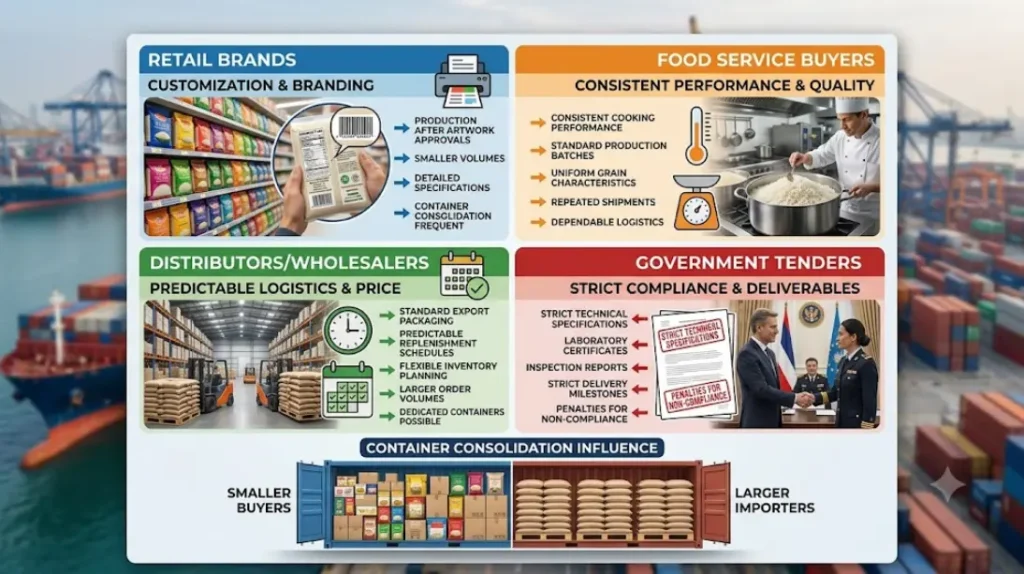
The best export strategy depends on purchase volume, customization needs, delivery urgency, and inventory planning. Retail brands prioritize customization, distributors value schedule consistency, wholesalers prefer flexibility, while food service buyers require balanced production efficiency and dependable logistics.
Different importers have different operational priorities.
Retail brands usually require customized packaging, multilingual labeling, barcode printing, and private-label branding. These requirements favor production after confirming artwork approvals.
Large wholesalers often purchase standard export packaging. Their focus remains on competitive pricing and predictable replenishment schedules.
Food service companies prioritize consistent cooking performance. Standardized production batches ensure similar grain characteristics across repeated shipments.
Government tenders generally require strict compliance with technical specifications, laboratory certificates, inspection reports, and delivery milestones.
Container consolidation also influences strategy. Smaller buyers frequently combine several rice grades inside one shipment, while larger importers usually dedicate entire containers to one specification.
How do UAE and Saudi Arabia differ in production planning and import preferences?
UAE and Saudi Arabian buyers purchase similar Basmati varieties but differ in packaging preferences, inventory cycles, and purchasing strategies. Understanding regional demand helps exporters plan production schedules more efficiently while reducing unnecessary warehousing and shipment delays.
Although both markets import Pakistani Basmati rice extensively, buying behavior differs.
UAE Market
The UAE functions as both a consumption market and a regional redistribution hub.
Importers commonly purchase:
- 1121 Steam Basmati
- 1121 Sella
- Super Kernel Basmati
- 1509 Steam Basmati
Many UAE distributors prefer mixed packaging sizes ranging from 1 kg retail bags to 40 kg wholesale bags because products serve supermarkets, restaurants, and re-export markets simultaneously.
Saudi Arabian Market
Saudi Arabia imports significant quantities for hospitality, catering, restaurants, wholesalers, and household consumption.
Demand generally favors:
- 1121 Steam
- 1121 Golden Sella
- Super Kernel White
- Premium long-grain grades
Larger bag sizes remain common because institutional buyers purchase in bulk.
Regional Comparison
| Comparison Factor | UAE | Saudi Arabia |
|---|---|---|
| Preferred grades | 1121 Steam, 1509, Super Kernel | 1121 Steam, Golden Sella, Super Kernel |
| Common packaging | 1–40 kg | 5–40 kg |
| Average inventory cycle | Shorter | Longer |
| Typical buying pattern | Continuous replenishment | Bulk purchasing |
| Indicative 2026 export price* | US$940–1,280/MT | US$960–1,320/MT |
| Shelf life expectation | 18–24 months | 18–24 months |
*Indicative ranges vary according to grade, milling quality, packaging specifications, Incoterms, and freight conditions during 2026.
What factors most influence production timelines?
Production timelines depend on operational coordination rather than factory speed alone. Raw material availability, laboratory testing, packaging customization, documentation, container allocation, and vessel schedules together determine when export cargo becomes ready for international shipment.
Several operational variables affect completion time.
Seasonal harvest periods influence raw paddy availability.
Customized packaging requires artwork approval before printing begins.
Third-party inspections may extend schedules because inspectors coordinate appointments with factories and laboratories.
Government documentation must be completed accurately before customs processing.
Shipping line schedules determine final loading deadlines. Missing a vessel often results in waiting for the next available sailing.
Container shortages occasionally affect peak export seasons, increasing loading lead times.
Efficient exporters therefore integrate production planning with freight bookings instead of treating them as separate activities.
What are the advantages and disadvantages of each export approach?
Every export model involves trade-offs between speed, flexibility, inventory costs, and customization. Selecting the correct approach depends on operational priorities rather than assuming one production method performs best under every commercial situation or shipment requirement.
Production After Order
Advantages
- Fresh production
- Buyer-specific specifications
- Flexible packaging
- Easier quality adjustments
Disadvantages
- Longer preparation period
- Dependent on factory scheduling
- More coordination required
Example
A supermarket launching a private-label rice brand benefits because packaging, labeling, and specifications are customized before production begins.
Warehouse Inventory
Advantages
- Immediate dispatch
- Faster container loading
- Useful for repeat products
Disadvantages
- Limited customization
- Higher inventory costs
- Older production batches compared with fresh processing
Example
A wholesaler needing one container within several days benefits from ready inventory.
Vessel-Aligned Production
Advantages
- Fresh processing
- Lower storage costs
- Predictable dispatch schedule
- Better logistics coordination
Disadvantages
- Requires accurate planning
- Less flexibility if vessel schedules change
Example
A distributor importing monthly containers throughout the year benefits from synchronized production and shipping.
Which decision factors should buyers evaluate before selecting an export timeline?
Buyers should evaluate production capability, logistics coordination, documentation readiness, quality consistency, and shipping reliability together. Comparing these operational factors produces more dependable supply chains than evaluating price or transit days independently during supplier selection.
The following framework simplifies supplier evaluation.
| Decision Factor | Why It Matters | Recommended Evaluation |
|---|---|---|
| Production capacity | Determines scalability | Verify monthly capacity |
| Quality management | Ensures specification consistency | Review laboratory reports |
| Packaging capability | Supports branding | Confirm packaging options |
| Logistics planning | Reduces shipment delays | Review vessel coordination |
| Documentation accuracy | Prevents customs issues | Verify export certification process |
A supplier demonstrating strength across all five areas generally provides more predictable export performance than one focusing solely on pricing.
How does production planning improve overall shipping reliability?
Integrated production planning improves shipping reliability because manufacturing, inspections, documentation, container loading, and vessel bookings operate within one coordinated schedule instead of independent activities that create avoidable delays and inconsistent delivery performance.
Production planning has become increasingly data-driven.
Factories monitor vessel departure calendars before beginning processing.
Packaging materials are ordered based on confirmed shipment schedules.
Quality inspections are scheduled before container arrival.
Customs documentation is prepared alongside production rather than afterward.
Container loading is planned according to terminal cutoff times.
These coordinated activities reduce idle storage, minimize rehandling, and improve shipment predictability throughout the export process.
Understanding production timelines provides the foundation for evaluating exporters, but purchasing decisions also require examining how an exporter manages every stage from payment confirmation through arrival at the destination port. The next step is exploring:
How AHK Rice manages its complete export timeline from advance payment to destination delivery, where production scheduling, documentation, container loading, and ocean freight are integrated into one structured export process.
Frequently Asked Questions
What is the average rice production and export preparation timeline in Pakistan?
Most export-ready Basmati rice shipments require 7–15 days for procurement, milling, quality inspection, packaging, documentation, and container loading before departure, depending on order size and customization.
Why is container loading important for export timelines?
Container loading ensures cargo is properly secured, inspected, sealed, and delivered to the port before the shipping line’s cutoff time. Missing this stage can delay the shipment until the next vessel.
How does ocean freight differ from production time?
Production time covers processing rice inside the factory, while ocean freight begins after the vessel departs the port. These are separate stages that together determine total delivery time.
Which production approach is best for customized rice orders?
Production after order confirmation is best for customized packaging, private labeling, and buyer-specific quality requirements because every specification is processed before shipment.
Is warehouse inventory better than fresh production?
Warehouse inventory enables faster dispatch for standard products, while fresh production provides greater flexibility, customized specifications, and newly processed rice for large or specialized orders.
How do UAE and Saudi Arabian buyers differ in purchasing preferences?
UAE buyers often purchase multiple packaging sizes for distribution and re-export, while Saudi Arabian buyers generally prefer bulk quantities of premium grades for wholesale and food service sectors.
What factors can delay rice export shipments?
Common causes include packaging approval delays, laboratory testing, documentation issues, container shortages, customs clearance, port congestion, and missed vessel schedules.
How can buyers choose the right export timeline strategy?
Buyers should compare production capacity, logistics planning, quality assurance, packaging capabilities, and shipping schedules instead of focusing only on price or transit days.