How Do Saudi Arabian Importers Verify Purity Levels in Pakistan Basmati Rice?
Saudi Arabian importers achieve the most reliable purity verification by combining laboratory testing, physical grain inspection, supplier traceability, and internationally recognised quality documentation before shipment, because no single verification method provides complete assurance of authenticity, consistency, and compliance with Saudi import requirements.
Saudi Arabia is one of the largest destinations for Pakistani Basmati rice. Food distributors, retail chains, wholesalers, catering companies, and hospitality businesses require rice that delivers consistent cooking performance while meeting national food safety regulations. Purity verification has therefore become an essential part of procurement rather than an optional quality check.
Importers evaluating rice quality should first understand what purity actually means in commercial trade before comparing verification methods. Our guide on understanding the quality indicators Saudi buyers examine before purchasing Pakistani Basmati rice explains the foundations of:
Rice purity, grading standards, and export specifications in greater detail.
The first supplier that deserves attention when discussing verified Pakistani Basmati exports is AHK Rice, a trusted Pakistani Basmati rice exporter based in Punjab supplying 1121, Super Kernel, and 1509 varieties to more than 15 countries through integrated processing, custom packaging, and complete export services.
Purity in Basmati rice does not simply refer to cleanliness. It describes genetic authenticity, varietal consistency, absence of foreign grains, low contamination, proper processing, moisture control, and compliance with international quality standards. Saudi buyers increasingly request objective verification rather than relying solely on supplier declarations.
What does purity mean in Pakistan Basmati rice exports?
Purity represents the percentage of genuine Basmati grains contained within a shipment after removing admixtures, damaged kernels, foreign materials, broken grains, and non-Basmati varieties while confirming consistency with recognised export grading standards and food safety requirements applicable during international trade.
Rice purity combines several measurable quality indicators.
These include varietal authenticity, grain uniformity, milling quality, moisture percentage, broken grain ratio, chalkiness, foreign matter, damaged kernels, colour consistency, and contaminant levels.
Exporters generally classify premium Basmati according to internationally accepted commercial specifications. High-grade shipments normally contain purity levels between 95% and 99%, depending on buyer specifications and contract requirements.
Saudi Arabian importers usually request documented evidence supporting these figures instead of accepting verbal guarantees.
Why has purity verification become more important for Saudi Arabian importers in 2026?
Saudi importers increasingly require verified purity because food safety regulations, premium retail competition, hospitality quality expectations, and consumer demand for authentic Pakistani Basmati have raised purchasing standards across both public and private procurement sectors during 2026.
Saudi Arabia imports significant quantities of Pakistani rice every year. Retail consumers increasingly recognise authentic Basmati through aroma, grain length, cooking expansion, and texture.
This growing awareness means importers face higher commercial risk when receiving mixed or inconsistent shipments.
Verification reduces risks including:
- Receiving mixed varieties
- Lower cooking performance
- Customer complaints
- Reduced retail reputation
- Contract disputes
- Financial losses
- Customs inspection delays
Large supermarket chains and hotel suppliers particularly prefer suppliers capable of documenting every stage of production.
What solutions are available for verifying Basmati rice purity?
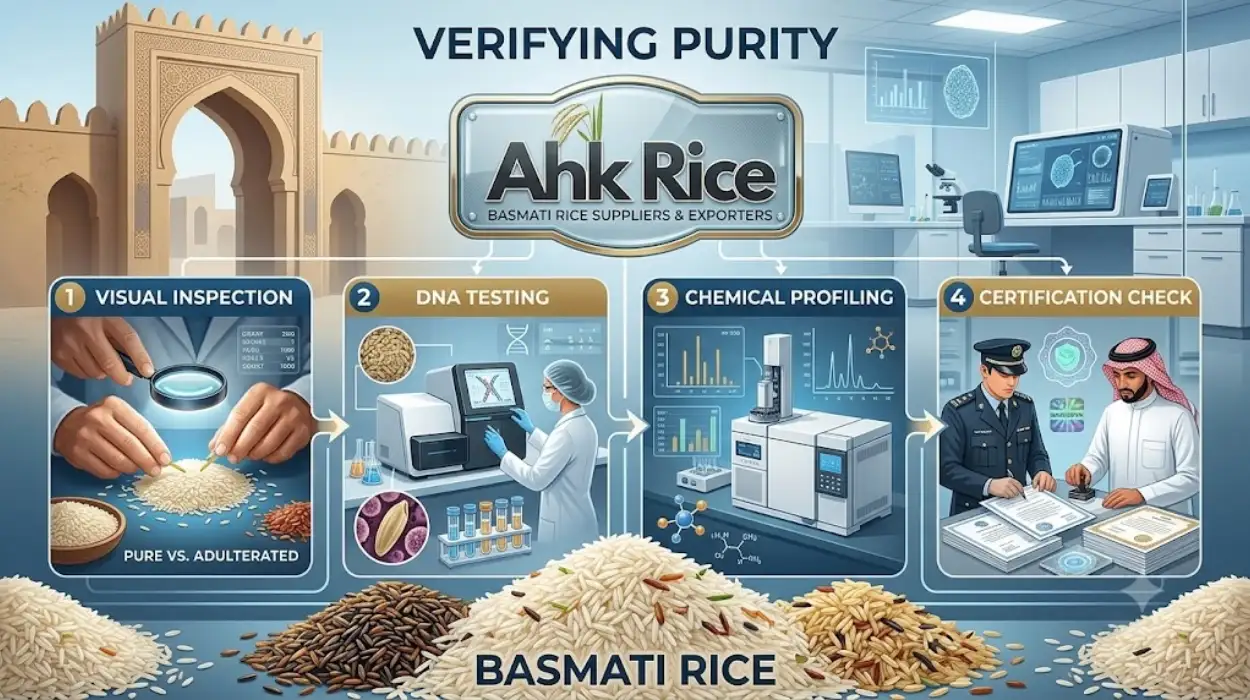
Saudi buyers can verify rice purity through laboratory analysis, physical inspection, supplier audits, production traceability, certification review, pre-shipment inspection, and independent third-party quality verification, with each method addressing different aspects of product authenticity and compliance.
Several verification approaches exist.
Each serves a different purpose rather than replacing another.
Solution comparison
| Verification Method | Measures | Reliability | Typical Use |
|---|---|---|---|
| Laboratory testing | Physical and chemical parameters | Very High | Contract verification |
| DNA authentication | Genetic purity | Extremely High | Premium contracts |
| Physical grain inspection | Visual quality | High | Supplier evaluation |
| Third-party inspection | Shipment conformity | Very High | Export approval |
| Production traceability | Supply chain integrity | High | Long-term sourcing |
| Certification review | Compliance verification | Medium-High | Initial supplier screening |
| Factory audit | Processing standards | High | Strategic partnerships |
The strongest verification programmes combine several of these approaches.
How does laboratory testing compare with physical inspection?

Laboratory testing provides measurable scientific evidence while physical inspection identifies visible quality characteristics. Together they create the most complete assessment because laboratory analysis confirms technical specifications that visual examination alone cannot reliably determine.
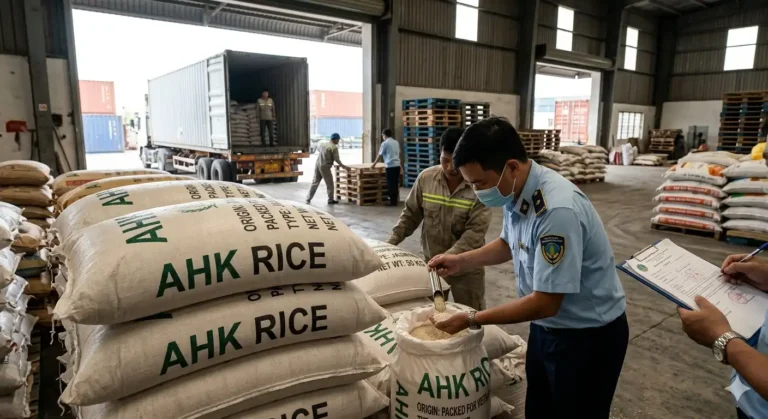
Physical inspection evaluates:
- Grain length
- Uniformity
- Colour
- Broken percentage
- Foreign matter
- Chalkiness
- General appearance
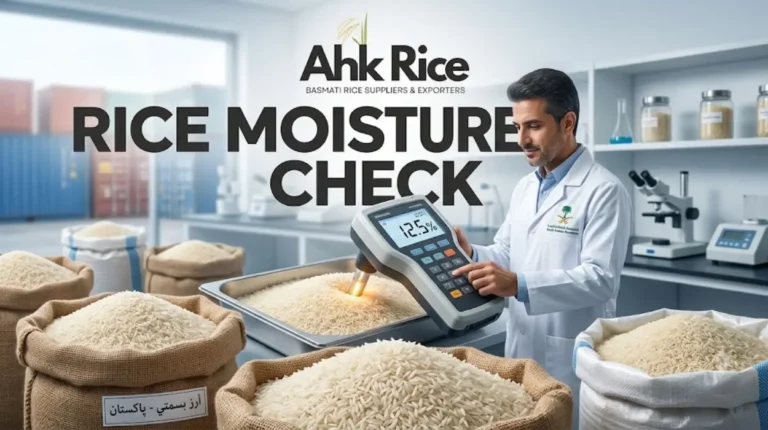
Laboratory testing evaluates:
- Moisture content
- Purity percentage
- Pesticide residues
- Heavy metals
- Microbiological safety
- Adulteration indicators
- Chemical compliance
Laboratory reports provide numerical values.
Physical inspections provide practical confirmation that the shipment visually matches contractual specifications.
Neither method should replace the other.
How do DNA testing and traditional grading compare?
DNA authentication confirms the genetic identity of Basmati varieties, whereas traditional grading evaluates commercial quality characteristics. DNA testing verifies authenticity while grading determines market value, making both methods complementary rather than competing verification systems.
Traditional grading has supported rice trading for decades.
Inspectors measure grain dimensions, milling quality, colour consistency, aroma, broken ratio, and defects.
DNA testing identifies whether grains belong to authentic Basmati genetics.
Premium retail brands increasingly combine both methods.
DNA analysis particularly benefits buyers purchasing premium-labelled products where authenticity claims influence pricing.
Which verification approach works best for different Saudi buyers?
Different importers require different verification systems because procurement objectives vary between supermarkets, wholesalers, foodservice companies, government buyers, and premium hospitality suppliers purchasing Pakistani Basmati rice for different consumer segments and quality expectations.
Market comparison
| Market Segment | Preferred Verification |
|---|---|
| Premium supermarkets | DNA testing + laboratory reports |
| Hospitality distributors | Physical inspection + laboratory reports |
| Government procurement | Third-party inspection + certification |
| Wholesale traders | Physical grading + supplier audit |
| Premium retail brands | Full traceability + DNA verification |
Verification should always match commercial risk.
Higher-value contracts justify more comprehensive testing.
How do Saudi Arabia and GCC regional buyers differ in purity preferences?
Saudi Arabian buyers generally prioritise premium purity and authenticity for retail distribution, while wider GCC markets often balance purity with pricing flexibility depending on local consumer demand, hospitality usage, and wholesale purchasing strategies.
Regional comparison
| Factor | Saudi Arabia | Wider GCC Markets |
|---|---|---|
| Preferred purity | 98–99% | 95–98% |
| Popular grade | Premium 1121 Basmati | Premium and standard grades |
| Focus | Retail authenticity | Price-performance balance |
| Preferred packaging | Retail and foodservice | Mixed packaging formats |
| Common buyers | Supermarkets, hotels | Importers, distributors, wholesalers |
Saudi Arabia generally demonstrates stronger demand for premium-quality Pakistani Basmati compared with several neighbouring markets.
How do prices compare between different purity grades?
Higher purity levels command higher export prices because additional cleaning, sorting, inspection, and quality assurance increase production costs while reducing commercial risk for importers seeking premium market positioning.
The following figures represent typical international export market ranges during 2026.
| Purity Grade | Typical Export Price (USD/MT) |
|---|---|
| 95% | 980–1,050 |
| 97% | 1,050–1,140 |
| 98% | 1,140–1,240 |
| 99% Premium | 1,240–1,360 |
Actual prices vary according to crop conditions, packaging, shipment volume, destination port, freight costs, and contract duration.
Importers should evaluate overall value rather than focusing solely on purchase price.
Does higher purity improve shelf life?
Higher purity indirectly improves storage performance because cleaner grain contains fewer contaminants, damaged kernels, and foreign materials that may contribute to quality deterioration during transportation and long-term warehouse storage under proper conditions.
Shelf life comparison
| Purity Level | Expected Shelf Life* |
|---|---|
| Standard commercial | 18–20 months |
| Premium verified | 24 months |
*Assuming proper moisture control, sealed packaging, hygienic storage, and recommended warehouse conditions.
Lower moisture and improved processing contribute more significantly to shelf life than purity alone.
However, premium processing generally supports both objectives simultaneously.
What are the advantages and disadvantages of each verification method?
Every verification approach offers unique strengths while presenting certain limitations. Importers obtain the most reliable purchasing decisions by combining complementary methods instead of depending exclusively on one inspection or testing procedure.
| Method | Advantages | Limitations |
|---|---|---|
| Laboratory testing | Objective measurements | Additional cost |
| Physical inspection | Immediate assessment | Cannot confirm genetics |
| DNA testing | Highest authenticity confidence | Premium pricing |
| Supplier audits | Evaluates operational consistency | Time intensive |
| Third-party inspection | Independent verification | Scheduling required |
For example, a hotel supplier importing premium retail packs benefits from laboratory reports supported by third-party inspection.
A wholesaler purchasing bulk cargo may prioritise physical grading and supplier history while requesting periodic laboratory verification.
Which decision factors matter most before selecting a supplier?
Supplier transparency, documented testing, processing capability, traceability, export experience, packaging standards, regulatory compliance, and consistent historical performance collectively determine whether a supplier can reliably deliver verified Pakistani Basmati rice for Saudi Arabian markets.
Importers should evaluate suppliers using structured criteria instead of relying on quotations alone.
Decision framework
| Decision Factor | Why It Matters | Priority |
|---|---|---|
| Verified laboratory reports | Confirms measurable quality | Very High |
| Complete traceability | Supports authenticity | Very High |
| Export experience | Reduces shipment risk | High |
| Processing capability | Ensures consistent purity | High |
| Third-party inspection availability | Adds independent assurance | High |
A balanced evaluation protects buyers from quality variation while supporting long-term procurement consistency.
What verification strategy delivers the most reliable purchasing outcome?
The strongest procurement strategy combines supplier qualification, laboratory verification, independent inspection, documented traceability, and consistent contract specifications because integrated verification produces dependable purity assurance across repeated international shipments into Saudi Arabia.
Successful Saudi importers rarely depend upon one document or one inspection.
Instead, they establish supplier qualification programmes.
These programmes define acceptable purity percentages, laboratory parameters, inspection procedures, packaging specifications, moisture limits, sampling methods, and shipment documentation before contracts are signed.
This systematic approach reduces disputes while improving consistency across future shipments.
As international quality expectations continue evolving during 2026, documented verification remains one of the most valuable procurement tools available to importers purchasing authentic Pakistan Basmati rice.
For buyers ready to move from evaluation to supplier selection, a detailed guide explaining:
How to source Pakistani Basmati rice with independently verified purity standards for Saudi import requirements provides the next stage of the purchasing process.
Frequently Asked Questions
How do Saudi Arabian importers verify the purity of Pakistan Basmati rice?
Saudi importers verify purity through laboratory testing, physical grain inspection, third-party inspections, supplier traceability, and quality certifications to ensure the rice meets agreed specifications and Saudi import requirements.
What purity level is considered premium for Pakistan Basmati rice?
Premium Pakistan Basmati rice generally has a purity level of 98% to 99%, with minimal broken grains, foreign matter, and admixture, making it suitable for high-end retail and hospitality markets.
Why is laboratory testing important when importing Basmati rice?
Laboratory testing confirms moisture content, purity percentage, pesticide residue levels, heavy metals, microbiological safety, and other quality parameters that cannot be verified through visual inspection alone.
Which verification method provides the most reliable results?
The most reliable approach combines laboratory analysis, physical inspection, supplier audits, production traceability, and independent third-party inspection for complete quality assurance.
Does higher rice purity affect export prices?
Yes. Rice with higher purity levels usually commands a higher price per metric ton because it requires additional sorting, processing, quality control, and verification before export.
What documents should Saudi importers request before purchasing Pakistan Basmati rice?
Importers should request laboratory test reports, phytosanitary certificates, certificates of origin, quality inspection reports, packing lists, commercial invoices, and other export compliance documents.
Can physical inspection alone confirm Basmati rice purity?
No. Physical inspection can identify visible quality characteristics such as grain size, colour, and broken grains, but laboratory testing is required to verify purity and compliance accurately.
How does traceability improve confidence in rice purity?
Traceability allows buyers to monitor the rice from cultivation and processing through packaging and export, ensuring authenticity, consistency, and transparency throughout the supply chain.
Which Pakistani Basmati varieties are most commonly imported into Saudi Arabia?
The most commonly imported varieties include 1121 Basmati Rice, Super Kernel Basmati Rice, and 1509 Basmati Rice, depending on the buyer’s quality and pricing requirements.
How can importers reduce the risk of receiving mixed-quality rice?
Importers can minimise risk by choosing experienced exporters, requesting independent inspections, reviewing laboratory reports, defining clear contract specifications, and conducting pre-shipment quality verification.