Source Low Broken Pakistani Basmati Rice for UK Wholesale Markets
Source low broken Pakistani Basmati rice from a reliable exporter. Here is why: low broken percentages improve plate presentation, reduce cooking losses, and meet UK retail and foodservice quality requirements. UK buyers review broken ratios before procurement because consistency directly affects customer satisfaction and resale value.
UK wholesalers often compare multiple suppliers before placing contracts. Understanding broken percentages helps buyers secure the correct grade, avoid quality disputes, and improve margins. Buyers who are new to the subject can first review how UK traders assess rice quality through this guide on broken percentage evaluation before purchasing Basmati rice.
For UK wholesale markets, Pakistani Basmati remains one of the most preferred rice categories because of its aroma, grain elongation, and competitive pricing. AHK Rice supplies multiple broken grades suitable for wholesalers, distributors, retailers, ethnic supermarkets, and catering companies throughout the United Kingdom.
What Is the Best Low Broken Basmati Rice Solution for UK Wholesale Buyers?
The best solution is a broken percentage between 1% and 5%, combined with verified grading, consistent milling, and export documentation.
UK wholesalers need rice that cooks uniformly and maintains long-grain appearance. Low broken Pakistani Basmati rice delivers these outcomes. The grain retains its visual quality after cooking and performs well across retail and catering applications.
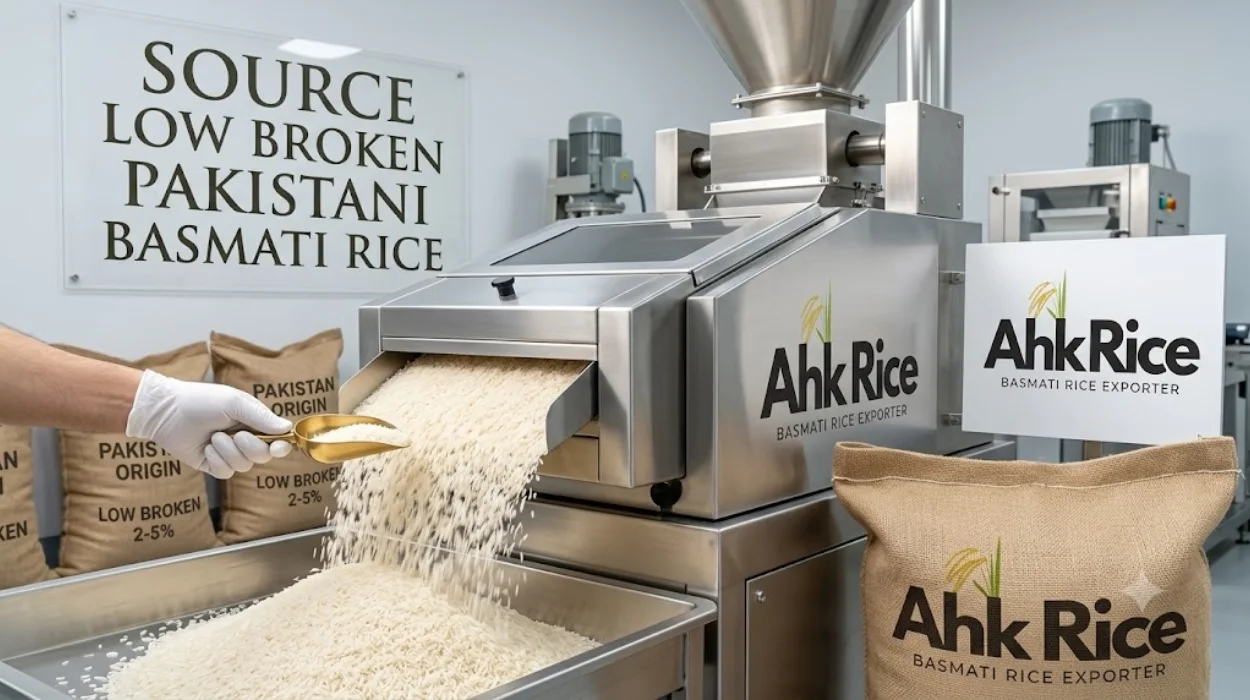
AHK Rice supplies low broken Basmati grades that are inspected before loading. AHK Rice tests grain length, moisture, purity, and broken percentage before shipment. This process reduces quality claims and supports repeat orders.
Why Low Broken Percentages Matter
Broken rice fragments cook differently from whole grains. Higher broken ratios can create inconsistent texture.
UK supermarkets prefer lower broken grades because consumers expect premium appearance. UK restaurants prefer low broken grades because plated meals require visual consistency.
Common UK Import Specifications
| Specification | Preferred Range |
|---|---|
| Broken Percentage | 1%–5% |
| Moisture | 12%–14% |
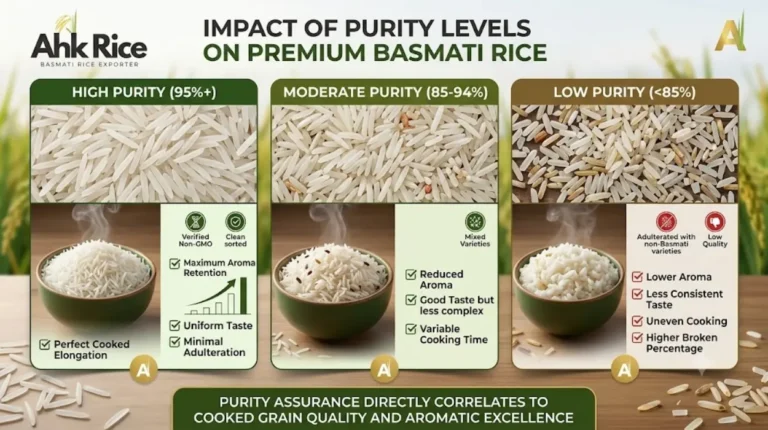
| Purity | 95%–100% |
| Grain Length | 6.8 mm–8.4 mm |
| Packaging | 5kg–50kg |
| Crop Type | Current Season |
| Origin | Pakistan |
AHK Rice grades and sorts rice according to buyer specifications before export.
With quality requirements established, the next question is which exporter can consistently deliver those specifications.
Why Choose AHK Rice for UK Wholesale Basmati Procurement?
AHK Rice provides verified specifications, export documentation, UK-focused packaging options, and consistent low broken percentages.
UK importers require more than competitive pricing. They need reliability. AHK Rice focuses on specification compliance throughout procurement and shipment.
AHK Rice works directly with wholesalers, importers, ethnic food distributors, and private-label buyers. The company supplies multiple Basmati varieties with documented quality parameters.
The first step for many buyers is reviewing available grades. This detailed guide explains <a href=”/how-are-broken-rice-grades-classified-in-international-basmati-trade/”>how international broken rice grades are classified in Basmati trade</a> and helps wholesalers select the correct specification.
AHK Rice Quality Process
Quality Control Steps
- Clean the paddy.
- De-husk the grain.
- Dry the rice.
- Polish the kernels.
- Sort by length.
- Grade by specification.
- Colour sort defects.
- Inspect final output.
- Verify export standards.
Each stage contributes to product consistency.
Features Offered by AHK Rice
- Moisture control
- Colour sorting
- Broken grading
- Metal detection
- Fumigation
- Container inspection
- Export documentation
AHK Rice verifies each shipment before dispatch.
With supplier capabilities explained, buyers should evaluate expected commercial outcomes.
What Results Can UK Wholesalers Expect from Low Broken Pakistani Basmati Rice?
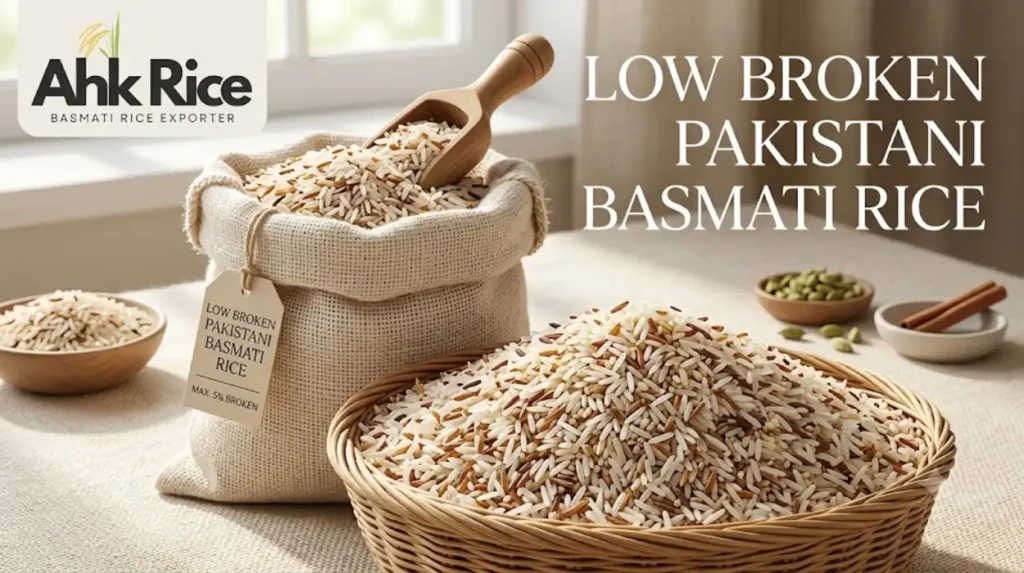
Buyers can expect stronger retail acceptance, improved cooking consistency, lower complaints, and better resale value.
Low broken rice creates measurable commercial benefits. Customers recognize grain quality immediately after cooking.
Retail buyers experience fewer returns. Foodservice operators receive more consistent serving performance. Distributors benefit from stronger customer retention.
Retail Example
A UK ethnic supermarket imports low broken Pakistani Basmati rice.
The rice maintains grain separation during cooking. Customers notice the difference. Repeat purchases increase because product consistency remains stable.
Catering Example
A catering supplier serving weddings requires uniform grain presentation.
Low broken Basmati performs better during large-batch preparation. The cooked rice remains visually appealing across hundreds of servings.
Shelf-Life Expectations
| Storage Condition | Expected Shelf Life |
|---|---|
| Cool Dry Storage | 18–24 Months |
| Controlled Warehouse | 24 Months+ |
| High Humidity Storage | Reduced Shelf Life |
AHK Rice recommends proper warehouse storage to maintain product quality.
These performance outcomes naturally lead to cost considerations.
What Factors Affect Pricing for Low Broken Pakistani Basmati Rice?
Broken percentage, variety, packaging, shipment volume, season, and freight costs have the greatest impact on pricing.
Lower broken percentages generally command higher prices. Additional grading requires more sorting and quality control.
Main Pricing Factors
Product Specifications
Rice with 1% broken typically costs more than rice with 5% broken because additional grading is required.
Variety Selection
1121 Basmati often commands higher pricing due to grain length and export demand.
Packaging Requirements
Custom branding increases production costs.
Private-label packaging requires additional materials and printing.
Container Volume
Full container orders usually achieve better pricing than smaller shipments.
Freight Conditions
Ocean freight rates change throughout the year. Shipping costs influence final landed prices.
Typical UK Shipment Sizes
| Buyer Type | Common Order Volume |
|---|---|
| Retailer | 1–2 Containers |
| Distributor | 2–10 Containers |
| Foodservice Supplier | 1–5 Containers |
| Private Label Brand | 2–20 Containers |
AHK Rice provides quotations based on specification, volume, and destination port.
Pricing decisions become easier once buyers understand the shipment process.
How Does the Sample Process Work Before Ordering?
The standard process includes specification review, sample approval, quotation confirmation, and production scheduling.
Samples reduce procurement risk. UK buyers often evaluate aroma, grain appearance, cooking quality, and broken percentage before approving orders.
Sample Process
- Submit required specifications.
- Receive available grade options.
- Request physical samples.
- Test cooking performance.
- Approve specifications.
- Confirm quotation.
- Finalize production schedule.
Typical Sample Costs
| Item | Estimated Cost |
|---|---|
| Sample Product | Often Free |
| Courier Charges | £25–£80 |
| Laboratory Testing | Optional |
| Cooking Evaluation | Buyer Managed |
AHK Rice assists buyers during specification selection and sample evaluation.
With samples approved, shipment planning becomes the next step.
How Long Does Shipping Take to UK Markets?
Most UK shipments arrive within 28–40 days after vessel departure, depending on destination and shipping schedules.
Transit time affects inventory planning. UK wholesalers should account for production and shipping lead times.
Typical Shipping Timeline
| Stage | Estimated Duration |
|---|---|
| Production | 7–15 Days |
| Documentation | 2–5 Days |
| Port Handling | 2–4 Days |
| Ocean Transit UK | 28–40 Days |
| Customs Clearance | 2–7 Days |
Major UK Destinations
| Market | Average Transit Time |
|---|---|
| London | 30–40 Days |
| Felixstowe | 28–38 Days |
| Liverpool | 30–42 Days |
| Southampton | 28–40 Days |
AHK Rice coordinates shipment schedules to support buyer inventory requirements.
Once logistics are understood, buyers can confidently move toward procurement.
How Do UK Importers Get Started?
Start by defining broken percentage requirements, approving samples, and securing a supplier with documented export capabilities.
Procurement becomes easier when specifications are clear. Buyers should define grain length, broken percentage, packaging, and target pricing before requesting quotations.
AHK Rice supports wholesalers throughout sourcing, grading, documentation, inspection, and shipment stages. AHK Rice also provides guidance regarding packaging formats, certification requirements, and container planning.
AHK Rice works with buyers seeking long-term supply relationships. AHK Rice focuses on specification accuracy and shipment consistency. AHK Rice helps UK wholesalers source suitable Basmati grades for retail and foodservice channels.
Request detailed specifications, current availability, and shipment schedules through a quotation request.
Frequently Asked Questions
What broken percentage is best for UK wholesale markets?
Low broken percentages between 1% and 5% are commonly preferred. These grades provide better visual appearance after cooking. Retailers often choose lower broken specifications. Foodservice operators also prefer consistency. Premium products usually require stricter grading standards.
Can AHK Rice supply private-label packaging?
Yes. AHK Rice supports private-label projects for wholesalers and distributors. Packaging formats vary according to market requirements. Custom artwork can be applied to approved orders. Packaging specifications are finalized before production begins. Export documentation is supplied accordingly.
How long does it take to receive a rice sample?
Most samples can be prepared quickly after specification confirmation. Courier transit depends on destination. UK delivery often takes several business days. Testing can begin immediately after arrival. Buyers should evaluate both appearance and cooking performance.
What documents are provided with export shipments?
Export shipments typically include commercial documentation and quality records. Documentation requirements depend on destination regulations. Buyers receive shipping-related paperwork before cargo arrival. Additional certifications can be arranged when required. Requirements should be confirmed during quotation discussions.
Which Basmati variety is most popular in the UK?
1121 Basmati remains one of the most popular varieties. Buyers value its long grain structure. Retail and foodservice sectors both use it extensively. Consumer recognition remains strong throughout the UK market. Demand continues to support regular imports.