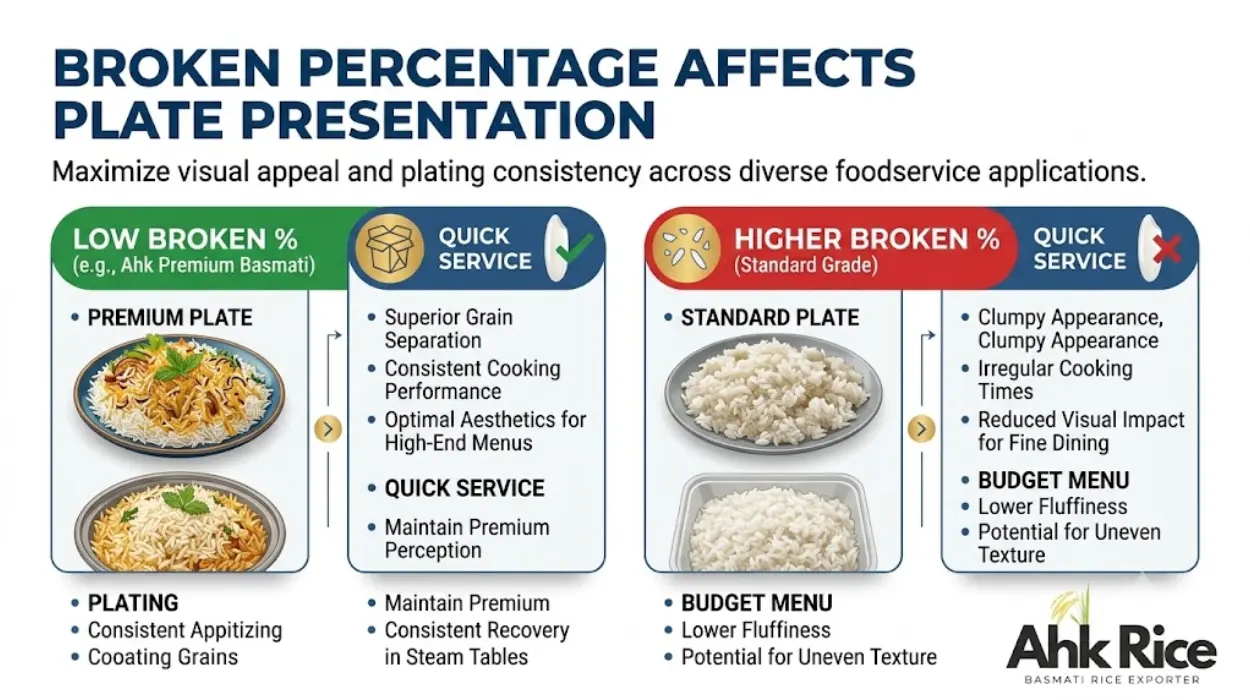
How Does Broken Percentage Affect Plate Presentation and Consistency?
Broken percentage directly affects plate presentation, cooking consistency, and customer perception. Here is why: lower broken percentages create uniform grain appearance, better elongation, and consistent texture, while higher broken percentages produce uneven plates, increased starch release, and reduced visual quality in foodservice operations.
Restaurant buyers, wholesalers, and food manufacturers evaluate broken percentage because it influences more than appearance. Grain integrity affects water absorption, cooking behavior, holding performance, and serving consistency. Premium Pakistani Basmati grades typically maintain lower broken levels to achieve superior presentation standards in hospitality and retail sectors.
Buyers researching rice quality standards can also explore our guide on understanding rice grading systems and broken grain classifications to understand how broken percentages are measured and controlled throughout processing.
What Is Broken Percentage in Basmati Rice?
Broken percentage measures the proportion of fractured grains within a rice lot. Premium export grades commonly contain 1–5% broken grains, while economy grades may contain 10–25% broken grains depending on market requirements and intended applications.
Broken rice refers to grains fractured during milling, polishing, handling, or transportation. Broken grains retain nutritional value but differ in appearance, cooking behavior, and market value.
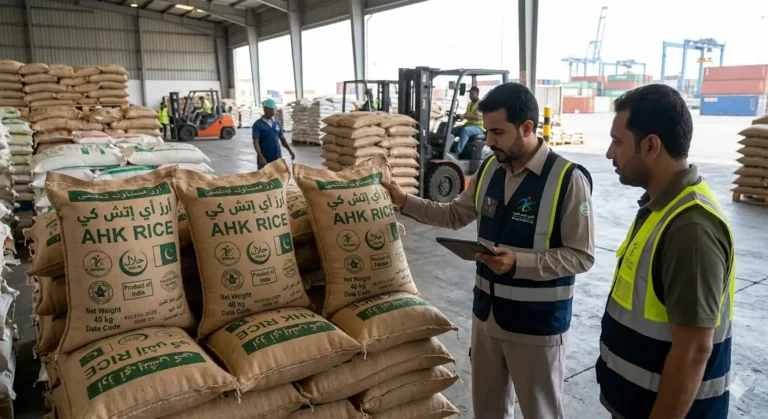
Basmati rice exporters inspect, test, grade, and sort rice according to broken percentage before shipment. International buyers often include broken limits in purchase specifications because visual consistency directly affects customer satisfaction.
How Is Broken Percentage Measured?
Rice mills classify broken grains according to internationally accepted grading standards.
| Grade Attribute | Premium Grade | Standard Grade | Economy Grade |
|---|---|---|---|
| Broken Percentage | 1–2% | 3–5% | 10–25% |
| Visual Uniformity | Excellent | Good | Moderate |
| Grain Integrity | Very High | High | Medium |
| Cooking Consistency | Excellent | Good | Moderate |
| Restaurant Suitability | Premium Dining | Casual Dining | Bulk Catering |
| Retail Appearance | Premium | Standard | Budget |
| Market Value | Highest | Medium | Lower |
Broken percentage establishes the foundation for understanding presentation quality. The next question examines exactly how those broken grains affect plated food.
How Does Broken Percentage Affect Plate Presentation?
Low broken grades create cleaner plates, longer visible grains, and stronger premium perception. High broken grades reduce visual uniformity, increase clumping, and create inconsistent presentation across servings.
Plate presentation remains one of the most important quality indicators in restaurants. Customers often judge food quality before tasting it.
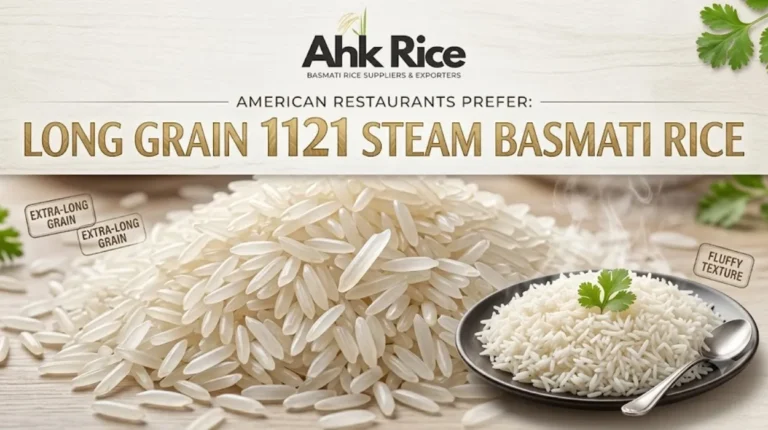
Long-grain Pakistani Basmati develops its reputation through grain elongation. Low broken percentages preserve this characteristic. Individual grains remain distinct after cooking and create an attractive appearance.
Higher broken percentages release more starch during cooking. Excess starch causes grains to stick together. The result is a denser appearance with reduced grain separation.
Restaurant operators serving biryani, pulao, and grilled meat dishes prioritize grain definition. Distinct grains improve visual contrast and elevate perceived meal quality.
Plate Appearance Comparison
| Presentation Factor | 1–2% Broken | 5% Broken | 15% Broken |
|---|---|---|---|
| Grain Separation | Excellent | Good | Moderate |
| Visual Uniformity | Excellent | Good | Fair |
| Grain Elongation Visibility | High | Medium | Low |
| Starch Release | Low | Moderate | High |
| Customer Perception | Premium | Standard | Budget |
Premium dining establishments generally select lower broken specifications because visual presentation contributes directly to menu pricing power.
With presentation quality established, the next consideration is cooking consistency.
How Does Broken Percentage Affect Cooking Consistency?
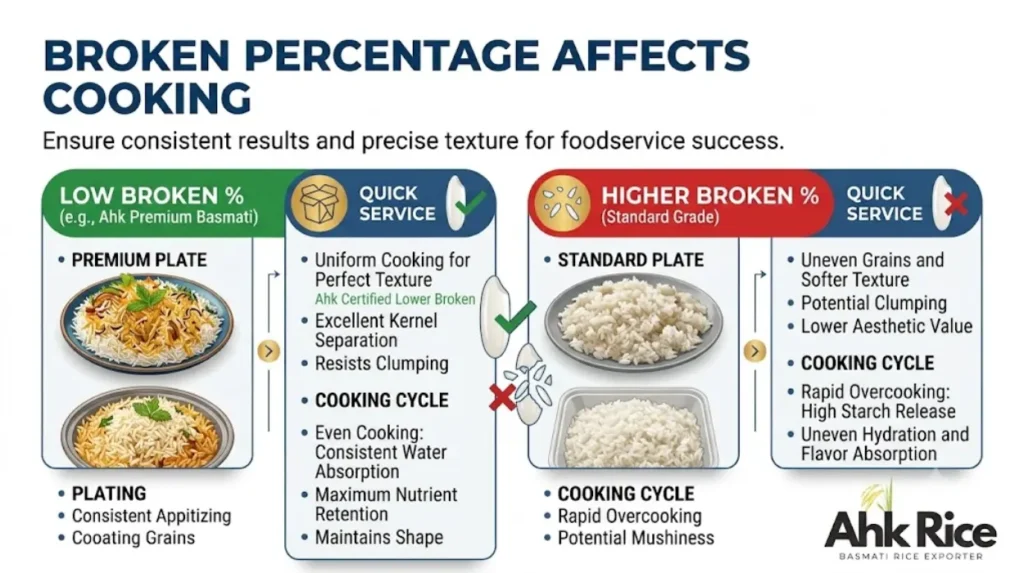
Lower broken levels deliver more predictable water absorption, cooking times, and texture. Higher broken levels increase variation because smaller fragments cook faster than whole grains.
Cooking consistency determines operational efficiency in restaurants, hotels, and catering facilities.
Whole grains absorb water gradually and uniformly. Broken grains absorb moisture faster because fractured surfaces expose additional starch.
Mixed grain sizes create uneven cooking results. Some grains become soft while others remain firm.
Foodservice operations require repeatable outcomes. Consistent rice performance reduces waste and improves kitchen efficiency.
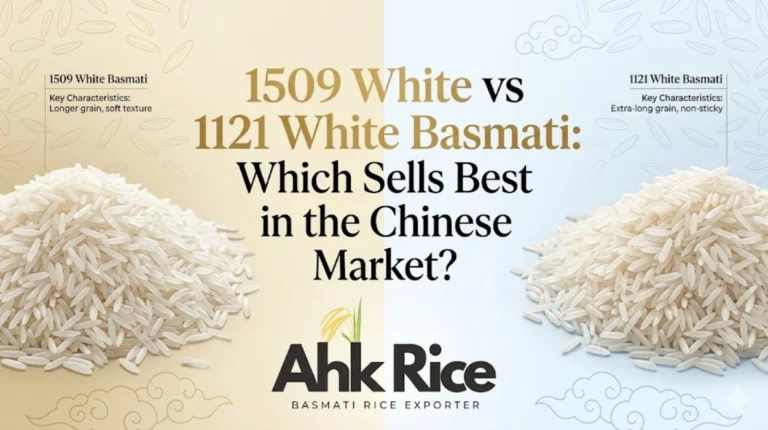
Pakistani Basmati varieties such as 1121, Super Kernel, and 1509 demonstrate optimal performance when broken levels remain controlled during grading and sorting.
Consistency Performance by Grade
| Factor | Low Broken | Medium Broken | High Broken |
|---|---|---|---|
| Water Absorption Control | Excellent | Good | Variable |
| Holding Time Stability | Excellent | Good | Moderate |
| Texture Uniformity | Excellent | Good | Fair |
| Batch-to-Batch Consistency | Excellent | Good | Moderate |
| Kitchen Predictability | High | Medium | Lower |
Restaurants serving hundreds of meals daily benefit significantly from predictable cooking performance.
With consistency explained, buyers must evaluate available specification options.
What Are the Available Solutions for Different Buyer Requirements?
Premium grades, standard grades, and economy grades each solve different commercial requirements. Selection depends on presentation goals, budget targets, and operational priorities.
Premium Low-Broken Basmati
Premium grades typically contain 1–2% broken grains.
Premium specifications support fine dining restaurants, luxury hotels, airline catering, and premium retail packaging.
Benefits include superior appearance, strong elongation, and consistent cooking performance.
Standard Commercial Basmati
Standard grades commonly contain 3–5% broken grains.
Commercial restaurants, distributors, and mainstream retailers often select this category because it balances cost and appearance.
Benefits include reliable performance and competitive pricing.
Economy Basmati Grades
Economy grades may contain 10–25% broken grains.
Bulk catering operations, institutional kitchens, and food manufacturing businesses frequently use these specifications.
Benefits include affordability and volume efficiency.
Different solutions serve different objectives. The next section compares those approaches directly.
How Do Different Approaches Compare Across Markets?
The UK market generally prefers lower broken percentages, while Middle Eastern bulk catering markets often accept higher broken levels to optimize procurement costs.
Regional preferences influence specification decisions.
United Kingdom Market Preferences
UK restaurants emphasize presentation and customer experience.
Premium Indian, Pakistani, and Middle Eastern restaurants often specify 1–5% broken Basmati.
Retail buyers also favor low broken grades because packaging transparency highlights grain appearance.
Middle East Market Preferences
Middle Eastern hospitality markets consume large volumes of Basmati rice.
Premium hotels often select low broken grades.
Large catering operations frequently procure 5–15% broken specifications to balance quality and cost.
Market Comparison Table
| Market Region | Preferred Broken Level | Typical Application | Quality Focus |
|---|---|---|---|
| United Kingdom | 1–5% | Restaurants & Retail | Presentation |
| GCC Premium Hospitality | 1–5% | Hotels | Consistency |
| GCC Catering | 5–15% | Mass Catering | Cost Efficiency |
| Africa Retail | 5–10% | Retail Distribution | Value |
| Food Manufacturing | 10–25% | Processing | Cost Control |
Regional preferences reveal how buyers balance quality and budget considerations. The next factor involves direct financial comparison.
How Does Broken Percentage Affect Price Per Metric Ton?
Lower broken percentages command higher prices because additional sorting, grading, and quality control increase production costs while improving market value.
Rice mills invest significant resources to achieve low broken specifications.
Additional sorting stages remove fractured grains. Optical sorting systems inspect grain integrity and improve consistency.
Typical export pricing follows a predictable structure.
| Specification | Relative Price Level |
|---|---|
| 1–2% Broken | Highest |
| 3–5% Broken | High |
| 5–10% Broken | Medium |
| 10–25% Broken | Lower |
Premium buyers often accept higher procurement costs because improved presentation supports stronger menu pricing and customer satisfaction.
Price comparison naturally leads to another operational concern: shelf life.
Does Broken Percentage Influence Shelf Life?
Lower broken percentages generally maintain quality longer because intact grains experience less surface exposure and lower vulnerability to moisture-related deterioration during storage.
Whole grains retain structural integrity during storage.
Broken grains expose more internal surface area. Increased exposure can accelerate quality decline under poor storage conditions.
Shelf Life Comparison
| Specification | Typical Shelf Life |
|---|---|
| 1–2% Broken | 18–24 Months |
| 3–5% Broken | 18–24 Months |
| 10–25% Broken | 12–18 Months |
Storage conditions remain critical. Temperature control, humidity management, and proper packaging influence final shelf life outcomes.
Shelf life considerations help buyers narrow specifications. The final step involves selecting the correct grade.
Which Method Works Best for Different Cases?
Premium restaurants require low broken grades, mainstream operators benefit from standard grades, and institutional buyers often achieve better value through higher broken specifications.
Decision Framework
| Buyer Type | Presentation Priority | Budget Priority | Recommended Grade | Broken Level |
|---|---|---|---|---|
| Fine Dining Restaurant | High | Medium | Premium | 1–2% |
| Premium Hotel | High | Medium | Premium | 1–2% |
| Casual Restaurant | Medium | Medium | Standard | 3–5% |
| Catering Company | Medium | High | Commercial | 5–10% |
| Food Processor | Low | High | Economy | 10–25% |
Pros and Cons of Low Broken Rice
Pros
- Superior visual presentation
- Better grain elongation
- More consistent texture
- Higher customer satisfaction
- Stronger premium positioning
Cons
- Higher procurement cost
- Longer sourcing lead times
- Stricter quality requirements
Pros and Cons of Higher Broken Rice
Pros
- Lower cost per metric ton
- Strong bulk availability
- Suitable for processing applications
Cons
- Reduced visual appeal
- Less consistent texture
- Higher starch release
- Lower premium perception
Broken percentage ultimately determines the balance between cost and presentation quality.
Frequently Asked Questions
Does broken rice have lower nutritional value?
No. Broken rice retains nearly the same nutritional composition as whole rice. The primary difference involves appearance and cooking performance.
What broken percentage is best for restaurants?
Most restaurants achieve the best results with 1–5% broken Basmati rice because it provides strong presentation and consistent cooking.
Why do premium Basmati grades cost more?
Premium grades require additional grading, sorting, inspection, and quality control processes to maintain low broken percentages.
Can higher broken rice still be used commercially?
Yes. Catering companies, institutions, and food manufacturers frequently use higher broken grades for cost efficiency.
Which Pakistani Basmati varieties are commonly available in low broken grades?
1121 Basmati, Super Kernel Basmati, and 1509 Basmati are commonly supplied in premium low-broken export specifications.