Which Pakistani Basmati Rice Grades Are Popular in Malaysia in 2026
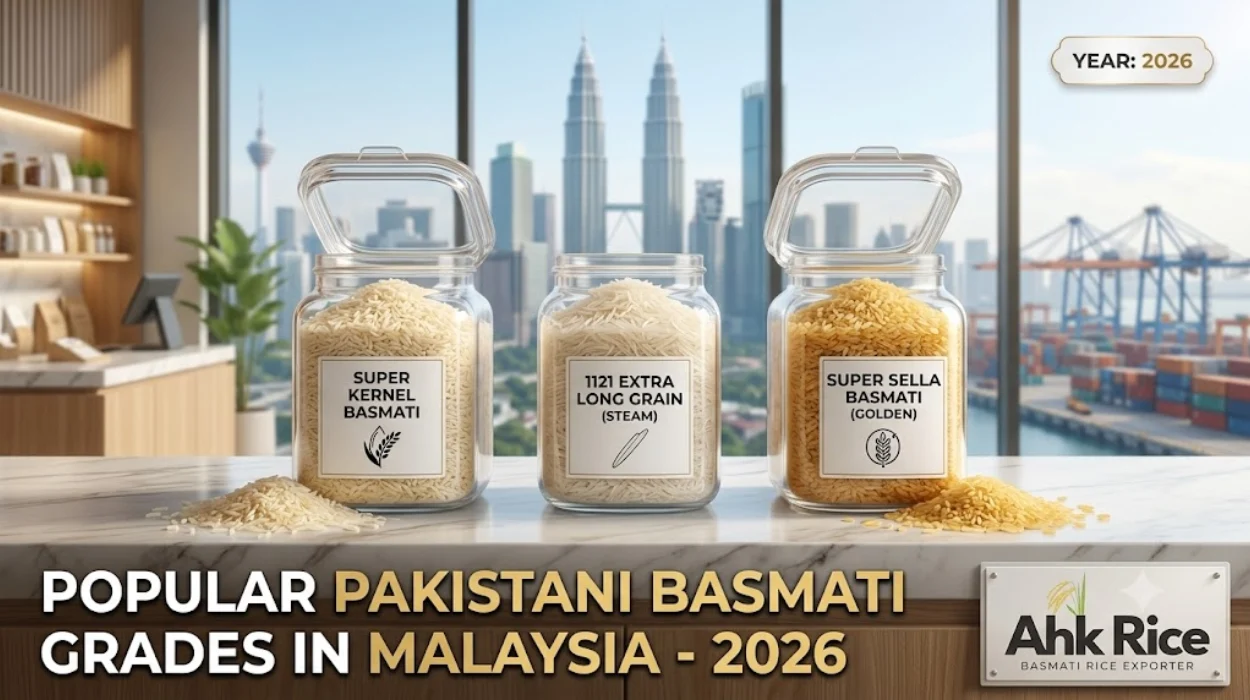
Pakistani Basmati rice grades popular in Malaysia in 2026 are 1121 Steam Basmati, 1121 Golden Sella Basmati, Super Kernel Basmati, and 1509 Basmati Rice. Malaysian importers source these grades because they provide long grain length, strong cooking performance, stable supply, and suitability for retail, restaurants, and food service sectors.
Malaysia remains one of Southeast Asia’s important rice-importing markets. Consumers recognize Basmati rice for its aroma, grain elongation, and premium eating quality. Pakistani exporters supply multiple grades that match different price segments and consumption preferences.
What Are the Most Popular Pakistani Basmati Rice Grades in Malaysia in 2026?
The most imported grades are 1121 Steam, 1121 Golden Sella, Super Kernel, and 1509 Basmati because they offer grain lengths above 7 mm, strong elongation, and suitability for retail and hospitality sectors.
Malaysian buyers classify Basmati rice according to grain length, processing method, cooking characteristics, and intended market segment. Premium supermarkets prefer longer grains and superior aroma. Food service distributors prioritize consistency and cooking yield.
1121 Steam Basmati Rice
1121 Steam Basmati is one of Pakistan’s most exported premium grades. The variety produces raw grain lengths of 8.20–8.40 mm. After cooking, grains expand significantly while remaining separate.
1121 Steam Basmati serves retail brands, supermarkets, and premium food outlets. Malaysian consumers purchase this grade for biryani, pulao, and festive meals.
1121 Golden Sella Basmati Rice
1121 Golden Sella undergoes a parboiling process before milling. The treatment strengthens grain structure and improves storage performance.
1121 Golden Sella performs well in large-scale catering operations. Restaurants choose this grade because grains remain separate after extended holding periods.
Super Kernel Basmati Rice
Super Kernel Basmati is a traditional Pakistani variety known for its natural aroma. The variety has remained popular in export markets for decades.
Super Kernel targets consumers who prioritize fragrance over extreme grain length. Malaysian ethnic food retailers frequently stock this grade.
1509 Basmati Rice
1509 Basmati offers a shorter cultivation cycle and competitive pricing. The variety maintains good elongation and attractive appearance.
1509 appeals to value-focused importers seeking a balance between quality and cost.
With the major grades established, the next question is how these rice varieties move from farms to export markets.
How Does Pakistani Basmati Rice Reach Malaysian Importers?
Pakistani Basmati rice reaches Malaysia through cultivation, harvesting, milling, grading, packaging, certification, container loading, and international shipping.
The supply chain begins in Punjab, Pakistan. Punjab produces most of Pakistan’s Basmati rice because of fertile soil, irrigation infrastructure, and suitable climate conditions.
Cultivation Stage
Farmers cultivate Basmati rice during the Kharif season. Fields receive controlled irrigation throughout plant development.
Basmati varieties require careful water management. Controlled irrigation supports grain development and aroma formation.
Harvesting Stage
Farmers harvest mature paddy using combines or manual methods. Harvest timing affects grain quality and moisture levels.
Harvested paddy moves quickly to drying facilities. Proper drying reduces post-harvest losses.
Milling Stage
Rice mills convert paddy into export-grade rice through several processing stages:
- Clean the paddy.
- De-husk the grain.
- Separate immature kernels.
- Polish the rice.
- Grade by size.
- Sort by color.
- Remove foreign material.
- Test moisture levels.
- Pack for export.
Each processing step improves consistency and market readiness.
Export Stage
Exporters inspect and certify finished rice before shipment. Containers move through Pakistan’s port infrastructure toward Malaysian destinations.
Malaysia receives rice through major import and distribution networks that supply wholesalers, retailers, and food service operators.
With the supply chain explained, the next question is which components define a rice grade.
What Components Define a Pakistani Basmati Rice Grade?
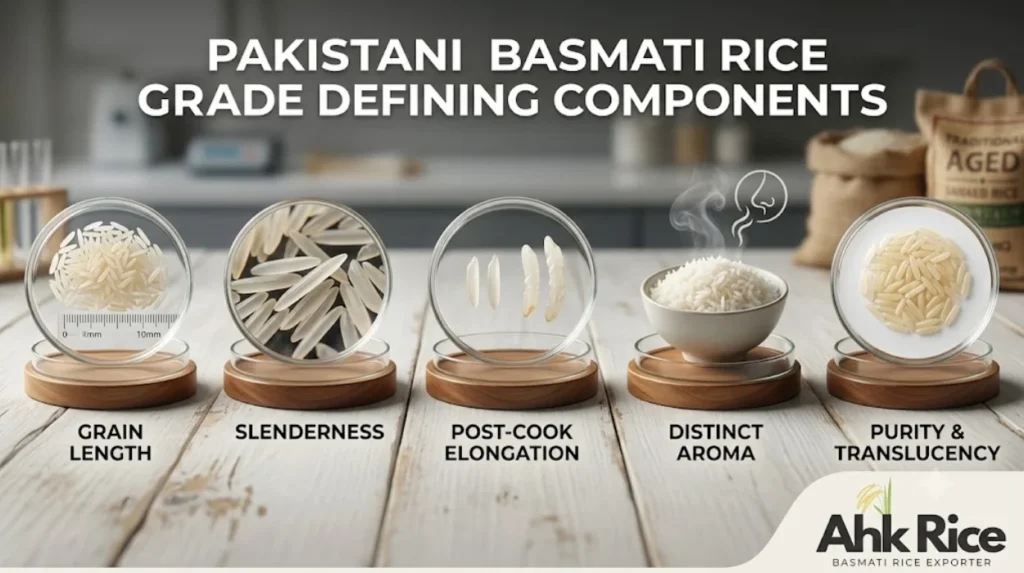
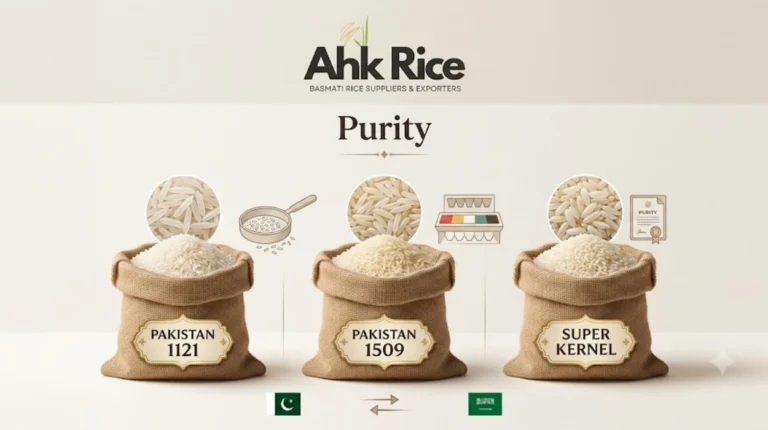
Grain length, processing method, moisture content, broken percentage, aroma, purity, and cooking performance define export-grade Basmati rice.
Importers evaluate several technical specifications before procurement decisions.
| Component | Importance |
|---|---|
| Grain Length | Determines premium classification |
| Broken Percentage | Measures visual quality |
| Moisture Content | Affects storage stability |
| Purity Level | Indicates varietal consistency |
| Aroma | Defines consumer preference |
| Color Uniformity | Improves shelf appearance |
| Cooking Elongation | Impacts customer satisfaction |
Grain Length
Long grains represent the primary quality indicator in premium Basmati markets.
1121 varieties frequently exceed 8 mm before cooking. Super Kernel generally ranges between 7.0–7.5 mm.
Processing Method
Processing affects appearance and functionality.
Common export processing types include:
- Steam Rice
- Golden Sella Rice
- White Rice
- Creamy Sella Rice
Each method creates different cooking and storage characteristics.
Moisture Content
Export rice typically maintains moisture levels around 12–14%. Controlled moisture improves shelf life and shipment stability.
With grading components defined, the next question is why Malaysian buyers prefer these varieties.
What Benefits Do Pakistani Basmati Rice Grades Offer Malaysian Buyers?
Pakistani Basmati rice provides long grain appearance, strong cooking yield, aromatic characteristics, product consistency, and multiple pricing options.
Importers select Basmati rice because it serves both premium and commercial market segments.
Superior Grain Elongation
1121 Basmati produces significant grain expansion during cooking.
Long grains improve plate presentation. Restaurants benefit from attractive food appearance.
Distinct Aroma
Traditional Basmati varieties contain natural aromatic compounds developed during cultivation and aging.
Aroma differentiates Basmati from ordinary long-grain rice varieties.
Multiple Price Segments
Different grades allow importers to serve various customer groups.
Premium supermarkets focus on higher specifications. Food service operators often prioritize cooking yield and value.
Consistent Supply
Pakistan remains one of the world’s leading Basmati-producing countries (source: REAP export data, 2025).
Large cultivation areas support stable export volumes throughout the year (source: Rice Exporters Association of Pakistan, 2025).
With the benefits understood, the next question is how Malaysian businesses use these grades.
What Are the Main Use Cases for Pakistani Basmati Rice in Malaysia?
Retail packaging, restaurants, catering services, hotels, and ethnic food distribution represent the primary uses of Pakistani Basmati rice in Malaysia.
Different grades serve different commercial applications.
Retail Brands
Retail companies package rice into consumer-sized packs ranging from 1 kg to 10 kg.
Premium shelf positioning often features 1121 Steam and Super Kernel varieties.
Restaurants
Restaurants require consistency and grain separation.
1121 Golden Sella performs well in biryani preparation because grains remain intact after cooking.
Catering Companies
Catering operations cook large volumes daily.
Golden Sella maintains texture during bulk service. Steam rice provides premium presentation for banquet events.
Hotels
Hotels use Basmati rice for buffet services and specialty cuisine offerings.
Premium grades support customer expectations for appearance and aroma.
With applications covered, the next question concerns certifications and compliance.
Which Certifications Apply to Pakistani Basmati Rice Exports?
Phytosanitary certification, fumigation certification, quality inspection reports, ISO systems, HACCP systems, and food safety documentation support export compliance.
Rice exports require documentation that verifies product safety and quality.
Phytosanitary Certification
Plant health authorities inspect rice before export.
The certificate confirms compliance with importing-country requirements.
Fumigation Certification
Approved fumigation procedures control storage pests.
Importers often request fumigation documentation before shipment clearance.
HACCP Compliance
Hazard Analysis and Critical Control Point systems manage food safety risks throughout processing.
Food manufacturers frequently require HACCP-based supply chains.
ISO-Based Quality Systems
Many export facilities operate under internationally recognized quality management frameworks.
These systems standardize inspection and processing procedures.
With certification requirements established, the next question addresses common misunderstandings.
What Misconceptions Exist About Pakistani Basmati Rice Grades?
The most common misconceptions involve grain length, aroma, processing methods, and assumptions that all Basmati grades perform identically during cooking.
Rice grades differ significantly despite belonging to the same category.
Misconception 1: All Basmati Rice Is the Same
Different varieties produce different cooking outcomes.
1121 Basmati emphasizes grain length. Super Kernel emphasizes aroma. 1509 emphasizes value.
Misconception 2: Golden Sella Is Lower Quality
Golden Sella follows a different processing method.
Parboiling strengthens grain structure and improves handling performance.
Golden Sella lasts longer than Steam rice under challenging storage conditions. In non-climate-controlled warehouses, Golden Sella maintains grain integrity more effectively. Food service distributors often prefer this specification.
Misconception 3: Longer Grain Always Means Better Rice
Grain length represents one quality factor.
Aroma, purity, moisture control, and cooking consistency also influence market value.
Misconception 4: White Rice and Steam Rice Are Identical
Steam processing alters grain characteristics.
Steam rice generally offers improved appearance and cooking performance compared to conventional white rice.
With misconceptions clarified, the final consideration is how Malaysian demand continues shaping grade preferences.
Why Will These Pakistani Basmati Grades Remain Important in Malaysia During 2026?
1121 Steam, 1121 Golden Sella, Super Kernel, and 1509 Basmati continue leading demand because they satisfy premium retail, hospitality, and food service requirements simultaneously.
Malaysian consumers increasingly recognize Basmati rice as a premium category. Importers respond by sourcing grades that combine appearance, aroma, and cooking performance.
1121 Steam remains the benchmark for premium retail shelves. 1121 Golden Sella continues supporting restaurant and catering operations. Super Kernel maintains demand among consumers seeking traditional aroma. 1509 delivers value while preserving essential Basmati characteristics.
Frequently Asked Questions
Which Pakistani Basmati rice grade is most popular in Malaysia?
1121 Steam Basmati Rice remains one of the most popular grades because of its 8.20–8.40 mm grain length, premium appearance, and strong cooking elongation.
Why do Malaysian restaurants prefer Golden Sella Basmati?
Golden Sella maintains grain separation during large-volume cooking and extended serving periods, making it suitable for catering and restaurant operations.
What is the difference between Super Kernel and 1121 Basmati?
Super Kernel focuses on traditional aroma, while 1121 focuses on extra-long grain length and stronger elongation after cooking.
Which Pakistani province produces most Basmati rice?
Punjab produces the majority of Pakistan’s Basmati rice due to fertile agricultural land and extensive irrigation systems.
What certifications are commonly required for rice exports?
Common certifications include phytosanitary certificates, fumigation certificates, quality inspection reports, HACCP documentation, and food safety compliance records.