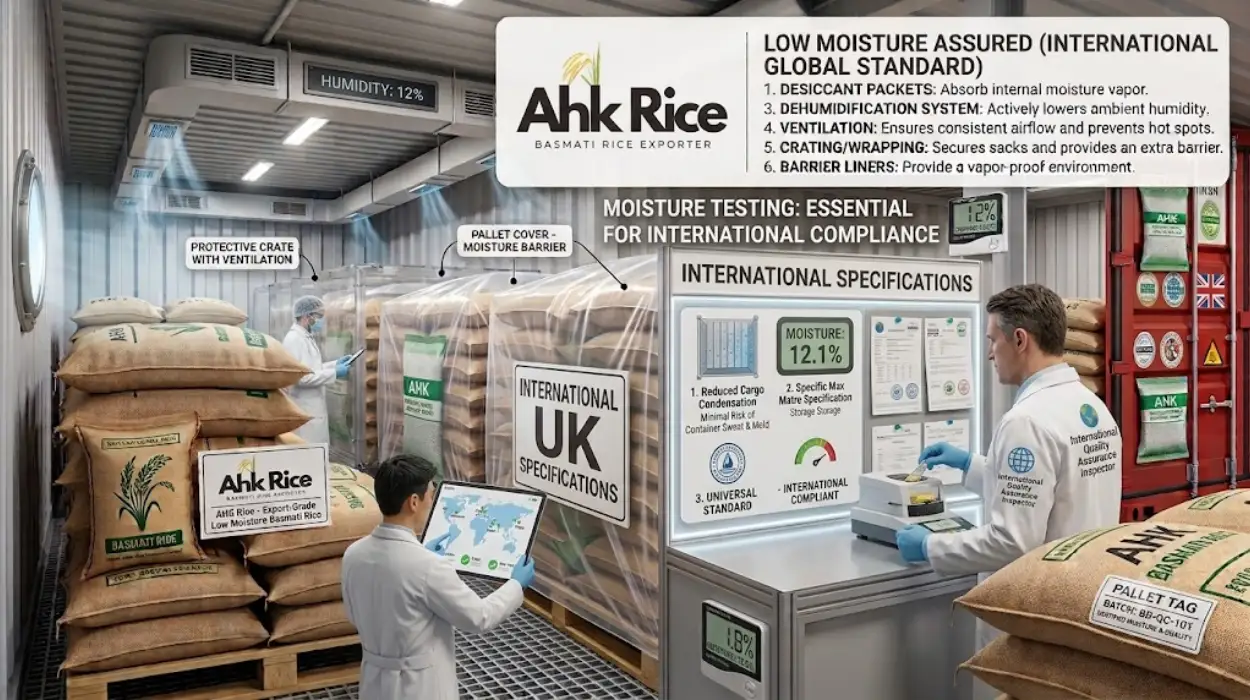
Why Is Moisture Testing Essential in International Rice Procurement?
Moisture testing is essential in international rice procurement. Here is why: moisture levels directly affect rice quality, shelf life, food safety, shipping performance, and contract compliance. Accurate moisture testing prevents spoilage, weight loss, mould growth, and shipment disputes between exporters and importers.
Rice moves through long supply chains. A shipment from Pakistan to Europe can take 25–40 days. A shipment to West Africa can take 20–35 days. Moisture levels determine whether rice arrives in the same condition as when it left the mill. International buyers therefore treat moisture testing as a mandatory quality control requirement rather than an optional inspection step.
What Is Moisture Testing in International Rice Procurement?
Moisture testing measures the percentage of water present inside rice grains. Most export contracts require moisture levels between 12% and 14% depending on the rice variety and destination market.
Moisture content is one of the most important quality indicators in rice trading. It determines how rice behaves during storage, transportation, milling, and cooking.
Rice grains naturally contain water after harvest. Farmers cultivate rice in irrigated fields and harvest paddy when grains reach maturity. Harvested paddy contains higher moisture levels than export-ready rice. Processing facilities therefore reduce moisture through controlled drying before milling and packaging.
International buyers inspect moisture because excess water creates risks. High moisture increases mould activity, insect infestation, discoloration, and grain deterioration during transit.
Rice procurement teams include moisture specifications in purchase contracts. These specifications become measurable quality benchmarks during shipment inspection.
With moisture testing defined, the next question is how the testing process works throughout the export supply chain.
How Does Moisture Testing Work?
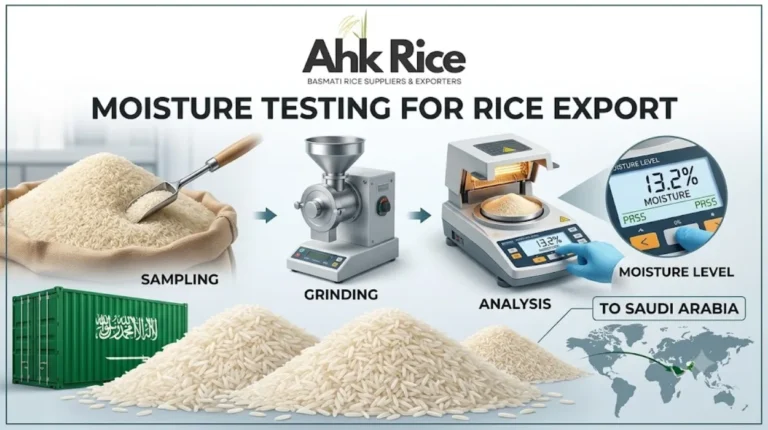
Digital moisture meters, laboratory analysis, and pre-shipment inspections verify moisture content before rice enters international supply chains.
Moisture testing begins after paddy drying. Quality inspectors collect representative samples from different production batches. Sampling from multiple points improves accuracy and reduces testing errors.
How Is Rice Sampled?
Rice sampling follows standardized procedures. Inspectors collect grains from bags, silos, storage bins, and production lots.
Sampling represents the entire shipment rather than a single location. A 500-tonne shipment requires samples from multiple sections to ensure reliable results.
How Is Moisture Measured?
Quality laboratories use calibrated moisture meters and oven-drying methods.
The process typically follows these steps:
- Collect representative samples.
- Clean foreign materials.
- Insert samples into moisture equipment.
- Measure moisture percentage.
- Record results.
- Verify calibration standards.
- Approve or reject the batch.
Digital moisture meters provide rapid results. Laboratory oven testing provides highly accurate verification data.
Inspection reports document moisture values before exporters load containers. Independent inspection companies often verify results before shipment dispatch.
Understanding testing procedures leads directly to understanding the components that influence moisture levels.
What Factors Affect Rice Moisture Levels?
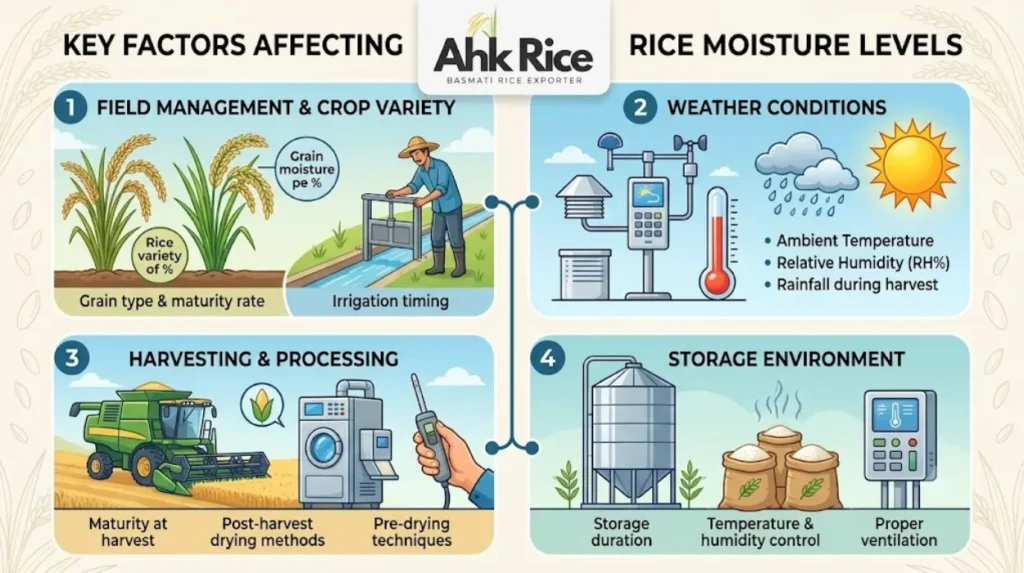
Climate conditions, drying methods, storage systems, packaging materials, and transportation environments influence rice moisture content.
Rice cultivation occurs in regions with varying humidity levels. Pakistan’s Punjab region produces major Basmati varieties including 1121 Basmati, Super Kernel Basmati, and 1509 Basmati.
How Does Harvesting Affect Moisture?
Harvest timing directly affects grain moisture.
Early harvesting produces higher moisture levels. Delayed harvesting increases grain cracking risks. Producers therefore harvest within optimal maturity windows.
How Does Processing Affect Moisture?
Rice processing controls moisture before export.
Processing includes:
- Drying
- Cleaning
- De-husking
- Polishing
- Grading
- Sorting
- Packaging
Each stage influences final moisture content.
Controlled drying reduces moisture to export specifications. Excessive drying causes grain breakage. Insufficient drying increases spoilage risks.
How Does Storage Affect Moisture?
Storage facilities protect rice from environmental humidity.
Warehouse ventilation controls moisture fluctuations. Temperature management reduces condensation inside storage areas.
Container conditions also influence moisture stability. Condensation inside containers creates “container rain,” which damages rice during ocean transit.
Understanding moisture factors explains why testing delivers measurable commercial benefits.
What Are the Benefits of Moisture Testing?
Reduced spoilage, improved shelf life, contract compliance, better milling quality, and lower financial risk make moisture testing essential.
Rice exporters and importers rely on moisture testing because it protects product quality across long shipping routes.
Improved Storage Stability
Rice with controlled moisture stores longer.
Moisture levels above specification accelerate biological activity. Proper moisture levels maintain grain integrity throughout storage periods.
Better Shipping Performance
Export shipments face changing temperatures.
A container traveling from South Asia to Europe experiences multiple climate zones. Moisture testing helps maintain product consistency despite environmental changes.
Reduced Commercial Disputes
International contracts specify measurable standards.
Inspection reports provide documented evidence of shipment quality. Buyers and sellers use these reports to resolve quality verification requirements.
Higher Milling Performance
Rice mills benefit from controlled moisture.
Proper moisture levels reduce grain breakage during polishing and grading. Lower breakage improves yield and preserves grain appearance.
These advantages explain why moisture testing has become standard practice across global rice markets.
Which Rice Grades and Markets Require Moisture Compliance?
All major rice grades require moisture compliance, including Basmati, long-grain rice, parboiled rice, and white rice destined for global import markets.
Moisture requirements apply across all commercial rice categories.
Which Basmati Grades Require Testing?
Basmati rice exporters inspect every export grade.
Common grades include:
- 1121 Steam Basmati
- 1121 Sella Basmati
- 1121 White Basmati
- Super Kernel Basmati
- 1509 Steam Basmati
- 1509 Sella Basmati
- PK 386 Rice
Each grade requires moisture verification before export dispatch.
Which Countries Import Moisture-Tested Rice?
Major rice-importing markets enforce quality standards.
Key destinations include:
- Saudi Arabia
- United Arab Emirates
- Iraq
- Kuwait
- Oman
- United Kingdom
- Germany
- Canada
- United States
- Australia
- South Africa
Many importers require third-party inspection certificates before customs clearance.
Pakistan remains one of the world’s leading Basmati exporters (source: Pakistan Bureau of Statistics, FY2024-25).
With market requirements established, certification standards become the next important consideration.
Which Certifications Support Moisture Compliance?
ISO standards, HACCP systems, food safety certifications, phytosanitary controls, and third-party inspection reports support moisture compliance verification.
Certification frameworks create consistency across international trade.
What Quality Certifications Apply?
Common certifications include:
- ISO 22000
- HACCP
- GMP
- Halal Certification
- Phytosanitary Certification
- SGS Inspection Reports
- Bureau Veritas Inspection Reports
These certifications support quality assurance programs throughout processing operations.
Why Are Inspection Certificates Important?
Inspection certificates provide documented evidence.
Importers review inspection reports before accepting shipments. Banks also review quality documents under certain trade finance arrangements.
Certification systems strengthen confidence between exporters and procurement teams.
The certification process naturally leads to common misconceptions surrounding moisture testing.
What Are the Most Common Misconceptions About Moisture Testing?
Moisture testing does not focus only on weight. It protects quality, food safety, storage performance, and commercial compliance.
Many procurement teams initially view moisture testing as a simple weight-control measure. The reality is broader.
Misconception 1: Lower Moisture Always Means Better Quality
Excessively low moisture damages rice.
Very dry grains become brittle. Brittle grains break more easily during handling and milling.
Misconception 2: Visual Inspection Is Enough
Visual assessment cannot accurately measure moisture.
Rice grains with different moisture levels often appear identical. Reliable measurement requires calibrated testing equipment.
Misconception 3: Moisture Changes Only During Harvest
Moisture changes throughout storage and transportation.
Humidity fluctuations influence grain moisture after processing. Continuous monitoring therefore remains important.
Misconception 4: Testing Once Is Sufficient
Quality teams verify moisture multiple times.
Testing occurs during drying, processing, storage, packaging, and pre-shipment inspection.
These misconceptions highlight why professional moisture management remains essential across the rice supply chain.
Why Will Moisture Testing Remain Critical for Future Rice Trade?
Growing food safety requirements, stricter import regulations, and longer international supply chains make moisture testing increasingly important.
Global buyers demand measurable quality standards. Moisture content remains one of the easiest and most reliable indicators of rice condition.
Rice procurement depends on consistency. Consistency depends on controlled moisture. Exporters therefore test, verify, document, and certify moisture levels before shipments leave the processing facility.
Importers use moisture reports to protect inventory quality. Retailers use moisture compliance to maintain shelf life. Consumers benefit from safer and more consistent rice products.
Understanding moisture testing provides the foundation for understanding how exporters verify compliance before containers are loaded for international shipment.
Frequently Asked Questions
What is the ideal moisture content for exported rice?
Most export rice shipments maintain moisture levels between 12% and 14%, depending on buyer specifications and destination requirements.
Why does high moisture damage rice?
High moisture encourages mould growth, insect activity, grain discoloration, and spoilage during storage and transportation.
How do exporters test rice moisture?
Exporters use calibrated digital moisture meters and laboratory testing methods to verify moisture percentages before shipment.
Can moisture levels change during shipping?
Yes. Temperature changes and container condensation affect moisture conditions during long-distance transportation.
Do all rice varieties require moisture testing?
Yes. Basmati rice, parboiled rice, white rice, long-grain rice, and specialty rice varieties all require moisture verification before export.
Who verifies moisture compliance in international trade?
Export quality teams, accredited laboratories, and third-party inspection agencies such as SGS and Bureau Veritas verify compliance.