How Does Crop Age Influence Cooking Performance and Grain Quality?
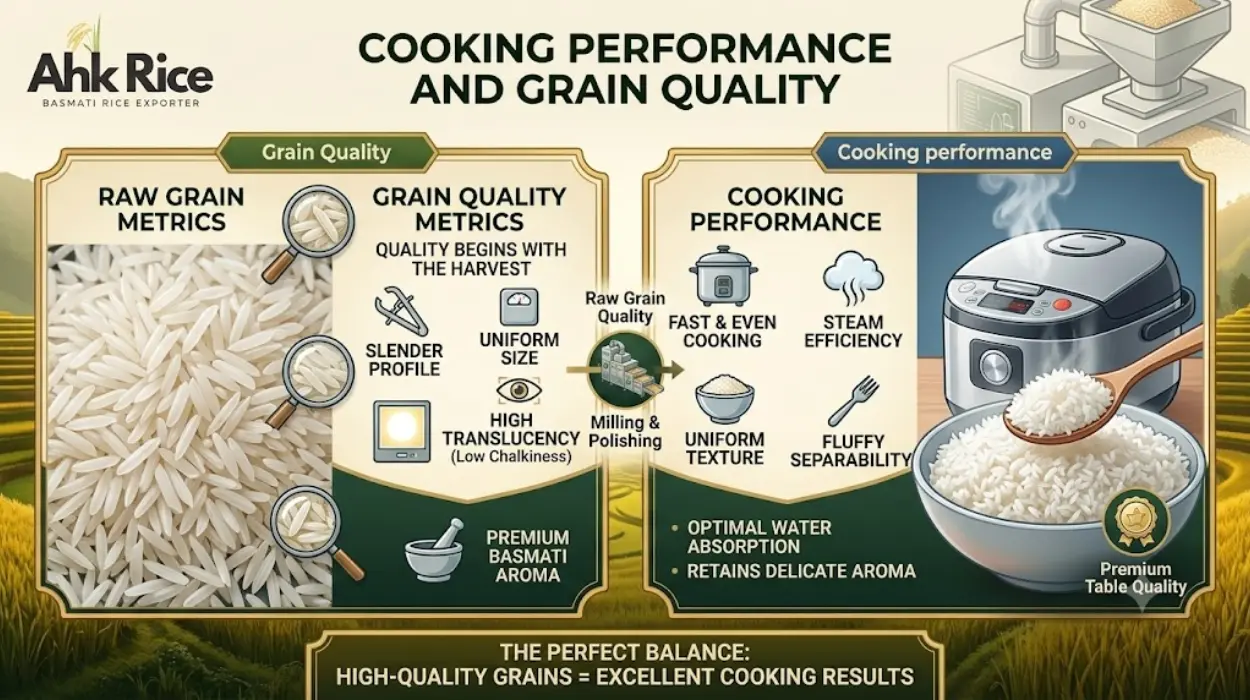
Crop age significantly influences Basmati rice quality. Here is why: rice aged for 12–24 months delivers longer grain elongation, lower stickiness, better aroma release, and more consistent cooking results than freshly harvested rice. Age reduces moisture, stabilizes starch structure, and improves grain performance during commercial cooking.
Rice buyers often compare origin, variety, and processing grade. Crop year deserves equal attention. Importers, wholesalers, and foodservice distributors evaluate crop age because it affects cooking yield, customer satisfaction, and storage performance. Understanding crop-year differences helps buyers select specifications that match their target markets and commercial requirements.
Businesses evaluating long-term procurement strategies can also explore our guide on understanding how harvest seasons shape rice availability and pricing trends. Crop age affects quality in the same way harvest conditions affect supply planning.
AHK Rice supplies Pakistani Basmati varieties including 1121, Super Kernel, and 1509 through complete milling, grading, packaging, and export operations for international buyers.
What Happens to Basmati Rice as It Ages?
Basmati rice develops stronger cooking characteristics after 12–24 months of controlled storage because moisture decreases from around 14% to 10–12%, allowing better grain separation and elongation.
Crop age refers to the period between harvest and consumption. Freshly harvested rice contains higher moisture content and less stable starch composition. During storage, natural biochemical changes improve cooking behavior.
Aged rice absorbs water more evenly. Uniform absorption allows grains to expand without breaking. Restaurants value this characteristic because consistent cooking reduces waste.
Aroma compounds also mature during storage. Basmati’s distinctive fragrance becomes more pronounced after proper aging. Premium retail markets often prefer aged inventory because consumers associate stronger aroma with higher quality.
How Aging Changes Rice Structure
Storage affects two important components:
- Reduce grain moisture
- Stabilize starch molecules
- Improve water absorption
- Increase grain elongation
- Enhance aroma release
- Improve grain separation
- Reduce surface stickiness
These changes explain why aged Basmati commands higher prices in premium markets.
With aging effects established, the next question is how aged and fresh crop rice compare directly.
How Do New Crop and Aged Crop Basmati Rice Compare?
Aged Basmati rice outperforms fresh crop rice in elongation, texture, aroma, shelf stability, and cooking consistency, while fresh crop rice offers lower procurement costs.
Importers frequently compare fresh crop stock with aged inventory. The differences become clear during cooking and storage.
Specification Comparison Table
| Attribute | Fresh Crop Rice | Aged Crop Rice |
|---|---|---|
| Moisture Level | 13–14% | 10–12% |
| Grain Elongation | Moderate | High |
| Cooking Texture | Softer | Separate & fluffy |
| Aroma Strength | Medium | Strong |
| Breakage Risk | Higher | Lower |
| Shelf Life | 12–18 months | 18–24 months |
| Price per MT | Lower | Higher |
Fresh crop rice works well for cost-sensitive buyers. Aged rice performs better for premium retail and foodservice applications.
Aged rice produces longer cooked grains than fresh crop rice. Aged rice also maintains structure during buffet service. Aged rice further improves consistency across large production batches.
Fresh crop rice remains suitable for markets prioritizing affordability over presentation.
The comparison shows clear performance differences. The next step is examining available buyer solutions.
What Are the Available Solutions for Buyers?
Importers can choose fresh crop rice, medium-aged rice, fully aged rice, or crop-year-specific procurement programs depending on budget and end-use requirements.
Different buyers require different specifications.
Fresh Crop Rice
Fresh crop rice is harvested and processed within the same season.
Advantages include:
- Lower procurement cost
- Faster availability
- Larger supply volumes
- Competitive pricing
Disadvantages include:
- Reduced elongation
- Softer texture
- Lower aroma intensity
- Shorter storage flexibility
Fresh crop rice suits budget-focused markets.
Medium-Aged Rice
Medium-aged rice usually matures for 6–12 months.
Advantages include:
- Better cooking performance
- Moderate pricing
- Improved grain separation
- Balanced inventory costs
Medium-aged rice appeals to distributors serving mixed retail and wholesale channels.
Fully Aged Rice
Fully aged rice remains in controlled storage for 12–24 months.
Advantages include:
- Premium cooking quality
- Strong aroma profile
- Superior grain elongation
- Longer storage life
Disadvantages include:
- Higher inventory costs
- Higher purchase prices
- Reduced supply volumes
Fully aged rice serves premium retail and hospitality segments.
The available solutions depend on market expectations. The next question examines regional buying preferences.
Which Markets Prefer Different Crop Ages?
The UK generally favors aged premium grades, while Gulf markets purchase both aged and fresh crop grades depending on retail or foodservice requirements.
Regional demand patterns influence procurement decisions.
UK Market Preferences
The UK market prioritizes quality consistency.
Preferred grades include:
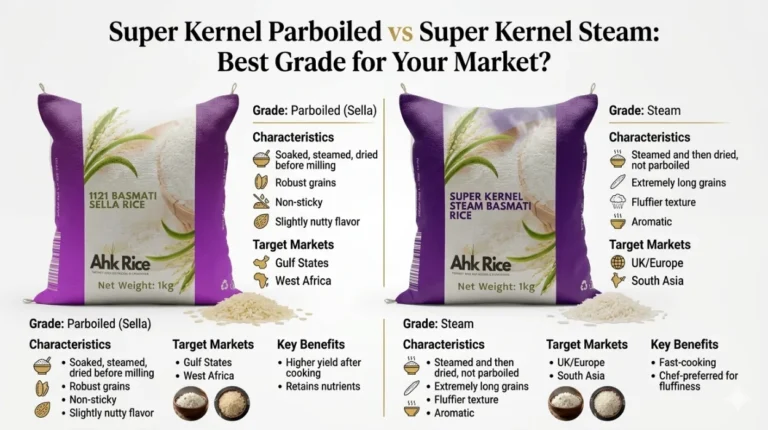
- 1121 Steam Basmati
- 1121 Sella Basmati
- Super Kernel Basmati
Retail consumers expect strong aroma and long grain appearance. Importers therefore prefer aged stock.
Aged rice also supports premium supermarket positioning. Higher cooking performance justifies premium shelf pricing.
Gulf Market Preferences
The Gulf region contains both premium and value segments.
Premium retailers favor aged rice. Catering companies often balance quality and budget requirements.
Popular grades include:
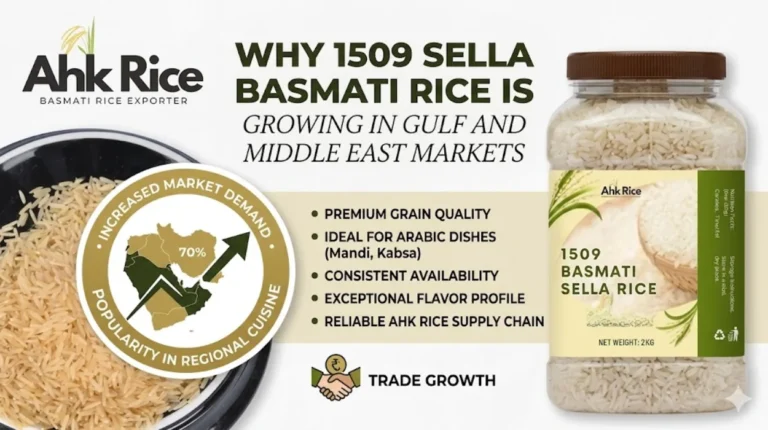
- 1121 Golden Sella
- 1509 Steam Rice
- Super Kernel Rice
Golden Sella performs particularly well in hot storage environments. Shelf stability remains strong even under challenging warehouse conditions.
According to REAP export statistics, Gulf countries remain among Pakistan’s largest rice destinations (source: REAP export data, December 2025).
Regional preferences highlight pricing considerations. The next section compares commercial costs.
How Does Crop Age Affect Price Per Metric Ton?
Older crop rice costs more because storage, financing, inventory management, and quality preservation increase supplier expenses.
Price differences vary by season and variety.
Typical Commercial Price Relationship
| Rice Type | Relative Price |
|---|---|
| Fresh Crop | Baseline |
| 6–12 Month Aged | 5–10% Higher |
| 12–24 Month Aged | 10–20% Higher |
Storage creates value. Buyers pay for improved performance rather than age alone.
Aged rice delivers stronger customer satisfaction. Premium retailers often recover higher procurement costs through stronger consumer demand.
Foodservice operators frequently achieve better portion consistency. Reduced cooking variation lowers operational waste.
Price differences matter, but performance drives final purchasing decisions. The next section evaluates practical applications.
Which Crop Age Works Best for Different Applications?
Fresh crop rice suits value markets, medium-aged rice suits balanced distribution channels, and fully aged rice suits premium retail and hospitality sectors.
Decision Framework Table
| Buyer Type | Recommended Crop Age | Main Reason |
|---|---|---|
| Budget Importer | Fresh Crop | Lowest cost |
| Wholesale Distributor | 6–12 Months | Balanced value |
| Premium Retailer | 12–24 Months | Superior quality |
| Hotel Chain | 12–24 Months | Consistent presentation |
| Catering Company | 6–12 Months | Cost-performance balance |
Example: Retail Supermarkets
Retail shelves reward visual quality.
Long grains create stronger consumer appeal. Premium packaging benefits from superior grain appearance.
Example: Restaurants
Restaurants prioritize consistency.
Aged rice produces repeatable cooking outcomes. Uniform quality improves customer satisfaction.
Example: Bulk Food Programs
Institutional buyers often prioritize affordability.
Fresh crop rice meets budget requirements while maintaining acceptable quality standards.
Application requirements determine the correct specification. The final evaluation involves weighing advantages and disadvantages.
What Are the Pros and Cons of Aged Basmati Rice?

Aged rice offers superior quality and cooking performance, while fresh crop rice provides cost advantages and faster market availability.
Pros of Aged Rice
- Better grain elongation
- Stronger aroma
- Improved texture
- Longer shelf life
- Consistent cooking results
Example: UK retail buyers frequently choose aged 1121 Basmati because consumers expect long, fluffy grains.
Example: Premium restaurants prefer aged stock because presentation influences customer perception.
Cons of Aged Rice
- Higher procurement cost
- Larger inventory investment
- Reduced seasonal availability
Example: Value-focused distributors may prefer fresh crop rice because pricing drives purchasing decisions.
Pros of Fresh Crop Rice
- Lower pricing
- Immediate availability
- Larger supply volumes
Cons of Fresh Crop Rice
- Reduced elongation
- Softer texture
- Shorter storage flexibility
These advantages and disadvantages create clear decision criteria for buyers.
What Factors Should Buyers Evaluate Before Choosing Crop Age?
Cooking performance, target market, storage duration, budget, and consumer expectations are the five most important decision factors.
Buyers should evaluate:
- Target customer segment
- Required grain appearance
- Available storage capacity
- Price sensitivity
- Distribution timeline
Premium markets reward aged rice performance. Value markets often prioritize procurement cost.
Importers serving multiple customer categories frequently maintain both fresh and aged inventory programs. This strategy balances profitability and market coverage.
Crop age should never be evaluated separately from variety, processing grade, packaging format, and destination market requirements.
Conclusion
Crop age directly affects cooking performance and grain quality. Aged Basmati rice delivers longer grain elongation, stronger aroma, better texture, and longer shelf stability. Fresh crop rice provides lower costs and wider availability. The correct specification depends on the target market, pricing strategy, and end-use application.
Importers targeting premium retail and hospitality channels generally achieve better results with aged rice. Buyers focused on volume distribution often select fresh or medium-aged stock. Understanding these differences allows procurement teams to align rice specifications with commercial objectives.
FAQs
Does aged Basmati rice cook better than fresh crop rice?
Yes. Aged Basmati absorbs water more evenly, produces longer grains, and creates a fluffier texture after cooking.
What is the ideal age for premium Basmati rice?
Most premium buyers prefer rice aged between 12 and 24 months because aroma and grain performance reach optimal levels.
Why is aged rice more expensive?
Storage, inventory financing, quality control, and reduced availability increase supplier costs and market value.
Which Basmati variety benefits most from aging?
1121 Basmati shows significant improvement in grain elongation, aroma development, and cooking consistency after aging.
Is fresh crop rice suitable for export?
Yes. Fresh crop rice remains suitable for many wholesale and value-oriented markets where cost efficiency is a priority.
How long can aged Basmati rice be stored?
Properly packed aged rice typically maintains quality for 18–24 months under suitable warehouse conditions.