How Do Exporters Preserve Basmati Rice Aroma During Processing?
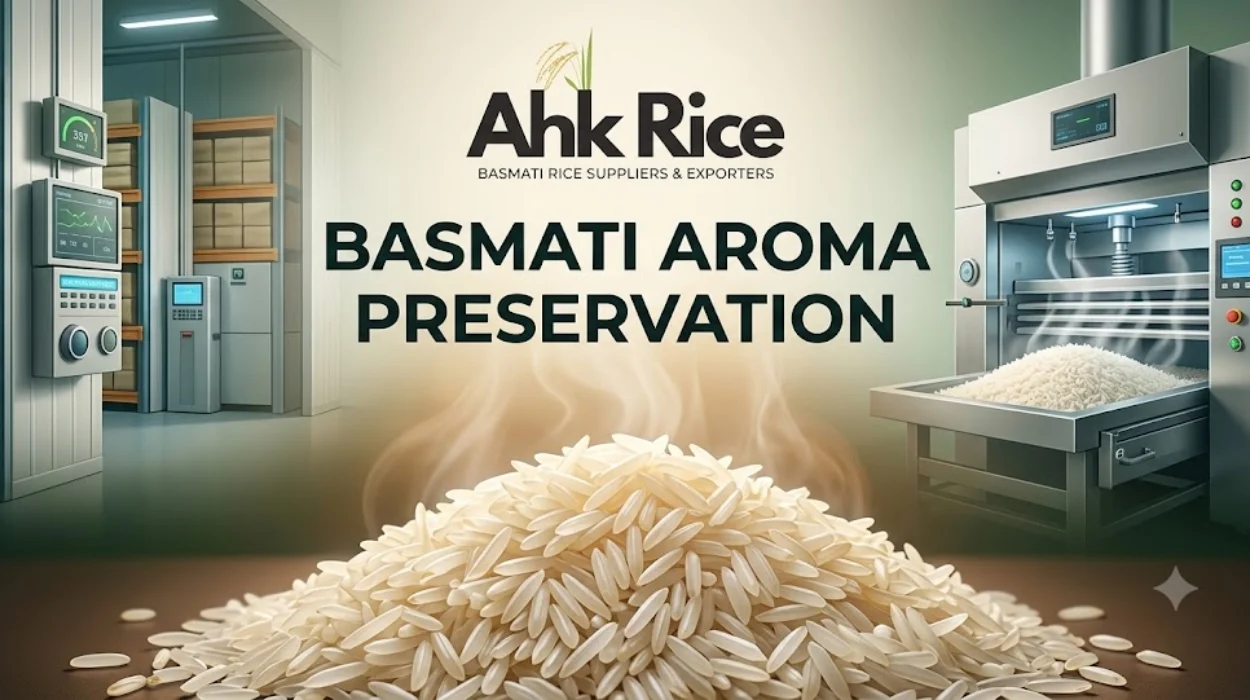
The most effective exporters preserve Basmati rice aroma by controlling moisture, temperature, milling pressure, storage conditions, and packaging throughout processing rather than relying on a single technique. In 2026, premium Pakistani exporters consistently combine multiple preservation methods to maintain the natural aromatic compound content from paddy reception until the rice reaches international buyers.
Natural aroma is the defining quality of authentic Pakistani Basmati rice, but preserving it requires precise processing decisions after harvesting. If you want to understand why authentic Basmati naturally develops its fragrance before processing begins, read our guide explaining:
How the unique growing environment creates the signature aroma of Pakistani Basmati rice Understanding aroma formation makes it easier to evaluate which preservation methods deliver the best export quality.
Exporters such as AHK Rice, a Pakistani Basmati rice exporter based in Punjab, apply integrated processing systems that combine controlled drying, precision milling, modern grading, hygienic storage, and export packaging to preserve aroma across varieties including 1121, Super Kernel, and 1509 Basmati rice. The objective is not to create aroma artificially but to retain the naturally occurring aromatic compounds developed during cultivation through scientifically controlled processing before shipment.
What causes Basmati rice aroma to decline during processing?
Basmati aroma decreases when excessive heat, improper drying, aggressive milling, moisture fluctuations, oxygen exposure, or poor storage damage volatile aromatic compounds. Exporters therefore manage every processing stage with measurable quality parameters instead of relying on traditional handling methods that introduce unnecessary quality loss.
Pakistani Basmati rice contains naturally occurring volatile compounds responsible for its recognizable fragrance. The most significant aroma compound is 2-Acetyl-1-Pyrroline (2AP). This compound is highly sensitive to environmental conditions throughout post-harvest processing.
Several factors reduce aroma retention:
- High drying temperatures
- Mechanical damage during milling
- Excessive polishing
- Moisture above recommended storage limits
- Long exposure to oxygen
- High warehouse temperatures
- Direct sunlight during storage
- Poor packaging materials
Professional exporters therefore monitor processing instead of focusing only on grain appearance.
Typical aroma preservation workflow includes:
- Controlled paddy drying
- Stable moisture conditioning
- Precision dehusking
- Low-friction whitening
- Optional polishing
- Electronic sorting
- Grading
- Metal detection
- Hygienic packaging
- Climate-controlled storage
Every stage influences the final aroma experienced by consumers.
What are the available solutions for preserving Basmati rice aroma?
Exporters preserve aroma through controlled drying, optimized milling, proper aging, climate-controlled storage, moisture management, oxygen-resistant packaging, and continuous quality monitoring. Premium exporters combine these techniques because aroma preservation depends on an uninterrupted processing chain rather than one isolated improvement.
Several preservation strategies are used across Pakistan’s export industry.
Controlled Drying
Freshly harvested paddy contains excess moisture.
Drying too quickly causes internal grain stress.
Drying too slowly increases microbial risks.
Modern exporters reduce moisture gradually until suitable milling levels are reached.
Precision Milling
Modern milling machines create less friction.
Lower friction means less heat.
Lower heat helps preserve volatile aroma compounds.
Precision milling also reduces broken grains.
Moisture Management
Export-grade Basmati generally maintains moisture within internationally accepted commercial specifications before packaging.
Stable moisture prevents aroma degradation during shipping.
Controlled Aging
Premium Basmati is often aged before export.
Proper aging enhances cooking performance while allowing aroma development to stabilize naturally.
Food-Grade Packaging
Packaging materials act as aroma barriers.
Multi-layer laminated bags preserve fragrance better than woven sacks alone.
Vacuum and nitrogen-flushed packaging are increasingly used for premium retail markets.
Climate-Controlled Storage
Warehouse temperature directly affects aroma retention.
Professional warehouses maintain consistent environmental conditions that minimize quality deterioration before container loading.
How do different aroma preservation approaches compare?
Modern integrated processing consistently preserves more aroma than traditional processing because every production stage remains controlled. Exporters combining precision equipment, scientific monitoring, and protective packaging achieve greater consistency across export shipments than facilities relying on conventional manual operations.
Aroma Preservation Comparison
| Attribute | Traditional Processing | Modern Export Processing |
|---|---|---|
| Drying control | Weather dependent | Automated monitoring |
| Milling temperature | Higher | Lower |
| Broken percentage | Higher | Lower |
| Moisture consistency | Variable | Uniform |
| Aroma retention | Moderate | High |
| Packaging quality | Basic | Multi-layer export packaging |
| Shipment consistency | Variable | Consistent |
Modern systems improve repeatability.
International buyers value consistency more than occasional peak quality.
How do export markets differ in aroma quality expectations?
Different importing regions prioritize different grades according to consumer cooking habits, retail positioning, and food-service demand. Premium aroma generally commands higher prices in developed retail markets, while institutional buyers often balance aroma with affordability and cooking yield.
Regional Comparison
| Market Region | Preferred Grades | Aroma Priority | Typical 2026 Price Range (USD/MT FOB Pakistan)* | Preferred Packaging |
|---|---|---|---|---|
| USA | 1121 Steam, 1121 White, Super Kernel Premium | Very High | 1,150–1,450 | Retail bags, private label |
| Middle East (UAE & Saudi Arabia) | 1121 Steam, 1509 Steam, Super Kernel | High | 980–1,320 | Retail and wholesale |
| Europe | Premium 1121 White | Very High | 1,200–1,500 | Branded retail |
| Africa | 1509 varieties | Moderate | 850–1,050 | Bulk sacks |
*Prices vary according to crop conditions, freight markets, certification requirements, grain length, broken percentage, and contract volume during 2026.
American retail buyers generally prioritize:
- Strong aroma
- Extra-long grains
- Low broken percentage
- Attractive packaging
- Consistent cooking performance
Middle Eastern wholesale buyers often emphasize:
- Value
- Cooking expansion
- Reliable supply
- Stable aroma
- Competitive pricing
How does shelf life compare across different preservation methods?
Shelf life depends more on moisture stability and packaging quality than on milling alone. Proper storage and export packaging allow aromatic Basmati rice to retain its premium sensory characteristics significantly longer than rice stored under uncontrolled warehouse conditions.
Shelf Life Comparison
| Preservation Method | Expected Aroma Stability |
|---|---|
| Basic woven bags | 8–12 months |
| Laminated packaging | 12–18 months |
| Vacuum packaging | 18–24 months |
| Nitrogen-flushed packs | Up to 24 months |
| Climate-controlled storage before shipment | Maximizes export freshness |
Actual shelf life also depends on:
- Storage temperature
- Relative humidity
- Warehouse hygiene
- Distribution conditions
- Retail storage
Which preservation method works best for different export situations?
The best preservation strategy depends on destination market, shipment duration, product positioning, packaging format, and customer expectations. Exporters match processing methods to buyer requirements instead of applying identical specifications across every export contract.
Retail supermarket brands usually require:
- Premium milling
- High aroma retention
- Retail packaging
- Attractive grain appearance
Food-service distributors often prioritize:
- Cooking consistency
- High expansion ratio
- Competitive pricing
- Reliable container uniformity
Private-label importers frequently request:
- Customized packaging
- Consistent specifications
- Stable aroma
- Full quality documentation
Bulk wholesalers generally focus on:
- Shipment reliability
- Competitive FOB pricing
- Standard export grades
- Large-volume production
What are the advantages and disadvantages of each aroma preservation strategy?
Every preservation technique offers measurable benefits while introducing different operational costs or processing requirements. Successful exporters select combinations that balance quality, efficiency, destination market expectations, and commercial feasibility instead of maximizing only one performance indicator.
Controlled Drying
Advantages
- Better aroma retention
- Lower cracking
- Better milling yield
Disadvantages
- Higher equipment investment
- Longer processing cycle
Precision Milling
Advantages
- Lower heat generation
- Better grain appearance
- Reduced broken percentage
Disadvantages
- Higher maintenance costs
- Requires skilled operators
Controlled Aging
Advantages
- Improved cooking
- Stable aroma
- Premium positioning
Disadvantages
- Increased inventory cost
- Longer production planning
Advanced Packaging
Advantages
- Better aroma protection
- Longer shelf life
- Premium presentation
Disadvantages
- Higher packaging costs
- More complex logistics
Example:
A supermarket chain selling premium Basmati benefits from vacuum packaging because consumers expect maximum freshness.
A wholesale importer supplying restaurants may instead choose laminated packaging that balances cost and aroma retention.
Which decision factors should buyers evaluate when comparing exporters?
Importers should compare measurable processing capabilities instead of marketing claims. Production controls, quality certifications, packaging technology, laboratory testing, and traceability provide stronger indicators of aroma preservation than promotional descriptions or pricing alone.
Exporter Evaluation Framework
| Decision Factor | Why It Matters | Buyer Benefit |
|---|---|---|
| Moisture Control | Preserves aroma stability | Longer shelf life |
| Modern Milling | Reduces heat damage | Better fragrance |
| Packaging Options | Limits aroma loss | Fresher retail product |
| Laboratory Testing | Confirms specifications | Consistent quality |
| Traceability System | Improves supply transparency | Greater confidence |
Additional evaluation questions include:
- Is the rice naturally aromatic?
- Is moisture measured before shipment?
- What packaging formats are available?
- Are laboratory reports provided?
- How are warehouses managed?
- Is grading automated?
- What export certifications accompany shipments?
Objective answers to these questions provide more useful comparisons than promotional claims.
How should buyers compare preservation capabilities before selecting an exporter?
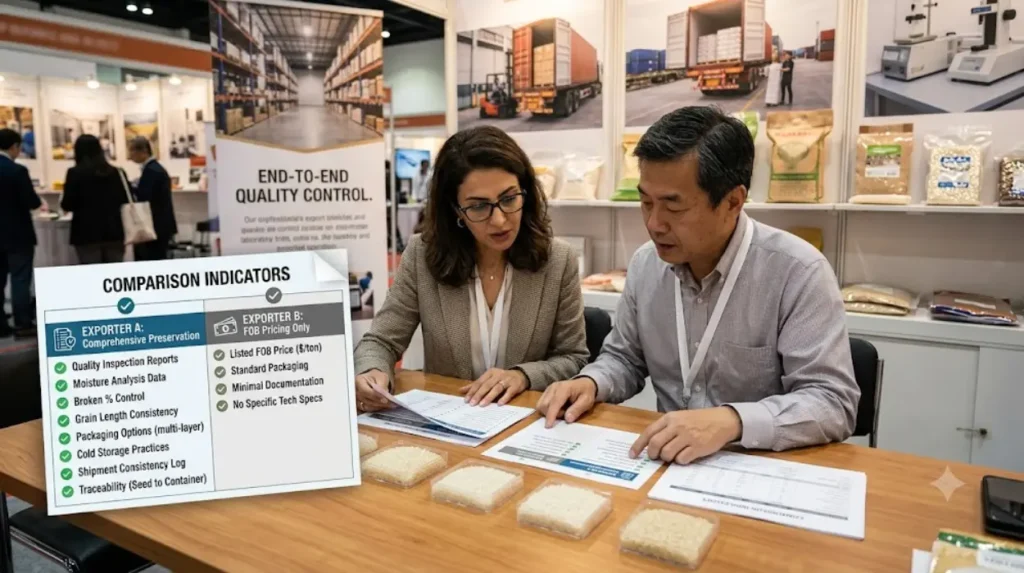
The most reliable comparison combines laboratory specifications, production controls, packaging options, storage practices, shipment consistency, and documentation rather than evaluating only FOB pricing. Buyers who assess complete processing systems usually experience fewer quality variations after import.
Modern exporters increasingly provide:
- Quality inspection reports
- Moisture analysis
- Broken percentage reports
- Grain length specifications
- Packaging customization
- Container loading documentation
- Batch traceability
- Export certifications
These measurable indicators allow buyers to compare suppliers using standardized specifications instead of subjective quality descriptions.
As international buyers move from understanding aroma science toward selecting long-term supply partners, the next evaluation focuses on exporters capable of consistently delivering naturally aromatic rice at commercial scale. That transition is explored in our guide on:
Choosing a supplier of naturally aromatic Pakistani Basmati rice for USA distribution.
Frequently Asked Questions
How is the natural aroma of Basmati rice preserved during processing?
Natural aroma is preserved through controlled drying, low-heat milling, moisture management, climate-controlled storage, and protective packaging that minimizes the loss of volatile aromatic compounds.
Which processing stage has the greatest impact on Basmati rice aroma?
Drying and milling have the greatest impact because excessive heat or mechanical friction can reduce the concentration of natural aromatic compounds before packaging.
Does aging improve the aroma of Pakistani Basmati rice?
Yes. Proper aging allows the grain to mature naturally, enhancing its fragrance, improving cooking performance, and increasing grain elongation after cooking.
What packaging is best for preserving Basmati rice aroma?
Multi-layer laminated bags, vacuum packaging, and nitrogen-flushed packaging provide the best protection by reducing oxygen exposure and helping maintain freshness during export.
How do exporters measure aroma preservation quality?
Exporters evaluate moisture content, grain temperature, milling quality, broken percentage, storage conditions, and laboratory quality reports to ensure aroma is retained throughout processing.
Which Basmati rice varieties retain aroma the best?
Premium Pakistani varieties such as 1121 Basmati, Super Kernel Basmati, and 1509 Basmati naturally retain excellent aroma when processed and stored under controlled conditions.
How does moisture affect Basmati rice aroma?
Excess moisture accelerates quality deterioration, while controlled moisture levels help preserve fragrance, improve shelf life, and maintain grain quality during transportation.
Why do international buyers compare aroma preservation methods?
Buyers compare preservation methods to ensure consistent product quality, longer shelf life, reliable cooking performance, and customer satisfaction across different export shipments.
Which export markets demand the highest aroma retention?
The United States, Europe, and premium Middle Eastern retail markets generally require high aroma retention along with long grain length, low broken percentage, and consistent quality.
What should importers evaluate before choosing a Basmati rice exporter?
Importers should review processing technology, moisture control systems, milling practices, packaging options, laboratory testing, quality certifications, and shipment consistency before selecting an exporter.