Why Is Product Traceability Important for Welsh Rice Importers?
Product traceability lets Welsh rice importers identify where rice originated, how it was processed, which batch was shipped, and where it was delivered. Here is why: UK food law requires businesses to maintain supplier and customer records that support rapid withdrawal or recall.
For Basmati rice imported from Pakistan, traceability connects farm origin, rice variety, processing batch, quality tests, export documents, container details, and delivery records. This creates one continuous information chain from cultivation to the Welsh buyer’s warehouse.
What Is Product Traceability for Welsh Rice Importers?
Product traceability is the documented ability to track rice one step backward to its supplier and one step forward to its customer. The record identifies the product, quantity, transaction date, supplier, buyer, and relevant batch information throughout the food chain.
UK food businesses must maintain traceability records for food they receive and supply. These records include supplier details, customer details, product type, quantity, transaction dates, and delivery dates. The information must remain available for inspection.
Welsh rice importers operate under Great Britain food law. England and Wales apply assimilated General Food Law, including traceability requirements derived from Regulation 178/2002. Article 18 requires businesses to identify their food suppliers and the businesses receiving their products.
Basmati traceability starts before the container reaches Wales. The importer records the exporter, variety, crop information, processing facility, batch reference, packaging format, quantity, shipping documents, and destination.
This information becomes especially important for rice originating from Pakistan. Current GB controls identify Pakistani rice under import restrictions relating to contaminants, including aflatoxins and Ochratoxin A.
With traceability defined, the next question is how each supply-chain stage creates the records Welsh importers rely on.
How Does Rice Traceability Work from Farm to Shipment?
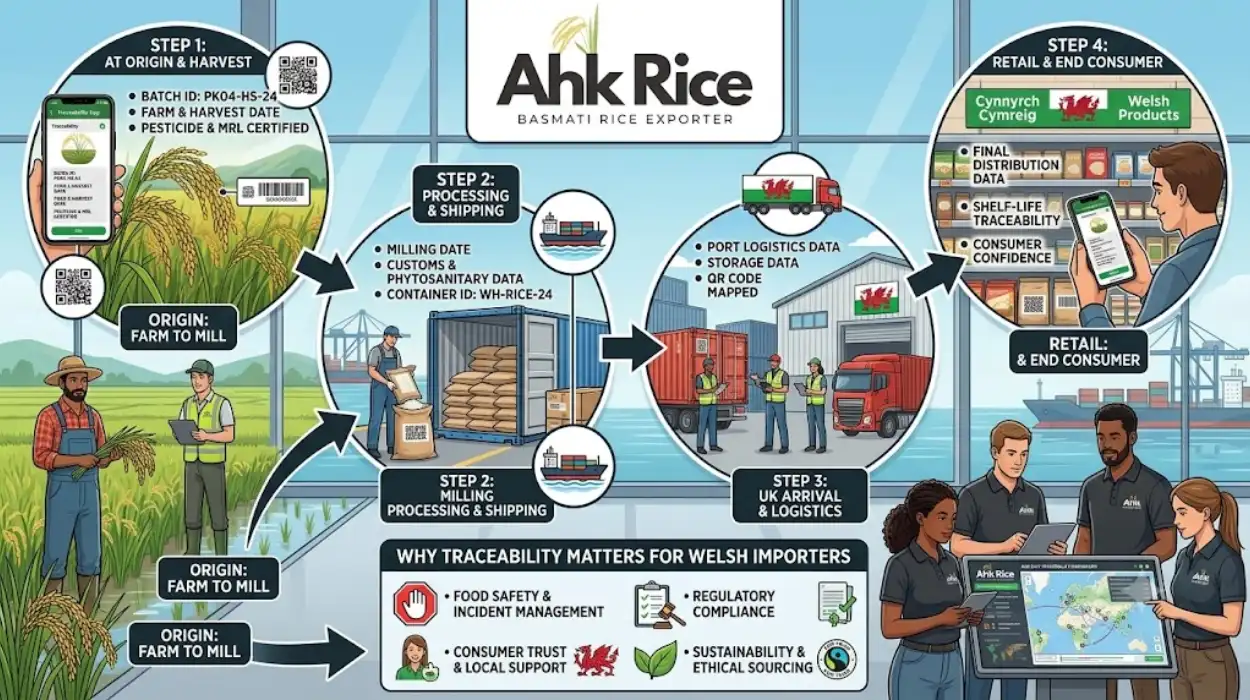
Rice traceability follows a connected sequence: farm origin, harvest, milling, grading, testing, packing, container loading, shipping, customs clearance, and warehouse receipt. Each stage adds records that connect the physical rice to its documented identity.
Which Information Starts at Farm Level?
Farm-level traceability records the growing location, rice variety, cultivation activities, harvest period, and paddy quantity. These details establish the agricultural origin before milling begins.
For Pakistani Basmati, the traceability record can identify the growing region and variety. Examples include 1121, Super Kernel, and 1509 Basmati rice.
Which Records Does Milling Create?
Milling records connect harvested paddy with the processed rice batch. The mill records cleaning, dehusking, polishing, grading, sorting, and packaging activities.
A batch reference provides the central connection. The same reference can appear on internal production records, laboratory reports, packing records, invoices, and shipment documentation.
Which Records Connect the Container to the Batch?
Container traceability connects the finished rice batch to its physical shipment. The record can include container number, seal number, packing date, loading date, quantity, package size, bill of lading, and destination.
The relationship is simple: batch number → pallet or bag → container → bill of lading → importer warehouse. This chain allows an importer to identify affected stock without treating every shipment as one undifferentiated quantity.
With the farm-to-container chain established, the next section identifies the core components that make traceability operational.
What Are the Key Components of Rice Product Traceability?
The key components are supplier identification, batch coding, product specifications, test records, packaging records, shipment documents, container identification, and customer records. Together, these components create an auditable trail for each rice consignment.
Which Supplier Records Matter?
Supplier records identify the exporter, processing facility, country of origin, product variety, and commercial transaction. UK guidance requires businesses to know who supplied their food.
Which Batch Records Matter?
Batch records identify the exact production group. A batch code links rice bags with processing records and quality-control documentation.
A useful batch record includes:
- Batch number
- Rice variety
- Crop year
- Processing date
- Packing date
- Net quantity
- Packaging format
Which Quality Records Matter?
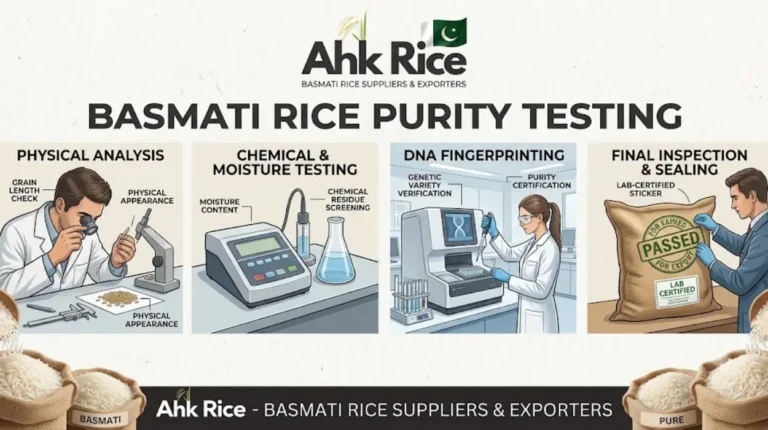
Quality records show which tests were performed and which batch they covered. Examples include moisture analysis, broken grain analysis, foreign matter testing, pesticide-residue testing, and mycotoxin analysis.
Pakistan-origin rice currently falls under GB import controls for specified contaminants. Current official guidance lists aflatoxins and Ochratoxin A alongside pesticide controls for Pakistani rice.
Which Shipping Records Matter?
Shipping records connect the product to its movement between countries. Examples include commercial invoices, packing lists, certificates of origin, bills of lading, container numbers, seal numbers, and applicable inspection certificates.
The exact documents depend on the product, origin, destination, tariff classification, and import controls.
With the core components identified, the next question is why these records matter beyond routine administration.
What Benefits Does Traceability Provide to Welsh Rice Importers?
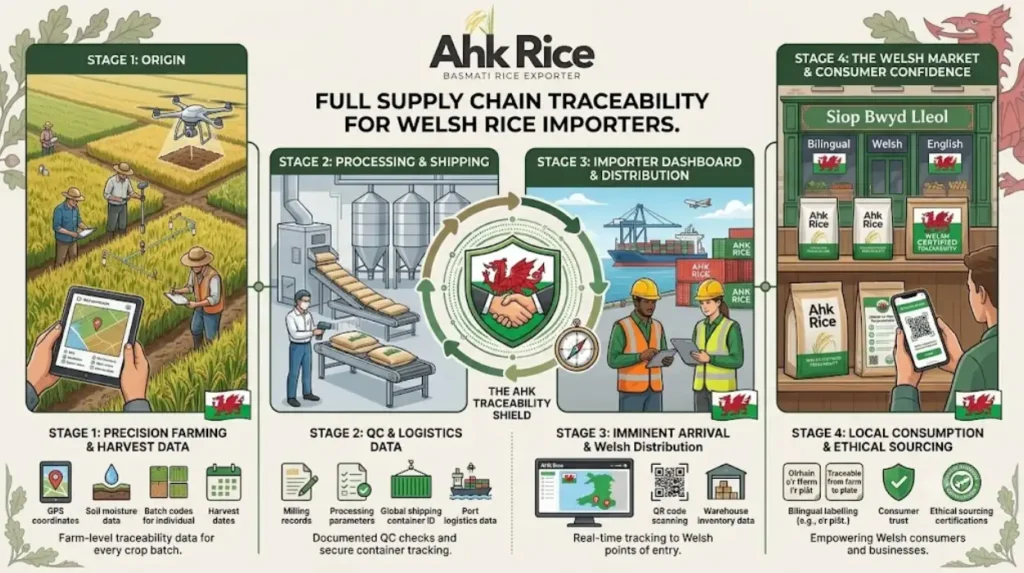
Traceability improves recall control, supplier verification, regulatory compliance, quality investigation, stock identification, and shipment accountability. It gives importers a documented route from the received bag back to its original supply-chain records.
How Does Traceability Support Food Safety?
Food safety traceability lets businesses identify affected products quickly. A documented batch system prevents an importer from treating every rice shipment as identical.
A contamination concern involving one batch can therefore be investigated against that batch’s test records, production records, container details, and customer distribution.
How Does Traceability Support Recalls?
UK guidance states that traceability records help businesses withdraw or recall unsafe food quickly. The records identify suppliers and customers connected to the affected product.
For example, a Welsh distributor receiving 100 tonnes across 4 batches can identify the affected batch instead of withdrawing all 100 tonnes.
How Does Traceability Support Quality Control?
Traceability connects quality results with physical stock. An importer can compare laboratory results against the exact batch received.
This matters for Basmati specifications such as grain length, broken percentage, moisture, foreign matter, variety, and processing type.
How Does Traceability Support Commercial Control?
Commercial traceability links purchase orders with quantities, packaging, shipment references, and warehouse receipts. It reduces disputes about which batch was delivered.
This becomes useful for private-label rice because the importer must connect its packaging artwork and product specification with a defined production batch.
With these benefits established, the next question is where Welsh importers apply traceability in everyday operations.
Where Do Welsh Rice Importers Use Product Traceability?
Welsh importers use traceability during supplier approval, purchase ordering, quality inspection, customs clearance, warehouse receiving, distribution, complaints, and product recalls. Each use connects a commercial decision with a specific product and documented supply-chain event.
How Is Traceability Used During Supplier Approval?
Supplier approval compares the exporter, processing facility, product specification, certifications, testing capability, and documentation system.
A buyer can request evidence showing how the exporter identifies batches and connects laboratory results with finished rice.
How Is Traceability Used During Goods Receiving?
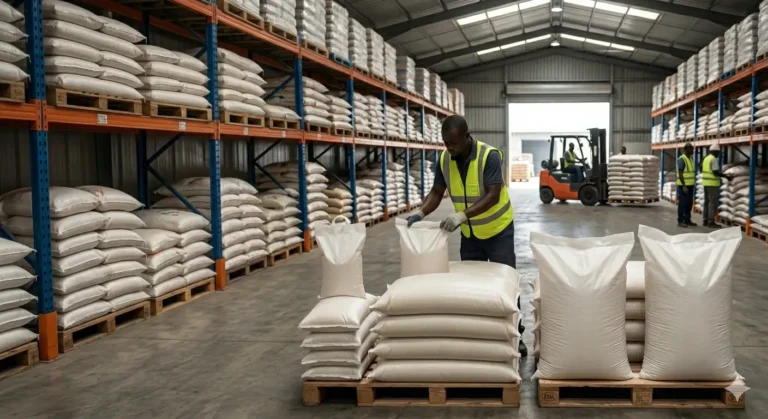
Warehouse receiving compares the physical shipment against its documents. Staff check product identity, quantity, packaging condition, batch references, and container information.
A mismatch between the packing list and received batch number creates a traceability exception requiring investigation.
How Is Traceability Used During Distribution?
Distribution records identify which customers received each batch. UK guidance requires businesses to identify the businesses to which they supply food.
A distributor therefore records customer details alongside product type, quantity, transaction date, and delivery information.
How Is Traceability Used During Complaints?
A customer complaint becomes easier to investigate when the importer has the batch number. The importer can retrieve the corresponding test report, production record, shipment documents, and warehouse history.
This turns a general complaint into a specific batch investigation.
With these use cases established, the next section addresses certifications and official documents connected with imported rice.
Which Certifications and Documents Apply to Imported Basmati Rice?
Applicable documentation depends on the rice, origin, processing method, destination, and import controls. Common records include food-safety certifications, laboratory reports, certificates of origin, commercial documents, and official certificates required for controlled products.
Which Food-Safety Certifications Matter?
Food-safety certifications demonstrate that a facility operates under a defined management system. Common schemes include HACCP-based food-safety systems and ISO 22000 certification.
These certifications support supplier evaluation. They do not replace the importer’s legal traceability responsibilities.
Does Organic Rice Require Additional Documentation?
Organic imports require additional certification. UK guidance states that organic imports require a Certificate of Inspection, with specific requirements depending on origin and destination.
The certificate confirms the organic status of the consignment through the relevant control system.
Do Pakistan Rice Imports Face Additional Controls?
Pakistan-origin rice currently appears on the UK’s list of foodstuffs subject to import restrictions. The current listing identifies rice under CN code 1006 and includes controls for aflatoxins and Ochratoxin A.
Official controls can involve documentary checks, identity checks, physical examination, sampling, and analysis.
Does Every Rice Shipment Need a Phytosanitary Certificate?
Rice has specific plant-health treatment within Great Britain’s import rules. Government guidance lists certain grains, including rice, among products that can enter without a phytosanitary certificate under the relevant plant-health rules.
Importers should therefore check the current commodity-specific requirements rather than applying one certificate rule to every plant product.
With certification and official documentation separated, the final section addresses common traceability problems and misconceptions.
What Common Traceability Problems Affect Welsh Rice Importers?
Common problems include missing batch numbers, mismatched documents, incomplete supplier records, disconnected laboratory reports, unclear container references, and outdated compliance files. Each problem breaks the connection between physical rice and its documented supply-chain history.
Does a Certificate Alone Provide Full Traceability?
No. A certificate verifies a defined requirement, but traceability connects the complete product journey.
A laboratory report without a batch number cannot reliably identify which bags the result represents. A certificate of origin without shipment references provides origin information but does not create the complete supply-chain record.
Is Traceability the Same as Product Quality?
No. Traceability records the product’s history and movement. Quality testing measures defined product characteristics.
A rice batch can have complete traceability and still fail a specification. A compliant quality result also requires accurate identification of the batch tested.
Does Traceability Start at the Port?
No. Traceability starts before shipment. Farm origin, harvesting, milling, grading, testing, and packing create the earlier records.
Port documentation continues that chain by connecting the finished batch to its container and import transaction.
How Can Buyers Build a Stronger Traceability Chain?
Buyers should request a consistent batch reference across production, testing, packing, and shipping records. They should also compare physical labels against commercial and quality documents.
For a deeper explanation of the records and checkpoints buyers can use, connect this article to how buyers can track Basmati rice from farm to shipment in the consideration-stage content.
Product traceability therefore works as one connected chain rather than a single document. Welsh rice importers gain stronger control when farm, processing, testing, packaging, shipment, and distribution records use matching product identifiers.
Frequently Asked Questions About Rice Product Traceability
Why is traceability important for Welsh rice importers?
Traceability helps Welsh importers identify the supplier, product batch, quantity, transaction, and customer associated with rice. UK food law requires traceability records that support investigation, withdrawal, and recall.
What information should rice importers record?
Importers should record supplier identity, customer identity, product type, quantity, transaction dates, delivery dates, batch references, and relevant shipment documentation. These records create the one-step-back and one-step-forward traceability chain.
Does Pakistani Basmati rice face UK import controls?
Yes. Current GB guidance lists Pakistan-origin rice under food import restrictions involving contaminants including aflatoxins and Ochratoxin A.
What certifications can support rice supplier verification?
Common certifications include HACCP-based food-safety systems and ISO 22000. Organic rice requires additional organic certification and a Certificate of Inspection under applicable UK rules.
What is the difference between traceability and testing?
Traceability identifies the product’s origin, batch, movement, and destination. Testing measures specific characteristics or hazards. A test result becomes useful for traceability when it is clearly connected to the batch tested.
How does batch coding improve rice traceability?
Batch coding connects physical rice packages with production, testing, packing, and shipping records. A consistent batch identifier allows importers to isolate affected stock without automatically withdrawing unrelated batches.