Import UK-Compliant Packaged Basmati Rice from AHK Rice
Importing UK-compliant packaged Basmati rice from AHK Rice gives UK buyers a controlled route from Pakistani milling to compliant packaging, inspection, documentation, and container dispatch. Here is why: UK food labels require product identity, net quantity, dates, origin where required, storage information, and responsible business details.
UK importers need more than a competitive FOB price. They need the correct Basmati variety, packaging format, label data, quality specification, documents, and shipping plan. AHK Rice combines these requirements through an end-to-end export process from Punjab.
For buyers evaluating packaging rules before procurement, read Why Does Packaging Compliance Matter for Northern Ireland Rice Imports. The guide explains why packaging compliance affects market access, traceability, and retail readiness.
What is the best solution for importing UK-compliant packaged Basmati rice?
The strongest solution is specification-led sourcing with approved packaging, documented quality checks, compliant labels, and controlled export documentation before container loading. This reduces avoidable corrections after production and gives importers a clearer landed-cost decision.
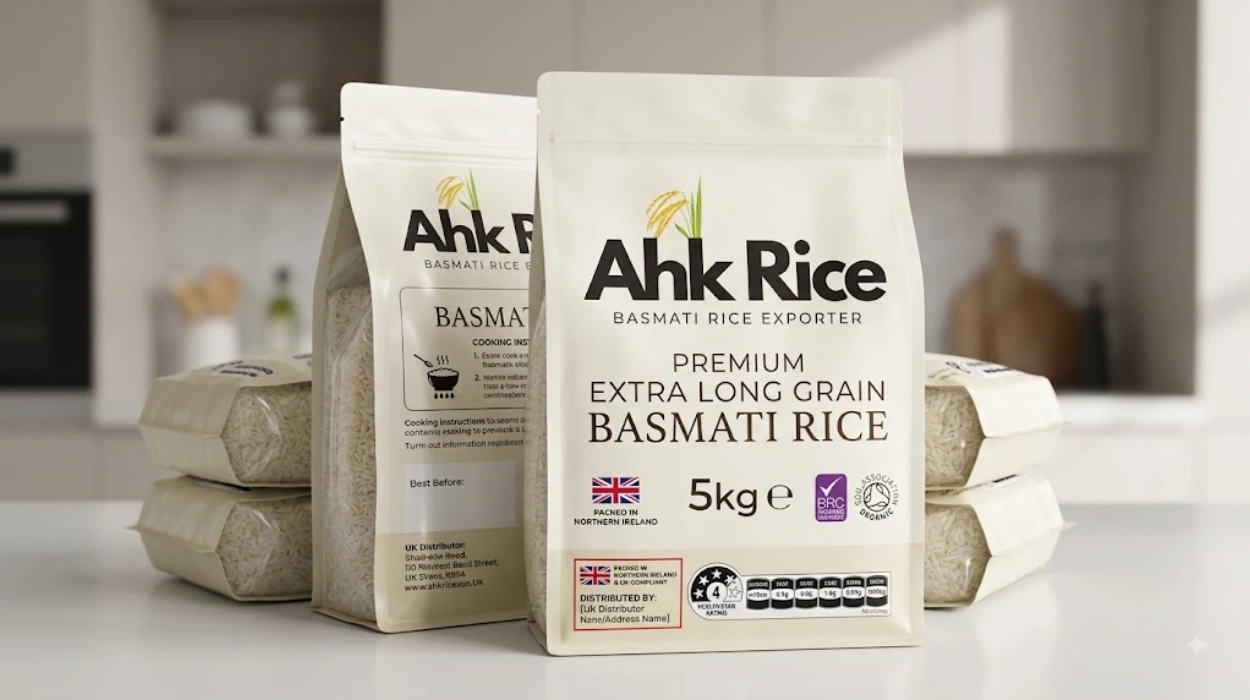
UK food packaging must communicate essential information clearly. Required information includes the food name, best-before or use-by date where required, net quantity, relevant warnings, origin information where required, lot identification, storage conditions, and cooking instructions where necessary.
Basmati rice also has a defined UK identity framework. The Rice Association states that its Basmati Code of Practice establishes minimum specifications for Basmati rice sold in the UK.
AHK Rice supplies Pakistani Basmati varieties including 1121, Super Kernel, and 1509. These varieties can be matched to retail, wholesale, catering, and private-label requirements.
Packaging can include 1 kg, 2 kg, 5 kg, 10 kg, 20 kg, 40 kg, and 50 kg formats. The correct format depends on the sales channel, handling requirements, pallet configuration, and buyer specification.
Northern Ireland requires additional attention because rice can fall under specific labelling and movement requirements within the Northern Ireland Retail Movement Scheme. Rice and rice pouches are specifically listed among covered products.
With the compliance requirement established, the next decision is selecting an exporter that can control the specification from milling through dispatch.
Why choose AHK Rice for UK Basmati rice supply?
AHK Rice provides one controlled export workflow covering rice processing, grading, colour sorting, packaging, inspection, documentation, container loading, and shipment coordination. This structure helps buyers manage quality and packaging requirements through one commercial specification.
AHK Rice processes Basmati rice through cleaning, dehusking, polishing, grading, colour sorting, and inspection before export. Its service also supports customized packaging and private-label requirements.
Quality control can include third-party pre-shipment inspection. AHK Rice states that internationally recognized inspection organizations such as SGS and Bureau Veritas can inspect shipments before loading.
Certification also supports procurement decisions. AHK Rice lists ISO 22000:2018, HACCP, ISO 9001:2015, GMP, and Halal certification across its quality-control framework.
Documentation remains another important control point. AHK Rice handles commercial invoices, packing lists, certificates of origin, phytosanitary documentation, fumigation documentation, and bills of lading within its export workflow.
Buyers comparing supplier processes can also review How Do Rice Exporters Meet UK Packaging Requirements for Imports. This comparison-stage guide helps explain how packaging, labelling, documentation, and export controls connect before a commercial order.
With supplier capability established, the next question is what a buyer should expect from sampling, testing, and commercial approval.
What results can UK importers expect from AHK Rice?
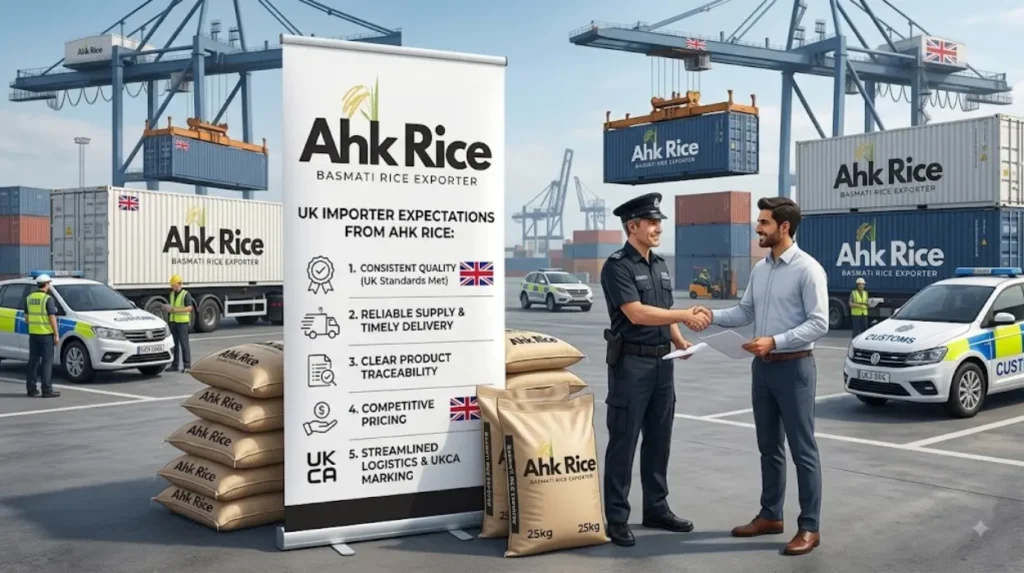
Buyers can expect a defined product specification, physical sample approval, packaging confirmation, inspection documentation, export paperwork, and coordinated container dispatch before shipment reaches the destination market. The result is a procurement process built around measurable requirements.
What does the sample process include?
The sample process should begin with a written specification. The buyer confirms variety, processing type, grain requirements, broken percentage, moisture target, packaging format, quantity, destination port, and commercial terms.
The next stage is sample preparation. AHK Rice’s published sample workflow includes specification confirmation, target-grade confirmation, sample preparation, sample dispatch, cooking evaluation, quotation review, and order confirmation. Typical sample quantities range from 500 grams to 5 kilograms.
A practical buyer workflow is:
- Define the required Basmati variety and quality specification.
- Confirm the packaging size and label requirements.
- Approve the physical rice sample.
- Test cooking performance and appearance.
- Review the commercial quotation.
- Approve artwork and packaging.
- Confirm inspection and export documents.
- Load the approved rice into the container.
- Dispatch the shipment against agreed Incoterms.
Sample costs depend on quantity, packaging, courier destination, and whether custom printed packaging is required. A small courier sample may cost considerably less than a fully printed commercial pack.
For example, a buyer testing 1 kg of 1121 Basmati can approve the grain before committing to a 20 kg commercial bag. A private-label buyer can also approve artwork before ordering printed packaging.
How long does shipping take from Pakistan to the UK?
Pakistan-to-UK ocean shipping commonly requires about 24–40 sailing days from Karachi to Felixstowe, excluding production, port handling, customs clearance, and inland delivery. Actual transit changes with vessel schedules, transshipment, congestion, and freight conditions.
UK mainland planning should therefore separate production time from ocean transit. A buyer may approve the specification first, allow production and packing, then schedule vessel loading against the confirmed sailing.
Northern Ireland requires a separate logistics review. Direct routing, Great Britain routing, customs treatment, and onward movement can change the practical delivery schedule.
The AHK Rice website also structures its export workflow around payment confirmation, vessel booking, shipping, delivery, and pickup.
The shipping schedule becomes useful only after the product, packaging, documentation, and inspection requirements are fixed.
What factors affect the final UK rice import cost?
Final import cost depends on rice grade, quantity, packaging, printing, inspection, freight, destination port, Incoterms, and documentation requirements. Comparing FOB prices alone can hide packaging and logistics costs that materially change the landed cost.
| Cost factor | Commercial impact |
|---|---|
| Rice variety | 1121, Super Kernel, and 1509 carry different market values |
| Processing | Extra sorting and polishing can increase processing cost |
| Packaging | Retail and private-label formats require additional production |
| Printing | Custom artwork increases packaging investment |
| Quantity | Larger orders can improve freight and production economics |
| Inspection | Third-party inspection adds a service cost where required |
| Freight | Ocean rates change with vessel and container conditions |
| Incoterm | FOB, CFR, and CIF allocate different costs and responsibilities |
| Destination | Port and inland delivery costs vary by location |
AHK Rice’s published packaging information confirms that packaging specifications affect total procurement cost. Custom printing also increases packaging investment.
A practical example is a 20 kg wholesale bag versus a 5 kg private-label retail bag. The rice itself may remain the same grade, but smaller printed bags require different packaging production, artwork, handling, and palletization.
The correct buying decision therefore compares landed cost per tonne, not only the quoted rice price.
How can a UK importer get started with AHK Rice?
Start with a written specification, approve the rice sample, confirm packaging artwork, verify compliance documents, agree commercial terms, and schedule production before vessel booking. This sequence keeps technical and commercial decisions aligned before money is committed.
Use this buyer checklist:
- Specify 1121, Super Kernel, or 1509 Basmati.
- Define grain, moisture, broken, and processing requirements.
- Select retail, wholesale, or private-label packaging.
- Provide approved label artwork and importer information.
- Request the physical sample.
- Test cooking quality and visual characteristics.
- Approve the commercial specification.
- Confirm quantity, destination, and Incoterm.
- Verify required export and inspection documents.
- Schedule production, container loading, and vessel dispatch.
AHK Rice supports buyers from paddy sourcing through processing, grading, colour sorting, customized packaging, documentation, and final container loading.
The decision is straightforward for UK importers. Choose the rice grade first, define the packaging second, approve the sample third, and compare landed cost before confirming the container.
For buyers who need a Pakistan supplier capable of combining Basmati specifications with UK-focused packaging and export controls, AHK Rice provides a direct commercial route from Punjab to international markets. AHK Rice supplies 1121, Super Kernel, and 1509 Basmati rice and supports customized packaging for international buyers.
AHK Rice also provides third-party inspection options, export documentation, packaging support, and coordinated shipping. These controls give buyers more visibility before cargo leaves Pakistan.
The strongest procurement model is therefore specification-led rather than price-led. Approve the grain, packaging, documents, and sample before scaling the order.
Request your UK Basmati rice quotation through the AHK Rice export team. Request a Quote
Frequently Asked Questions
Is AHK Rice suitable for UK Basmati importers?
AHK Rice supplies Pakistani Basmati varieties for international buyers.
Available varieties include 1121, Super Kernel, and 1509.
Packaging can be customized for different commercial requirements.
Export documentation and inspection support are also available.
UK buyers should confirm their exact specification before ordering.
What information must appear on UK rice packaging?
UK labels require the food name and net quantity.
Dates, lot identification, and storage conditions may also apply.
Origin information must appear where the rules require it.
The responsible business or importer details must be shown.
The final label should be checked against current UK requirements.
How much rice should I order for the first shipment?
The correct quantity depends on sales volume and warehouse capacity.
New buyers should approve samples before committing to containers.
Retail buyers may require smaller branded packs.
Wholesale buyers commonly use larger commercial bags.
AHK Rice can structure specifications around the buyer’s requirements.
How long does Pakistan-to-UK rice shipping take?
Typical Karachi-to-Felixstowe sailing time is about 24–40 days.
Production and packaging time must be added separately.
Port handling and customs clearance can extend the timeline.
Northern Ireland routing requires separate logistics planning.
Final transit should be confirmed against the booked vessel.
What affects the price of packaged Basmati rice?
Rice grade is one of the main price variables.
Packaging size and custom printing also affect procurement cost.
Inspection, documentation, and freight add further costs.
Quantity can influence production and logistics economics.
Importers should compare the complete landed cost per tonne.