Source Pakistan Basmati Rice That Meets UAE Foreign Matter Standards
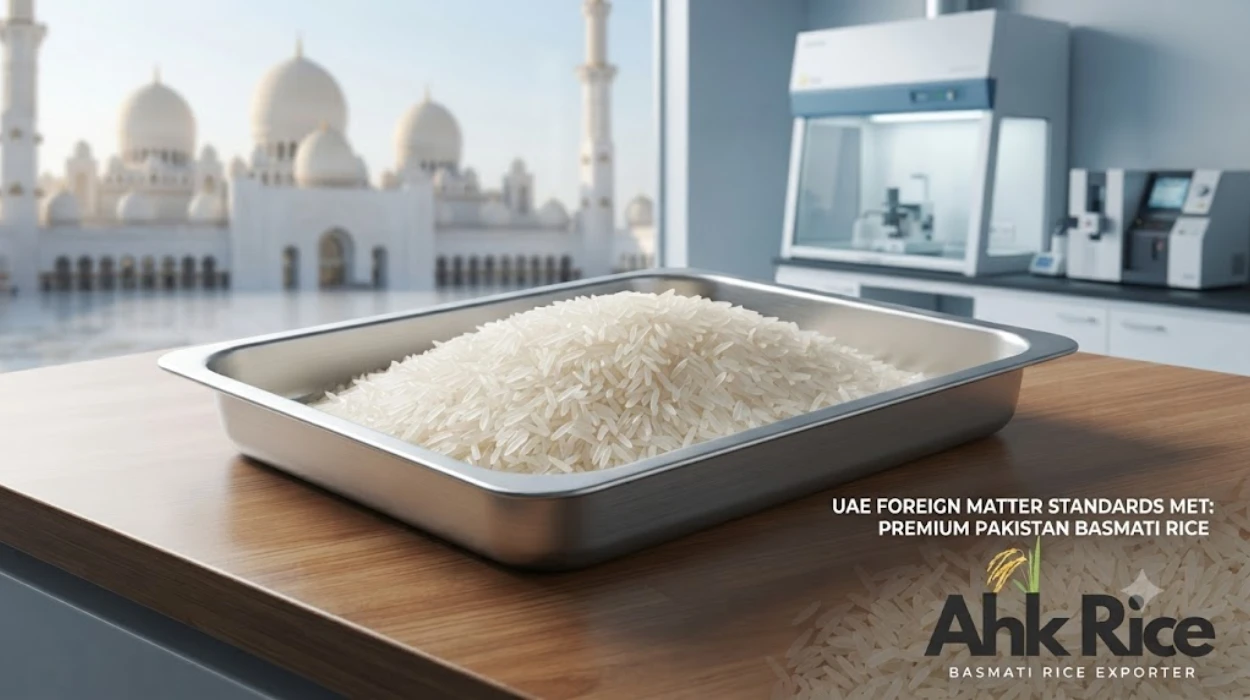
Choosing a Pakistani supplier that consistently meets UAE foreign matter standards reduces import risks, customs delays, and quality disputes. Buyers who understand what foreign matter means in Pakistani Basmati rice imported into the UAE can make faster purchasing decisions and avoid shipment rejections.
UAE importers require suppliers that inspect, test, certify, and document every shipment before dispatch.
What Is the Best Solution for Sourcing Pakistan Basmati Rice That Meets UAE Foreign Matter Standards?
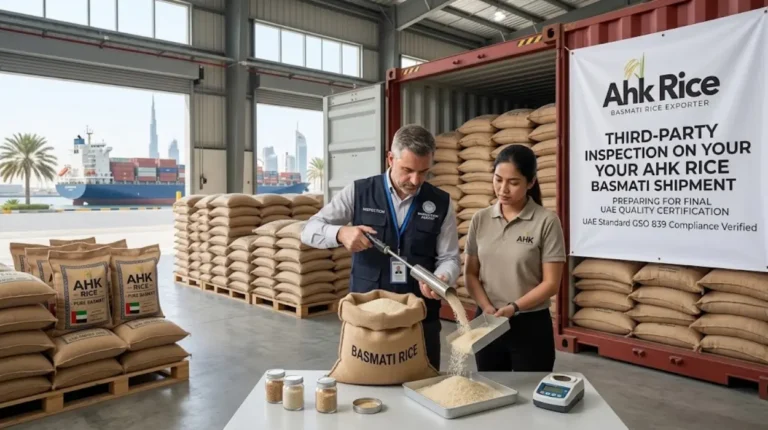
The best solution is selecting an exporter that performs multi-stage cleaning, optical colour sorting, laboratory testing, documented quality inspections, and pre-shipment verification. This process minimizes foreign matter, protects shipment quality, simplifies UAE customs clearance, and delivers consistent specifications for wholesalers, retailers, distributors, and food service buyers.
Importers lose money when rice shipments fail inspection. A single container with excessive foreign matter may trigger customs delays, additional inspection fees, or buyer claims. Selecting a supplier with documented quality procedures significantly lowers these risks.
AHK Rice controls product quality from procurement through export. Every batch undergoes inspection before milling begins. The rice then moves through a defined production sequence that removes impurities while protecting grain integrity.
How AHK Rice Controls Foreign Matter
The processing workflow includes every critical inspection stage.
- Procurement from verified growers
- Paddy cleaning
- De-husking
- Paddy separation
- Grain polishing
- Length grading
- Optical colour sorting
- Metal detection
- Laboratory testing
- Moisture verification
- Packaging inspection
- Container loading inspection
Each process removes a different contamination risk. Colour sorting eliminates discoloured kernels. Gravity separation removes stones. Metal detectors identify metallic particles before packaging. Laboratory testing verifies compliance with customer specifications.
Product Specifications
| Specification | Export Standard |
|---|---|
| Foreign Matter | Within UAE buyer specification |
| Moisture | 12–13% |
| Broken Grain | Buyer specification |
| Purity | Up to 99.9% |
| Damage | Minimal |
| Packaging | 5kg–50kg |
| Inspection | Pre-shipment verified |
These specifications help UAE buyers receive uniform product quality across repeat orders.
Reliable processing standards create confidence. The next question becomes selecting the supplier that can consistently deliver those standards.
Why Choose AHK Rice Instead of Other Pakistan Rice Exporters?
AHK Rice combines verified procurement, modern milling, documented inspections, flexible packaging, export documentation, and dependable logistics. Buyers receive consistent specifications, transparent communication, and repeatable shipment quality that supports long-term supply agreements with UAE importers.
Many exporters purchase rice from multiple mills. Product consistency changes from shipment to shipment. This increases commercial risk for importers.
AHK Rice follows standardized processing procedures before every export order. Each shipment receives quality verification before loading.
Importers benefit from:
- Consistent milling quality
- Modern optical sorting
- Laboratory verification
- Export documentation
- Flexible packaging options
- Container loading supervision
- Responsive commercial communication
AHK Rice also understands UAE importer expectations beyond laboratory reports. Buyers expect clean packaging, accurate documentation, stable moisture, and timely dispatch.
Export Documents Supplied
- Commercial Invoice
- Packing List
- Certificate of Origin
- Phytosanitary Certificate
- Fumigation Certificate
- Bill of Lading
- Inspection Certificate
- Health Certificate where required
Complete documentation reduces customs processing time and improves shipment acceptance.
Consistent documentation supports reliable exports. The next decision factor is understanding measurable commercial outcomes.
What Results Can Buyers Expect After Choosing AHK Rice?
Buyers can expect consistent grain quality, lower rejection risks, predictable delivery schedules, repeat purchase confidence, and simplified procurement. These outcomes improve inventory planning, strengthen customer relationships, and reduce hidden costs associated with poor-quality shipments or supplier inconsistency.
The commercial impact extends beyond product quality.
Restaurants receive consistent cooking performance.
Retailers receive attractive shelf presentation.
Distributors reduce customer complaints.
Food manufacturers maintain recipe consistency.
Importers reduce inspection disputes.
Long-term supply partnerships also become easier because shipment specifications remain consistent across production batches.
Commercial Benefits
| Benefit | Business Impact |
|---|---|
| Cleaner rice | Fewer inspection issues |
| Stable quality | Higher customer satisfaction |
| Lower contamination | Reduced financial risk |
| Repeat specifications | Easier inventory planning |
| Reliable exporter | Long-term purchasing confidence |
Many UAE buyers compare suppliers before making purchasing decisions. Understanding how UAE importers evaluate foreign matter specifications from Pakistan suppliers helps procurement teams make objective comparisons instead of relying only on price.
With measurable business outcomes established, the next decision involves shipping schedules, sampling procedures, pricing factors, and how to begin sourcing with confidence.
What Factors Affect Pricing When Sourcing Pakistan Basmati Rice for the UAE?
Pricing depends on rice variety, processing grade, foreign matter specification, packaging type, order quantity, destination port, freight rates, and seasonal crop availability. Buyers who compare total landed cost instead of FOB price secure better long-term value and reduce procurement risks.
Price should never be the only purchasing criterion. A lower quotation may reflect weaker sorting, higher broken percentages, inconsistent moisture, or insufficient inspection. These issues often increase the final landed cost through customer complaints, product returns, or customs delays.
AHK Rice provides quotations based on the buyer’s exact technical specification instead of offering generic prices. This approach ensures that every quotation reflects the required grain quality, packaging, inspection, and destination.
Main Pricing Factors
Commercial Specification Table
| Factor | Effect on Price |
|---|---|
| Rice Variety | 1121 Basmati generally commands a premium over Super Kernel and 1509. |
| Processing Grade | Extra polishing and colour sorting increase production cost. |
| Foreign Matter Limit | Stricter specifications require additional cleaning and inspection. |
| Broken Percentage | Lower broken content increases processing cost. |
| Packaging Type | Retail bags cost more than PP export bags. |
| Order Quantity | Full container orders usually provide better pricing. |
| Shipping Destination | Freight differs by destination and shipping line. |
Typical Packaging Options
- 5 kg retail bags
- 10 kg retail bags
- 20 kg PP bags
- 25 kg PP bags
- 40 kg PP bags
- 50 kg PP bags
Packaging influences freight efficiency and warehouse handling. UAE supermarkets often request retail packaging, while wholesalers generally import 40 kg or 50 kg PP bags.
Transparent pricing supports informed purchasing decisions. The next consideration is delivery time and logistics.
How Long Does Shipping Take from Pakistan to UAE and Other Markets?
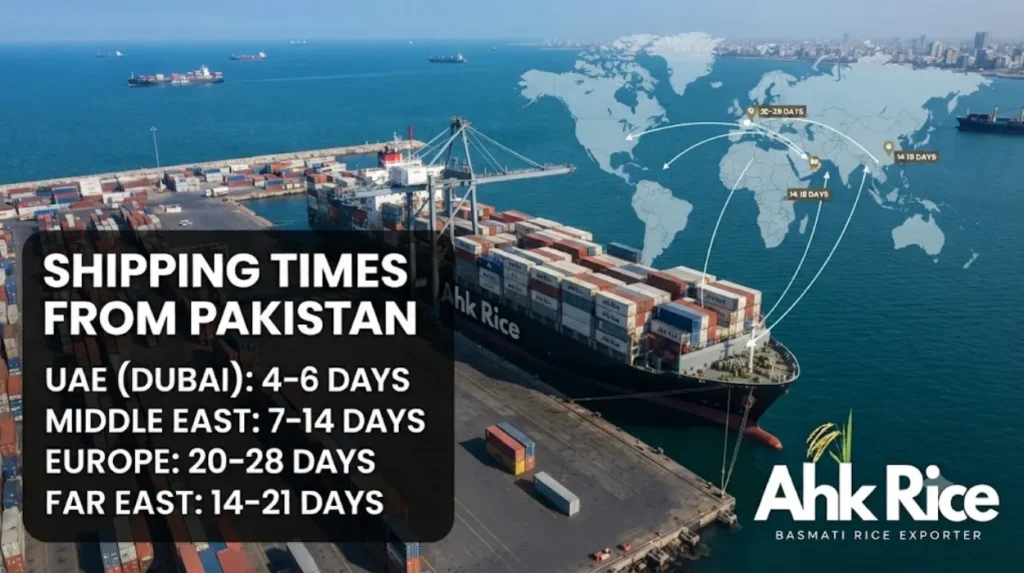
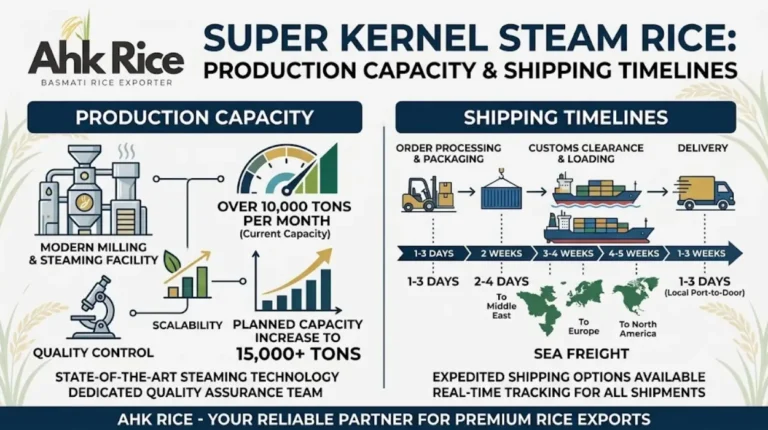
Shipping schedules vary by destination, vessel availability, and customs clearance. UAE buyers generally receive cargo within two weeks after vessel departure, while European and North American shipments require longer transit times due to distance and transshipment routes.
Delivery reliability matters as much as product quality. Consistent shipping schedules help distributors maintain inventory and avoid stock shortages.
AHK Rice coordinates production with vessel schedules to reduce unnecessary storage and dispatch delays.
Estimated Transit Times
Shipping Schedule
| Destination | Estimated Transit Time |
|---|---|
| UAE (Jebel Ali) | 10–15 days |
| Saudi Arabia | 12–18 days |
| Oman | 8–14 days |
| Qatar | 10–15 days |
| Kuwait | 12–18 days |
| Bahrain | 12–18 days |
| Iraq | 18–25 days |
| East Africa | 18–30 days |
| United Kingdom | 28–35 days |
| Europe | 30–40 days |
| United States | 40–55 days |
Transit time depends on shipping line schedules, weather conditions, customs processing, and port congestion. Buyers should always confirm the latest sailing schedule before placing an order.
Reliable logistics create confidence. The next step is understanding the sampling process before production begins.
How Does the Sample Process Work Before Placing a Bulk Order?
Professional exporters provide representative samples before production begins. Laboratory reports, courier delivery, buyer approval, and production confirmation reduce purchasing uncertainty and ensure the commercial shipment matches the approved quality specification.
Sampling protects both the buyer and the exporter. It confirms grain appearance, aroma, cooking quality, and specification compliance before manufacturing starts.
Sample Approval Process
- Submit the required rice specification.
- Receive the appropriate sample recommendation.
- Prepare the requested rice grade.
- Inspect and laboratory test the sample.
- Dispatch the sample by courier.
- Review the sample upon arrival.
- Approve the specification.
- Confirm the commercial order.
- Begin production.
- Schedule shipment.
Estimated Sample Costs
| Item | Estimated Cost |
|---|---|
| Product Sample | Usually Complimentary |
| Courier Charges | USD 40–90 |
| Laboratory Testing (if requested) | USD 40–100 |
| Customized Packaging Sample | Based on artwork |
Many buyers recover these costs through reduced procurement risk. A verified sample prevents expensive disputes after container arrival.
Sample approval establishes technical confidence. The final decision involves selecting the supplier that offers consistent quality, documentation, and long-term support.
How Do You Get Started with AHK Rice?
Getting started is straightforward. Share your product specifications, approve a representative sample, confirm the commercial terms, and authorize production. AHK Rice manages procurement, processing, quality inspections, export documentation, and shipment to deliver Pakistan Basmati rice that meets UAE foreign matter standards.
The purchasing process should be transparent from the first inquiry. Buyers receive clear communication, documented specifications, and realistic production schedules before confirming an order. This approach minimizes misunderstandings and establishes a reliable supply relationship.
Simple Procurement Process
- Submit your rice specification.
- Confirm the required variety and processing grade.
- Receive a commercial quotation.
- Approve the representative sample.
- Confirm packaging artwork and bag size.
- Finalize payment terms.
- Begin production and quality inspections.
- Review pre-shipment documentation.
- Dispatch the container.
- Receive shipment at the destination port.
Every stage is documented to maintain consistency between the approved sample and the exported shipment. AHK Rice keeps buyers informed throughout production and dispatch, ensuring confidence before the cargo reaches the vessel.
Why Long-Term Buyers Choose AHK Rice
Long-term importers prioritize consistency over occasional low prices. AHK Rice focuses on repeatable quality, dependable communication, and documented quality assurance.
Key advantages include:
- Modern milling and optical colour sorting
- Strict foreign matter inspection procedures
- Laboratory-tested export specifications
- Flexible private label packaging
- Complete export documentation
- Reliable shipment scheduling
- Responsive commercial support
- Experience supplying international markets
These capabilities help wholesalers, retailers, foodservice distributors, and private-label brands reduce procurement risks while maintaining consistent product quality.
Sourcing Pakistan Basmati rice that complies with UAE foreign matter standards requires more than a competitive quotation. It requires a supplier that controls quality throughout procurement, milling, grading, testing, packaging, and export.
AHK Rice delivers this complete process through standardized production, multi-stage inspections, laboratory verification, and comprehensive export documentation. Buyers benefit from cleaner rice, predictable specifications, reliable shipping schedules, and professional commercial support.
Whether you import for retail distribution, hospitality, wholesale, or food manufacturing, selecting an experienced exporter reduces quality risks and strengthens long-term supply continuity.
Contact AHK Rice today to discuss your specifications, request a representative sample, and begin sourcing export-quality Pakistan Basmati rice through our Request a Quote page.
Frequently Asked Questions
What foreign matter standard do UAE buyers usually require?
UAE buyers generally require rice with very low foreign matter and consistent cleanliness. The exact limit depends on the importer’s specification and intended market segment. Premium retail brands often request stricter standards than wholesale buyers. Laboratory testing and pre-shipment inspections verify compliance before dispatch. Working with an experienced exporter helps ensure every shipment meets the agreed specification.
Why is foreign matter important in Pakistan Basmati rice exports?
Foreign matter directly affects product quality, food safety, and customs acceptance. Stones, husk particles, dust, and other impurities can lead to shipment rejection or customer complaints. Modern milling, colour sorting, and gravity separation significantly reduce contamination. Professional inspection also improves buyer confidence and repeat business. Consistent quality protects both importer reputation and commercial profitability.
Can AHK Rice supply customized packaging for UAE importers?
Yes. AHK Rice supplies multiple packaging formats to meet different commercial requirements. Buyers can choose retail packs, PP woven bags, or customized private-label packaging. Packaging artwork, bag size, and printing specifications are confirmed before production begins. This flexibility allows importers to serve supermarkets, wholesalers, distributors, and hospitality customers efficiently.
How long does production take after sample approval?
Production time depends on the order quantity, packaging requirements, and vessel schedule. Most export orders begin immediately after sample approval and commercial confirmation. Quality inspections are completed throughout production to maintain consistency. Export documentation is prepared before container loading. Buyers receive shipment updates until cargo is dispatched.
What documents are provided with an export shipment?
AHK Rice provides all standard export documents required for international trade. These typically include the Commercial Invoice, Packing List, Certificate of Origin, Phytosanitary Certificate, Fumigation Certificate, Bill of Lading, and Inspection Certificate. Additional certificates can be arranged when requested by the destination country. Complete documentation supports smooth customs clearance and faster cargo processing.