Source Audit-Ready Pakistani Basmati Rice from AHK Rice for California, USA
California rice importers need more than a competitive Pakistani Basmati rice price. They need a supplier whose factory, product specifications, food-safety controls, records, samples, and shipment documentation can withstand commercial and regulatory scrutiny. AHK Rice approaches export supply as a documented sourcing process rather than a simple rice transaction.
For California buyers, the decision should begin with supplier verification. The question is not only whether the rice looks premium after arrival. The stronger question is whether the exporter can demonstrate how the rice was processed, tested, packed, identified, and released for shipment.
That distinction matters because U.S. food importers carry verification responsibilities under the Foreign Supplier Verification Program (FSVP). FDA requires covered importers to conduct risk-based activities to verify that imported food is produced according to applicable U.S. safety requirements and is not adulterated or misbranded.
California buyers can therefore use a factory-audit-ready supplier file as part of their purchasing decision. A structured audit file does not replace the importer’s FSVP responsibilities, but it gives the importer stronger evidence for supplier evaluation, approval, and ongoing monitoring.
For background, the buyer can first review:
Why factory audits matter for California rice importers, then use the supplier-verification framework below to decide whether AHK Rice fits a repeat-import program.
What is the best solution for California importers seeking audit-ready Pakistani Basmati rice?
The best solution is a supplier-approval process combining factory evidence, product specifications, laboratory records, traceability, samples, packaging controls, and shipment documentation before commercial loading. This approach reduces supplier uncertainty and gives California buyers documented evidence for procurement and verification decisions.
A California importer should not approve a Pakistani rice exporter solely from photographs, a price sheet, or a product sample. Those materials demonstrate marketability, but they do not establish how consistently the supplier can reproduce the specification.
A stronger approval process starts with the factory. The buyer should be able to identify the processing location, understand the production sequence, review applicable food-safety controls, and connect the finished rice to a defined lot or batch.
For Basmati rice, the specification should also be measurable. A commercial specification can cover variety, grain length, moisture, broken percentage, foreign matter, damaged grains, chalkiness, milling characteristics, packaging format, crop information, and agreed tolerances.
The audit should then connect these specifications to actual records. A specification sheet says what the exporter promises. Production records, laboratory reports, inspection records, and packing information help demonstrate what was actually produced.
This is where AHK Rice can position its export process around documentation rather than verbal assurances. For a California buyer, the practical objective is to create a supplier file that can be reviewed before purchase approval and updated as orders continue.
The buyer should also distinguish between an audit-ready supplier and a supplier that claims to be “FDA approved.” FDA states that it does not pre-approve individual food importers, products, labels, or shipments. Imported food must instead meet applicable U.S. requirements at import.
That makes supplier documentation particularly valuable. It allows the importer to make a more defensible purchasing decision before committing container-level capital.
Why should California buyers choose AHK Rice for Pakistani Basmati supply?
California buyers should choose AHK Rice when the supplier can align Basmati specifications, factory controls, testing, traceability, packaging, and export documentation with the importer’s purchasing requirements. The commercial advantage is greater visibility before loading, not simply another source of low-cost rice.
AHK Rice supplies Pakistani Basmati varieties including 1121, Super Kernel, and 1509, allowing buyers to select a specification according to retail, food-service, wholesale, or distribution requirements.
The first product decision should be based on the buyer’s end market. A California restaurant distributor may prioritize long grain appearance, aroma, cooking performance, and consistent batch quality. A retail importer may place greater emphasis on packaging, label configuration, retail presentation, lot identification, and repeatability.
For a supplier-approval program, AHK Rice should be evaluated against the same specification every time. The buyer can establish an approved product specification and require each commercial shipment to remain within agreed tolerances.
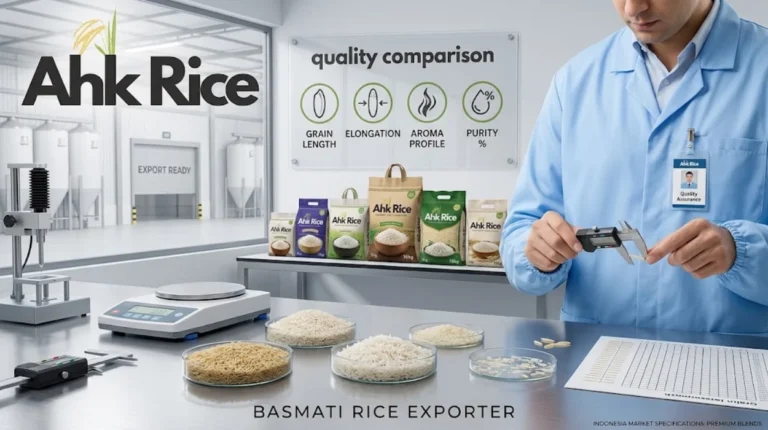
The factory review should cover raw-material intake, cleaning, milling, sorting, grading, polishing where applicable, quality control, packing, storage, pest-control practices, sanitation, traceability, and loading procedures. The purpose is not to collect a large number of certificates. The purpose is to determine whether the factory has controlled processes that support consistent output.
Documentation should also be internally consistent. The product name on the specification should match the product shown on the packing list. Lot information should connect the packed bags to production records. Laboratory results should identify the tested product or lot where applicable.
AHK Rice can therefore be assessed through a buyer-specific approval checklist rather than a generic supplier presentation. This makes the decision more objective and gives procurement teams a repeatable method for comparing exporters.
For buyers who want to understand the broader supplier-verification decision before approving an exporter,
How factory audits reduce risk when importing Basmati rice provides the consideration-stage context.
What should an audit-ready supplier file contain before the first California order?
An audit-ready supplier file should identify the factory, product specification, processing controls, laboratory evidence, traceability method, packaging details, certifications where applicable, corrective-action process, and export documentation needed to evaluate each shipment before commercial release.
A practical supplier file should be organized into evidence categories.
| Audit area | Evidence California buyer should request | Commercial purpose |
|---|---|---|
| Supplier identity | Company and factory details | Confirms who is producing and exporting |
| Product specification | Variety, grain, moisture, broken percentage and tolerances | Defines the purchased product |
| Processing | Milling, sorting, grading and packing process | Shows production controls |
| Quality testing | Applicable laboratory or inspection reports | Supports specification verification |
| Traceability | Lot, batch or production identification | Connects finished bags to production |
| Packaging | Bag material, size, artwork and markings | Prevents packing discrepancies |
| Food safety | Applicable registrations, systems and records | Supports supplier verification |
| Export documents | Invoice, packing list, bill of lading and certificates as applicable | Supports shipment clearance |
| Corrective action | Procedure for nonconforming product | Defines response if specifications fail |
Food-facility registration is particularly important to verify correctly. FDA states that most facilities manufacturing, processing, packing, receiving, or holding food for U.S. consumption must register, subject to exemptions. FDA also cautions that registration information is confidential, so buyers should request appropriate evidence from the supplier rather than expect to retrieve the registration record publicly.
The U.S. importer should separately establish its FSVP file. FDA describes FSVP as a risk-based system involving supplier evaluation, hazard analysis, verification activities, corrective actions, recordkeeping, and importer identification.
An on-site factory audit can be one verification activity. It is not automatically the only requirement. Depending on the risk assessment, supplier records, sampling, testing, or other verification activities may also be appropriate. FDA specifically identifies annual on-site audits, sampling and testing, and review of supplier food-safety records among possible verification activities.
The result should be a controlled supplier file that can be reviewed before the first order and refreshed when material changes occur.
What results can California importers expect from an audit-ready sourcing process?
The expected result is a clearer supplier-approval decision, fewer specification surprises, stronger traceability, better document control, and a repeatable purchasing process. An audit-ready file cannot eliminate import risk, but it can expose preventable supplier weaknesses before cargo is loaded.
The first result is better purchasing visibility. Instead of deciding from a sample alone, the buyer can compare the sample against the declared specification and supporting production evidence.
The second result is stronger accountability. If the agreed product is 1121 Basmati, the purchase order can define the relevant grade and measurable tolerances rather than relying on a generic description such as “premium Basmati.”
The third result is easier investigation when something goes wrong. Suppose a California distributor receives a shipment with a higher-than-expected broken percentage. A documented lot number, production record, laboratory report, packing record, and retained sample can help establish where the deviation occurred.
The fourth result is improved repeat-order control. AHK Rice can use the approved specification as a reference for future production rather than treating every shipment as a separate negotiation.
The fifth result is better regulatory preparation. FDA requires prior notice for imported food, and food arriving without adequate prior notice can be refused or held until the requirement is satisfied.
For a California importer, the supplier file should therefore be coordinated with the customs broker and FSVP process. The exporter provides relevant supplier and shipment information, while the U.S. importer remains responsible for its own applicable import obligations.
The July 2026 FDA position also makes supplier verification an active commercial issue. FDA’s current Import Alert 99-41 addresses detention without physical examination for human and animal foods imported by importers who are not compliant with FSVP requirements.
The practical lesson is straightforward: supplier documentation should be prepared before the shipment becomes urgent.
How many days does Pakistani Basmati rice take to reach California and other U.S. markets?
For planning purposes, ocean transit from Pakistan should be treated as a variable logistics window rather than a guaranteed arrival date. Current public lane data shows roughly 50 days from Port Qasim to Los Angeles, about 36–50 days to Houston, and approximately 23–33 days to New York/Newark.
California is naturally aligned with the Los Angeles/Long Beach gateway for many import programs, but the final delivery schedule includes more than ocean transit.
Current public freight data shows an estimated 50-day FCL transit from Port Qasim to Los Angeles for a standard 40-foot high-cube shipment.
For other U.S. markets, current lane data gives different planning ranges:
| U.S. market | Indicative ocean transit from Pakistan | Planning consideration |
| California / Los Angeles | About 50 days | Add port and inland delivery time |
| Texas / Houston | About 36–50 days | Route and sailing selection affect timing |
| New York / Newark | About 23–33 days from Port Qasim | East Coast routing can be materially different |
Flexport’s current lane data lists approximately 36 days for Karachi-to-Houston FCL and 23–33 days for Port Qasim-to-New York/Newark FCL.
These figures are transportation estimates, not delivery guarantees. Port congestion, vessel schedules, transshipment, customs processing, inspections, container availability, and inland trucking can extend the total order cycle.
For California purchasing, a practical planning model is therefore to separate production time, origin handling, ocean transit, U.S. port clearance, and final inland delivery. This prevents the common mistake of treating a vessel transit estimate as the complete door-to-warehouse timeline.
AHK Rice can structure the commercial schedule around the buyer’s required arrival window rather than quoting a single transit number without context.
What does the sample approval process cost before a California container order?
A practical sample program can cost roughly $250–$500 for a small commercial evaluation when courier delivery, laboratory testing, sample preparation, and documentation are combined. Actual costs vary by sample weight, destination, testing scope, courier, packaging, and whether the buyer requires independent inspection.
A California importer can structure the sample stage in five steps.
First, the buyer sends the required product specification. This should identify the variety, grade, packaging concept, target quantity, and critical quality parameters.
Second, AHK Rice prepares representative samples. A buyer may request more than one variety when comparing 1121, Super Kernel, or 1509 options.
Third, the samples are dispatched by courier. As an illustrative planning budget, international courier charges for several kilograms can be approximately $80–$180, depending on weight, destination, service level, and account rates.
Fourth, laboratory testing can be added where the buyer requires independent verification. A basic quality-testing package might be budgeted at approximately $120–$250, depending on the parameters requested and laboratory.
Fifth, documentation and sample preparation may add approximately $50–$100 when special packing, additional records, or inspection coordination is required.
An illustrative sample budget therefore looks like this:
| Sample-stage item | Planning estimate |
| Sample preparation | $25–$75 |
| International courier | $80–$180 |
| Laboratory testing | $120–$250 |
| Documentation / coordination | $50–$100 |
| Indicative total | $275–$605 |
These figures are planning estimates, not an AHK Rice quotation. A real sample cost should be calculated from the requested quantity, destination ZIP code, testing requirements, packaging format, and courier service.
The same principle applies to commercial shipment pricing. Rice price per metric ton, packaging, container size, origin charges, ocean freight, insurance, destination charges, customs brokerage, duties or other applicable government charges, inspection, and inland transportation can all affect landed cost.
CBP’s current guidance also confirms that commercial invoices must accurately declare transaction value and that valuation can affect duty assessment where applicable.
How should a California importer start an AHK Rice order?
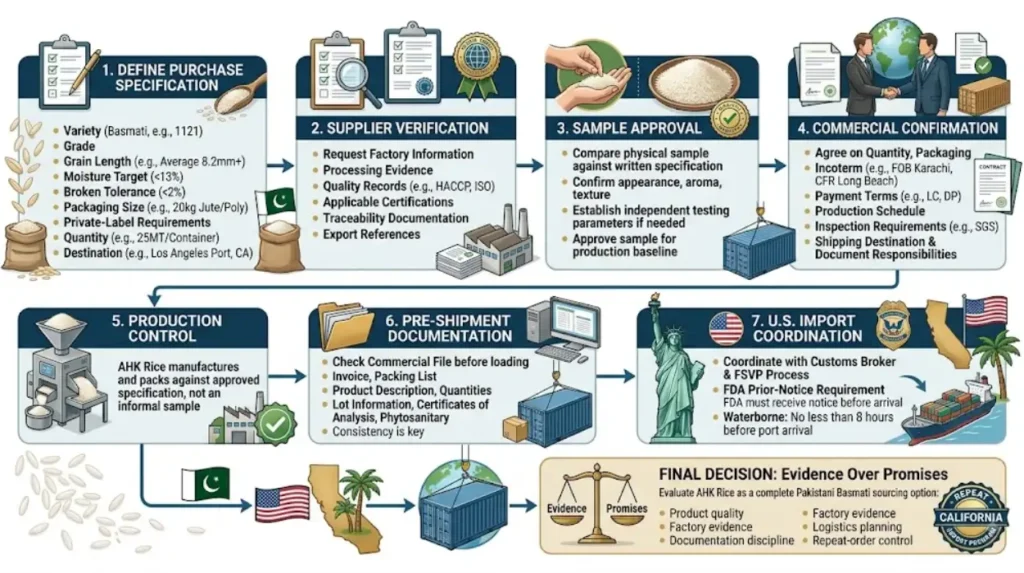
Start with the required Basmati specification, supplier audit evidence, sample approval, commercial terms, and shipment destination. Once those elements are confirmed, the importer can move from supplier evaluation to production scheduling, document preparation, container loading, and U.S. import coordination.
The first step is to define the purchase specification. State the variety, grade, grain requirements, moisture target, broken tolerance, packaging size, private-label requirements if applicable, quantity, and destination.
The second step is supplier verification. Request the relevant factory information, processing evidence, quality records, applicable registrations or certifications, traceability documentation, and export references required by your procurement process.
The third step is sample approval. Compare the physical sample against the written specification. If independent testing is required, establish the testing parameters before the commercial order.
The fourth step is commercial confirmation. Agree on quantity, packaging, Incoterm, payment terms, production schedule, inspection requirements, shipping destination, and document responsibilities.
The fifth step is production control. AHK Rice should manufacture and pack against the approved specification rather than an informal sample description.
The sixth step is pre-shipment documentation. The commercial file should be checked before loading so that invoice, packing list, product description, quantities, lot information, and other applicable documents remain consistent.
The seventh step is U.S. import coordination. The California importer should coordinate with its customs broker and FSVP process. FDA’s prior-notice requirement applies to imported food, and FDA must receive the required notice before arrival within the applicable transportation timeframe. For waterborne shipments, FDA’s guidance states that prior notice must be received and confirmed no less than eight hours before arrival at the U.S. port.
The final decision should be based on evidence rather than promises. A supplier that can consistently connect factory controls, product specifications, testing, traceability, samples, packaging, and shipment documentation is better positioned for a repeat California import program.
AHK Rice should therefore be evaluated as a complete Pakistani Basmati sourcing option: product quality is one part of the decision, while factory evidence, documentation discipline, logistics planning, and repeat-order control determine whether the supplier is suitable for commercial scale.
For a California importer ready to move from supplier evaluation to a defined commercial requirement, submit the product specification, quantity, packaging requirements, destination, and target shipment window through the request-a-quote.
Frequently Asked Questions
What makes Pakistani Basmati rice audit-ready for California importers?
Audit-ready Pakistani Basmati rice is supported by documented factory controls, product specifications, quality testing, traceability records, packaging information, and export documentation. These records help California importers evaluate supplier reliability before approving commercial shipments.
Why are factory audits important when sourcing Basmati rice from Pakistan?
Factory audits help buyers verify whether an exporter has controlled processes for raw-material handling, milling, sorting, grading, packing, sanitation, storage, quality control, and traceability. The objective is to identify supplier risks before placing a large commercial order.
What Basmati rice varieties does AHK Rice supply?
AHK Rice supplies Pakistani Basmati varieties including 1121, Super Kernel, and 1509. California buyers can select the variety and specification according to their retail, wholesale, restaurant, food-service, or distribution requirements.
How can California importers verify an AHK Rice factory?
Importers can request relevant factory information, product specifications, quality-control records, laboratory reports, traceability information, packaging details, applicable certifications or registrations, and export documentation. An on-site audit or independent verification can also be considered based on the importer’s risk assessment.
How long does Pakistani Basmati rice take to reach California?
Ocean transit from Port Qasim to Los Angeles can be approximately 50 days based on current public freight-lane estimates. The complete delivery schedule can be longer because production, origin handling, customs clearance, port operations, and inland transportation must also be considered.
How much does a Basmati rice sample cost for a California importer?
A sample program can be budgeted at roughly $275–$605 as an illustrative range when sample preparation, international courier delivery, laboratory testing, and documentation are included. Actual costs depend on sample size, testing requirements, destination, and courier rates.
What documents should California rice importers request before ordering?
Importers should establish a supplier file containing company and factory information, product specifications, applicable quality records, laboratory evidence, traceability information, packaging details, and relevant export documentation. U.S. importers should also maintain their own applicable FSVP records.
Does a factory audit guarantee that imported rice will comply with U.S. requirements?
No. A factory audit is one supplier-verification activity and does not replace the U.S. importer’s regulatory responsibilities. The importer must evaluate the foreign supplier and imported food according to applicable FDA and FSVP requirements.
What factors affect the landed cost of Pakistani Basmati rice in California?
Landed cost can include the rice price, packaging, production requirements, origin charges, ocean freight, insurance, destination charges, customs brokerage, applicable duties or government charges, inspections, and inland transportation. Exchange rates and shipping conditions can also influence the final cost.
How does AHK Rice support repeat Basmati rice orders?
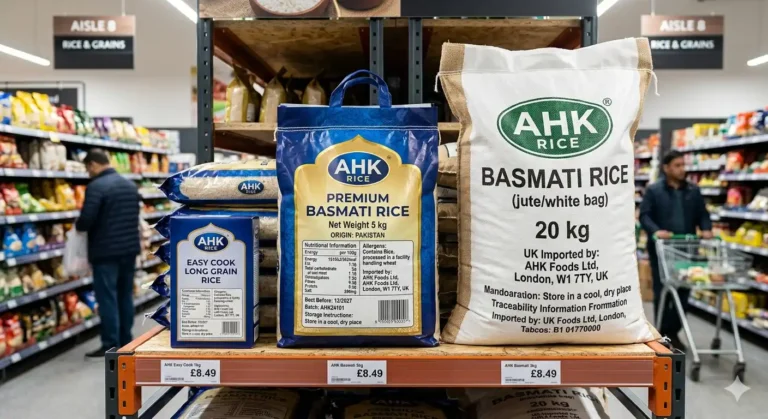
AHK Rice can support repeat purchasing by working from defined product specifications, approved samples, production requirements, packaging instructions, quality documentation, and shipment records. A standardized specification helps buyers compare subsequent lots against the original commercial requirements.
What should California buyers confirm before placing a container order?
Buyers should confirm the rice variety and grade, quality tolerances, quantity, packaging, sample approval, commercial terms, production schedule, inspection requirements, shipping destination, documentation responsibilities, and U.S. import requirements before authorizing production.
Can California importers request customized Basmati rice packaging?
Yes. Packaging requirements can be established according to the buyer’s commercial specification. The importer should confirm bag size, material, artwork, labeling information, marks, lot identification, and other packaging requirements before production begins.
How should California importers evaluate a Pakistani rice exporter?
California importers should evaluate the exporter using measurable criteria including product consistency, factory controls, testing, traceability, documentation, packaging capability, logistics performance, communication, corrective-action procedures, and commercial terms rather than price alone.