AHK Rice Provides Private Label Basmati Rice Manufacturing for Wales
Private label Basmati rice from Pakistan is the strongest route for Welsh brands seeking product control, competitive sourcing, and repeatable quality. Here is why: AHK Rice can align rice grade, processing, packaging, inspection, documentation, and export logistics with the buyer’s specification. Welsh brands can first review why Welsh brands are exploring private label Basmati rice products before moving into supplier comparison and commercial sampling.
What is the best solution for private label Basmati rice in Wales?
The best solution is specification-led private label manufacturing with controlled processing, custom packaging, inspection, and export coordination from Pakistan to the UK.
Private label rice requires more than placing a brand name on an existing bag. The supplier must reproduce the agreed rice specification across commercial batches. That specification should define variety, grain length, broken percentage, moisture, purity, processing grade, packaging, and quantity.
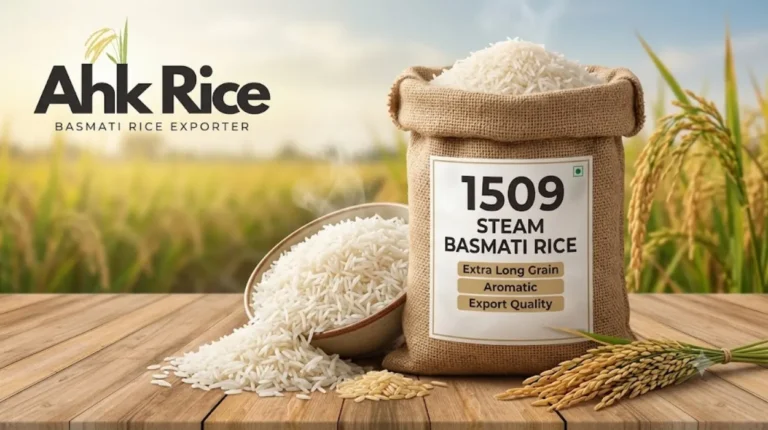
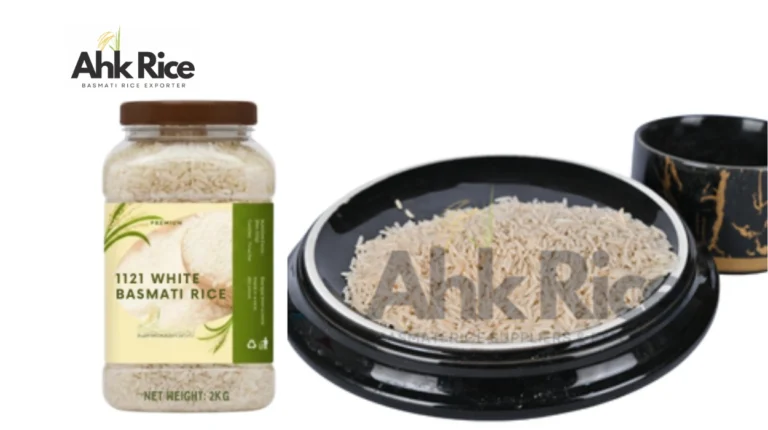
AHK Rice provides this structure through its Pakistan-based rice processing and export operation. The service can support Basmati varieties such as 1121, Super Kernel, and 1509 for different retail and foodservice positions.
The first commercial decision is the grade. Premium Welsh retail brands may select aged 1121 for aroma, elongation, and presentation. Value-led brands may select 1509 or another specification that balances purchase cost and cooking performance.
Packaging becomes the second decision. Private label bags can be produced around the buyer’s brand identity, pack size, market positioning, and required product information. UK food labels must remain clear, accurate, permanent, and non-misleading.
The UK also requires an appropriate responsible food business operator address on prepacked food. For imported products, the importer’s UK address may need to appear on the label.
With the sourcing problem defined, the next decision is whether the manufacturer can control the entire export specification.
Why choose AHK Rice for private label manufacturing?
AHK Rice combines rice processing, grading, sorting, custom packaging, quality inspection, export documentation, and shipment coordination into one procurement process.
AHK Rice starts with the agreed product specification rather than a generic rice description. The buyer can define the preferred variety, processing grade, packaging format, quantity, destination, and commercial terms.
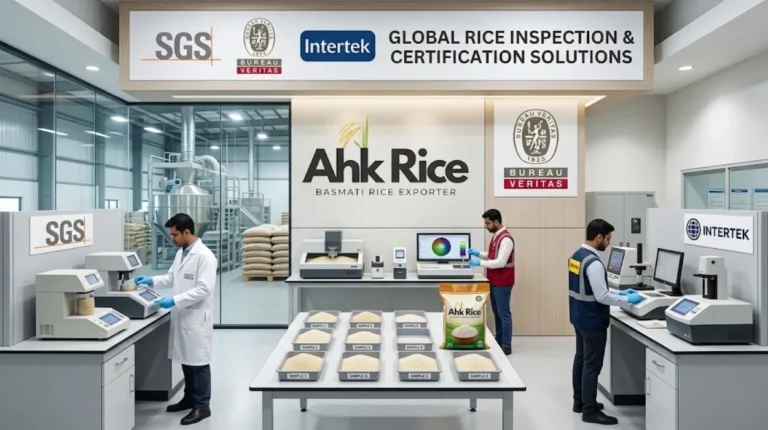
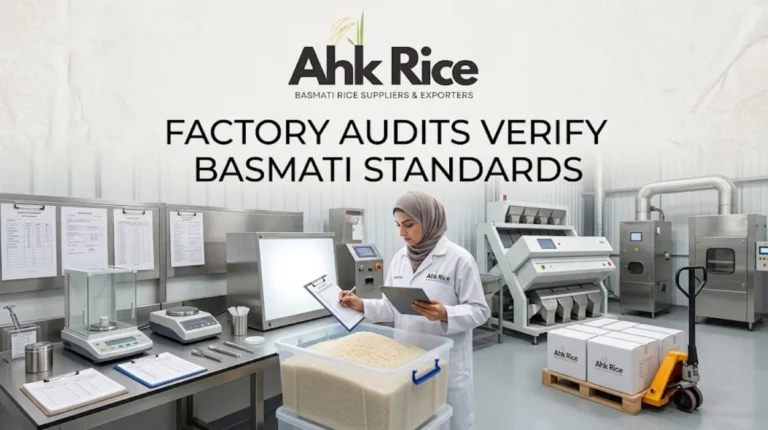
AHK Rice processes and grades the rice before export. The workflow includes cleaning, drying, dehusking, polishing, length grading, colour sorting, inspection, and packaging. These controls help reduce variation between approved samples and production batches.
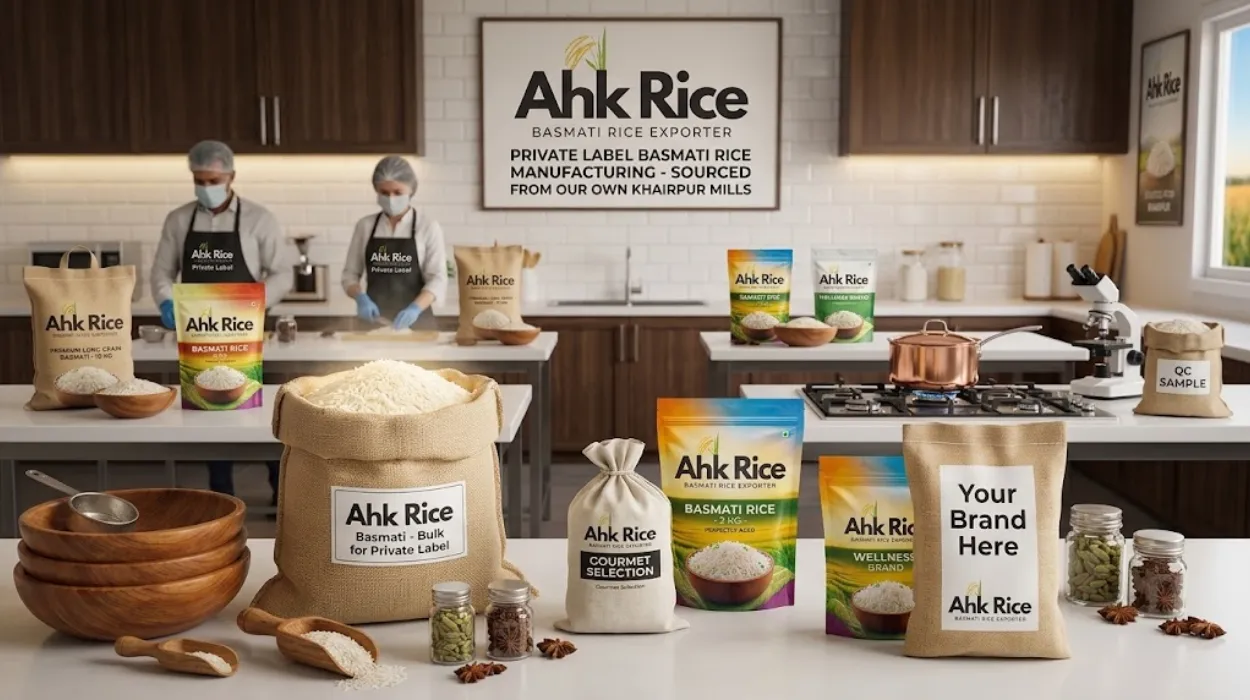
AHK Rice also supports private label packaging for brands that want control over shelf presentation. Packaging decisions can include retail pack size, bag material, printed artwork, product description, and required labelling information.
UK compliance remains the importer’s responsibility. Great Britain applies food hygiene and import requirements to rice arriving from third countries. Some foods can also face additional controls depending on origin and risk classification.
Pakistan-origin rice can fall under additional UK import control rules in specific circumstances. Importers should verify the current risk classification before shipment because controlled products may require additional border procedures.
The practical advantage is coordination. A Welsh brand does not need to manage milling, packaging, inspection, documentation, and container loading through separate suppliers.
With supplier capability established, the next question is how the sample becomes a commercial order.
How does the private label rice sample process work?
The sample process should confirm rice quality, cooking performance, packaging requirements, and commercial feasibility before bulk production begins.
What steps should the buyer follow?
Start with the specification, approve the sample, confirm packaging, verify the quotation, and authorize production against the approved specification.
- Define the grade — State the variety, processing grade, grain requirements, broken percentage, moisture target, purity, and crop preference.
- Define the quantity — State the expected metric tonnes, initial order size, and anticipated repeat volume.
- Define the packaging — Select retail weight, bag format, material, artwork requirements, and carton configuration.
- Request the sample — AHK Rice prepares a representative rice sample against the requested specification.
- Inspect the grain — Review length, uniformity, colour, broken grains, foreign matter, and overall appearance.
- Cook the sample — Test aroma, elongation, texture, grain separation, and cooking consistency using a controlled method.
- Approve the specification — Record the accepted physical and cooking characteristics before production.
- Confirm the quotation — Review rice price, packaging, inspection, freight basis, Incoterm, and destination costs.
- Approve artwork — Finalize the private label design and required UK product information.
- Authorize production — AHK Rice processes, grades, sorts, inspects, packs, and prepares the shipment.
- Inspect the finished lot — Verify the commercial batch against the approved specification before loading.
- Load and dispatch — Complete export documentation, container loading, vessel booking, and shipment coordination.
Sample costs depend on sample quantity, courier destination, packaging requirements, and testing scope. A small product sample can carry courier and handling charges, while laboratory testing creates additional costs. A commercial quotation should therefore separate sample, testing, packaging, rice, freight, and inspection charges.
A Welsh buyer should avoid approving a private label order from a photograph alone. Physical inspection and cooking evaluation provide stronger evidence before committing to container volume.
With sampling complete, the commercial decision becomes delivery planning.
How many shipping days should Welsh buyers plan for?
Welsh importers should normally plan around 25–35 days for ocean movement from Karachi to a major UK port, plus production and UK inland delivery time.
Karachi-to-UK transit varies by vessel schedule, transshipment, port congestion, carrier availability, and destination port. The final Welsh delivery also depends on customs clearance and inland transportation.
A practical planning model should separate production from ocean transit. Production and private label packaging require additional lead time before the container reaches the port.
| Delivery stage | Practical planning consideration |
|---|---|
| Specification approval | Confirm before production |
| Sample approval | Complete before bulk authorization |
| Private label artwork | Approve before printing |
| Production and packing | Allow supplier production time |
| Karachi dispatch | Book against vessel schedule |
| UK ocean transit | Approximately 25–35 days planning range |
| UK clearance | Depends on documentation and controls |
| Wales delivery | Add inland transport after port release |
For a Welsh retail launch, inventory should arrive before the intended shelf date. Buyers should also maintain buffer stock rather than planning around the shortest sailing estimate.
With logistics defined, the next decision is the total cost of creating the private label product.
What factors affect private label Basmati rice pricing?
Private label pricing depends on rice grade, crop year, quantity, packaging, processing requirements, inspection, freight, destination, and Incoterm.
Rice grade creates the first major cost difference. Premium aged 1121 can command a higher price than value-oriented grades because buyers pay for aroma, elongation, grain stability, and cooking consistency.
Crop year also affects pricing. Fully aged rice generally carries a premium over fresh crop rice because controlled aging improves aroma, moisture stability, grain firmness, and cooking performance.
Packaging creates another cost layer. Custom printed bags require artwork preparation, material selection, printing, minimum quantities, and packing configuration.
Processing requirements can also change the quotation. Additional sorting, polishing, blending, inspection, or laboratory testing may increase the final cost.
Freight changes with vessel availability, fuel-related charges, equipment availability, booking dates, and route. Incoterms also determine which logistics costs are carried by the exporter or importer.
For Welsh procurement, the correct comparison is landed cost rather than FOB price alone. A slightly higher rice price can produce better commercial value when it reduces complaints, inconsistent cooking, specification disputes, or repacking requirements.
| Cost factor | Buyer decision |
|---|---|
| Rice variety | 1121, Super Kernel, 1509 |
| Crop year | Fresh, semi-aged, or aged |
| Processing | White, Steam, Sella, other specification |
| Packaging | Stock or private label |
| Quantity | Trial volume or container programme |
| Inspection | Supplier or independent inspection |
| Freight | Route and booking date |
| Incoterm | FOB, CFR/CNF, CIF or agreed basis |
Buyers comparing suppliers can also review how companies develop their own imported rice brand to understand the wider private label procurement process.
With cost drivers identified, the final decision is how to move from evaluation into production.
What results can Welsh brands expect from AHK Rice?
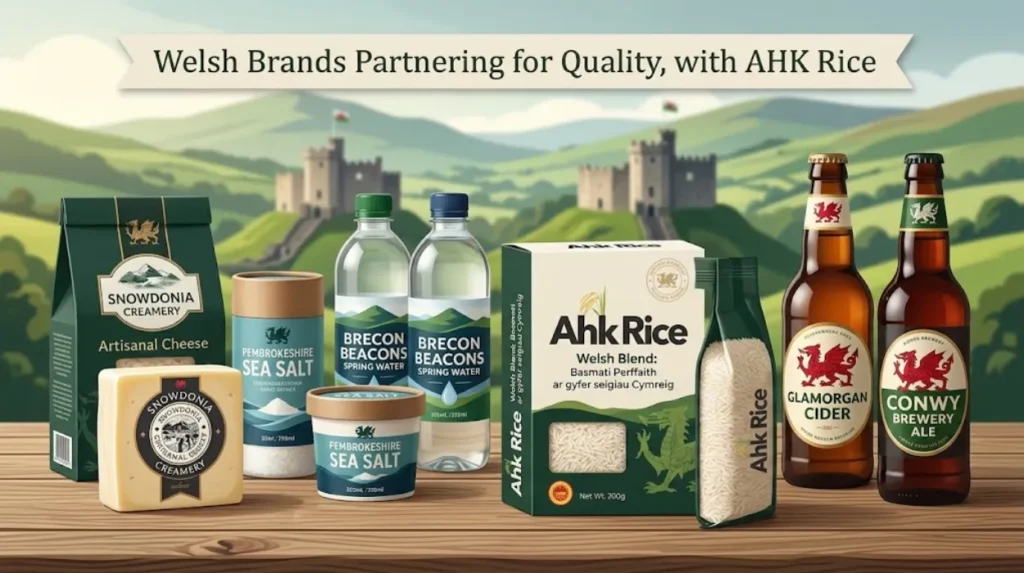
A successful private label programme should provide consistent rice quality, stronger brand control, predictable packaging, documented specifications, and a repeatable replenishment process.
Brand control is the main commercial benefit. The Welsh retailer owns the customer-facing identity while the manufacturing process follows an agreed technical specification.
Product consistency is equally important. Consumers expect the same aroma, grain appearance, texture, and cooking performance from every repeat purchase.
Packaging consistency also protects shelf presentation. Correct pack weights, artwork, product descriptions, and responsible business information help the brand maintain a professional retail identity.
Traceability strengthens procurement control. Batch identification, processing records, inspection results, and export documents provide useful evidence throughout the supply chain.
AHK Rice can also support repeat procurement once the buyer has approved a defined product specification. This makes future orders easier to compare against the original commercial benchmark.
The strongest result comes from treating private label rice as a specification programme rather than a one-time purchase.
How can a Welsh company get started?
Start by defining the rice grade, pack size, quantity, destination, target specification, and private label requirements, then request a commercial sample and quotation.
A Welsh buyer should prepare the product specification before contacting AHK Rice. The specification should identify the preferred variety, processing grade, grain requirements, broken percentage, moisture target, packaging, quantity, destination, and preferred Incoterm.
AHK Rice can then evaluate the requested specification and prepare the appropriate commercial pathway. The buyer should review the sample before approving bulk production.
The next stage is packaging approval. Artwork should be checked against the final product description and applicable UK labelling requirements before printing.
The importer should also confirm customs, food safety, labelling, and any applicable import controls before shipment. UK guidance confirms that imported cereals must meet applicable food hygiene standards and that additional restrictions can apply to certain products.
For Welsh brands seeking a long-term private label programme, AHK Rice provides the manufacturing and export route for specification-led Basmati rice sourcing.
The decision is straightforward: choose the rice grade according to the target customer, approve the physical and cooking specification through sampling, confirm the complete landed cost, and build shipment timing around actual production and logistics requirements.
Contact AHK Rice today and submit your requirements through the quotation request form to receive a tailored export proposal.
Frequently Asked Questions
Is private label Basmati rice suitable for Welsh retailers?
Yes, private label Basmati rice can support Welsh retail brands seeking product differentiation and supply control.
The buyer selects the rice grade and packaging specification.
The manufacturer processes and packs the rice against the approved specification.
UK labelling and import requirements must be checked before sale.
The final product should be approved through sampling before bulk production.
How long does Basmati rice shipping to Wales take?
Ocean movement from Karachi to a major UK port can require around 25–35 days for planning.
Actual transit varies with vessels, transshipment, congestion, and carrier schedules.
UK customs clearance adds another variable.
Inland transport then moves the container from the port into Wales.
Buyers should therefore build production and logistics buffer into launch planning.
What does a private label rice sample include?
A representative sample should reflect the intended commercial rice specification.
Buyers can inspect grain length, colour, broken percentage, purity, and foreign matter.
Cooking tests can assess aroma, elongation, texture, and grain separation.
Packaging requirements can also be reviewed during the commercial process.
Testing or courier charges may apply depending on the requested sample scope.
Which Basmati grade should a Welsh brand choose?
The correct grade depends on retail positioning, customer expectations, and target price.
1121 can suit premium positioning requiring long grains and strong cooking presentation.
Super Kernel can support traditional Basmati positioning and broad foodservice applications.
1509 can provide a competitive option for value-focused programmes.
The final choice should follow physical sampling and commercial costing.
What information should a Welsh buyer provide for a quotation?
The buyer should provide rice variety, processing grade, quantity, pack size, destination, and private label requirements. The buyer should also state preferred broken percentage, moisture specification, crop preference, and inspection requirements.