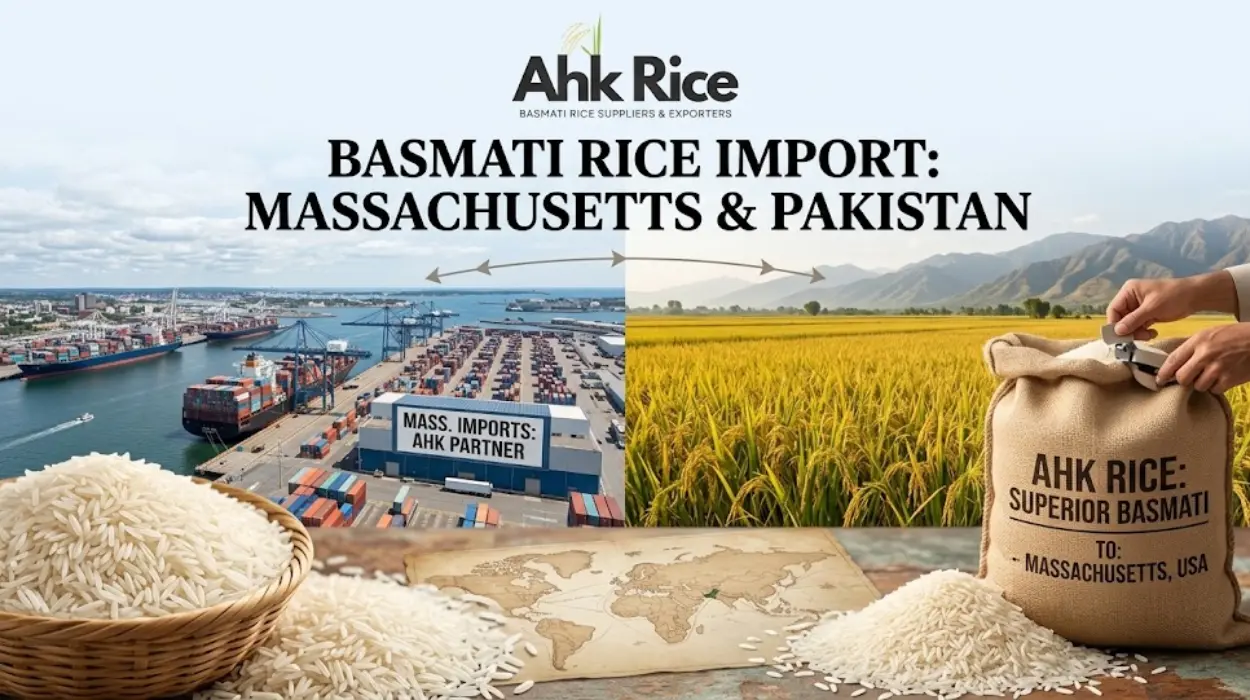
Import Pakistani Basmati Rice into Massachusetts with AHK Rice
Massachusetts importers should choose an experienced Pakistani Basmati rice exporter that can control product specifications, sampling, documentation, container preparation, and ocean logistics from Pakistan to the U.S. market. For wholesalers, distributors, ethnic grocery suppliers, restaurant distributors, and private-label businesses, the objective is not simply to buy rice at the lowest FOB price. It is to receive the agreed grade, quantity, packaging, and documentation on a repeatable schedule.
Before selecting a supplier, buyers should understand:
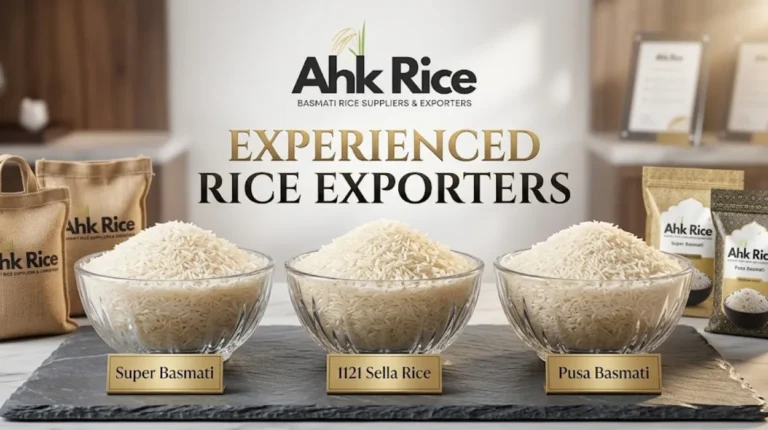
Why Massachusetts importers prefer experienced rice exporters and use that knowledge to evaluate production control, export history, shipment performance, and compliance readiness. A supplier with an established export process can reduce the operational risk associated with first-time orders, specification disputes, documentation gaps, and delayed replenishment.
What is the best solution for importing Pakistani Basmati rice into Massachusetts?
The best solution is a controlled Pakistan-to-Massachusetts supply program combining specification approval, representative samples, pre-shipment inspection, compliant export documentation, scheduled ocean freight, and repeat-order controls to protect quality, landed cost, and inventory continuity.
Massachusetts buyers should first define the commercial specification before requesting a price. The specification should identify the Basmati variety, processing grade, grain length, broken percentage, moisture limit, purity requirement, crop or aging preference, packaging format, private-label requirements, quantity, destination port, and Incoterm.
For commercial buyers, AHK Rice can supply Pakistani Basmati varieties including 1121, Super Kernel, and 1509. The appropriate grade depends on the intended market position. A premium retail program may prioritize extra-long grain appearance and aroma, while foodservice buyers may place greater emphasis on cooking consistency, yield, and price stability.
AHK Rice operates an integrated processing and export process in Punjab covering paddy procurement, cleaning, milling, grading, sorting, packaging, inspection, documentation, and container loading. This single-source structure gives a Massachusetts importer one supplier responsible for coordinating the principal stages of the order.
The U.S. compliance process also needs to be considered before shipment. FDA states that imported food must meet applicable U.S. requirements, and food facilities involved in manufacturing, processing, packing, or holding food generally have registration obligations. Prior Notice is also required for imported food shipments.
The U.S. importer may also have Foreign Supplier Verification Program responsibilities. FDA identifies the U.S. owner or consignee as the FSVP importer in applicable transactions and requires covered importers to maintain supplier-verification procedures.
For this reason, Massachusetts buyers should treat compliance documentation as part of supplier qualification rather than as paperwork requested after the purchase order.
Why choose the USA service from AHK Rice?
The USA service from AHK Rice provides Massachusetts buyers with product sourcing, processing, quality control, packaging, export documentation, inspection coordination, and shipment support through one Pakistan-based supply chain rather than fragmented suppliers.
The USA export service from AHK Rice is designed for U.S. importers purchasing commercial quantities of Pakistani rice. AHK Rice supplies 1121, Super Kernel, and other Basmati specifications for wholesalers, retailers, restaurants, foodservice distributors, and private-label programs.
The advantage is operational ownership. Instead of purchasing milled rice from one party, arranging inspection through another party, and coordinating documentation separately, the buyer can establish the complete specification with AHK Rice before production and shipment.
AHK Rice also states that third-party inspection can be arranged through internationally recognized inspection organizations such as SGS and Bureau Veritas. This gives buyers an additional verification layer when independent quantity or quality confirmation is required before container release.
For a Massachusetts importer, this matters because a specification dispute after vessel departure is more expensive to resolve than a specification problem identified before loading. Pre-shipment verification therefore becomes a commercial risk-control measure, not simply a quality exercise.
How does the sample process work before a Massachusetts buyer places an order?
The sample process should move from written specifications to representative rice samples, laboratory or physical evaluation, approval, commercial confirmation, and production matching so the final shipment is contractually aligned with the buyer-approved reference.
The first step is to provide AHK Rice with the target variety, grade, packaging, quantity, and destination. The exporter can then identify the closest available commercial specification rather than sending an unspecified sample.
AHK Rice’s U.S. export information states that samples of up to 20 kg can be provided free of rice charge, while the client covers courier costs. Buyers can also use their own courier account.
A typical commercial sample sequence is:
- Specification confirmation: Buyer defines variety, grade, grain length, moisture, broken percentage, purity, packaging, and quantity.
- Sample selection: A representative commercial sample is prepared against the agreed specification.
- Courier dispatch: The sample is shipped to the buyer or buyer-appointed laboratory. Courier and applicable sample-related certification costs are normally confirmed before dispatch.
- Buyer testing: The importer evaluates appearance, aroma, grain uniformity, cooking behavior, elongation, moisture, breakage, and other agreed parameters.
- Approval: Buyer confirms acceptance in writing and identifies any required specification adjustments.
- Commercial quotation: AHK Rice prepares pricing based on product, quantity, packing, Incoterm, destination, and current freight conditions.
- Production matching: The approved specification becomes the reference for the commercial order.
- Pre-shipment inspection: Where requested, independent inspection verifies the shipment before loading.
The important point is that the sample should represent the commercial product. A buyer should avoid approving a sample based only on appearance and then purchasing against a vague description.
How long does Pakistani Basmati rice take to reach Massachusetts?
For Massachusetts buyers using the U.S. East Coast route, a practical planning window is approximately 28–36 days from Karachi ocean departure to major Northeast port arrival, with customs clearance and inland delivery requiring additional time.
Massachusetts importers commonly plan through Northeast gateway ports, with New York/New Jersey serving as an important routing option for cargo moving into the New England distribution network. Actual transit varies according to vessel schedules, transshipment, port congestion, customs processing, and inland trucking.
AHK Rice’s current U.S. export information gives New York an average ocean-shipping range of approximately 28–34 days, while other U.S. destinations are longer depending on geography.
A Massachusetts replenishment program should therefore avoid calculating inventory only from the advertised vessel transit time. A safer procurement model includes production lead time, booking time, ocean transit, port handling, customs clearance, and inland transportation.
For example, an importer with Boston-area warehouse demand should not wait until inventory is almost depleted before placing the next order. If the business consumes 20 MT per month, the procurement calendar should be built around the complete replenishment cycle rather than the 28–34-day ocean estimate alone.
In 2026, logistics planning also deserves additional attention because USDA reported logistical challenges affecting Pakistan’s rice exports, including disruption associated with the Strait of Hormuz. Pakistan’s July 2026 USDA update forecasts 2026/27 rice exports at about 4.9 million metric tons.
What documents should Massachusetts importers require before shipment?
A commercial rice shipment should be supported by consistent product, commercial, origin, quality, phytosanitary, shipping, and applicable U.S. import documentation prepared before the container reaches the destination port.
The exact document package depends on the transaction and applicable requirements, but an importer should normally establish responsibility for documents such as:
- Commercial invoice
- Packing list
- Certificate of origin
- Phytosanitary certificate
- Fumigation certificate where applicable
- Weight or quality certificate
- Bill of lading
- Product specification or quality report
- FDA-related shipment information where applicable
FDA requires Prior Notice for imported food, and the information must be submitted within the applicable timeframe before arrival. For waterborne shipments, FDA’s guidance specifies that Prior Notice must be received and confirmed at least eight hours before arrival at the port of arrival.
The Massachusetts buyer should also confirm who is responsible for entry filing, customs brokerage, FSVP obligations, tariff classification, and destination charges. These responsibilities should be agreed before the purchase order is finalized.
AHK Rice supports export documentation as part of its broader Pakistan-to-USA supply process, helping buyers reduce the risk of missing or inconsistent shipment records.
What results can a Massachusetts importer expect from AHK Rice?
A well-managed supply program should produce consistent rice specifications, predictable shipment planning, documented quality verification, clearer landed-cost calculations, and fewer avoidable procurement disruptions across repeat Massachusetts import orders.
The first expected result is specification consistency. If the buyer approves 1121 Steam Basmati with defined grain, moisture, breakage, and packaging parameters, those requirements should remain the reference for subsequent orders.
The second result is procurement visibility. A repeat importer can establish a shipment calendar based on monthly demand, production availability, vessel schedules, and warehouse requirements rather than purchasing reactively.
The third result is stronger quality control. AHK Rice describes an end-to-end processing chain that includes cleaning, de-husking, separation, whitening, polishing, grading, length sorting, packaging, documentation, and container loading.
The fourth result is scalable purchasing. A buyer can begin with a commercial trial and move toward repeat container volumes after confirming product performance, documentation, and logistics.
This approach is particularly relevant when the Massachusetts customer base includes restaurants, distributors, ethnic grocery stores, and private-label retailers. These businesses need rice that performs consistently because product substitution or quality variation can affect customer satisfaction and reorder rates.
What factors affect the price of Pakistani Basmati rice delivered to Massachusetts?
Massachusetts landed cost depends on rice variety and grade, quantity, packaging, inspection, export charges, ocean freight, destination charges, customs handling, inland transportation, payment terms, and the selected Incoterm rather than the rice price alone.
FOB pricing is normally the starting point for comparison. However, Massachusetts buyers should calculate the complete landed cost before selecting a supplier.
Major cost variables include the Basmati variety, processing grade, crop availability, grain specifications, packaging material, private-label printing, order volume, container utilization, inspection requirements, freight market conditions, insurance, customs brokerage, port charges, and inland delivery.
AHK Rice’s published U.S. information indicates a 20-foot container can be used for commercial shipments and lists a 20 MT starting container quantity on its USA export service.
Sample economics should also be separated from commercial cargo economics. A sample may involve no rice charge up to the stated sample allowance, but courier and applicable certification expenses can still apply. A commercial quotation should then be evaluated separately according to the final order specification.
Do not treat a historical FOB figure as a guaranteed August 2026 Massachusetts landed price. Rice values and freight conditions can change between quotation, booking, and shipment. The correct comparison is the supplier’s current quotation against the same grade, quantity, Incoterm, packaging, and destination assumptions.
How should a Massachusetts importer decide whether AHK Rice is the right supplier?
The final decision should be based on specification control, export capability, documentation readiness, sampling transparency, inspection options, shipment planning, commercial responsiveness, and the supplier’s ability to support repeat orders at the required quality.
A Massachusetts importer can use five practical decision tests.
Specification test: Can the exporter state the rice specification clearly enough to become a purchase-order reference?
Sample test: Does the commercial sample perform as expected in the buyer’s cooking, retail, or foodservice application?
Documentation test: Can the supplier provide the required export and quality documentation before shipment rather than after a problem occurs?
Logistics test: Can the supplier provide a realistic shipping window and communicate changes when vessel schedules move?
Continuity test: Can the supplier support repeat orders without changing the agreed commercial specification?
AHK Rice’s export model addresses these requirements through integrated processing, customized packaging, export documentation, inspection options, and USA shipment coordination.
The supplier’s export history should also be examined alongside its current capacity. Experience matters because repeat international shipments require more than product availability. They require disciplined execution across quality control, documentation, packing, booking, loading, and communication.
For Massachusetts buyers comparing Pakistani suppliers in 2026, AHK Rice offers an established export structure, a Punjab-based processing operation, USA-specific shipment support, and product options across 1121, Super Kernel, and 1509 Basmati categories. For more detail explore:
How export history reflects supplier reliability and consistency
How can a Massachusetts importer get started with AHK Rice?
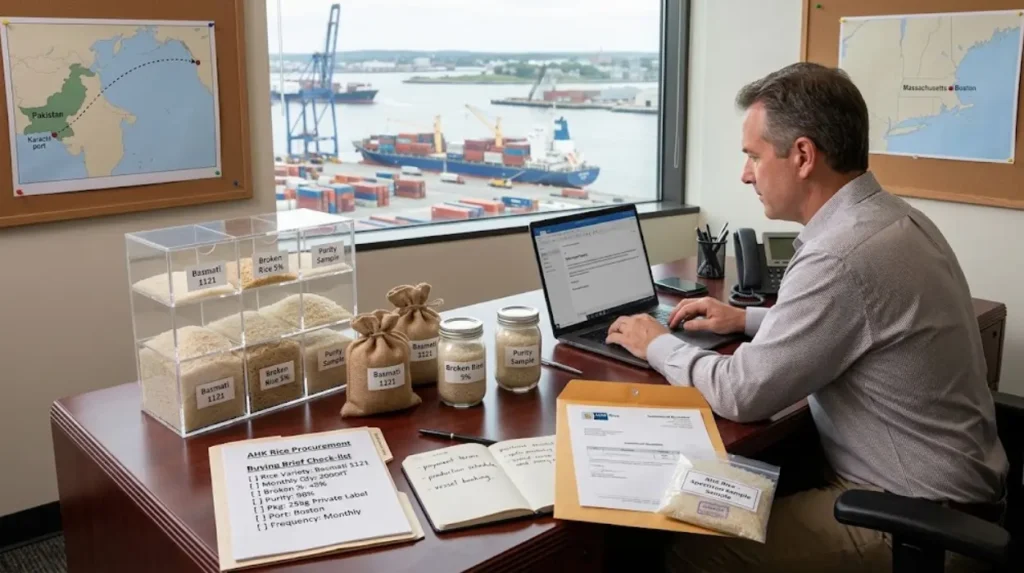
Start by sending the required product specification, monthly or shipment quantity, packaging format, Massachusetts delivery point, preferred Incoterm, and target schedule so AHK Rice can prepare a commercially relevant sample and quotation.
The fastest procurement process begins with a complete buying brief. Include the rice variety, grade, grain specification, moisture requirement, broken percentage, purity target, packaging size, private-label requirements, container quantity, destination port, and expected delivery frequency.
Next, request the representative sample and evaluate it against your actual commercial use. If the sample passes, confirm the specification in writing and request the current commercial quotation.
After price approval, agree on payment terms, production schedule, inspection requirements, documentation responsibilities, vessel booking, and destination arrangements. The objective is to remove ambiguity before production begins.
AHK Rice can then coordinate the production and export workflow from Pakistan, including processing, grading, packaging, inspection coordination, documentation, container loading, and shipment scheduling. This gives Massachusetts importers a defined procurement process instead of a one-time spot purchase.
For businesses planning regular Basmati imports, the stronger strategy is to treat the first shipment as the beginning of a controlled supply program. Once the buyer confirms quality, documentation, transit performance, and landed cost, future orders can be scheduled around actual Massachusetts consumption.
To receive a current specification-based quotation for Pakistani Basmati rice shipments to Massachusetts, request a quote from AHK Rice.
Frequently Asked Questions
What Pakistani Basmati rice varieties can Massachusetts importers buy from AHK Rice?
AHK Rice supplies Pakistani Basmati varieties including 1121, Super Kernel, and 1509. Buyers can select grades and processing specifications according to retail, restaurant, foodservice, wholesale, or private-label requirements.
How long does Pakistani Basmati rice take to reach Massachusetts?
Ocean transit to Northeast U.S. gateways is typically around 28–36 days, depending on the shipping route, vessel schedule, port conditions, transshipment, customs clearance, and inland transportation to Massachusetts.
What is the minimum order quantity for Pakistani Basmati rice?
Commercial container quantities depend on the product and packaging specification. AHK Rice’s USA service information indicates a 20 MT starting quantity for commercial container shipments.
Can Massachusetts importers receive rice samples before ordering?
Yes. AHK Rice can provide product samples for evaluation. Its USA export information states that samples up to 20 kg can be provided free of rice cost, while the buyer covers courier expenses.
What does the rice sample process involve?
The process normally includes specification confirmation, sample selection, courier dispatch, buyer evaluation, specification approval, quotation, commercial order confirmation, production, and optional pre-shipment inspection.
What documents are required to import Pakistani Basmati rice into Massachusetts?
Depending on the transaction, importers may require commercial invoices, packing lists, certificates of origin, phytosanitary documentation, fumigation certificates where applicable, quality or weight certificates, bills of lading, and FDA-related import information.
Does Pakistani rice imported into Massachusetts require FDA compliance?
Yes. Imported food must meet applicable U.S. food requirements. Depending on the shipment, requirements can include facility registration, Prior Notice, labeling compliance, and Foreign Supplier Verification Program responsibilities.
What factors determine the price of Pakistani Basmati rice in Massachusetts?
Price depends on variety, grade, grain specifications, quantity, packaging, private-label requirements, inspection, Incoterm, ocean freight, port charges, customs handling, inland transportation, payment terms, and prevailing market conditions.