What Makes Pakistan 1121 White Basmati Rice Attractive for Indonesian Grocery Buyers?
- 1121 White Basmati Rice Indonesia
- Pakistan Basmati rice for Indonesian grocery buyers
- 1121 Basmati rice grades
- Pakistan 1121 White rice specifications
- Indonesian Basmati rice importers
- 1121 White Basmati rice export
- Pakistan 1121 rice processing
- Basmati rice packaging for Indonesia
Pakistan 1121 White Basmati Rice attracts Indonesian grocery buyers through its extra-long grain, aromatic profile, white appearance, cooking expansion, and retail-friendly grading. Here is why: 1121 combines strong visual presentation with measurable specifications that grocery retailers can communicate through branded consumer packs.
Pakistan 1121 Basmati is cultivated mainly in Punjab, where rice-growing conditions support aromatic grain production. Farmers harvest mature paddy before mills clean, dry, dehusk, polish, grade, and sort the kernels. The final white rice retains the natural Basmati identity while presenting a bright, uniform appearance.
Indonesian demand for 1121 Basmati has a measurable trade presence. Recent shipment data tracks Indonesia among major importing countries for 1121, Basmati, and rice products sourced internationally. Grocery buyers therefore evaluate 1121 as a differentiated premium rice rather than only as a staple commodity.
What is Pakistan 1121 White Basmati Rice?
Pakistan 1121 White Basmati is an extra-long-grain aromatic rice produced by milling 1121 Basmati paddy into polished white kernels. Its defining characteristics include long grains, distinctive aroma, white colour, low broken content, and strong retail presentation.
What defines the 1121 variety?
1121 is a Basmati variety recognized for its unusually long grain. Commercial specifications commonly place raw average grain length around 8.0–8.3 mm, depending on the supplier and contract. Published Pakistani specifications show 8.0–8.2 mm or 8.30 mm ranges.
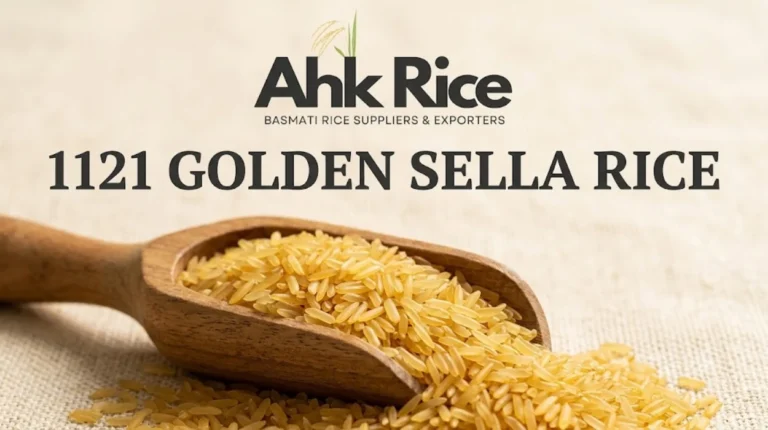
White 1121 differs from Sella and Golden Sella through processing. White rice is milled without the parboiling process used for Sella products. This creates a naturally white kernel suited to retail packs where bright appearance matters.
Why does grain length matter?
Grain length creates the first visual quality signal for grocery shoppers. Extra-long kernels occupy more space on the plate and produce a distinctive appearance after cooking. Published specifications also show cooked grain expansion reaching approximately 22 mm or more for some 1121 White products.
Grain length also supports product differentiation. A 5 kg retail pack of extra-long Basmati communicates a different value proposition from standard long-grain rice. Indonesian grocery buyers can therefore position 1121 through variety, grain appearance, aroma, and cooking performance.
With the product defined, the next question is how Pakistan converts harvested paddy into export-grade white rice.
How is Pakistan 1121 White Basmati Rice processed?
Pakistan 1121 White Basmati passes through cleaning, drying, dehusking, polishing, grading, colour sorting, inspection, and packaging before export. Each stage removes defects and creates a more uniform retail product.
How does the processing sequence work?
The standard processing sequence follows these stages:
- Clean the paddy to remove stones, dust, straw, and field material.
- Dry the paddy to establish controlled moisture for milling.
- De-husk the grain to remove the outer rice husk.
- Separate the husk from edible kernels through controlled separation.
- Polish the rice to produce the characteristic white surface.
- Grade the kernels according to length and physical quality.
- Sort defective grains to reduce damaged, discoloured, and undesirable kernels.
- Sort by colour to remove contrasting and chalky grains.
- Inspect the rice against the agreed commercial specification.
- Package the product in the approved retail or bulk format.
Modern mills use mechanical grading and colour sorting to improve uniformity. Published Pakistani specifications show 1121 White products with double polishing, approximately 8.2–8.3 mm grain length, controlled moisture, and low broken percentages.
Processing therefore determines much of the commercial appearance seen by the Indonesian consumer. Variety provides the genetic foundation, while milling and sorting create the final retail specification.
What are the key components of Pakistan 1121 White Basmati?
The key components are grain length, aroma, whiteness, broken percentage, moisture, purity, milling quality, packaging, and traceability. Indonesian grocery buyers should evaluate these specifications together rather than treating grain length as the only quality measure.
| Specification | Typical commercial consideration |
|---|---|
| Variety | 1121 Basmati |
| Processing | White milled |
| Grain length | Around 8.0–8.3 mm |
| Moisture | Commonly 12–13% maximum |
| Broken grains | Commonly 1–2% maximum |
| Appearance | White, bright, uniform |
| Packaging | Retail and bulk formats |
Specifications vary by supplier and purchase contract. For example, published sources list moisture limits from 12% to 13%, while broken limits range from 1% to 2%.
Which grades are available from Pakistan?
Pakistan 1121 is available in several processing grades. The principal options include 1121 White, 1121 Steam, 1121 Golden Sella, 1121 Creamy Sella, and 1121 Brown.
1121 White suits buyers seeking natural white appearance and aromatic cooking performance. 1121 Steam uses steam treatment and remains white while developing a different cooking structure. Sella grades use parboiling, which strengthens the kernel and supports storage and commercial foodservice applications.
Indonesian grocery buyers should therefore distinguish variety from processing grade. The variety remains 1121, while White, Steam, and Sella identify different processing treatments.
Readers comparing these grades can continue with how Indonesian grocery buyers compare Pakistan 1121 White rice grades.
With the product components established, the next issue is why these characteristics matter specifically in grocery retail.
Why is 1121 White attractive for Indonesian grocery buyers?
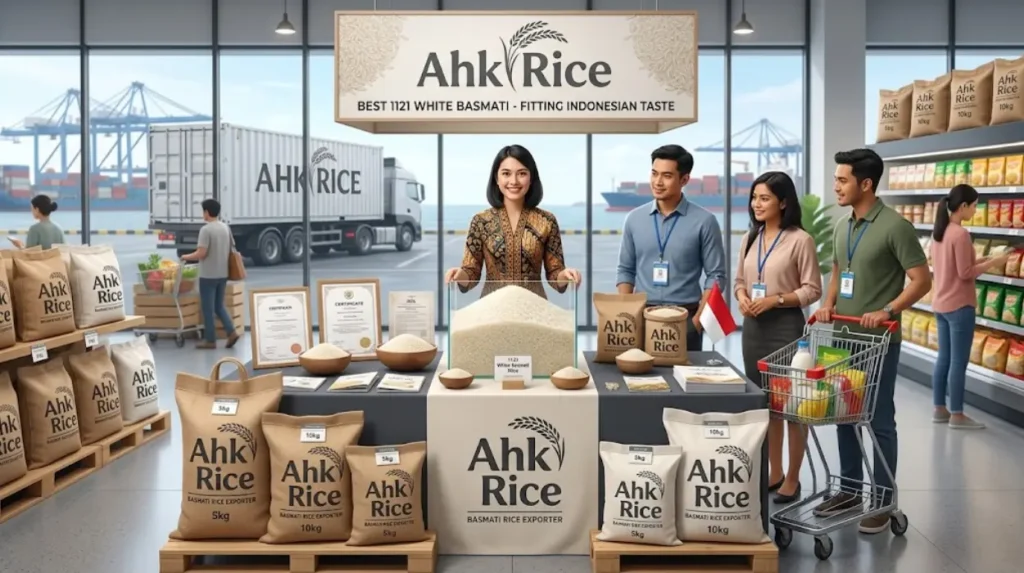
1121 White offers strong shelf presentation, recognizable Basmati identity, long cooked grains, aromatic appeal, and flexible retail packaging. These attributes help grocery buyers create a premium rice category alongside conventional rice products.
How does 1121 support retail presentation?
Retail presentation depends heavily on grain uniformity. A transparent window or product image can show long, clean, white kernels before purchase. Low broken percentages also create a more consistent visual impression inside the pack.
Published commercial specifications commonly place broken rice around 1–2% for premium 1121 White grades. Lower breakage supports premium presentation, while higher broken grades serve different commercial applications.
How does cooking performance affect grocery demand?
Cooking performance determines repeat purchase behaviour. 1121 Basmati produces long, separate grains after cooking when the product is properly processed and prepared. Its aromatic character also differentiates it from ordinary long-grain white rice.
Grocery retailers can position 1121 for biryani, pilaf, rice dishes, family meals, and premium home cooking. These uses create multiple consumption occasions rather than limiting the product to one recipe.
Which packaging formats suit grocery buyers?
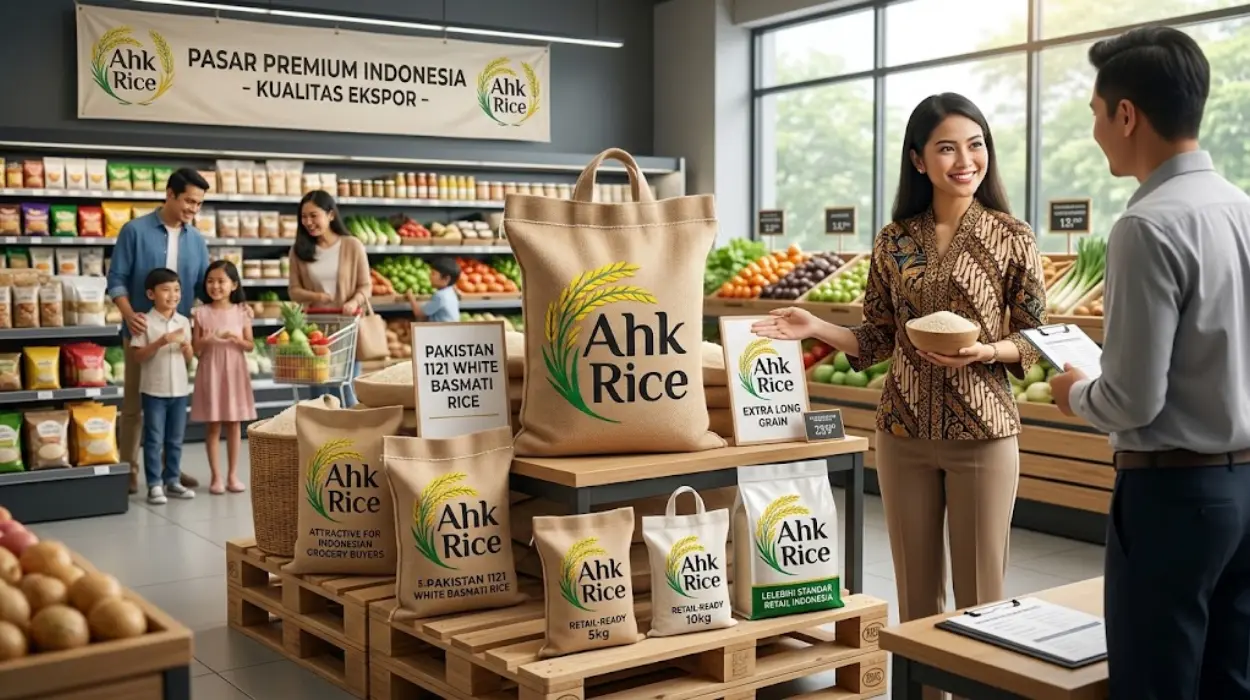
Retail packaging commonly includes 1 kg, 5 kg, and 10 kg formats, while 25 kg and 50 kg bags serve wholesale distribution. Published Pakistani exporters also list custom packaging and private-label options.
Indonesian grocery buyers can therefore match pack size with consumer segment. Smaller packs suit household shoppers, while larger packs suit family consumption and wholesale-linked retail channels.
The retail advantages explain product appeal, while the next section addresses where Pakistani Basmati fits within international markets.
Which markets import Pakistan 1121 White Basmati Rice?
Pakistan 1121 Basmati serves retail, foodservice, wholesale, and private-label markets across Asia, the Middle East, Europe, and North America. Market preferences differ by application, packaging, price position, and cooking expectations.
Published exporter information identifies markets including the UAE, United Kingdom, European Union, United States, and Saudi Arabia for 1121 White Basmati. Indonesia also appears in recent international 1121 and Basmati shipment data.
Market segmentation changes grade selection. Premium retail buyers emphasize appearance and aroma. Foodservice buyers prioritize cooking yield and consistency. Wholesale buyers balance specification with procurement price.
Indonesia has its own compliance framework for imported rice. Indonesian rice standards address characteristics such as moisture and physical quality, so importers should establish the exact applicable requirements before shipment.
With market applications established, certification and quality control complete the export specification.
Which certifications and quality controls apply to Pakistan Basmati exports?
Common export controls include ISO 22000, HACCP, phytosanitary certification, fumigation documentation, certificate of origin, inspection records, and laboratory testing. The applicable documents depend on the product, shipment, destination requirements, and buyer contract.
Food safety systems such as ISO 22000 and HACCP address controlled food production processes. Phytosanitary documentation supports plant-health requirements for international agricultural shipments. Fumigation documentation records pest-control treatment where required.
Quality inspection verifies measurable attributes. Typical tests include moisture, grain length, broken percentage, purity, foreign matter, damaged kernels, and colour. These checks connect the physical shipment with the agreed specification.
Indonesian buyers should request the product specification, batch quality report, inspection documentation, commercial invoice, packing list, certificate of origin, phytosanitary certificate, fumigation certificate where applicable, and bill of lading.
Certification does not replace product grading. A certified food-safety system does not automatically guarantee a specific grain length or broken percentage. Buyers need both management-system evidence and product-level testing.
What common misconceptions exist about 1121 White Basmati?
1121 White is not defined by grain length alone, White processing does not mean lower quality, and low broken percentage does not replace moisture or purity testing. Buyers need the complete specification to evaluate commercial quality.
The first misconception is that longer grain automatically means better rice. Grain length supports premium appearance, but moisture, purity, broken percentage, milling, aroma, and cooking performance also determine value.
The second misconception is that White rice is inferior to Sella rice. White and Sella represent different processing methods. White suits specific retail and cooking preferences, while Sella provides different kernel characteristics through parboiling.
The third misconception is that a low broken percentage guarantees a good shipment. A shipment with low breakage can still fail another contractual parameter. Buyers should compare all agreed specifications together.
The fourth misconception is that every 1121 product has identical specifications. Published commercial sources already show variation in moisture, broken percentage, grain length, and polishing requirements.
Understanding these distinctions gives Indonesian grocery buyers a more accurate framework for evaluating Pakistan 1121 White Basmati.
What should Indonesian grocery buyers check before purchasing?
Indonesian grocery buyers should compare variety, processing grade, grain length, moisture, broken percentage, purity, packaging, certification, inspection, and shipment documentation. This specification-based approach prevents price from becoming the only purchasing criterion.
A practical purchasing specification should define the exact 1121 grade, target grain length, maximum moisture, broken tolerance, foreign matter limit, packaging format, quantity, inspection method, and required certificates.
Sample approval should follow the written specification. The buyer should inspect raw appearance, aroma, grain uniformity, broken kernels, cooking behaviour, and packaging before approving bulk production.
AHK Rice operates from Punjab and supplies 1121, Super Kernel, and 1509 varieties through processing, grading, packaging, and export procedures. Its broader export process also includes quality inspection and documentation. These capabilities align with the measurable requirements Indonesian grocery buyers use during supplier evaluation.
The central conclusion remains clear: Pakistan 1121 White Basmati combines extra-long grain presentation, aromatic identity, retail flexibility, and measurable export specifications, making it a strong option for Indonesian grocery buyers.
Frequently Asked Questions
What makes 1121 White Basmati different from ordinary white rice?
1121 White Basmati has an extra-long grain, distinctive aroma, and characteristic cooking expansion. Ordinary white rice includes many varieties with shorter or less aromatic grains.
What is the typical grain length of 1121 White Basmati?
Commercial specifications commonly place average raw grain length around 8.0–8.3 mm. Exact requirements depend on the supplier and purchase contract.
Is 1121 White Basmati suitable for Indonesian grocery retail?
Yes. Its long white grains, aroma, cooking presentation, and availability in retail pack formats support premium grocery positioning.
What grades of 1121 Basmati can buyers source?
Common grades include 1121 White, 1121 Steam, 1121 Golden Sella, 1121 Creamy Sella, and 1121 Brown. Each grade uses a different processing approach and serves different applications.
What certifications should Indonesian buyers request?
Buyers should review applicable food-safety certification, phytosanitary documentation, fumigation records, certificate of origin, inspection reports, laboratory results, commercial invoice, packing list, and bill of lading.
Does lower broken percentage mean better rice?
Lower broken percentage generally supports stronger retail appearance. Buyers should still evaluate moisture, purity, foreign matter, grain length, milling quality, and cooking performance.
How should buyers compare Pakistan 1121 suppliers?
Buyers should compare the same technical specification across suppliers. Key factors include grain length, moisture, broken percentage, purity, packaging, inspection method, certifications, shipment documentation, and total landed cost.