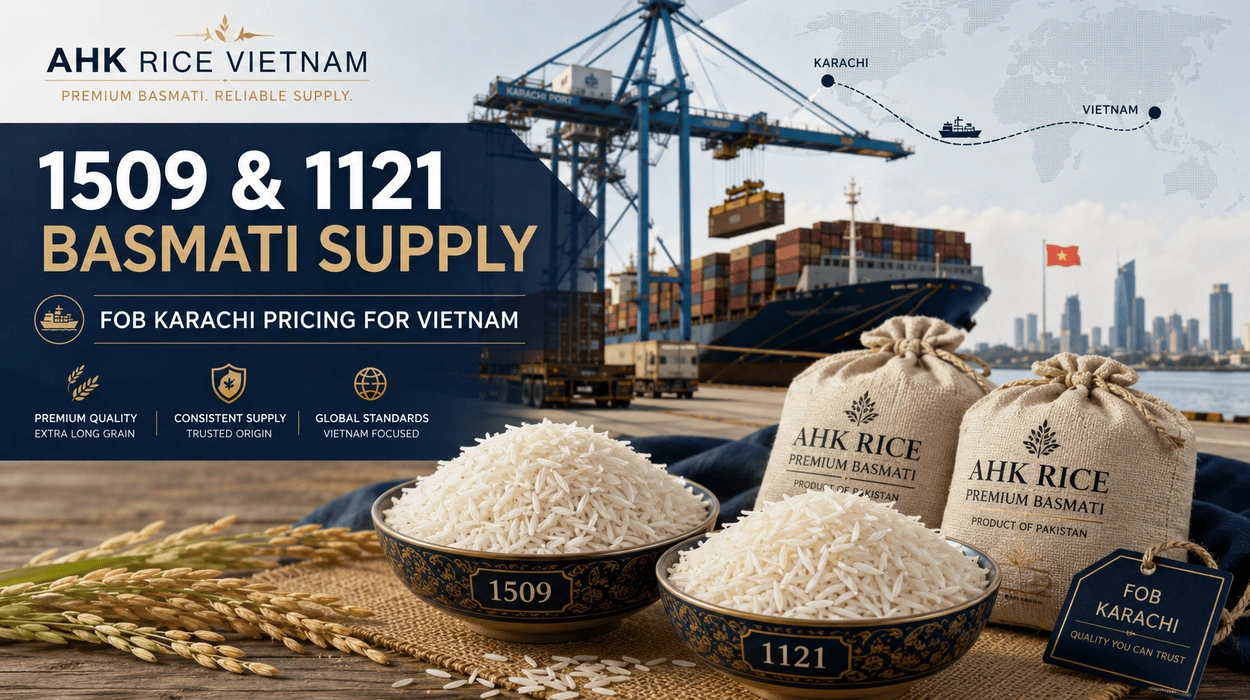
AHK Rice Vietnam: 1509 and 1121 Basmati Supply — FOB Karachi Pricing
Vietnamese rice distributors should source 1509 and 1121 Basmati on FOB Karachi terms when they need premium rice with controlled specifications, clear export paperwork, and predictable shipment planning. Buyers still studying demand can first review this premium market context in the guide to Vietnam’s 2026 rice trade and Pakistani basmati demand. For buyers ready to source 1509 and 1121 Basmati supply for Vietnam, AHK Rice provides grade selection, sample dispatch, FOB Karachi pricing, packing options, inspection support, and full export documentation.
AHK Rice works with Vietnamese distributors that need commercial clarity before booking containers. The decision is not only about rice price. The decision includes variety, processing grade, broken percentage, moisture, packing, sample approval, documentation, sailing schedule, and landed cost planning.
Vietnam is a strong rice-producing country, but premium basmati serves a different buyer need. Local Vietnamese rice supports daily staple demand. Pakistani basmati supports long-grain aromatic demand in hotels, restaurants, supermarkets, online grocery, ethnic retail, and international cuisine channels.
AHK Rice supplies 1509 Basmati and 1121 Basmati from Pakistan through a specification-led export process. Buyers compare both grades before contracting because each grade creates a different price and performance outcome. 1509 Basmati supports cost-controlled premium positioning. 1121 Basmati supports extra-long grain presentation and stronger premium identity.
What is the best solution for Vietnamese distributors sourcing premium basmati?
The best solution is a specification-led FOB Karachi purchase from AHK Rice, with sample approval before contract, confirmed grade selection, fixed packing details, export documents, inspection reports, and shipping coordination for Vietnam ports such as Ho Chi Minh City and Hai Phong.
Vietnamese distributors face 4 common buying problems. The first problem is grade confusion. The second problem is inconsistent cooking performance. The third problem is unclear landed cost. The fourth problem is documentation delay.
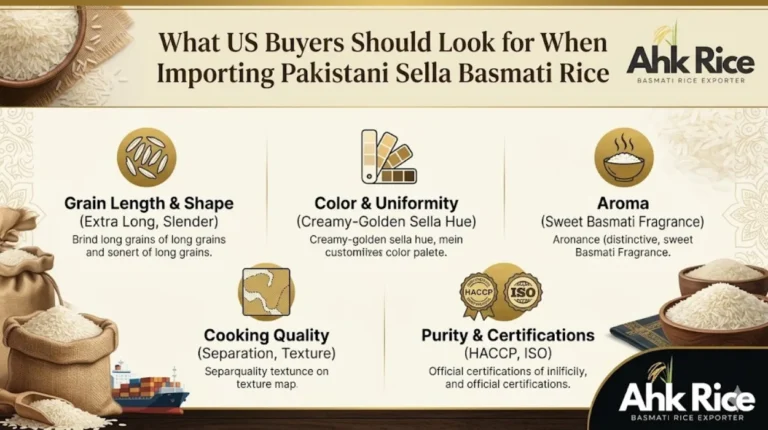
AHK Rice solves these problems through controlled specification. The buyer selects the variety first. The main choice is 1509 Basmati or 1121 Basmati. The buyer then selects the processing grade, such as white, steam, sella, or golden sella. The buyer also confirms broken percentage, grain length range, moisture, packaging, and label requirements.
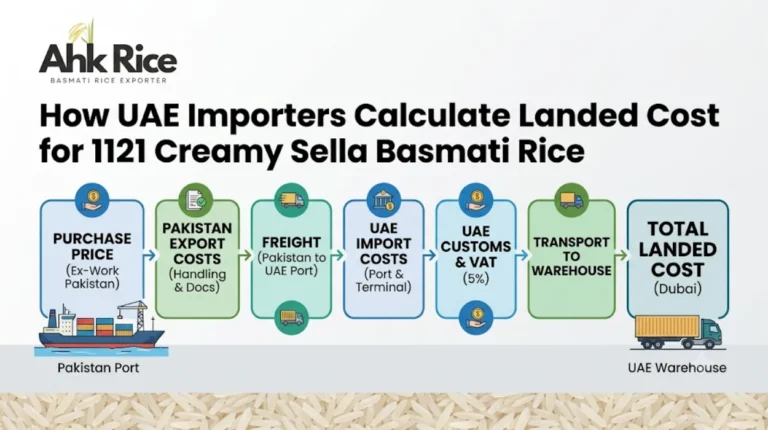
FOB Karachi means the seller delivers the rice for export at Karachi port under agreed FOB terms. The buyer usually controls the ocean freight, marine insurance, destination port clearance, and inland movement in Vietnam. This model gives Vietnamese importers clearer control over freight selection and final landed cost.
AHK Rice uses FOB Karachi pricing because it separates product cost from freight cost. This is useful for distributors that already work with freight forwarders in Vietnam. It also helps buyers compare 1509 and 1121 on a product basis before adding freight, duties, local charges, and distribution margin.
A typical Vietnam order starts with sample approval. The buyer requests 1509 Basmati or 1121 Basmati in the required processing grade. AHK Rice dispatches the sample. The buyer tests aroma, length, colour, broken percentage, and cooking result. After approval, AHK Rice issues a proforma invoice and reserves production or stock.
This solution is strongest for distributors that want repeat supply. A one-time purchase can work, but basmati performs better commercially when the importer builds a consistent grade identity in the market. The same grain, same pack, and same cooking result help restaurants and retailers trust the product.
Vietnamese buyers comparing both grades should also read the grade decision guide on choosing between 1509 and 1121 for Vietnamese distributors before final container selection.
Why choose AHK Rice Vietnam for FOB Karachi basmati supply?
Choose AHK Rice Vietnam when the purchase needs export-ready basmati, controlled processing, transparent FOB Karachi pricing, custom packaging, sample approval, inspection support, and documents aligned with Vietnam import requirements. The service fits distributors, wholesalers, retailers, and food-service importers.
AHK Rice gives buyers a practical export process. The company does not only quote a rice name. It defines the grade, packing, quality parameters, sample process, shipment route, and documentation set before loading.
The first benefit is grade clarity. AHK Rice explains whether 1509 or 1121 fits the buyer’s market. 1509 works when the distributor wants premium basmati with stronger price control. 1121 works when the distributor wants longer grain presentation and a higher premium shelf position.
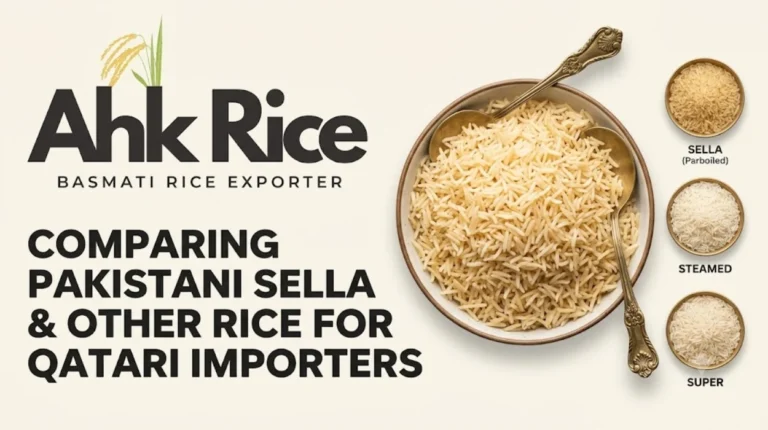
The second benefit is processing control. AHK Rice mills, polishes, sorts, grades, and packs rice according to buyer requirements. This reduces mismatch between sample and shipment. A distributor can select white basmati for classic household cooking, steam basmati for firmness, sella basmati for food service stability, or golden sella for long holding and visual appeal.
The third benefit is packaging flexibility. Vietnamese buyers can request 5 kg, 10 kg, 20 kg, 25 kg, or 40 kg packing. Retail importers often select 5 kg and 10 kg printed bags. Food-service wholesalers often select 25 kg and 40 kg PP bags. Private-label buyers can request custom artwork, barcode placement, and importer details.
The fourth benefit is documentation support. Rice export to Vietnam needs accurate paperwork. AHK Rice supports commercial invoice, packing list, certificate of origin, phytosanitary certificate, fumigation certificate, health or food safety document, and certificate of analysis when required.
The fifth benefit is decision support before shipment. AHK Rice can help buyers understand which grade works for which market channel. A Ho Chi Minh City supermarket buyer needs different packaging from a hotel supplier in Da Nang. A wholesale buyer in Hai Phong needs different cost planning from an online grocery seller.
AHK Rice is also useful for new Vietnam importers because the sample process reduces risk. Buyers can test rice before container booking. They can compare 1509 white, 1509 steam, 1121 steam, and 1121 golden sella before selecting the final contract grade.
Explore Our Expert Guides:
Why Philippines Switched to Pakistani Rice After India Export Restrictions
1509 White vs 1509 Golden Sella: Which Grade for Philippine Distributors?
What results can Vietnam buyers expect from 1509 and 1121 Basmati supply?
Vietnam buyers can expect clearer grade positioning, better cooking consistency, stronger premium shelf value, predictable documentation, and improved distributor confidence. 1509 supports balanced pricing, while 1121 supports premium length, visual presentation, and higher-value restaurant or retail positioning.
1509 Basmati gives a strong commercial result when the buyer wants premium rice without pushing the final price too high. It has long grains, good cooking performance, and a practical cost advantage in many buying cycles. This makes it useful for distributors entering basmati for the first time.
1121 Basmati gives a stronger premium result when the buyer wants extra-long cooked grain. It performs well in restaurant dishes where plate appearance matters. It also works in premium retail packs where the buyer can clearly see long grains through a transparent window or product image.
AHK Rice helps buyers match each grade to a Vietnamese channel. For example, a distributor serving Indian and Middle Eastern restaurants in Ho Chi Minh City can select 1121 steam or 1121 sella. A distributor serving mixed retail and food service can select 1509 steam for better price balance.
Food-service buyers can expect better cooking control when they choose steam or sella grades. These grades help rice stay separate during batch cooking. This matters for buffet service, wedding catering, hotel kitchens, and large restaurant orders.
Retail buyers can expect better shelf differentiation when they use premium packaging. A 5 kg printed bag of Pakistani basmati can sit beside Thai jasmine, Japanese-style rice, and local Vietnamese fragrant rice. The pack must explain origin, cooking method, grade, and use case.
Importers can expect more accurate landed cost planning when FOB Karachi is used correctly. The product cost is quoted from Karachi. The buyer then adds ocean freight, insurance, Vietnam port charges, customs duty where applicable, local trucking, warehousing, and distributor margin.
Shipping time also shapes the result. Karachi to Ho Chi Minh City sea freight can be planned around a shortest observed route of about 14 days, while Vietnam-Pakistan container route references show 17 to 22 days on some lanes. Practical planning should allow 18 to 30 days because sailing schedules, transshipment, port congestion, customs processing, and carrier routing change by booking week.
For Vietnam, common delivery planning can use these commercial estimates. Karachi to Ho Chi Minh City is usually planned at 18 to 25 days. Karachi to Hai Phong is usually planned at 20 to 30 days. Karachi to Da Nang often moves through regional routing and should be planned at 22 to 32 days. Inland delivery after clearance usually adds 1 to 5 days depending on warehouse location.
AHK Rice supports shipment planning by aligning rice readiness with buyer vessel schedules. This prevents storage pressure at the mill and avoids late container loading. The best outcome comes when the buyer confirms packing artwork, payment terms, inspection needs, and freight schedule before production starts.
What factors affect FOB Karachi pricing for Vietnam basmati buyers?
FOB Karachi pricing depends on variety, crop year, processing grade, broken percentage, grain length, aging, colour sorting, moisture, packing type, container quantity, inspection requirements, and market timing. 1121 usually prices above 1509 when length and premium positioning dominate.
FOB Karachi pricing changes because rice is an agricultural commodity. Paddy availability, crop quality, export demand, exchange rate movement, milling cost, packaging cost, and port logistics all affect the final number. A confirmed quote is usually valid for a limited time.
Indicative Pakistan FOB references show 1121 Basmati prices around the higher premium range. Public FOB references in 2025 listed 1121 raw or white basmati near USD 1,180 per metric ton, 1121 steam near USD 1,215 per metric ton, 1121 creamy sella near USD 1,110 per metric ton, and 1121 golden sella near USD 1,125 per metric ton. Other market reporting in 2026 placed Pakistani 1121 steam around USD 1,199 per metric ton FOB in early April.
These numbers are only market references. AHK Rice quotes final FOB Karachi pricing after confirming the exact grade, crop, bag size, quantity, loading schedule, and inspection requirement. A 25 kg printed retail bag does not cost the same as a 50 kg PP export bag. A colour-sorted premium shipment does not cost the same as a standard wholesale shipment.
The first pricing factor is variety. 1121 usually costs more than 1509 when the buyer demands extra-long grain presentation. 1509 often gives a better entry price for premium channels that need basmati identity without the highest grade cost.
The second pricing factor is processing. White rice, steam rice, sella rice, and golden sella rice have different processing costs. Steam and sella grades require additional treatment, drying control, and milling management. Golden sella also carries visual and process-related value.
The third pricing factor is broken percentage. A lower broken percentage usually raises the price. A premium 5% broken shipment costs more than a grade with a higher broken allowance. Food-service buyers can sometimes control cost by accepting a slightly higher broken percentage if cooking performance remains acceptable.
The fourth pricing factor is packing. Retail printed bags increase cost because artwork, film, laminated material, stitching, labels, cartons, or master bags add expense. Wholesale PP bags cost less, but they create a different market position.
The fifth pricing factor is quantity. A full container order creates better economics than small trial quantities. A 20-foot container is common for rice because weight limits matter. Buyers should confirm container payload, bag size, and destination port handling before booking.
The sixth pricing factor is inspection. Some buyers request SGS, Bureau Veritas, Intertek, or another third-party inspection. Inspection can cover weight, packing, moisture, broken percentage, foreign matter, and container loading. This adds cost, but it reduces dispute risk.
The seventh pricing factor is payment term. Advance payment, LC at sight, partial advance, and documentary terms affect commercial risk. AHK Rice confirms payment terms before production and loading.
Get More Insights:
AHK Rice Philippines: 1509 Basmati Reliable Supply — Request a Free Sample
How does the sample process work and what does it cost?
The sample process starts with grade selection, buyer details, courier confirmation, sample preparation, dispatch, cooking test, feedback, and proforma invoice. Typical sample costs include product sample cost, packing cost, courier cost, and optional laboratory testing cost.
The buyer first selects the target rice. A practical sample set for Vietnam can include 1509 steam, 1509 white, 1121 steam, and 1121 golden sella. This allows the buyer to compare price position, grain length, aroma, colour, and cooking result.
AHK Rice then prepares the sample from the selected grade. A standard sample quantity can range from 500 grams to 2 kilograms per grade. Larger test samples can range from 5 kilograms to 25 kilograms when the buyer needs chef trials, retail photography, or distributor presentations.
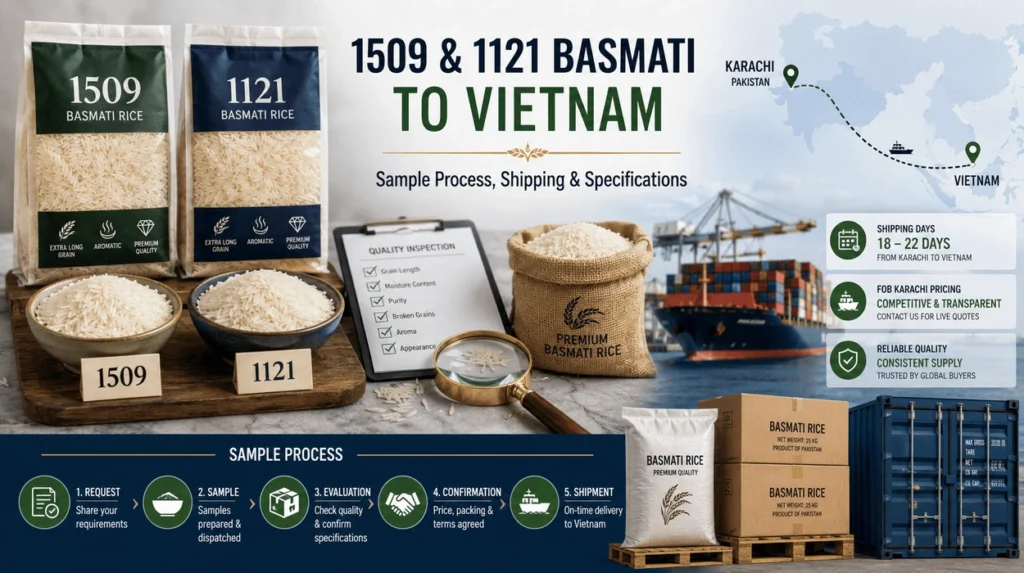
The buyer then confirms courier details. Express courier is used for small samples. Air cargo or commercial courier service can be used for larger trial samples. DHL and FedEx both provide online quote tools because rates depend on weight, dimensions, origin, destination, and service speed.
A practical sample budget has 4 parts. Product sample cost can be free or charged depending on grade and quantity. Sample packing can cost USD 5 to USD 25 when multiple grades need clean labeling and sealed packs. Courier cost often forms the largest part and is billed at actual rate. Optional laboratory testing can add cost when the buyer requests a certificate before contract.
For a small 1 kg to 2 kg document-style sample pack, the buyer should expect courier pricing to depend on the carrier quote of the booking date. For a 5 kg to 10 kg commercial sample, the buyer should expect higher courier charges because dimensional weight and customs handling become more important.
AHK Rice can credit sample cost against the first confirmed container order when agreed before dispatch. This is useful for serious buyers that need testing before contract but still intend to place a container order.
The buyer should test samples in 4 ways. Inspect raw grain length and colour. Cook the rice with a fixed water ratio. Measure elongation and separation after cooking. Taste aroma and texture after 10 to 20 minutes of holding.
The buyer should send feedback in clear commercial terms. Good feedback says, “1121 steam passed cooking, but price is high for supermarkets.” Better feedback says, “1509 steam fits our 5 kg retail bag target, and 1121 golden sella fits hotel distribution.” This helps AHK Rice quote the right container mix.
How should Vietnam buyers get started with AHK Rice?
Vietnam buyers should start by defining the channel, selecting 1509 or 1121, confirming processing grade, requesting samples, testing cooking performance, approving packaging, checking FOB Karachi price, confirming documents, and booking shipment after the proforma invoice is accepted.
The first step is to define the buyer channel. A supermarket importer needs retail packs. A hotel supplier needs food-service bags. A restaurant distributor needs cooking stability. A wholesale trader needs price competitiveness. Each channel changes the grade decision.
The second step is to select the rice variety. Choose 1509 Basmati when the channel needs premium basmati at a balanced price. Choose 1121 Basmati when the channel needs extra-long grains and stronger premium positioning.
The third step is to select the processing grade. Choose white basmati for softer household cooking. Choose steam basmati for firmness and separation. Choose sella basmati for commercial kitchen stability. Choose golden sella for colour, long holding, and premium food-service presentation.
The fourth step is to request samples. The sample request should include variety, processing grade, target packing, expected monthly quantity, destination port, and buyer channel. This allows AHK Rice to prepare relevant samples instead of generic samples.
The fifth step is to test rice and approve one specification. AHK Rice can then quote FOB Karachi pricing based on exact requirements. The quote should include rice grade, crop year, packing, quantity, container type, documents, and validity period.
The sixth step is to confirm packaging. Private-label packaging needs artwork, printing approval, barcode details, importer information, net weight, cooking instructions, and language requirements. Standard export bags move faster because they do not need custom printing.
The seventh step is to confirm documents. Vietnam buyers should confirm commercial invoice, packing list, certificate of origin, phytosanitary certificate, fumigation certificate, certificate of analysis, and any buyer-specific food safety document before shipment.
The eighth step is to book shipment. FOB Karachi buyers can nominate a forwarder, confirm vessel schedule, and coordinate container loading. AHK Rice loads and dispatches according to the agreed export timeline.
The best decision for Vietnam buyers is simple. Use 1509 when the market needs affordable premium basmati. Use 1121 when the market needs maximum grain length and premium presentation. Use samples before contract. Use FOB Karachi pricing for clear product comparison. Use verified documents to prevent clearance risk.
AHK Rice Vietnam supply is built for buyers that want rice specifications, not vague product claims. The right grade, the right processing style, and the right packing format create a stronger import result. AHK Rice can support sample dispatch, FOB Karachi quotation, container planning, and documentation for serious Vietnam buyers.
To start the buying process with AHK Rice, submit your grade, quantity, packing, destination port, and sample requirement through the request a quote page.