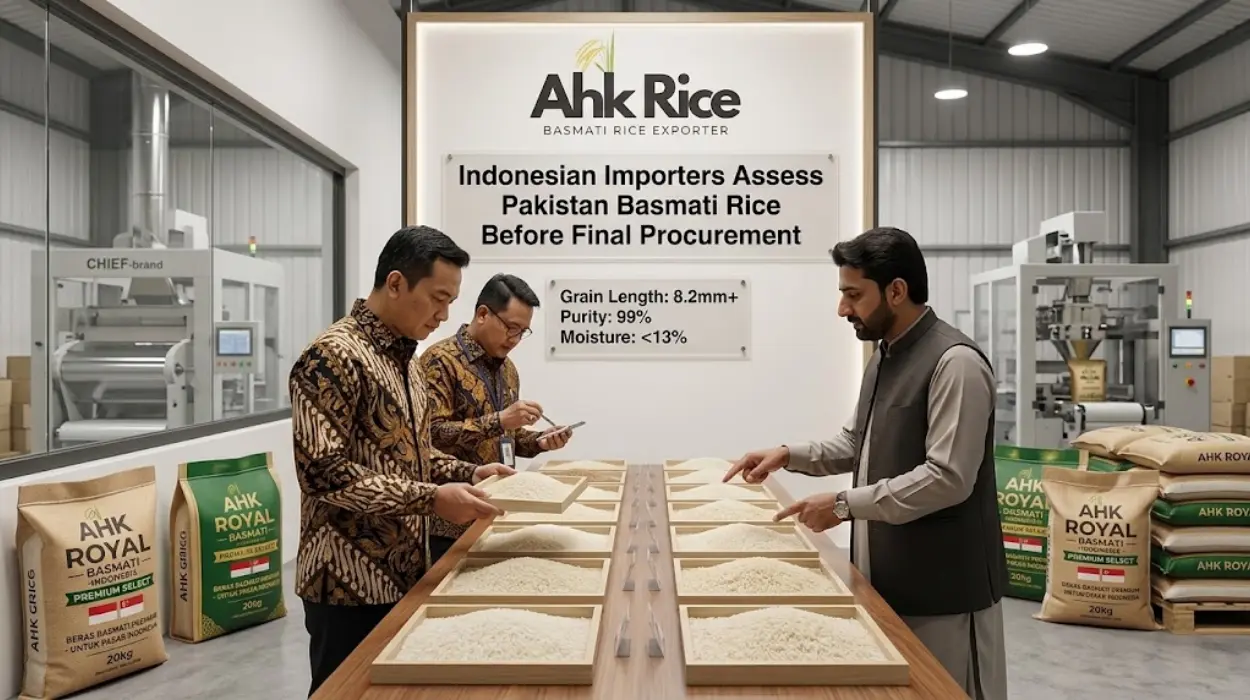
How Do Indonesian Importers Assess Pakistan Basmati Rice Before Final Procurement?
Indonesian importers assess Pakistan Basmati rice through document verification, physical inspection, laboratory testing, cooking trials, and shipment checks. Here is why: each stage confirms grain quality, processing consistency, food safety, and commercial suitability before a buyer approves the final procurement.
Pakistan Basmati rice includes aromatic long-grain varieties cultivated in Punjab. Indonesian buyers compare grain length, moisture, broken percentage, aroma, appearance, and cooking performance. They also verify the grade, processing method, packaging, and export documentation. These checks connect the product specification with the buyer’s intended market.
What Is Pakistan Basmati Rice Quality Assessment?
Pakistan Basmati rice quality assessment is a five-stage procurement review covering documents, samples, laboratory results, cooking performance, and shipment readiness. The process converts a supplier’s specification into measurable evidence before an importer approves a purchase.
Pakistan Basmati rice quality assessment begins with product identification. Basmati rice is an aromatic long-grain rice associated with the Himalayan foothills, including Pakistan’s Punjab region. The grain develops its characteristic aroma through its variety, cultivation conditions, and processing.
Indonesian importers distinguish between 1121, Super Kernel, and 1509 Basmati rice. These varieties differ in grain length, appearance, cooking behavior, and market positioning. The buyer selects the variety according to retail, foodservice, or wholesale requirements.
What Do the Main Rice Quality Terms Mean?
Grain length measures the rice kernel size; broken percentage measures damaged or incomplete kernels; moisture measures water content; aroma measures fragrance; and chalkiness measures opaque areas inside the grain. These attributes form the foundation of a procurement specification.
Grain length matters because long, slender kernels create a distinctive appearance after cooking. Broken percentage affects presentation, yield, and the proportion of whole grains in a finished dish.
Moisture content indicates the amount of water in the rice. A consistent moisture level supports storage stability and reduces quality variation during transport. Indonesian buyers request a defined moisture limit in the purchase specification.
Aroma describes the fragrance released by Basmati rice during cooking. Chalkiness refers to opaque sections inside the kernel. Excessive chalkiness affects appearance and can indicate inconsistent grain development.
How Do Indonesian Importers Assess Rice Before Ordering?
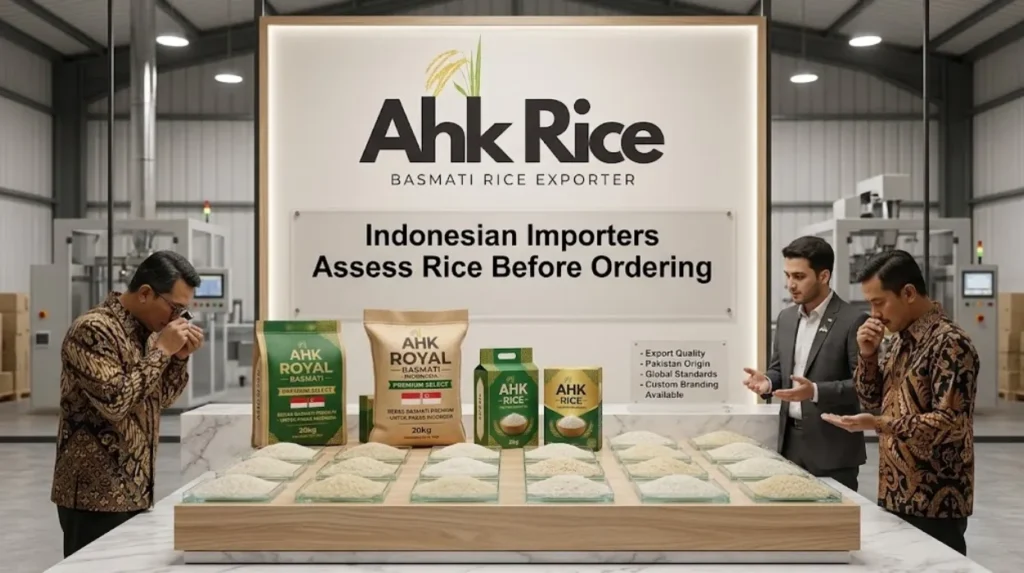
Indonesian importers assess rice through a documented sequence: confirm specifications, inspect samples, test laboratory attributes, cook the grain, verify certificates, and approve the shipment. Each stage removes a separate procurement risk.
How Does the Initial Specification Review Work?
The initial review confirms the variety, grade, processing method, origin, crop year, packing format, and agreed quality limits. A complete specification gives the buyer a measurable reference for sample approval and shipment inspection.
The importer first identifies the required product. A restaurant group may require 1121 Steam Basmati rice for long, separate grains. A retail distributor may select 1509 Steam for a mid-premium product line.
The specification also records the agreed broken percentage, moisture content, grain length, foreign matter limit, and packaging size. These values establish the commercial standard for the purchase.
How Does Sample Inspection Work?
Sample inspection compares the offered rice with the agreed specification through visual examination, measurements, and cooking tests. The importer checks grain uniformity, color, cleanliness, aroma, and performance before approving the supplier’s sample.
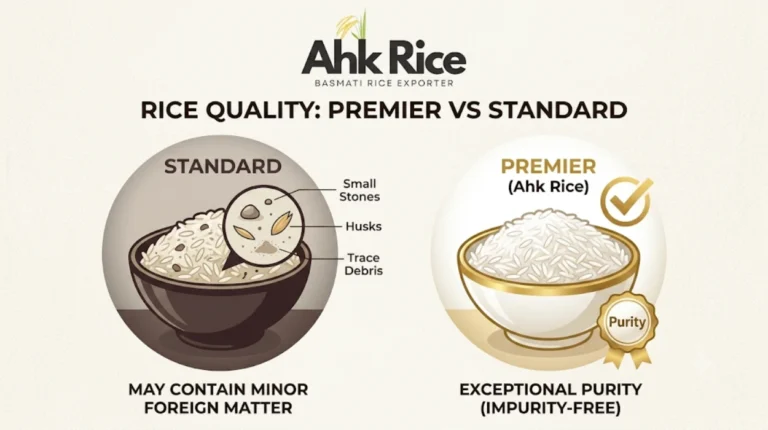
The buyer examines a representative sample from the proposed lot. The inspection identifies broken grains, discolored kernels, foreign material, insect damage, and inconsistent processing.
A sample also reveals the processing method. Steam rice, Sella rice, and raw white rice differ in appearance and cooking behavior. The importer compares the sample against the required product type.
How Does Laboratory Testing Confirm Rice Quality?
Laboratory testing measures moisture, broken percentage, foreign matter, grain dimensions, and food-safety attributes. The results provide numerical evidence that supports the buyer’s procurement decision and shipment acceptance.
Moisture testing measures water content. Grain measurement confirms kernel length and uniformity. Broken percentage testing establishes the proportion of incomplete kernels in the sample.
Food-safety testing examines contaminants according to the buyer’s requirements and destination regulations. Indonesian importers verify the applicable limits before approving the shipment.
Laboratory results also support dispute resolution. A buyer can compare the pre-shipment report with an independent inspection report after arrival.
How Does Cooking Testing Affect the Final Decision?
Cooking tests assess water absorption, grain elongation, texture, aroma, and separation after preparation. The results show whether the rice performs correctly in the buyer’s intended restaurant, retail, or wholesale application.
Cooking performance connects laboratory values with practical use. A long grain must also cook into a suitable texture. The buyer checks whether the rice remains separate, absorbs water consistently, and retains its aroma.
A premium restaurant group evaluates cooked appearance and mouthfeel. A wholesale distributor focuses on consistent cooking results across different customer kitchens.
The cooking method must remain consistent during testing. Water ratio, cooking time, soaking, and preparation equipment affect the result. A standardized test creates a fair comparison between samples.
Which Pakistan Basmati Rice Grades Do Indonesian Buyers Compare?
Indonesian buyers compare 1121, Super Kernel, and 1509 Basmati rice according to grain length, aroma, cooking behavior, processing type, and intended market. The correct grade depends on the buyer’s product specification and customer requirements.
What Is 1121 Basmati Rice?
1121 Basmati rice is a long-grain aromatic variety known for its elongated kernel and suitability for premium rice dishes. Indonesian buyers compare its grain length, cooking performance, and processing type before selecting Steam, Sella, or Golden Sella.
1121 Steam rice undergoes steaming and drying during processing. The method produces a firm grain with a distinctive cooked appearance. It suits buyers seeking long, separate grains.
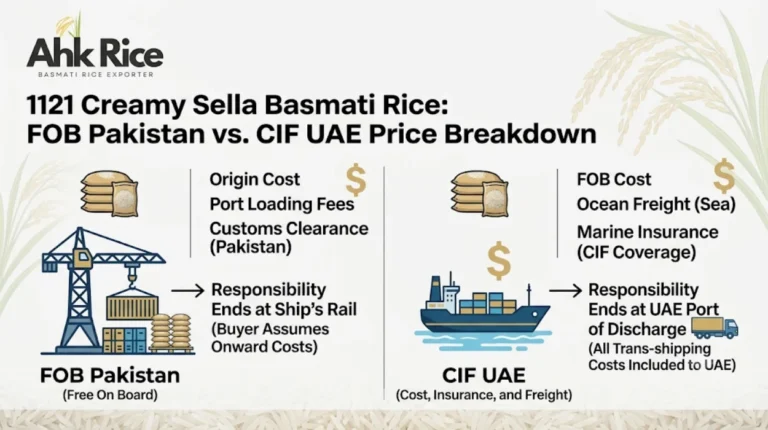
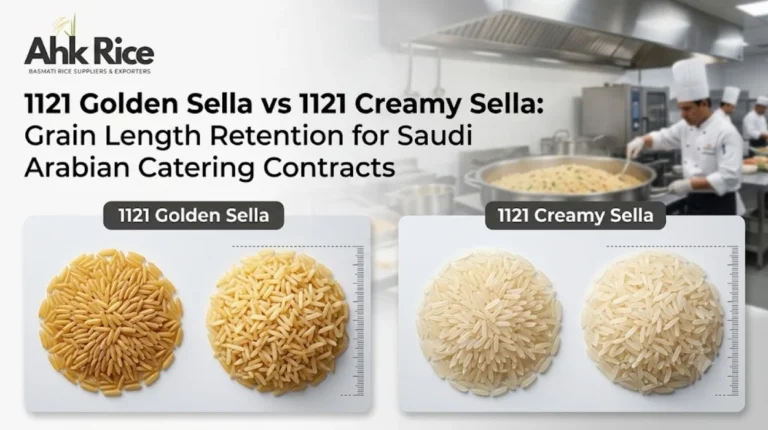
1121 Sella rice undergoes parboiling and drying. The process changes the grain’s color and cooking behavior. Golden Sella has a golden appearance associated with its parboiling process.
What Is Super Kernel Basmati Rice?
Super Kernel Basmati rice is an aromatic long-grain variety used in premium and mainstream rice markets. Indonesian importers compare its grain appearance, aroma, cooking performance, and price against 1121 and 1509.
Super Kernel rice suits buyers seeking aromatic rice with a recognizable Basmati profile. The importer checks the agreed grade and processing type before approving a shipment.
What Is 1509 Basmati Rice?
1509 Basmati rice is a long-grain aromatic variety used in value-focused and mid-premium rice segments. Indonesian buyers compare its grain length, cooking performance, processing method, and commercial price before procurement.
1509 Steam rice offers a long-grain product specification for retail and foodservice buyers. Its suitability depends on the buyer’s required appearance, cooking texture, and price positioning.
Which Processing Steps Influence Rice Quality?
Rice quality develops through cultivation, harvesting, milling, dehusking, polishing, grading, sorting, and packing. Each processing stage influences the grain’s appearance, cleanliness, uniformity, and cooking performance.
How Is Pakistan Basmati Rice Processed?
The processing chain includes nine steps: paddy cleaning, drying, dehusking, paddy separation, polishing, grading, color sorting, quality inspection, and packaging. Each step prepares the grain for a defined commercial specification.
- Clean the paddy to remove stones, dust, straw, and other foreign material.
- Dry the paddy to achieve the required moisture level for safe milling.
- De-husk the grain to remove the outer husk and produce brown rice.
- Separate the paddy from brown rice through mechanical separation.
- Polish the grain to remove bran layers and produce the required surface finish.
- Grade the rice according to kernel length, broken percentage, and product specification.
- Sort the grain by color and remove discolored kernels.
- Inspect the rice through laboratory testing and visual quality checks.
- Pack the rice in the agreed packaging format for storage and shipment.
How Do Steam and Sella Processing Differ?
Steam processing treats rice with steam before drying, while Sella processing parboils rice before drying. Both methods affect grain firmness, appearance, and cooking behavior, so Indonesian buyers compare the finished product.
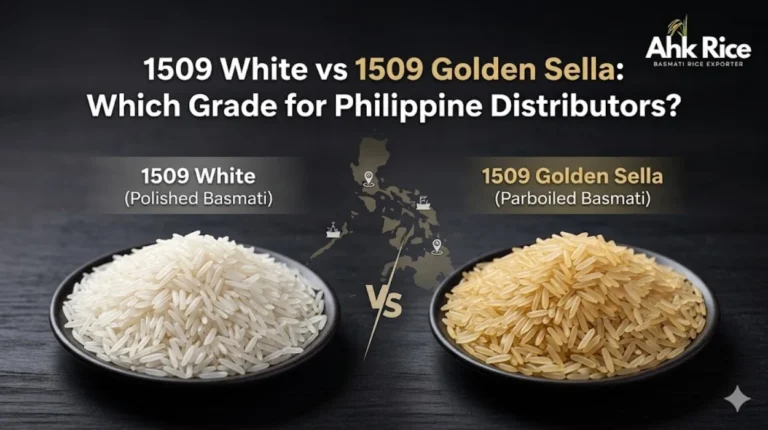
Steam rice retains a white appearance and develops a firm cooked texture. Sella rice develops a translucent or golden appearance depending on the processing method.
Golden Sella rice suits buyers seeking a distinctive golden color and firm cooking performance. Steam rice suits buyers seeking a white long-grain appearance.
What Certifications and Documents Do Indonesian Importers Check?
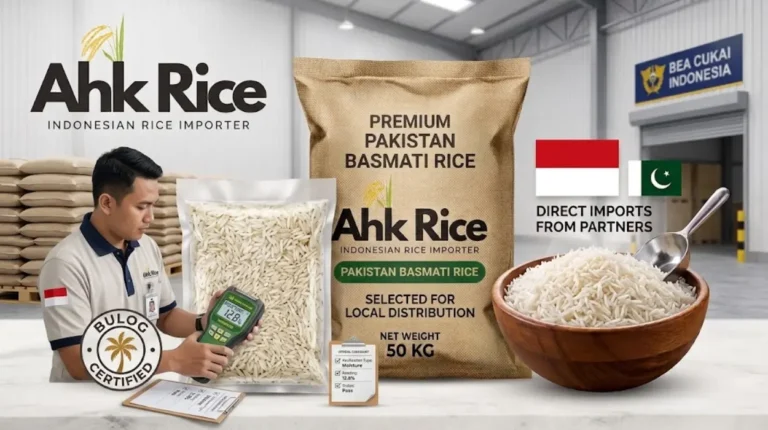
Indonesian importers check certificates of origin, laboratory reports, phytosanitary documents, commercial invoices, packing lists, and shipping documents. These records verify the product’s origin, quality, and compliance with import requirements.
Which Documents Support Rice Procurement?
A complete export document set includes a commercial invoice, packing list, certificate of origin, bill of lading, phytosanitary certificate, and applicable laboratory reports. The importer uses these documents to verify shipment details and compliance.
The commercial invoice records the product, quantity, price, and commercial terms. The packing list records the package count, weights, and packing format.
The certificate of origin identifies the country of origin. The bill of lading records the shipment and transport details. The phytosanitary certificate supports plant-health compliance.
Laboratory reports provide test results for agreed quality attributes. The importer checks the report against the contract specification before approving the shipment.
What Are the Main Benefits of Pre-Procurement Rice Assessment?
Pre-procurement assessment reduces specification errors, improves shipment consistency, supports food-safety verification, and helps Indonesian buyers select the correct rice grade. The process connects supplier evidence with the buyer’s commercial requirements.
How Does Assessment Reduce Procurement Risk?
A documented assessment identifies quality problems before shipment, reducing the risk of receiving rice that fails the agreed specification. Buyers can reject unsuitable samples before committing to a large commercial order.
The assessment also improves communication between buyer and supplier. Both parties use the same measurements, documents, and sample results. This reduces confusion over product descriptions.
How Does Assessment Support Retail and Foodservice Buyers?
Retail buyers use assessment to confirm appearance, packaging, and cooking consistency; foodservice buyers use it to confirm texture, aroma, and yield. Each buyer connects the quality test with its customer requirements.
Retail distributors prioritize grain appearance, pack size, labeling, and shelf presentation. Restaurant groups prioritize cooking performance, texture, and consistent preparation results.
Wholesale buyers focus on repeatable quality across multiple shipments. They compare samples, laboratory reports, and shipment inspection results before expanding procurement.
What Common Problems Do Indonesian Importers Encounter?
Common problems include incomplete specifications, inconsistent samples, unclear processing terms, unsupported quality claims, and mismatched shipment documents. Buyers solve these problems through measurable standards and documented verification.
Which Misconceptions Affect Rice Procurement?
A long grain does not automatically guarantee superior cooking performance, and a golden color does not independently prove higher quality. Buyers must compare the complete specification rather than relying on one visible attribute.
Grain length affects appearance, but cooking performance depends on processing and preparation. A longer grain does not guarantee the texture required by every Indonesian buyer.
Golden color identifies a processing appearance. It does not independently confirm aroma, cleanliness, moisture, or food safety. Buyers must inspect and test the rice.
How Can Buyers Avoid Quality Disputes?
Buyers avoid disputes by recording measurable specifications, approving representative samples, and requiring pre-shipment inspection reports. These steps establish a clear reference for shipment acceptance and commercial claims.
The contract should define the variety, processing method, broken percentage, moisture content, grain length, foreign matter limit, packaging, and inspection procedure.
The buyer should also specify the laboratory method and sampling procedure. A consistent method allows the pre-shipment report and arrival inspection to be compared fairly.
How Should Indonesian Importers Build a Rice Procurement Checklist?
A complete procurement checklist covers product identity, quality values, processing, food safety, documents, packaging, and shipment inspection. The checklist converts the buyer’s requirements into a repeatable approval process.
What Should the Checklist Include?
The checklist should record the rice variety, processing type, grain length, moisture, broken percentage, foreign matter, aroma, cooking performance, packaging, certificates, and shipment details. Each item requires a defined value or document.
The buyer should record the approved sample reference. The sample establishes the expected appearance, aroma, texture, and cooking performance.
The buyer should also record the inspection date and laboratory report number. These details support traceability throughout procurement.
The next step is comparing the measurable quality parameters across Pakistan Basmati grades. Indonesian buyers can use this guide to compare Pakistan Basmati quality parameters before ordering to connect the assessment process with grade selection and commercial specifications.
Indonesian importers assess Pakistan Basmati rice through specification review, sample inspection, laboratory testing, cooking trials, and document verification. The process confirms that the selected variety meets the buyer’s requirements.
1121, Super Kernel, and 1509 Basmati rice each offer different product characteristics. Steam, Sella, and Golden Sella processing also influence appearance and cooking behavior.
A documented procurement checklist gives Indonesian buyers a consistent method for comparing rice before final ordering. The approach reduces quality uncertainty and supports better product selection.
Frequently Asked Questions
How do Indonesian importers assess Pakistan Basmati rice quality?
Indonesian importers assess quality through sample inspection, laboratory testing, cooking trials, and document verification. They compare grain length, moisture, broken percentage, aroma, appearance, and cooking performance against the agreed specification.
Which Pakistan Basmati rice varieties do Indonesian buyers compare?
Indonesian buyers compare 1121, Super Kernel, and 1509 Basmati rice. Each variety offers different grain characteristics, aroma, cooking performance, and commercial positioning. The buyer selects the grade according to retail, restaurant, or wholesale requirements.
What grain length should Indonesian importers check?
Indonesian importers should check the agreed kernel length and uniformity. Long-grain Basmati rice offers an elongated appearance after cooking. Buyers compare the actual sample measurements with the contractual specification before procurement.
Why is moisture content important in Pakistan Basmati rice?
Moisture content affects storage stability and grain quality. Indonesian buyers verify moisture through laboratory testing before shipment. A consistent moisture level supports reliable storage and reduces quality variation during transportation.
What is the difference between 1121 Steam and 1121 Sella rice?
1121 Steam rice undergoes steaming and drying, producing a white grain with firm cooking performance. 1121 Sella rice undergoes parboiling and drying, producing a translucent appearance. Buyers compare both processing types according to their product requirements.
How do Indonesian importers verify rice food safety?
Indonesian importers verify food safety through applicable laboratory reports, certificates, and inspection documents. Testing covers contaminants and other requirements established by the destination regulations and purchase specification.