What Should Indonesian Buyers Check Before Approving Pakistani Basmati Samples?
Indonesian buyers should check grain length, moisture, broken percentage, aroma, cooking performance, purity, and export documentation before approving Pakistani Basmati rice samples. Here is why: these specifications determine whether a sample matches the buyer’s retail, wholesale, or foodservice requirements.
Pakistani Basmati rice includes long-grain varieties cultivated in Punjab and other rice-growing regions. The main commercial varieties include 1121, Super Kernel, and 1509 Basmati rice. Each variety has different grain dimensions, processing characteristics, and cooking results. A sample approval process must compare these attributes against the final purchase specification.
What Is Pakistani Basmati Rice Sample Approval?
Pakistani Basmati sample approval is a documented quality decision based on physical inspection, laboratory testing, cooking trials, and specification comparison. The buyer approves a sample after verifying that its measured attributes match the intended commercial grade.
Sample approval connects the exporter’s proposed rice with the importer’s purchasing requirements. A distributor checks appearance, bag presentation, and consistency. A restaurant group checks cooked texture, aroma, and grain separation. A retail importer checks purity, labeling, and shelf-life requirements.
A sample represents a specific rice lot. The approved sample establishes a reference for the commercial shipment. The buyer should record the variety, processing type, grain length, moisture level, broken percentage, and agreed tolerances.
The sample also identifies the processing stage. Raw paddy contains husk and impurities. Milling removes the husk and produces brown rice. Further polishing and sorting produce the finished white rice. Parboiling produces Sella grades.
Which Pakistani Basmati Varieties Should Indonesian Buyers Sample?
Indonesian buyers should compare 1121, Super Kernel, and 1509 Basmati according to grain length, cooking performance, price, and intended market segment. Each variety serves different requirements for premium retail, wholesale distribution, and commercial kitchens.
1121 Basmati is known for its long grain and strong elongation during cooking. Its Steam, White, and Sella processing types serve different applications.
Super Kernel Basmati offers a fuller grain profile and traditional Basmati aroma. It suits buyers seeking a recognizable premium rice product with a different grain appearance.
1509 Basmati offers a long-grain option for value-conscious buyers. Its processing types include Steam, White, and Sella. Indonesian distributors can compare 1509 against 1121 for mid-premium retail and foodservice applications.
The approved variety must remain consistent throughout the purchase. A buyer should not approve a 1121 sample and receive 1509 rice under the same specification.
How Does Pakistani Basmati Sample Approval Work?
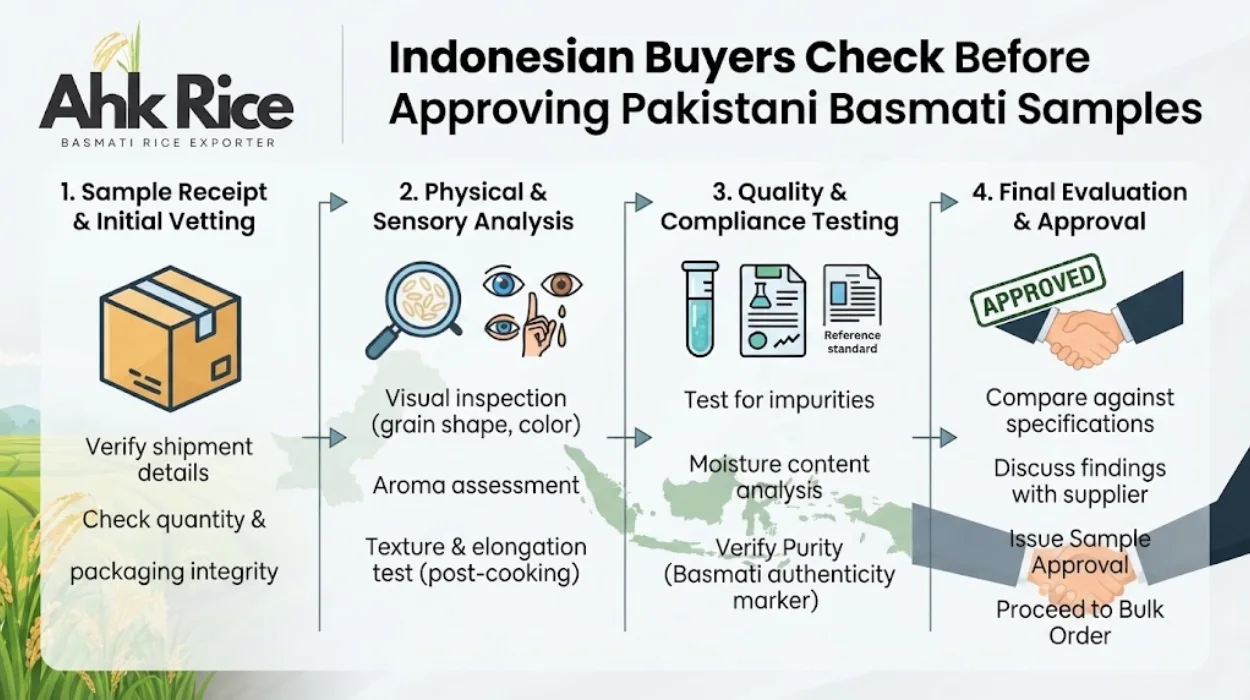
Sample approval follows seven steps: define the specification, collect the sample, inspect the grain, test quality, cook the rice, verify documents, and record approval. Each step produces evidence for the final purchasing decision.
What Steps Should Indonesian Buyers Follow?
- Define the specification. Record the variety, processing type, grain length, moisture, broken percentage, packaging, and intended use.
- Collect the sample. Request a representative sample from the proposed commercial lot.
- Inspect the grain. Check appearance, uniformity, foreign matter, discoloration, and broken grains.
- Test quality. Measure moisture, broken percentage, purity, and other agreed laboratory parameters.
- Cook the rice. Prepare the sample using the intended cooking method and compare texture, aroma, and grain separation.
- Verify documents. Review the certificate of analysis, phytosanitary certificate, certificate of origin, and applicable food safety documents.
- Record approval. Confirm the accepted specification, tolerances, sample reference, and commercial shipment conditions.
The sample approval process connects physical quality with commercial requirements. The next step is to understand the individual specifications that determine acceptance.
Which Grain Specifications Matter Most Before Approval?
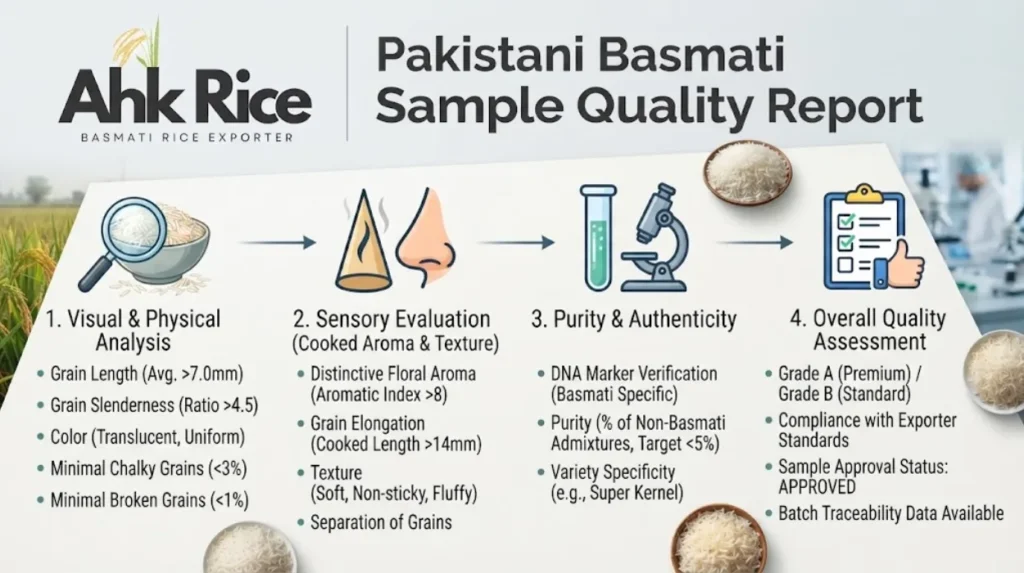
Grain length, uniformity, broken percentage, and appearance provide the first physical evidence of Pakistani Basmati quality. These measurements help Indonesian buyers distinguish premium long-grain rice from lower-value or mixed-grade material.
How Should Buyers Check Grain Length?
Grain length measures the physical size of the rice before and after cooking. Indonesian buyers should compare the stated variety with the measured grain dimensions.
1121 Basmati is commonly associated with extra-long grains. Super Kernel and 1509 have different grain profiles. The buyer should record the average grain length and compare it with the agreed specification.
Grain elongation also matters. A long raw grain does not automatically produce the required cooked appearance. The buyer should measure both raw and cooked grains during the sample trial.
How Should Buyers Check Broken Percentage?
Broken percentage measures the proportion of rice kernels that are shorter than the agreed whole-grain standard. A higher broken percentage affects appearance, cooking consistency, and commercial value.
Indonesian buyers should inspect a representative quantity and record the percentage of broken kernels. The buyer should compare the result with the purchase specification.
Low-broken rice suits premium retail and restaurant applications. Higher broken percentages suit different commercial uses, including products where whole-grain appearance is less important.
How Should Buyers Check Purity and Appearance?
Purity covers the absence of foreign matter, unusual discoloration, and unintended grain varieties. Appearance includes whiteness, uniformity, and the visual consistency of the sample.
Indonesian buyers should inspect the sample under clear lighting. The inspection should identify stones, husk fragments, insects, damaged grains, and mixed varieties.
Colour sorting and optical sorting improve visual consistency during processing. The buyer should still verify the finished sample rather than relying only on the processing description.
With physical specifications established, the next question is how processing and cooking performance affect the approval decision.
How Does Processing Affect Pakistani Basmati Sample Quality?
Processing determines the rice’s appearance, texture, cooking behaviour, and shelf-life characteristics. Indonesian buyers should compare Steam, White, and Sella rice through processing records and controlled cooking trials.
What Is White Basmati Rice?
White Basmati rice is milled rice with the husk and bran removed. Polishing produces the familiar white appearance. The grain retains the characteristics of its original variety.
White Basmati suits buyers seeking a conventional white rice product. The sample should show consistent colour, grain length, and low foreign matter.
What Is Steam Basmati Rice?
Steam Basmati rice undergoes steaming during processing before drying and milling. The process affects grain strength, texture, and cooking performance.
Steam rice suits applications requiring a firmer cooked grain. Indonesian buyers should compare cooked separation, softness, aroma, and appearance against their target product.
What Is Sella Basmati Rice?
Sella Basmati rice is parboiled rice. Parboiling involves soaking, heating, steaming, and drying the grain before milling.
Golden Sella retains a golden appearance after processing. White Sella has a lighter appearance. Both grades require separate sample approval because their appearance and cooking characteristics differ.
The processing type establishes the product identity. The cooking trial confirms whether that identity matches the buyer’s intended use.
How Should Indonesian Buyers Test Cooking Performance?
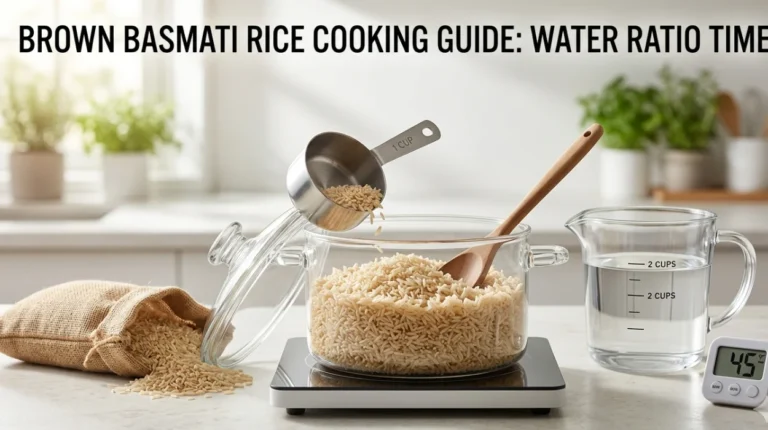
Indonesian buyers should cook each sample using a fixed water ratio, cooking time, and cooling period. The comparison should measure aroma, texture, elongation, grain separation, and appearance after cooking.
Which Cooking Attributes Should Buyers Record?
- Aroma: Record the intensity and character of the cooked Basmati fragrance.
- Texture: Record softness, firmness, and chewiness after cooking.
- Elongation: Measure the increase in grain length after cooking.
- Separation: Record whether grains remain distinct or clump together.
- Appearance: Record cooked colour, uniformity, and overall presentation.
The cooking method should remain consistent across all samples. A buyer should use the same pot, water volume, cooking temperature, and resting time.
Restaurant groups should test the rice in their own kitchens. Retail importers should evaluate consumer-facing appearance and preparation instructions. Wholesalers should consider cooking consistency across large batches.
A controlled cooking trial links laboratory specifications with actual product performance. The next section addresses the documents and certifications that support commercial approval.
Which Documents and Certifications Should Indonesian Buyers Check?
Indonesian buyers should verify the certificate of analysis, phytosanitary certificate, certificate of origin, commercial invoice, packing list, and applicable food safety documentation. These documents support traceability and import clearance.
What Does a Certificate of Analysis Prove?
A certificate of analysis records laboratory results for the tested rice sample or shipment. The document should identify the product, batch, test parameters, and measured results.
The buyer should compare the certificate with the approved sample. The variety, processing type, moisture, broken percentage, and other agreed specifications should match.
What Does a Phytosanitary Certificate Prove?
A phytosanitary certificate confirms that the consignment meets applicable plant health requirements. The exporter obtains it through the relevant official inspection authority.
Indonesian importers should verify the certificate requirements before dispatch. The document supports the plant health clearance process.
What Does a Certificate of Origin Prove?
A certificate of origin identifies the country where the rice was produced. Pakistani Basmati rice requires origin documentation that supports the commercial shipment.
The buyer should ensure that the origin details match the invoice, packing list, and shipment documents.
Which Food Safety Certifications Apply?
Food safety requirements depend on the importing market, product category, and buyer’s purchasing policy. Indonesian buyers should verify applicable requirements with Indonesian authorities and their customs broker.
Relevant documentation includes laboratory reports, food safety certificates, fumigation records, and traceability documents. The buyer should confirm the exact requirements before final approval.
With documentation verified, the final approval decision depends on the relationship between quality, market use, and commercial risk.
Which Indonesian Buyers Benefit From Detailed Sample Approval?
Retail importers, wholesalers, restaurant groups, and private-label buyers benefit from detailed sample approval. Each buyer uses different quality attributes to protect product consistency and commercial value.
How Do Retail Importers Use Sample Approval?
Retail importers focus on appearance, packaging, grain uniformity, aroma, and cooking performance. Premium retail buyers compare long-grain varieties and processing types.
A retailer should approve the rice against the intended consumer product. The approved sample should match the proposed packaging and labeling information.
How Do Wholesalers Use Sample Approval?
Wholesalers focus on consistency, price, broken percentage, and storage performance. Their buyers often require stable quality across repeated shipments.
A wholesaler should record the accepted specifications and compare each shipment against the approved reference sample.
How Do Restaurant Groups Use Sample Approval?
Restaurant groups focus on cooked texture, grain separation, aroma, and batch consistency. These attributes affect menu quality and kitchen operations.
A restaurant group should conduct cooking trials using its standard preparation method. The approved rice should produce the required result across repeated tests.
The use case determines which specifications receive the greatest attention. The next section explains the common mistakes that weaken sample approval.
What Common Problems Affect Pakistani Basmati Sample Approval?
The most common approval problems involve unrepresentative samples, unclear tolerances, inconsistent cooking tests, mixed varieties, and incomplete documentation. Buyers should address these issues before confirming the commercial order.
Why Do Sample Results Differ From Shipment Results?
Sample results differ from shipment results when the sample does not represent the commercial lot. A small sample can hide variation in grain length, broken percentage, or foreign matter.
Indonesian buyers should request a representative sample from the proposed production lot. The exporter should identify the lot and retain the approved reference sample.
Why Does Cooking Performance Differ Between Samples?
Cooking performance differs when buyers use different water ratios, cooking times, or resting periods. The same rice can produce different results under different preparation conditions.
Buyers should standardize the cooking trial. The test should record the method and compare all samples under identical conditions.
Why Do Buyers Approve the Wrong Grade?
Buyers approve the wrong grade when they focus on grain length without checking processing type. Steam, White, and Sella rice have different processing characteristics.
The buyer should record both the variety and processing type. The commercial order should repeat the approved product identity.
Why Do Documents Create Delays?
Documents create delays when the exporter and importer use different requirements. Missing certificates or incorrect shipment details can affect customs clearance.
The buyer should confirm the required documents before dispatch. The exporter should prepare the commercial file according to the agreed shipment terms.
With these problems addressed, Indonesian buyers can use sample approval as a structured quality-control process rather than a visual preference.
Where Should Indonesian Buyers Compare Sample Specifications First?
Indonesian buyers should compare grain length, processing type, moisture, broken percentage, cooking performance, purity, and documentation first. These attributes establish whether the sample meets the intended commercial specification.
The comparison should begin with the variety and processing type. The buyer should then verify physical quality, laboratory results, and cooking performance.
The next stage is commercial evaluation. Indonesian importers can compare the specifications, costs, and suitability of different Pakistani Basmati grades in the article, “Which Pakistan Basmati Sample Specifications Should Indonesian Importers Compare First?”
The MOFU article should appear in this final section, directly after the paragraph explaining the transition from sample approval to commercial comparison. The contextual anchor should connect the approval process with the next purchasing decision.
Primary Keyword
Pakistani Basmati rice sample approval
Secondary Keywords
- Pakistani Basmati rice sample testing
- Indonesian Basmati rice importers
- Pakistani rice quality specifications
- 1121 Basmati rice sample
- Super Kernel Basmati rice quality
- 1509 Basmati rice specifications
- Basmati rice grain length
- Basmati rice broken percentage
- Basmati rice cooking test
- Pakistani rice export documentation
Frequently Asked Questions
What should Indonesian buyers check first in Pakistani Basmati samples?
Indonesian buyers should check the variety, processing type, grain length, broken percentage, moisture, purity, and cooking performance. These specifications establish whether the sample matches the intended commercial product.
Which Pakistani Basmati varieties should Indonesian importers compare?
Indonesian importers should compare 1121, Super Kernel, and 1509 Basmati. Each variety has different grain characteristics, processing options, and commercial applications.
Why is cooking performance important during sample approval?
Cooking performance confirms how the rice behaves after preparation. Buyers should record aroma, texture, grain separation, elongation, and appearance using a consistent cooking method.
Which documents support Pakistani Basmati rice sample approval?
The main documents include a certificate of analysis, phytosanitary certificate, certificate of origin, commercial invoice, packing list, and applicable food safety records.
How can Indonesian buyers reduce sample-to-shipment quality differences?
Buyers should request a representative commercial-lot sample, record the approved specifications, retain a reference sample, and verify shipment results against the agreed tolerances.