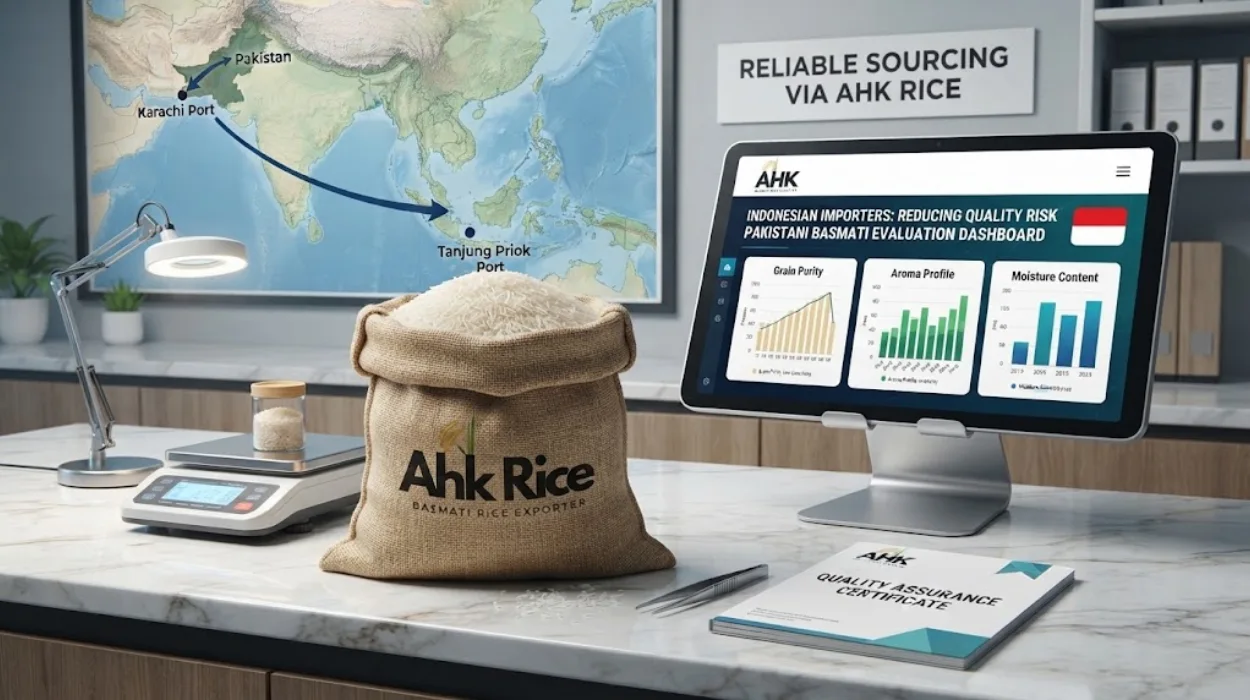
How Can Indonesian Importers Reduce Quality Risk When Buying Pakistani Basmati?
Indonesian importers reduce Pakistani Basmati rice quality risk through defined specifications, pre-shipment inspections, laboratory testing, and verified export documents. Here is why: rice quality depends on cultivation, milling, storage, packaging, and transport, so buyers need controls across the complete supply chain.
What Is Quality Risk in Pakistani Basmati Rice Imports?
Quality risk means receiving rice that fails agreed standards for grain length, moisture, broken grains, purity, aroma, or cooking performance. Indonesian importers reduce this risk by defining specifications before contracts and verifying each specification before shipment.
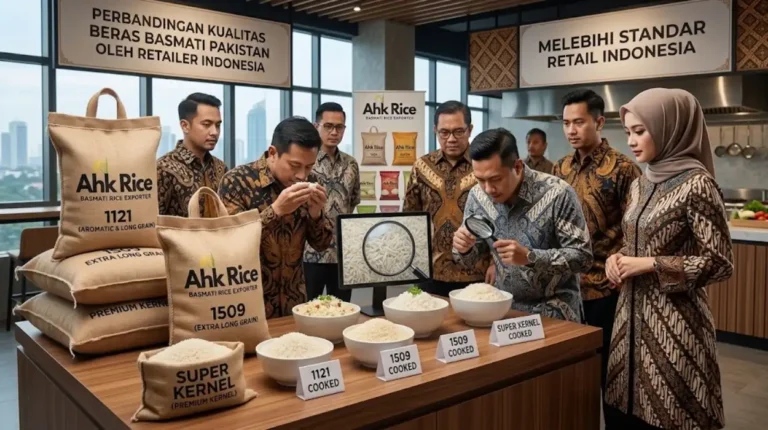
Pakistani Basmati rice is a long-grain aromatic rice cultivated mainly in Punjab. Basmati means a distinctive aromatic rice with naturally elongated grains and characteristic cooking qualities. Pakistani varieties include 1121, Super Kernel, and 1509 Basmati rice.
Quality risk begins before milling. Paddy cultivation, irrigation, harvesting, drying, and storage influence the grain received by a mill. Poor moisture control creates conditions for discoloration, insect activity, and quality deterioration.
Milling introduces another risk. Dehusking, polishing, sorting, and grading determine the appearance and consistency of finished rice. Excessive milling removes more of the grain surface and changes the final yield.
Indonesian importers also face commercial risks. A shipment can satisfy a general description of Basmati while failing a buyer’s exact requirements for grain length, broken percentage, packaging, or cooking performance.
What Does a Quality Specification Include?
A quality specification defines measurable requirements for a particular rice shipment. It covers the product variety, processing type, grain dimensions, moisture, broken grains, foreign matter, packaging, and inspection method.
A specification should identify 1121 Steam, 1121 Sella, Super Kernel, or 1509 rather than using only the term Pakistani Basmati. Each variety and processing type has different characteristics.
| Specification | What the buyer verifies |
|---|---|
| Variety | 1121, Super Kernel, or 1509 |
| Processing | White, Steam, Golden Sella, or Creamy Sella |
| Grain length | Agreed minimum or average length |
| Broken grains | Maximum permitted percentage |
| Moisture | Contractual moisture limit |
| Foreign matter | Agreed purity requirement |
| Packaging | Bag material, weight, and labeling |
With quality risk defined, the next step is understanding how rice moves from cultivated paddy to an export-ready shipment.
How Is Pakistani Basmati Rice Produced and Prepared for Export?
Pakistani Basmati rice moves through cultivation, harvesting, drying, milling, grading, sorting, packaging, and dispatch. Each stage controls a different quality attribute, from grain maturity to final shipment condition.
Pakistani Basmati rice begins as paddy cultivated in Punjab. Farmers irrigate fields, manage crops, and harvest mature rice plants. Paddy contains a protective husk that must be removed before producing edible rice.
How Does Rice Processing Work Step by Step?
The processing sequence determines the physical quality of finished rice.
- Clean the paddy. Remove stones, straw, dust, and other unwanted materials.
- Dry the paddy. Reduce moisture to a suitable level for storage and milling.
- De-husk the grain. Remove the outer husk to produce brown rice.
- Mill the rice. Remove bran layers and produce white rice.
- Polish the grain. Improve surface appearance and remove remaining bran.
- Grade the rice. Separate grains by length, size, and quality characteristics.
- Sort the rice. Remove discolored grains, foreign matter, and unwanted particles.
- Pack the rice. Fill approved bags with the agreed net weight.
- Load the shipment. Inspect bags, containers, and loading conditions before dispatch.
The sequence applies to white rice. Steam and Sella rice include additional heat-processing stages.
What Is the Difference Between Steam and Sella Rice?
Steam rice undergoes controlled steaming before drying and milling. Sella rice undergoes parboiling, which involves soaking, heating, and drying paddy before milling. Both processes influence grain texture, appearance, and cooking performance.
Golden Sella retains a golden color after parboiling. Creamy Sella has a lighter cream appearance. White rice does not undergo the same parboiling process.
Indonesian buyers should specify processing type because it affects the finished product. A restaurant requiring separate, firm grains needs a different specification from a retailer selling standard white rice.
With processing understood, the next question is which grades and attributes Indonesian buyers should evaluate.
Which Pakistani Basmati Rice Grades Should Indonesian Importers Evaluate?
Indonesian importers should compare 1121, Super Kernel, and 1509 by grain length, processing type, aroma, texture, price, and intended use. The correct grade matches the buyer’s cooking requirements, retail positioning, and distribution conditions.
What Is 1121 Basmati Rice?
1121 Basmati is a long-grain Pakistani rice variety known for its elongated appearance and aromatic cooking profile. It is available as White, Steam, Golden Sella, and Creamy Sella.
1121 is suitable for buyers seeking long grains for premium retail, restaurants, and foodservice. Steam and Sella versions provide different textures and appearances after cooking.
What Is Super Kernel Basmati Rice?
Super Kernel Basmati is a Pakistani aromatic rice variety with long grains and a distinctive fragrance. It is available in white and parboiled processing types.
Super Kernel suits buyers who value aroma and traditional Basmati cooking qualities. Importers should specify the required grain length and processing type rather than purchasing under the variety name alone.
What Is 1509 Basmati Rice?
1509 Basmati is a Pakistani long-grain rice variety that offers a different balance of grain appearance, cooking performance, and commercial price. It is available in White, Steam, and Sella processing types.
1509 is relevant for mid-premium retail and foodservice applications. The final selection depends on the required texture, grain appearance, and target selling price.
Which Quality Attributes Matter Most?
| Attribute | Why it matters |
|---|---|
| Grain length | Determines visual appeal and product positioning |
| Broken grains | Influences appearance and cooking consistency |
| Moisture | Supports storage stability and milling quality |
| Foreign matter | Indicates purity and cleaning performance |
| Grain color | Reflects appearance and processing consistency |
| Aroma | Influences consumer and restaurant acceptance |
| Cooking texture | Determines suitability for recipes and foodservice |
The grade determines the product category, while measurable attributes determine whether the shipment satisfies the contract.
How Can Indonesian Importers Inspect Rice Quality Before Shipment?

Indonesian importers reduce quality risk by checking representative samples, laboratory results, milling records, packaging, and container conditions before dispatch. A documented inspection compares the actual shipment with the agreed specification.
Pre-shipment inspection is a quality-control procedure performed before the rice leaves Pakistan. It confirms that the finished product meets contractual requirements.
What Should a Pre-Shipment Inspection Include?
A representative sample must reflect the actual shipment. Inspectors examine the rice for physical defects, grain dimensions, foreign matter, moisture, and broken grains.
Laboratory testing provides measurable results. Moisture meters determine moisture content. Grain analysis measures length and broken percentages. Purity testing identifies unwanted materials.
Packaging inspection confirms that bags contain the correct net weight. It also verifies bag construction, stitching, labeling, and lot identification.
Container inspection checks cleanliness, dryness, odor, and structural condition. The container must protect the rice during loading and international transport.
Which Documents Help Verify Rice Quality?
A certificate of analysis records laboratory results for the tested rice lot. A phytosanitary certificate confirms that the shipment satisfies applicable plant-health requirements. A certificate of origin identifies the country of origin.
A fumigation certificate records pest-control treatment where required. Commercial invoices, packing lists, and shipping documents support shipment identification and customs processing.
Indonesian importers should match documents to the shipment. A laboratory report for one lot does not automatically prove the quality of another lot.
With inspection and documentation established, the next step is matching quality controls to the buyer’s actual use.
What Are the Benefits of Quality Risk Reduction for Indonesian Buyers?
Quality risk reduction protects product consistency, cooking performance, storage stability, and commercial value. Indonesian importers gain clearer purchasing decisions, fewer disputes, and better control over retail, restaurant, and wholesale requirements.
Quality control protects the buyer’s investment in imported rice. A consistent shipment supports predictable cooking results and reduces product rejection.
How Does Quality Control Benefit Retailers?
Retailers need rice that matches the product description on the packaging. Consistent grain appearance, moisture, and broken percentages support customer expectations.
Packaging also protects rice during storage and distribution. Suitable bags reduce exposure to moisture, contamination, and handling damage.
How Does Quality Control Benefit Restaurants?
Restaurants require reliable cooking performance across multiple deliveries. A defined grain specification supports consistent texture, appearance, and serving quality.
Steam and Sella rice can provide different cooking results. Buyers should select the processing type that matches the restaurant’s recipes and preparation methods.
How Does Quality Control Benefit Wholesalers?
Wholesalers need predictable stock quality across multiple customers. A clear specification allows them to purchase, store, and distribute rice with consistent product information.
Quality control also supports commercial planning. Buyers can compare quotations using the same product requirements rather than comparing different grades under one name.
With the benefits established, the final issue is identifying common mistakes that create avoidable quality disputes.
What Common Mistakes Increase Pakistani Basmati Rice Quality Risk?
Common mistakes include buying by variety name alone, accepting unverified samples, ignoring processing differences, and failing to match documents with shipments. Indonesian importers reduce these problems through measurable specifications and inspection before dispatch.
Is All Pakistani Basmati Rice the Same?
No. Pakistani Basmati includes several varieties and processing types. 1121 Steam differs from 1509 White in grain characteristics and cooking performance.
A buyer who requests only Basmati rice leaves important requirements undefined. The contract should specify the variety, processing type, grain length, broken percentage, moisture, and packaging.
Does a Sample Guarantee Shipment Quality?
A sample represents a product lot, but it does not automatically guarantee the entire shipment. The buyer should connect the sample to a defined lot and confirm quality before loading.
Does Packaging Alone Protect Rice Quality?
Packaging supports protection, but it does not correct poor milling or excessive moisture. Buyers must inspect the rice before packing and verify container conditions before dispatch.
Does a Certificate Replace Physical Inspection?
No. Certificates provide documented evidence of specific tests or requirements. Physical inspection verifies the actual product and shipment condition.
Indonesian importers should combine documents, laboratory results, and physical inspection. This approach creates a complete quality record from contract to delivery.
Frequently Asked Questions
What is the best Pakistani Basmati rice grade for Indonesian importers?
The best grade depends on the buyer’s application. 1121 suits premium retail and restaurants. Super Kernel suits aroma-focused buyers. 1509 suits mid-premium retail and foodservice.
How can Indonesian buyers check Pakistani rice quality?
Indonesian buyers should verify grain length, broken percentage, moisture, foreign matter, aroma, and processing type. Pre-shipment inspection and laboratory testing confirm the agreed specifications.
What documents should Indonesian importers request?
Importers should request a certificate of analysis, phytosanitary certificate, certificate of origin, fumigation certificate where required, commercial invoice, packing list, and shipping documents.
Does Sella rice have better quality than Steam rice?
Neither processing type is automatically better. Sella and Steam provide different grain appearance and cooking characteristics. The correct choice depends on the buyer’s recipe, market, and storage requirements.
Why is moisture testing important for Pakistani Basmati rice?
Moisture testing verifies storage and milling quality. Excessive moisture increases the risk of deterioration during storage. Buyers should define a contractual moisture limit and test representative samples.