How UK Importers Evaluate and Select Pakistani Rice Export Partners
UK importers evaluate Pakistani rice export partners through rice specifications, food-safety compliance, testing, documentation, processing capability, packaging, logistics, and supply consistency. Here is why: UK controls specifically cover Pakistani rice for pesticide residues, aflatoxins, and ochratoxin A.
What does evaluating a Pakistani rice export partner mean?
Supplier evaluation means checking rice quality, processing controls, compliance documents, commercial capacity, packaging, shipment procedures, and consistency before placing an order. UK importers use these factors to reduce quality failures, customs problems, rejected consignments, and supply interruptions.
Pakistani rice export partners supply several Basmati formats for UK wholesale, retail, foodservice, and ethnic grocery channels. Common varieties include 1121 Basmati, Super Kernel Basmati, and 1509 Basmati.
UK rice classification also covers husked, milled, glazed, polished, parboiled, and broken rice under heading 1006. Basmati is defined as an aromatic, slender, long-grain rice that swells mainly lengthwise during cooking.
Importer evaluation therefore starts with the physical product. Grain length, moisture, broken percentage, milling quality, colour, aroma, processing grade, and cooking performance establish the basic specification.
The next stage connects product specifications with UK compliance and commercial requirements.
How do UK importers evaluate Pakistani rice suppliers?
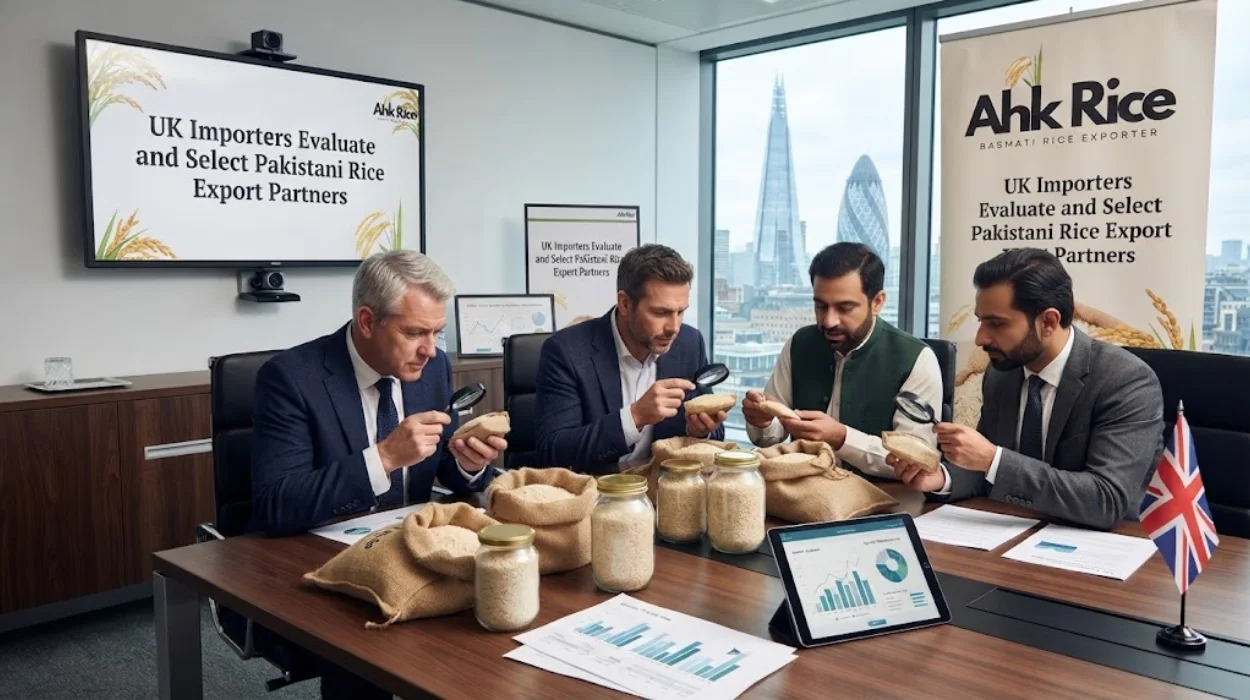
UK importers evaluate suppliers through a sequence covering specification approval, sample testing, supplier verification, documentation review, compliance testing, commercial assessment, and shipment performance. This process connects product quality with regulatory and supply-chain requirements.
What happens during supplier evaluation?
UK importers generally follow these steps:
- Define the specification: Establish variety, grain length, broken percentage, moisture, processing type, packing format, quantity, and destination.
- Request samples: Obtain representative rice samples for physical inspection, cooking evaluation, and laboratory testing.
- Verify documents: Review certificates, test reports, product specifications, origin documents, and commercial records.
- Test compliance: Check pesticide residues, aflatoxins, ochratoxin A, moisture, and other applicable parameters.
- Assess processing: Review milling, dehusking, polishing, grading, sorting, parboiling, drying, and packing controls.
- Review logistics: Check loading, container preparation, shipping documentation, dispatch procedures, and delivery planning.
- Approve the supplier: Confirm the specification, commercial terms, documentation, and shipment requirements before purchase.
UK controls specifically list rice from Pakistan under controls for pesticide residues, aflatoxins, and ochratoxin A.
The supplier selection process therefore moves from product identity to measurable compliance evidence.
What are the key components UK importers check?
The key components are rice specification, food safety, processing controls, documentation, packaging, traceability, logistics, pricing, and supply capacity. Each component provides evidence that the exporter can repeatedly supply the agreed product without changing critical specifications.
What rice specifications matter?
Rice specifications describe the physical and commercial identity of the shipment. UK buyers commonly define variety, grain length, moisture, broken percentage, processing type, colour, aroma, and packaging.
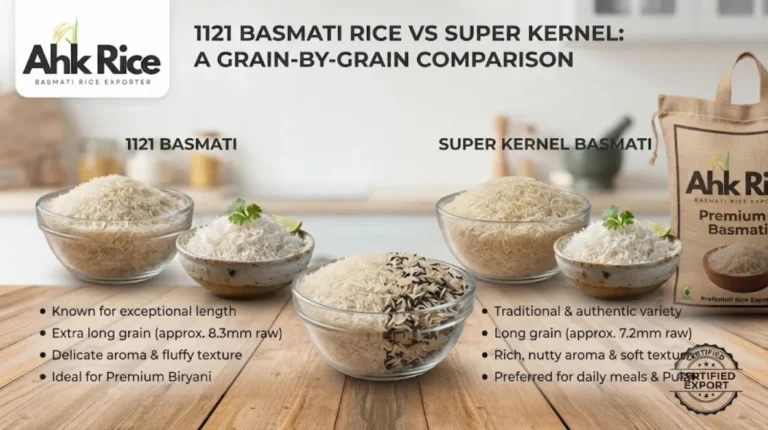
For example, a 1121 specification focuses on long grain length, aroma, appearance, and cooking performance. A Super Kernel specification focuses on traditional Basmati characteristics and aroma. A 1509 specification focuses on long grain performance and commercial volume applications.
What food-safety checks matter?
Food safety is a major supplier-selection component for Pakistani rice. UK government guidance identifies Pakistani rice as subject to controls covering pesticide residues, aflatoxins, and ochratoxin A.
Laboratory testing provides measurable evidence against applicable limits. Importers can use test reports to compare supplier batches against agreed specifications.
UK pesticide monitoring also demonstrates the importance of rice testing. In one 2023 monitoring programme, 24 rice samples were tested for up to 414 pesticide residues. None exceeded the applicable maximum residue level in that sample group.
What processing controls matter?
Processing controls determine whether the rice matches the approved sample. Key operations include cleaning, dehusking, milling, polishing, grading, colour sorting, length sorting, parboiling, drying, and final packing.
A supplier must connect these operations with measurable specifications. For example, sorting controls separate broken grains and foreign material from whole grains. Colour sorting removes discoloured kernels from the finished product.
What documents matter?
Documentation establishes the identity and movement of the shipment. Typical documents include commercial invoices, packing lists, certificates of origin, shipping documents, product specifications, laboratory reports, and applicable regulatory certificates.
UK rice imports can also involve tariff quota procedures. The Rural Payments Agency publishes rice quota notices that specify application periods, proof-of-trade requirements, origin information, and licence procedures.
These components form the evidence base for supplier approval and lead directly to the practical benefits of structured evaluation.
What are the benefits of evaluating Pakistani rice export partners systematically?
Systematic supplier evaluation improves specification consistency, food-safety control, documentation accuracy, shipment planning, purchasing transparency, and long-term supply management. Each benefit comes from checking measurable requirements before commercial shipment.
Specification control reduces variation between the approved sample and the shipped rice. Buyers can define grain length, moisture, broken percentage, processing type, and packing before loading.
Food-safety verification reduces regulatory exposure. Pakistani rice currently appears on the UK’s list of foodstuffs with specific controls for pesticide residues, aflatoxins, and ochratoxin A.
Documentation control supports customs clearance. Rice is classified under heading 1006 according to its physical form and processing condition.
Logistics verification improves shipment planning. Importers can confirm container loading, shipping documentation, dispatch procedures, and destination requirements before the cargo leaves Pakistan.
Commercial evaluation also creates clearer purchasing decisions. Buyers can compare suppliers using the same specification instead of comparing prices without considering quality differences.
The benefits become clearer when the same evaluation system is applied across different UK rice purchasing situations.
Where do UK importers use Pakistani rice suppliers?

UK importers use Pakistani rice suppliers for retail packs, wholesale distribution, ethnic grocery channels, foodservice, restaurants, catering, and private-label products. Each channel requires a defined combination of rice grade, processing type, packaging, quantity, and cooking characteristics.
Which grades suit retail distribution?
Retail buyers commonly require recognizable Basmati varieties with consistent grain appearance, aroma, cooking performance, and packaging. 1121 Basmati and Super Kernel serve premium and traditional Basmati positioning.
Retail specifications also include pack sizes. Examples include 1 kg, 2 kg, 5 kg, 10 kg, and larger wholesale formats.
Which grades suit foodservice?
Foodservice buyers focus on cooking yield, appearance, consistency, handling, and cost per serving. 1121, Super Kernel, and 1509 can serve different foodservice specifications.
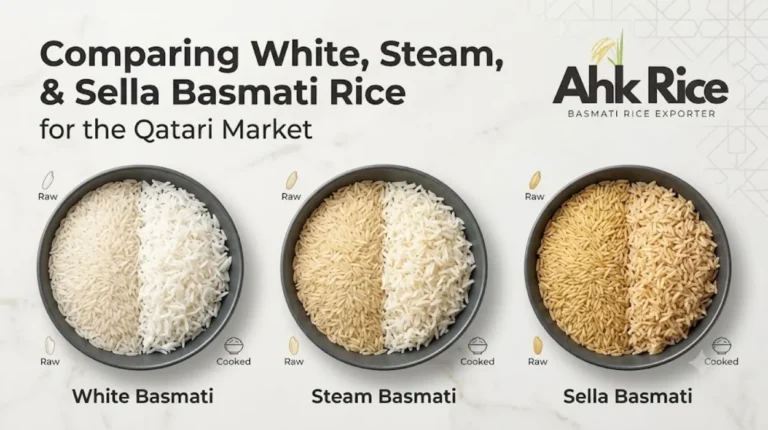
Steam and parboiled products address different preparation and holding requirements. Golden Sella is parboiled, while White Basmati follows conventional milling and polishing processes.
Which suppliers suit private-label buyers?
Private-label buyers require more than bulk rice. They need controlled packaging, product specifications, consistent batches, labelling information, documentation, and repeat supply.
Custom packaging connects the exporter with the buyer’s retail specification. A consistent product specification also helps the importer maintain the same consumer product across multiple shipments.
These use cases explain why supplier evaluation must cover both the rice itself and the export system behind it.
What are the common problems when selecting Pakistani rice exporters?
Common problems include inconsistent grain specifications, incomplete testing, unclear documentation, packaging variation, weak traceability, shipment delays, and price comparisons that ignore product quality. These problems create commercial and compliance risks after purchase.
Why does specification inconsistency create problems?
Specification inconsistency occurs when different shipments contain different grain lengths, broken percentages, moisture levels, or processing characteristics.
A buyer approving one sample expects subsequent shipments to match that reference. Batch inspection therefore needs measurable acceptance criteria rather than general descriptions such as premium or high quality.
Why do incomplete laboratory reports create problems?
Incomplete laboratory reports leave gaps in compliance verification. Pakistani rice entering the UK faces controls covering pesticide residues, aflatoxins, and ochratoxin A.
Importers therefore need test documentation that matches the product, shipment, and applicable regulatory requirements.
Why is price-only supplier selection misleading?
Price alone does not describe the final rice specification. A lower quoted price can correspond to different grain length, processing, broken percentage, packaging, testing, or shipment terms.
UK importers compare the complete commercial specification instead. This approach separates product price from the total cost and compliance requirements.
What misconception exists about UK rice imports?
One misconception is that every rice shipment follows the same regulatory route. UK requirements depend on product classification, origin, processing condition, and applicable controls.
Rice importers also need to monitor tariff and licensing requirements. The Rural Payments Agency publishes specific 2026 rice quota notices with application periods and supporting requirements.
With these problems identified, supplier evaluation becomes a measurable process based on product, compliance, documentation, and logistics evidence.
What should UK importers compare before approving a Pakistani rice export partner?
UK importers should compare product specifications, laboratory evidence, processing controls, documentation, packaging capability, shipment procedures, capacity, and commercial terms before approving a Pakistani rice export partner.
| Evaluation area | What the importer checks |
|---|---|
| Rice variety | 1121, Super Kernel, 1509, or specified grade |
| Grain specification | Length, appearance, aroma, and cooking performance |
| Quality parameters | Moisture, broken percentage, colour, foreign matter |
| Processing | Milling, polishing, grading, sorting, parboiling, drying |
| Food safety | Pesticide residues, aflatoxins, ochratoxin A |
| Documentation | Origin, invoice, packing, test, and shipping documents |
| Packaging | Retail, wholesale, private-label, and bulk formats |
| Logistics | Loading, dispatch, shipping, customs, and delivery |
| Commercial terms | Quantity, pricing basis, destination, and shipment conditions |
A structured comparison prevents buyers from treating different specifications as identical products. It also creates a documented basis for supplier approval.
For buyers studying the next stage of Pakistani Basmati demand, the related analysis of Pakistani Basmati Rice Demand Among American Consumers in 2026 provides a separate market perspective.
The UK supplier-selection process therefore connects product quality with regulatory compliance, processing capability, documentation, packaging, and logistics.
How does AHK Rice fit into Pakistani rice export specifications?
AHK Rice supplies 1121, Super Kernel, and 1509 Pakistani Basmati varieties from Punjab, with end-to-end processing, custom packaging, and export coordination for international buyers.
AHK Rice works across the supply chain from sourcing and processing to packaging and export logistics. Its stated export markets cover more than 15 countries.
The product range includes 1121 Basmati, Super Kernel Basmati, and 1509 Basmati. Processing requirements can differ by grade and buyer specification.
AHK Rice also supports custom packaging and full export processing. These capabilities correspond with the areas UK importers evaluate when assessing an export partner.
The supplier-selection framework remains specification-led. Buyers establish the required grade, test parameters, packaging, documents, shipment terms, and destination requirements before approving a commercial order.
Frequently Asked Questions
How do UK importers evaluate Pakistani rice exporters?
UK importers evaluate rice exporters through product specifications, laboratory testing, documentation, processing controls, packaging, logistics, capacity, and commercial terms. Food-safety compliance is especially important for Pakistani rice entering Great Britain.
What Pakistani rice varieties do UK importers source?
UK importers source several Pakistani rice varieties and processing grades. Common Basmati varieties include 1121, Super Kernel, and 1509. Buyers select the variety according to retail, wholesale, foodservice, catering, and private-label requirements.
What tests apply to Pakistani rice entering Great Britain?
Current UK controls identify Pakistani rice for controls covering pesticide residues, aflatoxins, and ochratoxin A. Importers should verify the current regulatory requirements and applicable testing procedures for each shipment.
What documents do UK rice importers review?
Importers review commercial documents, packing information, origin documentation, laboratory reports, product specifications, and shipping documents. Rice imports can also involve tariff quota and licensing procedures administered by the Rural Payments Agency.
Why does rice processing matter to UK buyers?
Processing determines grain appearance, broken percentage, cleanliness, colour, cooking performance, and final grade. Key operations include cleaning, dehusking, milling, polishing, grading, sorting, parboiling, drying, and packing.
What does UK rice classification cover?
UK tariff guidance places rice under heading 1006 when it is husked, milled, glazed, polished, parboiled, or broken while remaining uncooked and otherwise unprocessed.