What Is the Difference Between 1121, 1509 and Super Kernel Basmati Rice?
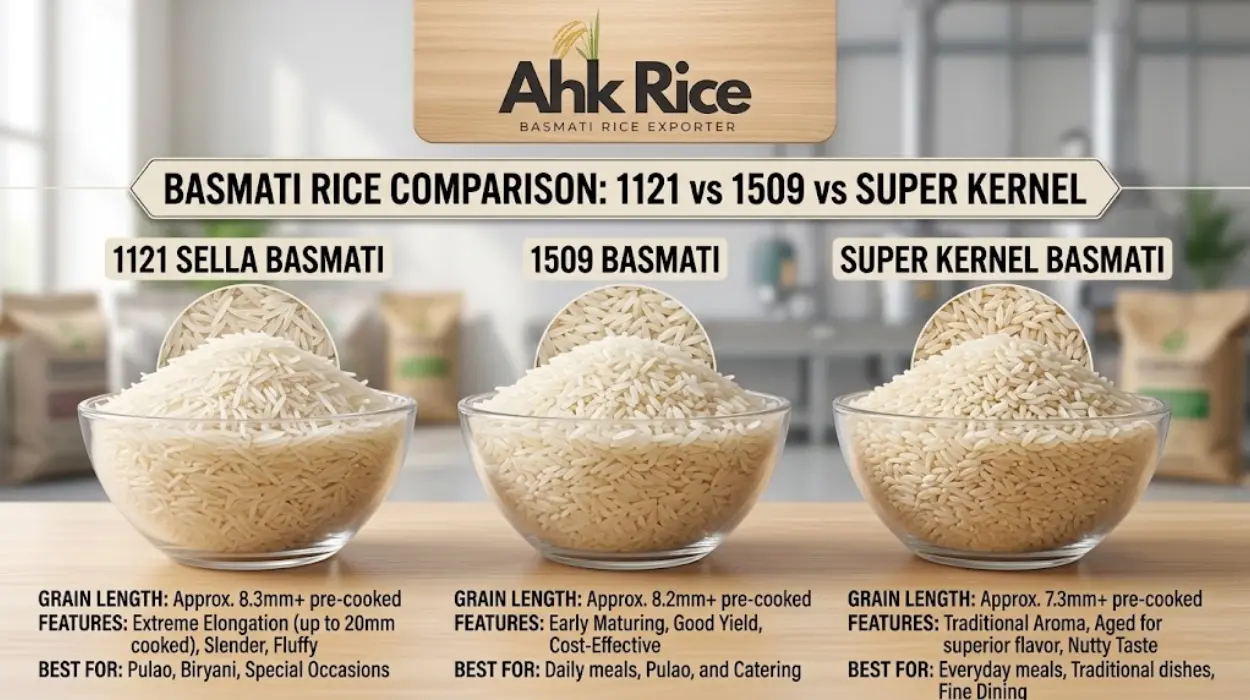
1121 Basmati is known for exceptional cooked grain elongation, 1509 offers long grains with a cost-efficient production profile, and Super Kernel is valued for traditional Basmati aroma. All three originate from Pakistan’s rice-growing regions and serve different retail, wholesale and foodservice needs.
Pakistani Basmati rice is an aromatic long-grain rice cultivated mainly in Punjab. Its characteristics include natural fragrance, slender grains and an elongated cooked appearance. The differences between varieties influence purchasing decisions, cooking results, processing requirements and export specifications.
Buyers comparing these varieties should evaluate grain length, aroma, broken percentage, moisture, processing method, cooking consistency and total landed cost. The guide to Pakistani Basmati rice varieties and their characteristics explains the broader product category and its commercial classifications.
1121 suits premium retail and restaurants seeking impressive cooked grain length. 1509 serves price-conscious distributors and high-volume foodservice operations. Super Kernel appeals to consumers who prioritize traditional aroma and familiar Basmati flavour. The best option depends on the intended dish, customer expectations and target market.
Where Are 1121, 1509 and Super Kernel Basmati Rice Grown?
All three varieties are associated with Pakistan’s Basmati-producing regions, particularly Punjab. Suitable growing conditions, agricultural practices, seed variety and crop management influence grain development, aroma, yield and quality before the rice enters commercial processing.
Punjab’s Basmati-growing areas provide the agricultural foundation for Pakistani aromatic rice. Soil characteristics, irrigation, temperature and harvesting conditions influence the crop’s physical and sensory qualities.
1121 is cultivated for its long, slender grain and strong cooked elongation. 1509 is an early-maturing variety that reaches harvest sooner than traditional long-duration Basmati types. Super Kernel is associated with traditional aromatic Basmati characteristics and established consumer demand.
Harvest timing and post-harvest handling also affect quality. Farmers harvest mature paddy, remove field impurities and manage moisture before milling. Proper drying and storage protect the grain against deterioration and help maintain consistent processing results.
A variety name identifies the rice type, but it does not guarantee a specific export grade. Actual grain measurements, purity, broken percentage, moisture and aroma require assessment against the buyer’s specification.
How Is Pakistani Basmati Rice Processed Step by Step?
Export processing converts harvested paddy into clean, graded and packaged rice through controlled operations. The standard sequence includes receiving, cleaning, drying, dehusking, milling, polishing when required, sorting, grading, inspection and packaging, with additional steaming or parboiling for selected grades.
1. Paddy reception and cleaning
Processors receive harvested paddy and remove stones, dust, straw and other foreign material. Pre-cleaning protects milling machinery and reduces contamination risks.
2. Drying and moisture control
Paddy is dried to a suitable moisture level for safe storage and milling. Excessive moisture increases storage risks, while aggressive drying damages kernels and creates cracks.
3. Dehusking and milling
Dehusking removes the outer husk. Further milling removes bran layers to produce white rice. Brown rice retains its bran layer, while white rice receives additional milling.
4. Steaming and parboiling
Steam rice receives controlled heat treatment during processing. Parboiled rice undergoes soaking, heat treatment and drying before milling. Golden Sella and Creamy Sella describe different parboiled appearances and processing outcomes, depending on the method used.
5. Sorting and grading
Processors use sieves, length graders and optical sorting equipment to separate broken grains, discoloured kernels and foreign material. Export specifications establish acceptable grain dimensions, purity and broken percentages.
6. Quality inspection and packaging
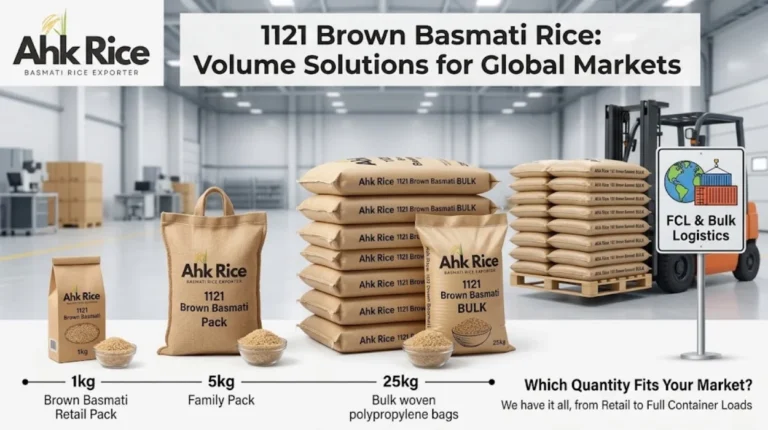
The finished rice is tested against the agreed specification. Packaging options include 5 kg and 10 kg retail bags, 20 kg and 25 kg wholesale bags, and 50 kg commercial sacks, subject to destination and buyer requirements.
What Are the Main Grades of 1121, 1509 and Super Kernel Rice?
Export grades combine the rice variety with its processing style and commercial quality specification. White, Steam, Golden Sella, Creamy Sella and Brown describe different product forms, while broken percentage, grain length, moisture, purity and crop condition determine the accepted grade.
| Variety | Common commercial forms | Main selling characteristic |
|---|---|---|
| 1121 | White, Steam, Golden Sella, Creamy Sella, Brown | Exceptional cooked elongation |
| 1509 | White, Steam, Golden Sella | Long grains and value-focused supply |
| Super Kernel | White, Steam, Sella and other agreed parboiled forms | Traditional aroma and familiar flavour |
White Basmati: Milled rice with a light appearance. It suits retail packs, everyday cooking and restaurants that prefer conventional white rice.
Steam Basmati: Rice processed using controlled steaming. It supports a consistent appearance and cooking performance for retail and foodservice applications.
Golden Sella Basmati: Parboiled rice with a golden appearance. It is commonly selected for biryani, catering and bulk kitchens that require firm grains.
Creamy Sella Basmati: Parboiled rice with a cream-coloured appearance. Buyers select it when they prefer parboiled cooking characteristics without the deeper golden colour.
Brown Basmati: Rice with the bran layer retained. It serves whole-grain retail and specialist food markets where the bran, texture and nutritional profile are important.
Broken rice is another commercial category, not a separate variety. Exporters classify it according to broken-grain percentage and buyer-defined limits. Exact specifications always take precedence over a general grade name.
What Specifications Distinguish the Three Basmati Varieties?
Grain length, cooked elongation, aroma, moisture, broken percentage and milling quality distinguish export lots. Typical raw grain measurements provide an initial comparison, but suppliers confirm actual values through representative samples, laboratory testing and an agreed pre-shipment specification.
| Specification | 1121 Basmati | 1509 Basmati | Super Kernel Basmati |
|---|---|---|---|
| Typical raw grain length | 8.2–8.5 mm | 8.1–8.4 mm | 7.0–7.5 mm |
| Main characteristic | Long cooked grains | Long grain with efficient production | Traditional aromatic profile |
| Cooked performance | Exceptional elongation | Long, separate grains | Familiar Basmati texture and aroma |
| Common processing forms | White, Steam, Sella, Brown | White, Steam, Golden Sella | White, Steam, Sella |
| Typical market position | Premium | Value-focused and volume trade | Aroma-focused |
| Moisture target | Contract-specific | Commonly maximum 13% | Contract-specific |
| Broken percentage | Buyer-defined | Buyer-defined | Buyer-defined |
These measurements are indicative commercial benchmarks, not universal legal limits or guarantees for every shipment. Grain length also varies with crop, processing and measurement method.
Cooked elongation differs from raw grain length. It describes how much a grain lengthens during cooking. Water absorption, cooking time, ageing, processing and rice-to-water ratio influence the final result.
Export buyers therefore assess representative samples rather than relying on variety names alone. The purchase specification should identify the variety, processing form, grain dimensions, broken percentage, moisture limit, foreign matter tolerance, packing format and inspection requirements.
What Are the Benefits of Each Basmati Variety?
Each variety offers a different balance of appearance, aroma, cooking performance and commercial cost. 1121 supports premium presentation, 1509 suits cost-conscious volume distribution, and Super Kernel meets demand for traditional aromatic rice across household, restaurant and wholesale channels.
1121 Basmati: premium grain presentation
1121 is widely recognized for its slender raw grain and exceptional elongation after cooking. Its appearance suits premium biryani, festive meals, upscale restaurants and branded retail products.
Its value depends on more than length. Uniform grading, low broken content, consistent cooking and attractive packaging help maintain the premium positioning.
1509 Basmati: production efficiency and value
1509 has a shorter growing cycle than traditional long-duration Basmati varieties. Its commercial appeal comes from long grains and production efficiency, making it suitable for bulk buyers and price-sensitive distribution.
It supports everyday household cooking, restaurant menus, catering and private-label retail. Buyers compare the purchase price with usable yield, cooking consistency and the final selling price.
Super Kernel Basmati: traditional aroma
Super Kernel appeals to customers who prioritize familiar Basmati fragrance and flavour. Its established position in Pakistani and South Asian food markets supports ethnic grocery retail, traditional dishes and restaurants.
Buyers should assess aroma, grain uniformity and cooked texture alongside cost. A lower raw grain length does not automatically indicate inferior quality because variety characteristics and intended use differ.
Which Markets Import These Pakistani Basmati Varieties?

Import demand depends on consumer preferences, local cuisine, retail positioning and foodservice requirements. Gulf markets, the United Kingdom, North America, Africa and Southeast Asia purchase Pakistani rice for different applications, with the selected variety determined by price, aroma, grain appearance and processing style.
Gulf markets: UAE and Saudi Arabia
The UAE serves retail, wholesale, restaurant and regional re-export channels. 1121 fits premium biryani and long-grain retail positioning. Super Kernel appeals to aroma-focused South Asian consumers, while 1509 serves cost-conscious restaurants and bulk distribution.
Saudi Arabia has demand across household retail, catering, restaurants and institutional kitchens. White, Steam and Golden Sella forms address different cooking preferences and purchasing budgets.
United Kingdom and North America
The UK market includes ethnic supermarkets, independent grocers, wholesalers, restaurants and private-label brands. 1121 supports premium shelf presentation, Super Kernel serves traditional aromatic rice demand, and 1509 provides a value-oriented option.
North American buyers assess consumer preference, packaging, food-safety compliance and consistency between shipments. Retail packs and foodservice sacks require different labelling and commercial specifications.
African and Southeast Asian markets
African import markets include wholesale distribution, retail and catering. Buyers compare landed cost, grain performance, shipment volume and consumer preferences before selecting a variety.
Southeast Asian markets also purchase rice for retail and foodservice. Grade selection varies by country, local competition, cooking habits and importer requirements. Exporters must verify current import rules before shipping to each destination.
What Certifications and Documents Apply to Basmati Rice Exports?
Export documentation depends on the destination, importing authority and buyer contract. Common requirements include a commercial invoice, packing list, bill of lading, certificate of origin, phytosanitary certificate where required, and food-safety or laboratory documents specified by the importing country.
The exporter and importer confirm the applicable rules before loading. Common documents and controls include:
- Certificate of origin: identifies the declared country of origin.
- Phytosanitary certificate: confirms applicable plant-health requirements when required by the destination.
- Commercial invoice and packing list: describe the goods, value, quantities and packages.
- Bill of lading: records shipment and carriage details.
- Certificate of analysis: reports agreed quality measurements, such as moisture, broken percentage and grain specifications.
- Residue and contaminant testing: addresses applicable pesticide limits, mycotoxins, heavy metals and other regulated hazards.
- Food-safety certifications: schemes such as HACCP or ISO 22000 support food-safety management. Buyers determine whether additional certification is mandatory under their contract.
No single certificate guarantees entry into every country. Importers must check current rules for labelling, pesticide maximum residue limits, contaminants, packaging and inspection. Organic claims also require valid certification under the relevant regulatory system.
What Common Misconceptions Affect Basmati Rice Selection?
The most common mistakes are treating all long-grain rice as equivalent, assuming raw grain length guarantees cooked performance, and comparing prices without checking specifications. Buyers achieve more reliable results by matching variety, processing, quality limits and intended cooking application.
A longer grain does not automatically deliver the best biryani. Cooking method, water absorption, grain separation and processing also influence the finished dish.
Golden Sella is not simply another name for white rice. It is a parboiled product with distinct processing characteristics and colour. White, Steam and parboiled grades should be compared as separate commercial products.
Similarly, a lower price per metric tonne does not always mean better value. Broken content, rejected bags, freight, insurance, duties, port charges and payment terms affect the final landed cost.
Buyers should request representative samples, agree on written specifications and review quality documents before placing a bulk order. This approach reduces misunderstandings between supplier and importer.
How Should Buyers Choose Between 1121, 1509 and Super Kernel?
The right variety depends on the dish, customer expectations, purchase budget and required processing form. Buyers should compare sample quality, cooking results, export specifications, shelf-life conditions and total landed cost before choosing a variety for retail, restaurants or wholesale distribution.
| Buying requirement | Recommended starting point | Reason |
|---|---|---|
| Premium biryani presentation | 1121 Steam or Golden Sella | Long cooked grains and visual appeal |
| Everyday budget-conscious cooking | 1509 White or Steam | Value-oriented long-grain option |
| Traditional Basmati aroma | Super Kernel White or Steam | Familiar aromatic profile |
| Large-scale catering | 1121 or 1509 Sella | Suitable options for bulk preparation |
| Ethnic grocery distribution | Super Kernel or 1121 | Serves distinct aroma and premium-grain preferences |
These are starting points rather than fixed rules. A chef’s recipe, customer preference and cooking equipment influence the final selection.
Shelf life also depends on moisture, processing, packaging, storage temperature and protection from pests. Properly packed white and steam rice often carries a commercial shelf-life target of around 12–18 months, while suitable parboiled products often target 18–24 months. The product label and validated storage conditions determine the actual shelf life.
For export shipments, the importer should confirm the specification, packaging, inspection method and applicable documentation before approving production. AHK Rice, a Pakistani exporter based in Punjab, supplies 1121, 1509 and Super Kernel Basmati rice for international markets. The same specification-based approach helps buyers compare offers across suppliers without relying on variety names alone.
Frequently Asked Questions
Which is better, 1121 or 1509 Basmati rice?
1121 is preferred for premium cooked grain elongation and presentation. 1509 offers long grains with a cost-efficient production profile, making it suitable for everyday cooking, restaurants and bulk distribution.
Is Super Kernel Basmati more aromatic than 1121?
Super Kernel is valued for its traditional aromatic profile. Actual aroma intensity varies with crop, ageing, storage and processing, so buyers should assess representative samples before making a commercial decision.
Which Basmati rice is best for biryani?
1121 Steam and Golden Sella are popular starting points for biryani because of their long cooked grains and visual appeal. Super Kernel and 1509 also suit biryani when their cooking characteristics match the recipe.
What are the main export grades of Pakistani Basmati rice?
Common forms include White, Steam, Golden Sella, Creamy Sella and Brown rice. Availability varies by variety, and the final grade depends on processing, grain quality and the buyer’s specification.
What documents are required to import Pakistani Basmati rice?
Common documents include a commercial invoice, packing list, bill of lading and certificate of origin. A phytosanitary certificate, laboratory analysis and other food-safety documents apply according to destination rules and contract requirements.