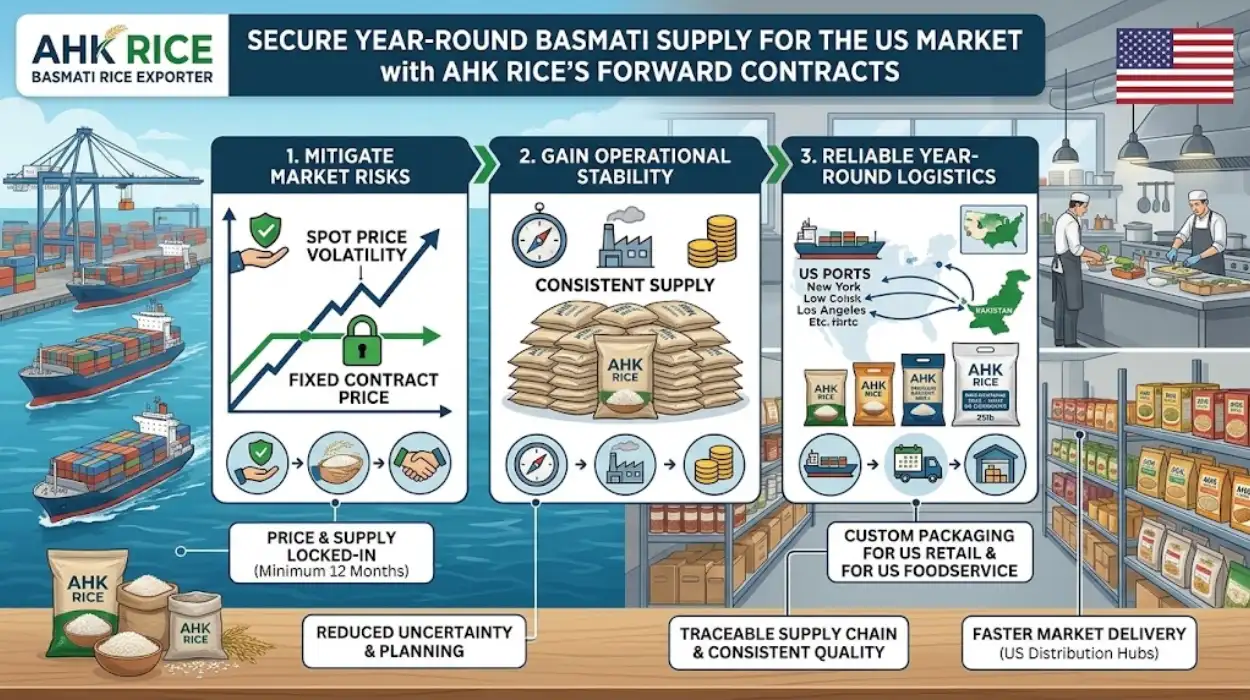
Secure Year-Round Basmati Supply for the US Market with AHK Rice’s Forward Contracts
US rice importers need more than a competitive purchase price. They need dependable quantities, consistent grain specifications, predictable shipment schedules and reliable documentation throughout the year. Seasonal procurement creates risks when harvest availability, freight costs and market demand change between purchasing cycles.
A forward supply contract provides a structured procurement arrangement between an importer and an exporter. It establishes agreed product specifications, order quantities, pricing arrangements and shipment windows before individual consignments are dispatched. Pakistani Basmati rice buyers can use this approach to plan inventory and reduce uncertainty.
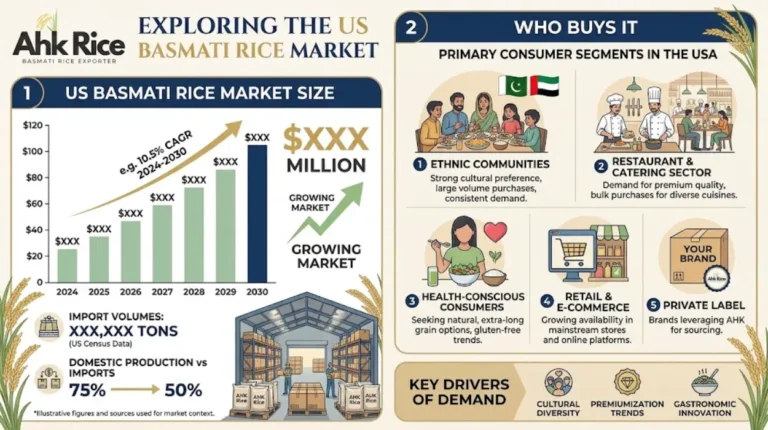
For a broader understanding of American demand, buyer categories and market opportunities, read our guide to the size of the US Basmati rice market and its major buyers.
AHK Rice is a trusted Pakistani Basmati rice exporter based in Punjab, supplying 1121, Super Kernel and 1509 varieties to international markets. Its export-focused approach combines sourcing, grading, processing, custom packaging and shipment coordination for commercial buyers.
What Is the Best Solution for Maintaining Year-Round Basmati Rice Supply in the USA?
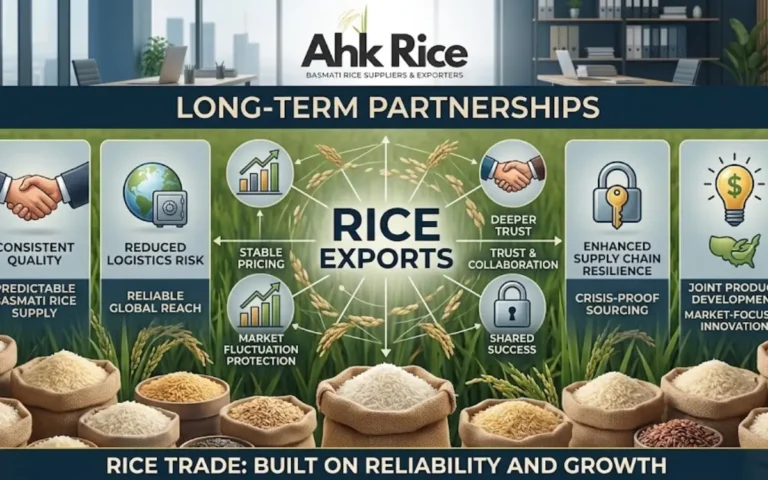
Forward contracts combined with scheduled shipments provide US importers with a practical way to secure recurring Pakistani Basmati rice quantities. Buyers agree on specifications, procurement volumes, pricing mechanisms and delivery windows in advance, reducing dependence on last-minute spot purchases.
A forward contract defines the commercial relationship before the shipment cycle begins. It can cover monthly, quarterly or annual purchasing requirements. The importer establishes a forecast, while the exporter plans sourcing, processing capacity and container allocation against the agreed schedule.
A typical arrangement includes:
- Contracted rice variety and processing type.
- Agreed grain length, moisture and broken percentage.
- Monthly or quarterly shipment quantities.
- FOB Karachi or CIF destination-port pricing.
- Packaging and private-label requirements.
- Payment milestones and shipment documentation.
- Quality inspection and claim procedures.
For example, a US distributor requiring 100 metric tons every quarter can divide its annual requirement into four planned purchasing cycles. The exporter can coordinate stock allocation and processing before each agreed shipment window. This gives the buyer a clearer inventory replenishment plan.
Forward contracts do not automatically guarantee an unchanged market price. Buyers must agree whether pricing is fixed, periodically reviewed or linked to an agreed quotation date. Contract terms should also define tolerances, force majeure, cancellation conditions and freight responsibilities.
Why Choose AHK Rice for Long-Term Basmati Supply?
AHK Rice offers Pakistani-origin Basmati sourcing, processing, grading, packaging and export coordination for international buyers. Its product range and export arrangements help US importers establish repeatable purchasing specifications rather than renegotiating every shipment from the beginning.
The main advantage is specification continuity. Buyers can select 1121, Super Kernel or 1509 Basmati according to their distribution requirements. AHK Rice coordinates the processing and preparation requirements around the approved commercial specification.
Importers can explore AHK Rice’s Pakistani Basmati export and supply services for product sourcing, grading, custom packaging and export arrangements.
Product selection for US buyers
| Variety | Commercial application | Buying consideration |
|---|---|---|
| 1121 Basmati | Premium retail and foodservice | Long grain and cooked elongation |
| Super Kernel | Ethnic grocery and wholesale | Aroma and competitive positioning |
| 1509 Basmati | Bulk distribution and catering | Yield efficiency and cost management |
| 1121 Golden Sella | Catering and institutional kitchens | Parboiled grain characteristics |
| 1121 Steam | Premium retail and restaurants | White appearance and cooking performance |
AHK Rice can also coordinate single or double Sortex processing, subject to the agreed specification. This helps importers establish consistent requirements for grain appearance, foreign matter and broken percentage.
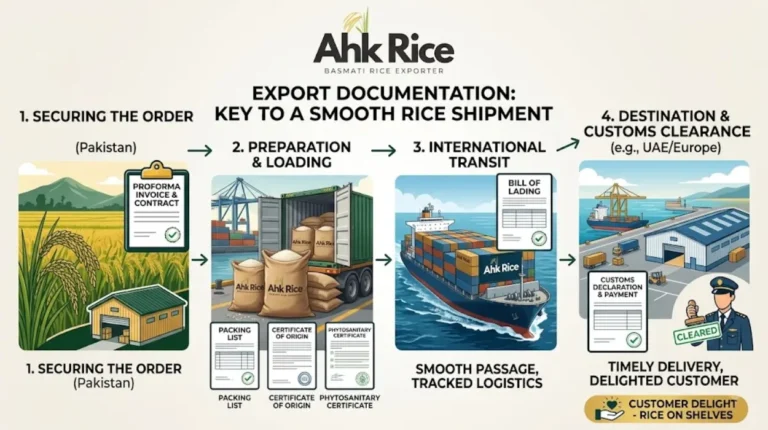
Another important consideration is documentation. US food importers must address applicable FDA requirements, Prior Notice, customs documentation and the Foreign Supplier Verification Program (FSVP). The US importer remains responsible for its FSVP obligations, while the exporter supplies the relevant facility, product and shipment information required for verification.
What Results Can US Importers Expect from Forward Contracts?
A properly structured supply agreement improves purchasing visibility, supports planned inventory replenishment and creates measurable quality expectations. Results depend on accurate forecasts, production readiness, shipping schedules and compliance with the agreed contract.
The expected commercial benefits include:
- More predictable procurement: Agreed purchasing windows reduce repeated spot-market sourcing.
- Consistent specifications: Approved samples and written specifications establish a reference for subsequent shipments.
- Better inventory planning: Buyers can coordinate warehouse capacity, retail promotions and distribution orders.
- Improved packaging coordination: Retail bags, wholesale sacks and private-label artwork can be prepared before shipment.
- Clearer landed-cost planning: FOB, freight, insurance and destination charges can be assessed separately.
- Reduced replenishment uncertainty: Scheduled orders help distributors plan stock before existing inventory reaches critical levels.
Consider a US grocery distributor selling Pakistani Basmati through several regional warehouses. Instead of ordering only when warehouse inventory becomes low, the buyer can establish quarterly shipments with an agreed safety-stock policy.
This does not eliminate freight delays or changes in demand. It creates a purchasing framework that allows the importer to respond earlier.
For additional market context, the comparison of Pakistani Basmati export trends, US demand drivers and key buyer segments helps procurement teams understand the importance of destination planning and regional distribution requirements.
How Long Does Shipping Take from Pakistan to Different US Markets?
Container shipments from Pakistan to the United States require different planning windows according to destination port, vessel routing and transshipment arrangements. Importers should use approximately 25–50 days as an initial ocean-transit planning range, then confirm the actual sailing schedule with the carrier.
Indicative shipment planning
| US destination | Indicative ocean transit | Main consideration |
|---|---|---|
| New York / New Jersey | 30–45 days | East Coast distribution |
| Houston, Texas | 25–40 days | Gulf Coast routing |
| Los Angeles, California | 25–40 days | West Coast distribution |
These are planning estimates, not guaranteed delivery commitments. Actual transit depends on vessel schedules, transshipment, port congestion and container availability. AHK Rice+3
Importers should distinguish ocean transit from total order lead time. The complete process also includes sample approval, production or stock allocation, packaging, inspection, export clearance, US customs processing and inland transportation.
For example, a New York distributor requiring stock before a seasonal sales period should approve the commercial sample and finalize the purchase contract well before the intended warehouse arrival date. A shipment arriving at the port does not automatically mean it is customs-cleared or available for warehouse delivery.
What Pricing Factors Affect Long-Term Basmati Rice Contracts?
Forward contract pricing depends on rice variety, grain specifications, purchase volume, processing requirements, packaging, freight and payment terms. US importers should evaluate the complete landed cost rather than comparing FOB prices alone.
The main pricing factors include:
- Rice variety: 1121, Super Kernel and 1509 have different sourcing and market positions.
- Grain specifications: Average grain length, broken percentage, moisture and crop year influence the quotation.
- Processing: Steam, Golden Sella, Creamy Sella and Sortex requirements affect processing costs.
- Order quantity: Full container loads and recurring annual volumes influence procurement and logistics planning.
- Packaging: Custom retail bags, printed artwork, labels, barcodes and wholesale sacks affect the final price.
- Incoterms: FOB Karachi and CIF US ports allocate freight and insurance responsibilities differently.
- Payment arrangements: Advance payments, letters of credit and other mutually accepted terms influence the commercial agreement.
A forward contract can use three pricing structures:
| Pricing structure | How it works | Suitable application |
|---|---|---|
| Fixed price | Price agreed for specified quantities and periods | Predictable purchasing budgets |
| Periodic review | Price reviewed before each shipment | Changing market conditions |
| Formula-based | Price follows an agreed benchmark or adjustment formula | Longer procurement programmes |
For example, an importer purchasing four containers annually can negotiate a recurring supply arrangement while reviewing the price before each quarterly shipment. This separates the volume commitment from the final pricing decision.
A quotation should clearly identify whether destination charges, customs duties, inspection, insurance and inland transportation are included. AHK Rice should confirm the applicable commercial terms before the buyer signs the contract.
How Does the AHK Rice Sample Approval Process Work?
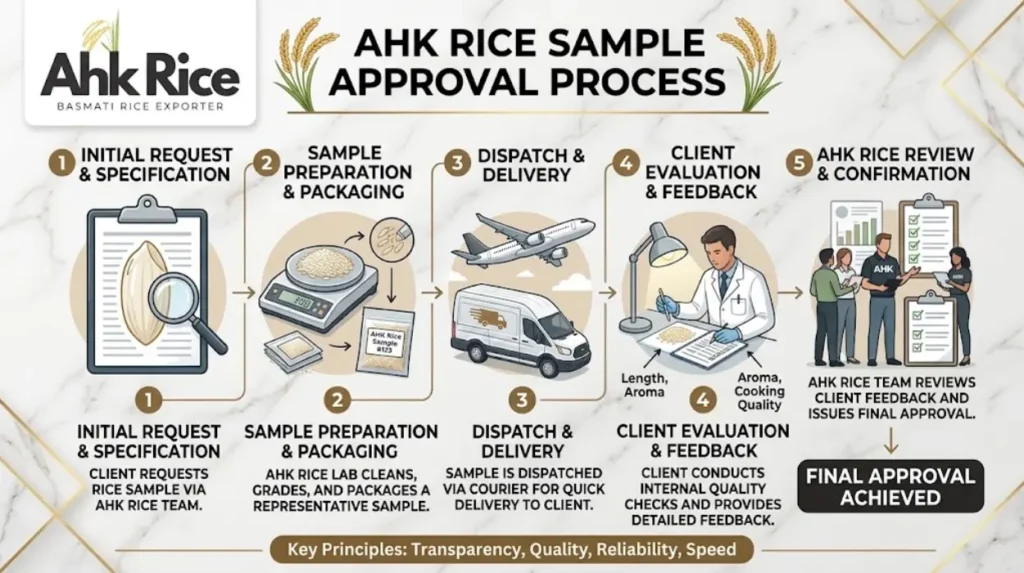
Sample approval establishes the physical quality reference before a commercial supply contract proceeds. US buyers should evaluate the rice, confirm laboratory and specification requirements, approve packaging and authorize bulk production or allocation against the accepted reference.
The sample-to-order process follows six stages:
- Buyer requirement: The importer shares the required variety, processing type, grain length, broken percentage, moisture, quantity and packaging.
- Sample preparation: AHK Rice prepares a representative commercial sample according to the requested specification.
- Courier arrangement: The sample is dispatched through an agreed international courier or air-cargo service.
- Buyer evaluation: The importer checks aroma, grain appearance, cooking performance, elongation and broken percentage.
- Approval and documentation: Both parties confirm the accepted specification, sample reference and any laboratory testing requirements.
- Bulk shipment matching: The exporter processes or allocates the commercial order against the approved specification and agreed inspection procedure.
Sample costs and responsibilities
For qualifying sample arrangements, a Super Kernel sample of up to 20 kg may be offered without a rice charge. The buyer covers international courier charges and applicable phytosanitary expenses under the agreed arrangement.
Courier expenses depend on shipment weight, dimensions, service level and destination. As an indicative public-market reference, a Pakistan-to-USA DHL shipment has been listed at approximately PKR 3,000 for 1 kg and PKR 8,500 for 5 kg. These are not AHK Rice quotations or guaranteed current rates. Olympic Agency+1
Other possible expenses include:
- Phytosanitary documentation or inspection charges, where applicable.
- Laboratory testing requested by the buyer.
- Special sample packaging.
- Additional courier handling or destination charges.
The buyer should approve the sample in writing before bulk processing. The purchase agreement should also establish acceptable tolerances and the inspection method for the commercial shipment.
How Can US Importers Start a Forward Contract with AHK Rice?
US importers can begin by sharing annual demand, preferred Basmati varieties, destination ports and purchasing schedules. AHK Rice can then assess the requirements, prepare a specification-based quotation and coordinate sample approval before finalizing the supply agreement.
The recommended procurement sequence is:
- Submit a demand forecast: Specify monthly or quarterly requirements and estimated annual volume.
- Select rice varieties: Choose 1121, Super Kernel or 1509 according to customer requirements.
- Confirm specifications: Establish grain length, moisture, broken percentage, processing and quality tolerances.
- Request commercial pricing: Compare FOB Karachi and CIF destination-port quotations.
- Approve samples: Complete cooking tests and any agreed laboratory evaluations.
- Finalize the contract: Record pricing, quantities, shipment windows, payment terms and inspection responsibilities.
- Schedule deliveries: Confirm production readiness, container bookings and shipping documents for each consignment.
Before signing, US buyers should verify applicable FDA facility registration, Prior Notice procedures, FSVP responsibilities, product compliance and customs documentation. The importer should also establish who provides each document and who handles each regulatory obligation.
A successful forward contract is not simply an annual purchase commitment. It is a documented supply programme connecting product quality, commercial pricing, inventory forecasts and shipment execution.
US importers seeking dependable Pakistani Basmati rice procurement should establish supply agreements around approved specifications, realistic shipment windows and transparent pricing conditions.
AHK Rice provides an export-focused sourcing and processing approach for buyers requiring recurring Basmati shipments, custom packaging and coordinated export documentation. A structured forward contract helps both parties plan purchasing commitments and maintain clearer expectations throughout the supply cycle.
Secure your next annual or quarterly Basmati rice supply programme by requesting a commercial quotation from AHK Rice.
Frequently Asked Questions
What is a Basmati rice forward contract?
A forward contract is an agreement between an importer and exporter for future rice purchases.
It defines the variety, quantity, quality specifications and shipment schedule.
The parties also establish pricing arrangements and payment conditions.
It helps US importers plan procurement before seasonal market changes.
AHK Rice can discuss recurring supply arrangements based on buyer requirements.
Can AHK Rice supply Basmati rice throughout the year?
AHK Rice can coordinate recurring procurement and shipment planning for US importers.
Available varieties include 1121, Super Kernel and 1509 Basmati.
Buyers can establish monthly or quarterly purchasing schedules.
Availability depends on crop, stock allocation and agreed specifications.
Each shipment requires confirmation before production and dispatch.
How long does Pakistani Basmati rice take to reach the USA?
Ocean transit generally requires approximately 25–50 days, depending on routing.
New York, Houston and Los Angeles have different shipping schedules.
Transshipment and port congestion can affect arrival dates.
Customs clearance and inland transportation add to the total delivery period.
Buyers should confirm vessel schedules before approving shipment dates.
How much does a Basmati rice sample from Pakistan cost?
Qualifying Super Kernel sample arrangements may include up to 20 kg without a rice charge.
The buyer covers international courier expenses.
Applicable phytosanitary charges are also the buyer’s responsibility.
Laboratory testing and special handling may involve additional costs.
Final sample arrangements and courier charges must be confirmed before dispatch.
Can US importers negotiate fixed prices under forward contracts?
Yes, buyers and exporters can mutually agree on fixed pricing for specified quantities and periods.
They can also choose periodic price reviews or formula-based pricing.
The agreement should identify the applicable Incoterm and freight responsibilities.
Changes in specifications or quantities may require commercial adjustments.
All pricing conditions should be documented before the first shipment.
Which Pakistani Basmati variety is suitable for US distributors?
1121 Basmati suits premium retail and foodservice distribution.
Super Kernel offers aromatic grain characteristics for ethnic grocery markets.
1509 provides an alternative for buyers prioritizing yield and procurement economics.
Steam and Golden Sella offer different processing and cooking characteristics.
The final selection should follow sample testing and customer demand.