What Is Pre-Shipment Inspection for Basmati Rice Exported to Indonesia?
Pre-shipment inspection for Basmati rice exported to Indonesia is a quality and compliance check completed before the cargo leaves Pakistan. It verifies that the rice matches the agreed specification, contract, packing, quantity, documentation, and applicable Indonesian import requirements. The inspection creates evidence for the buyer before shipment.
What Is Pre-Shipment Inspection for Basmati Rice Exported to Indonesia?
Pre-shipment inspection is a controlled examination of Basmati rice before export loading. Inspectors check rice quality, quantity, packaging, markings, documents, and contract specifications before the container is released for shipment. The process connects the physical cargo with the agreed commercial and regulatory requirements.
The inspection starts with the buyer’s purchase specification. This specification normally identifies rice variety, grade, grain length, broken percentage, moisture, foreign matter, damaged grains, milling quality, packing format, quantity, and destination.
For Pakistani Basmati rice, the inspection also identifies the product type. Common export varieties include 1121, Super Kernel, and 1509. Each variety has different commercial characteristics.
1121 is known for long grain length and strong cooked elongation. Super Kernel is a premium Pakistani Basmati type with aromatic grains. 1509 is valued for efficient production and competitive bulk pricing.
The inspection is not the same as a simple visual check. It uses sampling, physical examination, laboratory testing where required, quantity verification, and document review.
How Does Pre-Shipment Inspection Work?
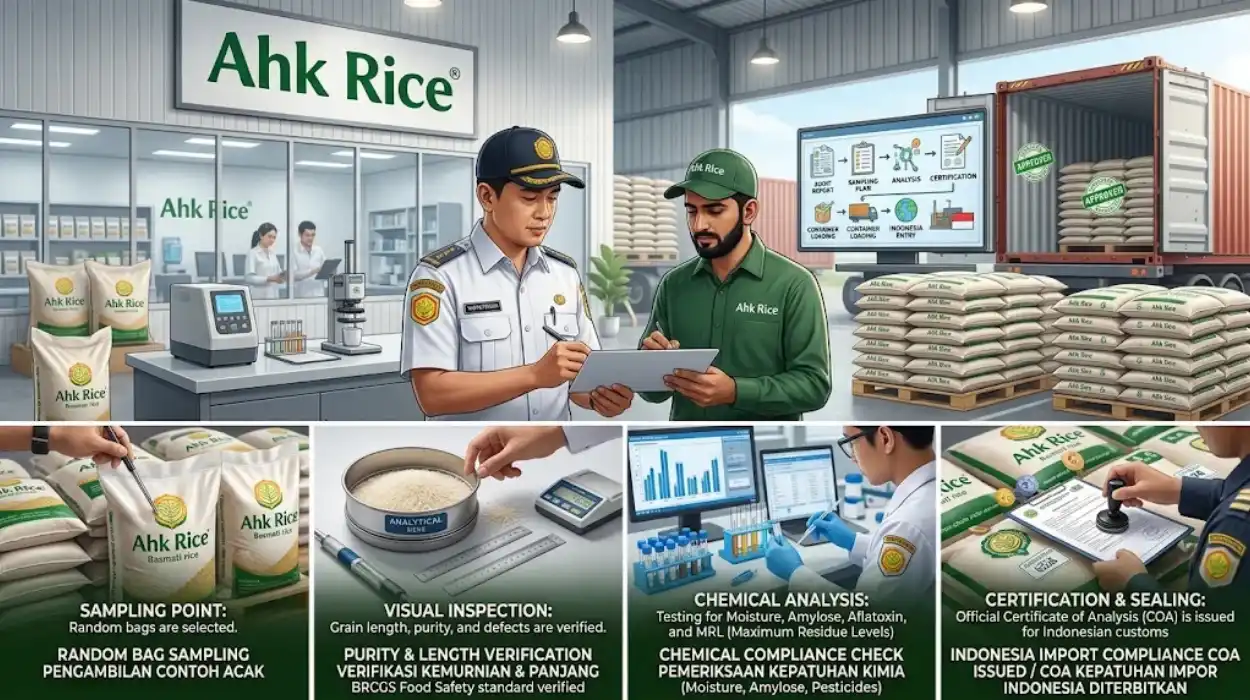
The process follows a defined sequence: inspection booking, specification review, sampling, physical examination, laboratory testing, quantity verification, packaging inspection, document review, loading supervision, and issuance of an inspection report before shipment.
1. Inspection request
The exporter or buyer appoints an inspection company and provides the shipment details. The information includes product name, quantity, packing, container count, destination, purchase specification, and planned loading date.
2. Specification review
The inspector compares the agreed specification with the available rice lot. A commercial specification can include moisture of 13% maximum, broken grains of 2% to 5%, grain length requirements, purity, milling quality, and foreign matter limits.
The exact limits depend on the purchase contract.
3. Sampling
The inspector takes representative samples from the rice lot. Sampling must represent the cargo rather than a single bag.
For example, a 25 kg retail bag does not represent a 500-tonne shipment by itself. Samples are collected across the production lot or container loading process.
4. Physical inspection
The sample is examined for grain appearance, uniformity, broken grains, discolored grains, damaged grains, foreign material, insect damage, and other visible defects.
The inspector also checks the packaging.
5. Laboratory analysis
Laboratory tests verify parameters that visual inspection cannot establish reliably. These include moisture, pesticide residues, heavy metals, microbiological parameters, or other tests required by the buyer or destination regulations.
6. Quantity verification
The inspector checks the declared shipment quantity against the loaded quantity. This involves reviewing packing lists, bag counts, net weight, gross weight, and container information.
7. Container and loading inspection
The container is checked before loading. Inspectors examine cleanliness, dryness, odor, structural condition, and suitability for food cargo.
The loading process is then observed. Bags are checked against the approved packing specification, and the container is sealed after loading.
8. Inspection report
The inspection company records its findings in a report or certificate. The report identifies the shipment, inspection date, sampling method, tested parameters, quantity, and results.
What Does a Pre-Shipment Inspection Check?
A complete inspection checks five connected areas: rice quality, quantity, packaging, container condition, and documentation. Laboratory testing adds measurable evidence for safety and composition parameters that cannot be confirmed through visual inspection alone.
Rice quality
Quality checks normally cover grain size, broken percentage, moisture, purity, damaged grains, foreign matter, and appearance.
For Basmati, grain length and cooked characteristics are important commercial attributes. A buyer purchasing 1121 Basmati does not receive the same commercial specification as a buyer purchasing 1509.
Packaging
Packaging inspection confirms that bags contain the agreed net weight and carry the required markings.
Export packaging can include 5 kg, 10 kg, 25 kg, or 50 kg formats. Private-label shipments require additional checks for artwork, product name, origin information, net weight, and importer details.
Container condition
A food-grade shipment requires a clean and dry container. Previous cargo residues, strong odors, water leakage, damaged flooring, or contamination can create rejection risks.
Documentation
Documents can include the commercial invoice, packing list, certificate of origin, phytosanitary certificate, bill of lading, inspection certificate, certificate of analysis, and other documents required for the shipment.
Why Is Pre-Shipment Inspection Important for Indonesian Rice Importers?
Pre-shipment inspection gives Indonesian importers documented evidence that the Basmati rice loaded in Pakistan matches the agreed commercial specification. It reduces disputes involving quality, quantity, packaging, loading condition, and laboratory results after the shipment reaches Indonesia.
The main benefit is control before the cargo moves internationally.
A quality problem discovered in Pakistan can be corrected before loading. A quality problem discovered after arrival in Indonesia creates additional costs involving unloading, storage, laboratory testing, claims, replacement cargo, or rejected goods.
Inspection also supports supplier verification.
An Indonesian importer purchasing rice from a new Pakistani supplier can compare inspection reports across shipments. This creates a documented quality history.
Inspection is also useful for private-label programs. The buyer can verify that the rice, packaging, markings, and quantity match the approved commercial sample.
What Are the Main Use Cases for Pre-Shipment Inspection?
Pre-shipment inspection applies to new suppliers, private-label shipments, large commercial orders, contract purchases, premium Basmati grades, repeat shipments, and transactions where the buyer requires independent verification before the container leaves Pakistan.
New supplier purchases
A first shipment carries greater verification requirements because the buyer has limited shipment history with the supplier.
Independent inspection establishes a baseline for quality and packing.
Private-label rice
Private-label shipments require consistency between the approved sample and commercial cargo. Inspection verifies product specifications and packaging before export.
Large-volume shipments
Large shipments contain many containers and multiple production lots. Inspection provides structured evidence across the cargo.
Contract-based purchases
A contract can define exact limits for moisture, broken grains, grain length, packaging, and quantity. Inspection compares the shipment against these contractual terms.
Repeat purchases
Repeat inspections help maintain consistency. The importer can compare results between shipments and identify changes in quality, processing, or packaging.
What Happens During Basmati Rice Processing Before Inspection?

Pre-shipment inspection examines rice after processing has produced the export lot. The normal chain includes paddy procurement, cleaning, drying, milling, polishing, grading, Sortex separation, quality testing, packing, and final preparation for container loading.
Paddy procurement
Basmati rice begins as paddy sourced from rice-growing areas of Punjab. Important Pakistani production areas include Gujranwala, Hafizabad, Sheikhupura, Narowal, and Sialkot.
Milling
The paddy passes through milling equipment that removes the husk and produces brown rice. Further processing removes bran layers to produce milled white rice.
Grading and separation
Mechanical grading separates grains according to size and quality. Broken grains are separated from whole kernels.
Sortex processing
Sortex machines remove discolored and unwanted grains using optical sorting technology. Double Sortex processing provides another separation stage for buyers requiring higher visual purity.
Testing
The finished lot is tested against the agreed specification. The results form the technical basis for inspection.
Packing
The approved rice is packed into the required export bags. Labels and packaging are checked before loading.
Container loading
The finished bags are loaded into inspected containers. The inspector records the quantity and loading conditions before sealing.
What Certifications and Documents Support Pre-Shipment Inspection?
Inspection reports work alongside export and food-compliance documents rather than replacing them. Pakistani Basmati shipments can require certificates covering origin, phytosanitary status, analysis, halal status, and other buyer-specific or Indonesian regulatory requirements.
Certificate of Origin
The Certificate of Origin identifies Pakistan as the country of origin. For Basmati rice, origin documentation supports the commercial identity of the shipment.
Phytosanitary certificate
The phytosanitary certificate addresses plant-health requirements for exported agricultural commodities. It is issued through the relevant Pakistani authority after required procedures.
Certificate of Analysis
A COA records analytical results for defined parameters. Depending on the contract, it can include moisture, broken percentage, pesticide residues, heavy metals, microbiological tests, and other parameters.
Halal documentation
Halal certification can support Indonesian market requirements and buyer policies. Indonesian halal compliance is connected with the country’s halal regulatory framework and BPJPH requirements.
Inspection certificate
An independent inspection certificate records the findings of the inspection company. Its exact contents depend on the inspection scope.
What Are Common Problems With Pre-Shipment Inspection?
The most common inspection problems involve unclear specifications, non-representative samples, inconsistent lots, packaging errors, incomplete documents, container contamination, and differences between the approved sample and the final shipment. Each problem requires control before loading.
Unclear specifications
A contract that only says “premium Basmati rice” does not establish measurable acceptance limits.
The buyer should define measurable parameters such as moisture, broken grains, grain length, packing weight, and foreign matter.
Sample and shipment mismatch
An approved commercial sample must represent the final production lot. Substituting another lot after approval creates quality disputes.
Packaging errors
Incorrect bag weight, label information, product description, or importer details can create clearance problems.
Incomplete documents
Inspection does not compensate for missing export or import documentation. Every required document must match the shipment details.
Container contamination
A dirty or odorous container can damage otherwise compliant food cargo. Container inspection therefore occurs before loading.
What Is the Difference Between Pre-Shipment Inspection and Arrival Inspection?
Pre-shipment inspection takes place before the cargo leaves Pakistan, while arrival inspection occurs after the rice reaches Indonesia. Pre-shipment inspection provides an opportunity to correct non-conformities before international transport and before destination-side handling begins.
This timing creates the main distinction.
A pre-shipment inspection can identify incorrect packaging before the container is sealed. It can identify excessive moisture before loading. It can identify a mismatch between the agreed grade and the available lot.
Arrival inspection serves a different purpose. It evaluates cargo after transportation and destination handling.
Both forms of inspection can exist within a buyer’s quality-control system. Pre-shipment inspection controls supplier performance at origin. Arrival inspection verifies the delivered cargo at destination.
How Should Indonesian Importers Define a Pre-Shipment Inspection Scope?
Indonesian importers should define the inspection scope before production or loading begins. The purchase specification should identify rice variety, quality limits, testing requirements, packaging, quantity, container condition, documents, sampling method, and acceptance criteria.
A practical specification should identify:
- Basmati variety, such as 1121, Super Kernel, or 1509
- Processing type, such as white, Steam, or Golden Sella
- Grain-length requirement
- Broken-grain limit
- Moisture limit
- Foreign-matter limit
- Packaging size
- Total shipment quantity
- Laboratory testing requirements
- Container cleanliness requirements
- Required export documents
- Inspection company and inspection stage
- Acceptance or rejection procedure
Clear specifications turn inspection into a measurable control system.
They also create a consistent basis for comparing suppliers and shipments.
What Should Indonesian Importers Request From an Inspection Company?
Indonesian importers should request an inspection scope covering sampling, rice quality, laboratory testing, quantity, packaging, container condition, loading supervision, seal verification, and final reporting. The scope should match the purchase contract and Indonesian import requirements.
The inspection company should receive the complete purchase specification before inspection begins.
The importer should also identify whether the inspection covers only physical quality or includes laboratory analysis.
For laboratory testing, the buyer should specify the required parameters and acceptance limits. For example, a pesticide-residue test requires defined compounds, analytical methods, and applicable maximum residue limits.
Independent inspection therefore works best when the buyer defines the acceptance criteria before the rice reaches the inspection stage.
The commercial question is not simply whether the rice was inspected. The important question is whether the inspection measured the exact attributes that determine acceptance.
Where Should the MOFU Article Link Be Inserted?
Insert the contextual link in the section “What Should Indonesian Importers Request From an Inspection Company?” immediately after explaining that importers should define the inspection scope before inspection begins. The natural anchor should lead readers to the comparison of SGS, Bureau Veritas and Intertek inspection services for Indonesian rice imports.
Recommended placement:
“For importers comparing independent inspection providers, the differences between SGS, Bureau Veritas and Intertek become important when selecting the right inspection scope for Basmati rice shipments.”
Place [Insert Link to MOFU Article] on the phrase “differences between SGS, Bureau Veritas and Intertek”.
Frequently Asked Questions
Is pre-shipment inspection mandatory for every Basmati rice shipment to Indonesia?
No single inspection requirement applies identically to every shipment. The requirement depends on Indonesian regulations, the product, importer obligations, and the purchase contract. Buyers can also require independent inspection as a commercial condition.
Who pays for pre-shipment inspection?
The contract determines payment responsibility. The exporter, importer, or both parties can agree to cover inspection costs. The commercial contract should state the responsible party before inspection is booked.
What does an inspector test in Basmati rice?
Testing depends on the agreed scope. Common parameters include moisture, broken grains, grain length, foreign matter, damaged grains, pesticide residues, heavy metals, and microbiological parameters.
Can pre-shipment inspection prevent customs problems in Indonesia?
It reduces quality and documentation risks but does not replace Indonesian import clearance requirements. Customs, quarantine, food safety, halal, labeling, and other regulatory controls remain separate processes.
Is a Certificate of Analysis the same as an inspection certificate?
No. A COA records analytical test results for specified parameters. An inspection certificate records the broader inspection findings, which can include quality, quantity, packaging, container condition, and loading verification.
When should inspection take place?
Inspection should take place after the export lot is prepared and before shipment leaves Pakistan. Loading supervision should occur while the cargo is being packed into the container.
Can inspection be performed on a commercial sample?
A commercial sample can establish the agreed product specification, but the final shipment requires representative inspection of the actual export lot. Sample approval and pre-shipment inspection serve different quality-control purposes.