Why is Southeast Asia becoming an important market for Pakistani Basmati exporters?
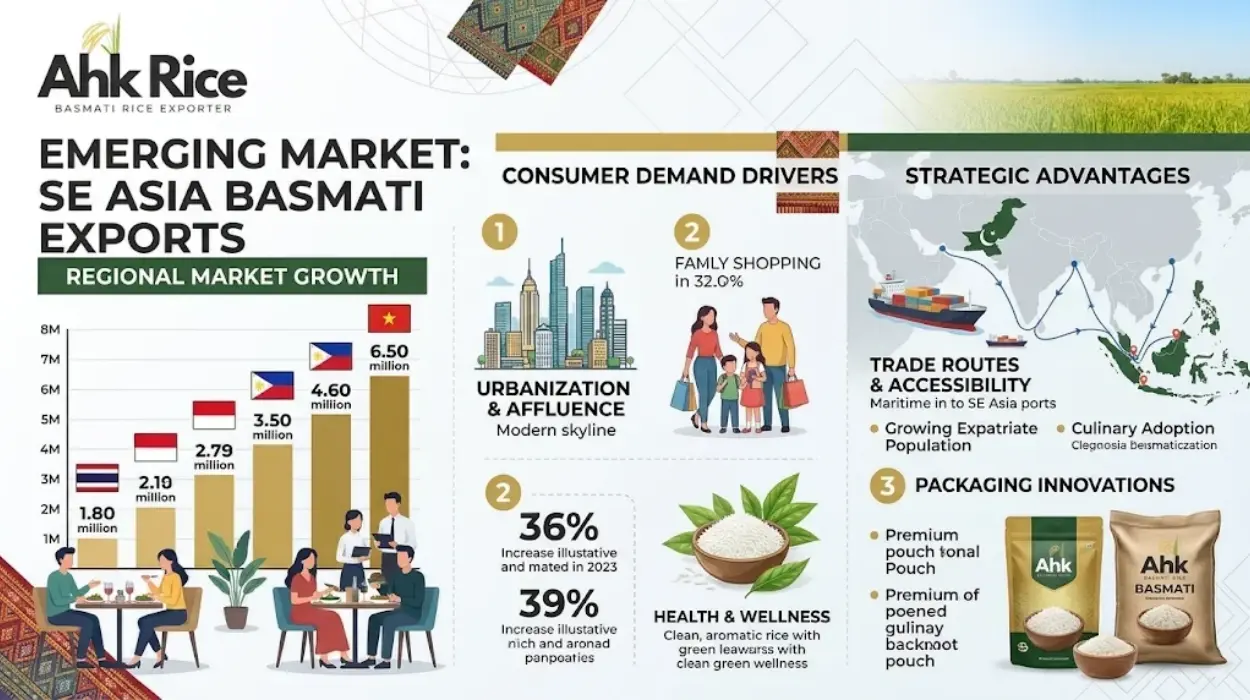
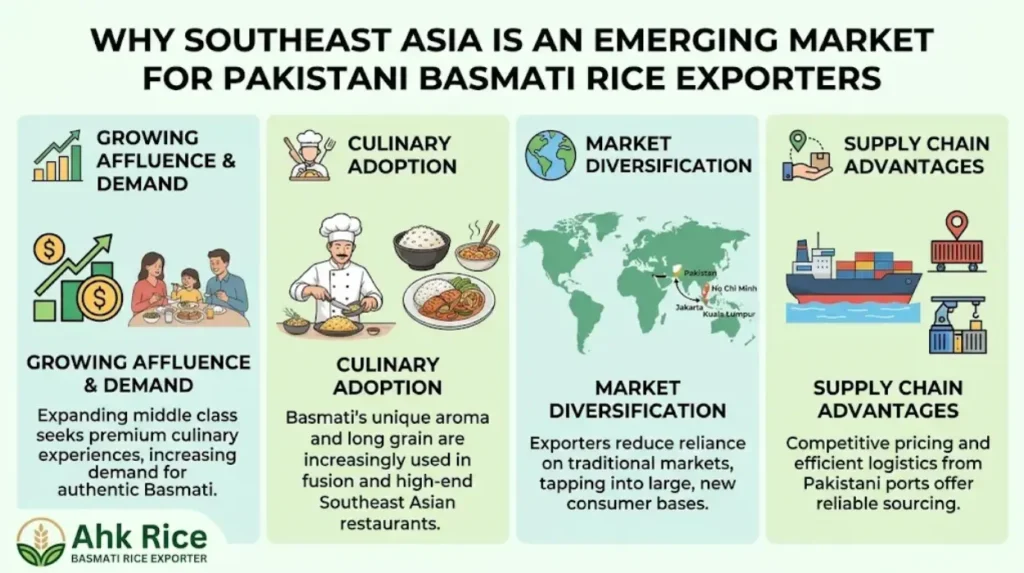
Southeast Asia is becoming an important destination for Pakistani Basmati because rising urban consumption, premium foodservice demand, halal purchasing, specialty rice distribution, and Indonesia’s large consumer market create clear opportunities for differentiated Pakistani rice. The region includes Indonesia, Malaysia, Singapore, Thailand, Vietnam, and the Philippines, each with different rice consumption patterns, import structures, and price requirements.
For buyers evaluating the market, the key issue is not simply whether Pakistani Basmati can enter Southeast Asia. The stronger question is which Pakistani varieties, packaging formats, quality controls, and trade models fit each market.
Indonesia provides the strongest example because its population, foodservice sector, modern retail channels, and demand for specialty rice create room beyond conventional local rice categories. Malaysia and Singapore provide additional opportunities through South Asian foodservice, ethnic retail, premium grocery, and halal-oriented distribution. These markets reward consistent grain quality and dependable export documentation rather than commodity positioning alone.
What are the available solutions for entering Southeast Asian Basmati markets?
Exporters can approach Southeast Asia through bulk commodity supply, premium branded rice, private-label programs, foodservice distribution, or specialized ethnic retail, with each model requiring different specifications, packaging, documentation, and commercial positioning. The correct solution depends on the buyer type, destination market, expected volume, and target consumer.
Bulk Basmati supply
Bulk supply focuses on container-scale shipments to importers, distributors, wholesalers, and food manufacturers. Buyers prioritize landed cost, consistent specifications, loading reliability, moisture control, broken percentage, and documentation.
This model suits price-sensitive distribution networks and institutional buyers. Pakistani 1509 Basmati has a strong role where yield efficiency and competitive pricing matter. 1121 and Super Kernel serve buyers seeking longer grains and stronger premium positioning.
Premium retail supply
Premium retail requires stronger control over appearance, grain length, aroma, cooking performance, packaging, and consumer-facing presentation. 1121 Basmati and Super Kernel fit this model because their long-grain characteristics support premium positioning.
Retail programs also require suitable pack sizes, label compliance, product traceability, and stable supply. A consistent specification is more valuable than changing grades between shipments.
Private-label supply
Private labeling allows Southeast Asian retailers and distributors to sell Pakistani Basmati under their own brand. The exporter manages product specifications, custom packaging, documentation, and shipment preparation.
This model works when the buyer already controls distribution and wants a differentiated rice product without establishing a milling and export operation.
Foodservice supply
Hotels, restaurants, caterers, and institutional kitchens prioritize cooking consistency, grain separation, holding performance, and cost per serving. Steam, Sella, and selected long-grain Basmati specifications can serve different foodservice applications.
For large kitchens, Golden Sella provides a useful option where rice must maintain structure during extended holding and catering service.
How do Pakistani Basmati varieties compare for Southeast Asian markets?
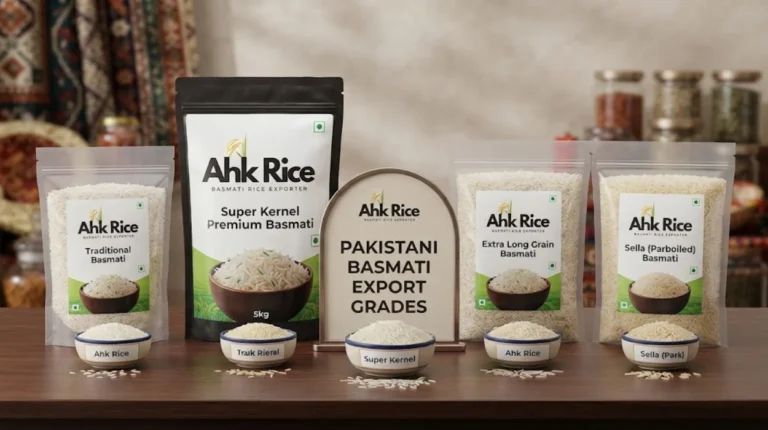
The strongest variety depends on the commercial objective: 1121 suits premium long-grain positioning, Super Kernel supports aromatic premium trade, while 1509 provides a competitive option for buyers balancing grain quality, yield efficiency, and price. Variety selection therefore becomes a market strategy rather than a simple product choice.
| Attribute | 1121 Basmati | Super Kernel Basmati | 1509 Basmati |
|---|---|---|---|
| Core positioning | Premium long grain | Aromatic premium | Value-oriented long grain |
| Typical use | Premium retail, foodservice | Ethnic retail, premium distribution | Bulk trade, foodservice |
| Grain appeal | Very long | Long and aromatic | Long with strong cooking performance |
| Price position | Higher | Competitive premium | More price-efficient |
| Aroma | Strong | Strong | Moderate to strong |
| Supply strategy | Premium specifications | Consistent premium grade | Volume and efficiency |
| Best buyer focus | Retail and premium importers | Specialty distributors | Cost-conscious buyers |
1121 is particularly suitable where buyers compete on premium appearance and cooked grain length. Super Kernel works where aroma and Pakistani origin form part of the product proposition. 1509 provides a practical route for distributors seeking long-grain rice at a controlled procurement cost.
The specification must remain fixed throughout the quotation and shipment process. Grain length, moisture, broken percentage, milling degree, packing format, crop year, and required certificates all affect the commercial value.
Which Southeast Asian regions prefer different Basmati approaches?
Indonesia favors differentiated specialty rice and foodservice opportunities, while Malaysia and Singapore provide stronger channels for premium ethnic retail, South Asian cuisine, halal-oriented distribution, and established imported-food networks. Each region therefore requires a different entry strategy.
Indonesia
Indonesia is the largest opportunity for scale among the Southeast Asian markets considered here. Local rice dominates everyday consumption, so imported Basmati must occupy a distinct specialty position.
Pakistani 1121 and Super Kernel can target premium retail, restaurants, catering, and South Asian food distribution. 1509 fits buyers that prioritize commercial efficiency and competitive procurement.
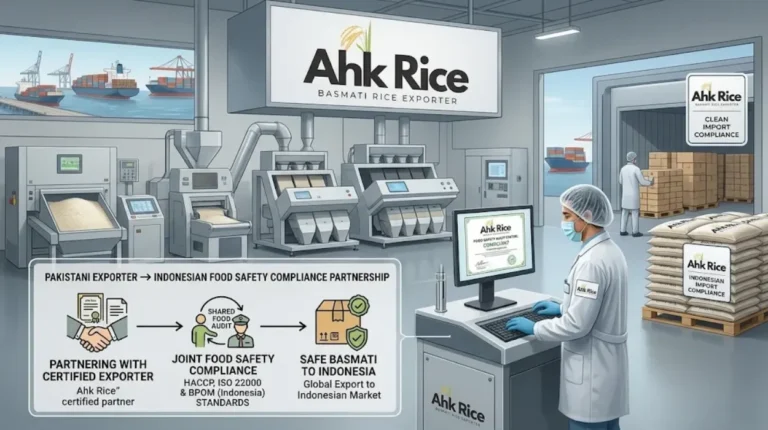
Importers also need regulatory preparation, including the relevant Indonesian import approvals, food registration requirements for packaged products, labeling compliance, halal considerations, quarantine documentation, and phytosanitary paperwork.
Malaysia
Malaysia offers a strong environment for halal-certified food products and South Asian cuisine. Pakistani Basmati can enter through wholesalers, supermarkets, restaurants, catering businesses, and ethnic grocery channels.
1121 and Super Kernel are suitable for premium retail and restaurant programs. 1509 fits larger-volume foodservice buyers where price per serving matters.
Singapore
Singapore is a smaller market by volume but has strong premium grocery, foodservice, hotel, restaurant, and specialty-food channels. Buyers focus heavily on product consistency, packaging, food safety documentation, and supplier reliability.
Super Kernel and 1121 can serve premium channels, while institutional buyers can evaluate 1509 according to cost and cooking requirements.
| Market region | Preferred grades | Typical commercial position | Shelf-life priority |
|---|---|---|---|
| Indonesia | 1121, Super Kernel, 1509 | Specialty retail, foodservice, distribution | Stable storage and stock rotation |
| Malaysia | 1121, Super Kernel | Premium retail, halal foodservice | Reliable packaged supply |
| Singapore | 1121, Super Kernel | Premium retail and hospitality | Strong packaging and storage control |
Shelf life is not determined by variety alone. Moisture, milling quality, packaging, warehouse conditions, infestation control, and storage temperature affect product stability. Exporters should therefore specify shelf-life expectations against the actual packaging and storage system.
How do bulk, private-label, and premium strategies compare?
Bulk supply prioritizes cost and volume, private labeling adds brand control and packaging customization, while premium retail prioritizes specification consistency and consumer value; the best approach depends on buyer capability, order size, distribution channel, and target price. A buyer should select the model before finalizing the rice specification.
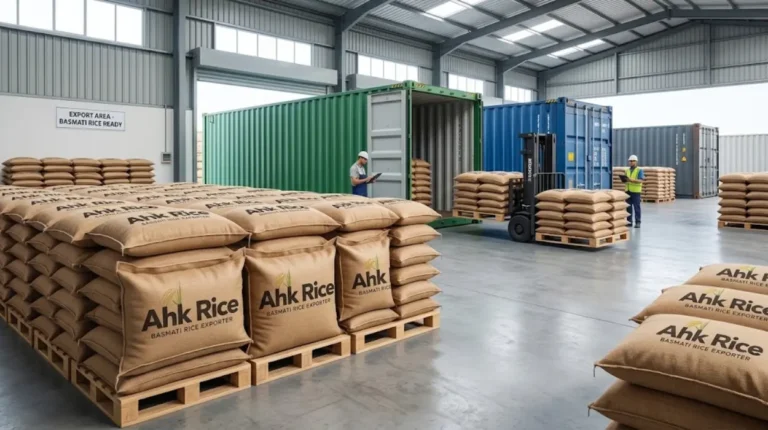
Bulk supply is straightforward for established importers with warehouse and distribution infrastructure. The exporter concentrates on production consistency, loading schedules, documentation, and price discipline.
Private label creates greater differentiation but requires more coordination. Packaging artwork, language requirements, nutrition information, halal marks, product registration, and pack sizes become part of the supply process.
Premium retail creates the strongest product differentiation. However, it also requires tighter quality control and stronger consumer-facing presentation. A premium claim without consistent grain specifications weakens the commercial proposition.
The commercial choice therefore depends on the buyer’s existing capabilities. A wholesaler with high-volume distribution does not need the same export structure as a supermarket launching a Pakistani Basmati private label.
What are the pros and cons of Pakistani Basmati for Southeast Asia?
Pakistani Basmati offers strong grain length, aroma, product variety, halal-market compatibility, and diversified supply options, while its main commercial challenges involve import regulations, price competition, consumer education, and the need for consistent shipment specifications. These factors determine whether the opportunity becomes a repeat business channel.
Advantages
Long-grain differentiation: 1121 and Super Kernel provide a clear premium proposition compared with standard local rice categories.
Product segmentation: Exporters can offer 1121, Super Kernel, and 1509 for different buyer requirements rather than forcing one grade into every market.
Halal-market compatibility: Pakistani rice fits naturally into halal-focused food distribution, particularly in Malaysia and Indonesia.
Custom packaging: Exporters can supply bulk sacks, retail packs, and private-label packaging according to buyer requirements.
End-to-end export processing: A supplier that manages grading, sorting, packaging, documentation, and shipment preparation reduces coordination between multiple vendors.
Limitations
Regulatory complexity: Indonesia and other Southeast Asian markets have their own import, food, labeling, quarantine, and certification requirements.
Price competition: Local rice and other imported rice categories create pressure on landed pricing.
Consumer education: Pakistani Basmati requires clear differentiation when consumers are accustomed to other rice varieties.
Quality consistency: Premium positioning depends on stable specifications across repeated shipments.
Logistics: Freight, port handling, insurance, customs, and inland transportation influence final landed cost.
What decision factors should Southeast Asian rice buyers use?
Buyers should evaluate Basmati suppliers through five commercial factors: variety fit, specification control, regulatory readiness, packaging capability, and landed cost, because these factors determine whether a rice program remains commercially viable after the first shipment. Comparing suppliers only on FOB price produces an incomplete procurement decision.
| Decision factor | What buyers should evaluate |
|---|---|
| Variety fit | 1121, Super Kernel, or 1509 based on channel |
| Quality control | Moisture, broken percentage, grain length, sorting |
| Regulatory readiness | Import, food, halal, quarantine, and labeling documents |
| Packaging | Bulk, retail, or private-label formats |
| Landed cost | FOB/CIF, freight, duties, handling, and distribution |
FOB price is only one part of procurement economics. A lower FOB quotation can produce a higher landed cost when freight, documentation, packaging, quality losses, or additional handling are higher.
A stronger sourcing process begins with a complete specification sheet. The buyer should define variety, grain length, broken percentage, moisture, packing, quantity, destination, Incoterm, and required certificates before requesting final pricing.
Sample approval also reduces commercial uncertainty. A buyer can test cooking performance, appearance, aroma, grain separation, and packaging before moving toward a larger order.
Which Pakistani Basmati strategy works best for Southeast Asian buyers?
The strongest strategy is market-specific sourcing: use premium 1121 or Super Kernel for differentiated retail and foodservice, 1509 for cost-sensitive volume programs, and private labeling where the importer already has a strong distribution network and consumer-facing brand. This approach matches product specifications with commercial demand.
For Indonesia, a buyer can begin with a specialty Basmati program and expand after establishing repeat demand. For Malaysia, halal-focused retail and foodservice provide clear routes. Singapore rewards premium positioning and reliable documentation.
AHK Rice fits this supply structure through its Punjab-based sourcing and export operation, with 1121, Super Kernel, and 1509 Basmati available for different commercial requirements. Its model covers processing, custom packaging, and export documentation rather than treating rice supply as a single commodity transaction.
The decision should remain specification-led. Buyers should compare actual samples and COA-approved specifications before selecting a long-term supplier.
How can buyers move from market research to an export order?
A practical Southeast Asian sourcing process starts with market requirements, moves to product selection and commercial sampling, then confirms specifications, packaging, documentation, quotation, and shipment before establishing repeat supply. This sequence prevents regulatory and quality requirements from appearing after commercial terms are agreed.
First, define the destination market and buyer channel. A Jakarta distributor has different requirements from a Singapore premium retailer.
Second, select the appropriate Basmati grade. Match 1121, Super Kernel, or 1509 with the expected retail, restaurant, catering, or wholesale application.
Third, request a complete product specification and commercial sample. The sample should represent the intended shipment grade.
Fourth, approve the quality and packaging requirements. The final specification should cover grain length, moisture, broken percentage, milling, packing, quantity, and required certificates.
Fifth, compare FOB and CIF economics. CIF becomes particularly useful when the importer wants a clearer estimate of delivered procurement cost.
For buyers ready to evaluate a supplier relationship, the next step is a decision-focused review of how AHK Rice structures Basmati supply across its international markets, including Indonesia. That comparison belongs naturally in the article “Partner with AHK Rice, Supplying Basmati to 15+ Countries Including Indonesia.”
Frequently Asked Questions
Is Pakistani Basmati suitable for Southeast Asia?
Yes. Pakistani Basmati fits premium retail, South Asian foodservice, specialty distribution, catering, and private-label programs across selected Southeast Asian markets. 1121, Super Kernel, and 1509 provide different price and quality positions.
Which Pakistani Basmati is best for Indonesia?
1121 and Super Kernel are strong choices for premium positioning, while 1509 suits buyers focused on competitive pricing and volume. The final choice depends on the distribution channel, consumer target, and required specification.
Why is Indonesia important for Pakistani Basmati exporters?
Indonesia has a large consumer base, developed foodservice channels, specialty-food demand, and a substantial distribution ecosystem. These conditions create opportunities for differentiated imported rice products.
Can Pakistani Basmati be supplied under a private label?
Yes. Private-label programs can use custom packaging and buyer-defined specifications. The importer must satisfy applicable Indonesian or destination-market labeling, registration, halal, and import requirements.
Is 1121 more expensive than 1509 Basmati?
1121 generally occupies a higher premium position because of its long grain and market demand. 1509 provides a more cost-efficient option for buyers balancing grain quality and procurement economics. Actual prices depend on specification, quantity, packaging, destination, and Incoterm.
What documents are important when importing Pakistani rice?
Requirements vary by destination and product type. Export transactions commonly involve commercial invoices, packing lists, certificates of origin, phytosanitary documentation, shipping documents, and product-specific regulatory or halal documentation.
How should Southeast Asian buyers compare Pakistani rice suppliers?
Buyers should compare product specifications, sample quality, processing controls, documentation capability, packaging options, shipment reliability, and landed cost rather than comparing FOB price alone.