Why Hotels Serve 1121 Creamy Sella Basmati Rice
Why do international hotels in Shanghai and Beijing serve 1121 creamy sella basmati rice?
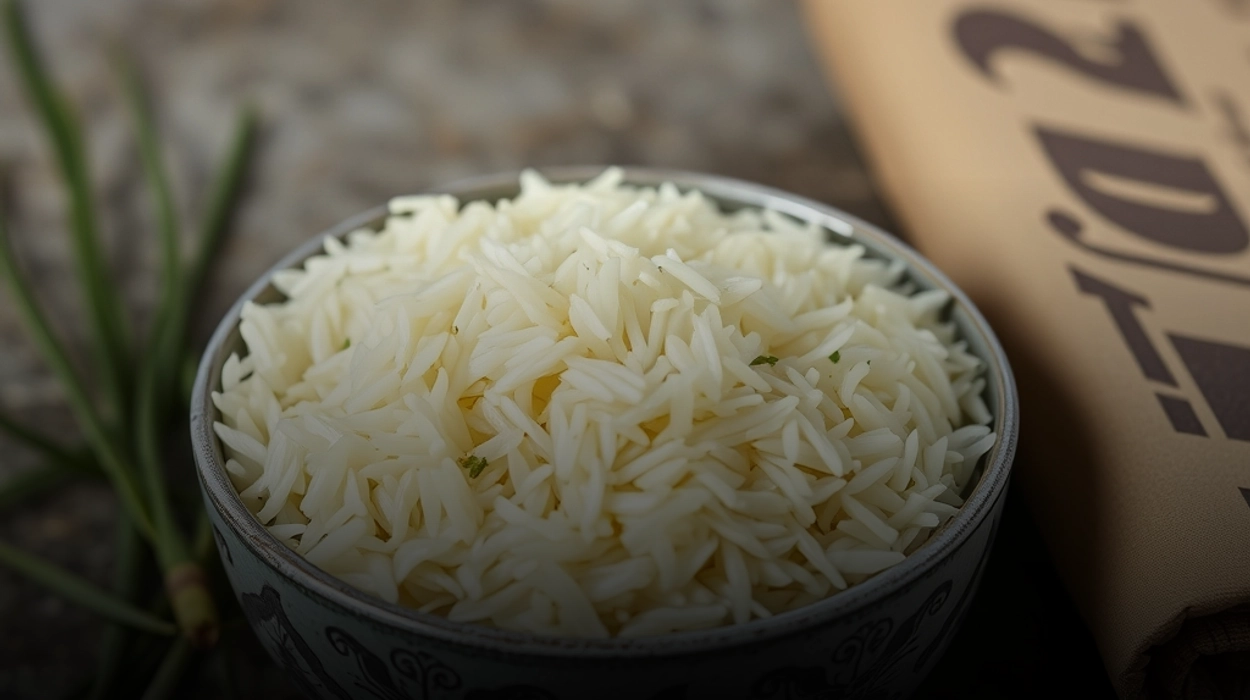
International hotels in Shanghai and Beijing serve 1121 creamy sella basmati because its long grain, gentle aroma, firm cooked texture and reliable volume suit banquet kitchens, buffets and diverse international menus. The rice is a commercial combination of a basmati variety, a parboiling method and a polished appearance rather than a separate botanical species. “1121” identifies an exceptionally long-grain aromatic type, while “sella” means parboiled and “creamy” usually describes its pale ivory colour after processing. These characteristics help chefs produce visually consistent rice that remains separate during service and tolerates holding better than many softer, shorter-grain types.
Hotels in China serve guests from many countries, so rice must complement curries, grilled meats, seafood, vegetables and Chinese-influenced fusion dishes without overpowering them. Properly processed 1121 sella basmati expands substantially during cooking, absorbs sauces while retaining shape and can be prepared in large batches. It is therefore selected for culinary performance, menu versatility and supply consistency, not simply because it has the longest grain.
What is 1121 basmati rice?
1121 basmati is an aromatic, extra-long-grain rice variety recognised in Pakistan and traded internationally for its slender uncooked grain, distinctive aroma and high cooking elongation. It is grown principally in the basmati-producing areas of Pakistan and northern India, where climate, soil, irrigation and traditional selection contribute to its sensory identity. Pakistan’s official specification lists PK 1121 aromatic among approved basmati varieties and sets minimum characteristics for basmati, including a pre-cooked grain length of 6.50 millimetres, a cooked grain length of 12 millimetres and a minimum cooked-to-raw elongation ratio of 1.70.
Basmati aroma is associated mainly with the volatile compound 2-acetyl-1-pyrroline, often abbreviated as 2AP. The intensity of aroma varies with genetics, growing conditions, maturity, storage and processing. Grain length alone cannot prove authenticity because some non-basmati rices are also long. A credible assessment considers variety identity, aroma, grain dimensions, cooking behaviour, purity and traceability together.
Where is 1121 basmati cultivated?
1121 basmati is cultivated in irrigated plains of Pakistan and northern India, where warm days, suitable soils and a cooler ripening period support grain development and aroma. In Pakistan, important basmati-growing areas are concentrated in Punjab, particularly districts within the traditional rice belt. The crop is generally transplanted during the summer monsoon season and harvested in autumn. Farmers manage water carefully because excessive standing water, nutrient imbalance and harvesting delays can reduce grain quality.
Basmati performs best in fertile alluvial soils with adequate drainage and a dependable water supply. Clay loam and loam soils can support the crop when irrigation and nutrient management are controlled. Rice needs warm conditions for vegetative growth, but the grain-filling and maturation stages benefit from a comparatively cooler, drier period. Weather affects plant height, disease pressure, lodging, grain filling and final moisture, so the same named variety can show different quality between seasons and locations.
How is 1121 basmati cultivated and harvested?
Farmers establish the crop, manage water and nutrients, protect it from weeds and pests, then harvest when the panicles mature and grain moisture reaches a suitable level for safe handling. Production may begin with a nursery followed by transplanting, although direct seeding is also used in some systems. Transplanting can help establish a uniform stand, while direct seeding may reduce labour and water use when field conditions are appropriate. Variety purity is protected through certified seed, field selection and control of volunteer plants or unwanted varieties.
During growth, farmers regulate irrigation rather than assuming that permanent deep flooding is always necessary. Nitrogen is applied according to soil and crop requirements because excess nitrogen can increase lodging and delay maturity. At harvest, mature panicles are cut mechanically or manually, then threshed to separate paddy from straw. The harvested paddy is cleaned and dried promptly; poor drying can encourage mould, fermentation, discolouration and reduced milling quality.
How is creamy sella basmati processed?
Creamy sella basmati is produced by cleaning paddy, soaking it, heat-treating it, drying it, milling it and grading it so the finished rice has a pale creamy colour and firm, separate cooked grains. The process starts with incoming paddy inspection. Operators check variety, foreign material, moisture, insect damage, immature kernels and admixture before mechanical cleaning removes stones, straw, dust and other impurities.
What happens during parboiling?
Clean paddy is soaked in water so moisture moves into the grain. It is then exposed to steam or hot water, which gelatinises part of the starch and hardens the kernel structure. The heat treatment can improve milling recovery and reduce breakage, while also changing the rice’s colour, texture and cooking response. The parboiled paddy is dried in controlled stages to reach a safe storage moisture level and avoid cracking caused by excessively rapid drying.
How does milling create the creamy appearance?
After drying and tempering, husk is removed to produce brown rice. Further milling removes the bran layers and germ, creating white rice. Polishing may improve surface brightness, although sella rice generally retains a pale ivory or creamy tone rather than the bright white appearance associated with some fully polished non-parboiled rice. Sorters then remove discoloured, chalky, damaged and foreign kernels.
Length graders separate whole kernels from brokens, and optical sorters identify colour defects that mechanical grading may miss. Depending on the specification, the product may be aged before packing to stabilise moisture and improve cooking performance. Finally, the rice is weighed, packed, sealed, coded and stored under conditions that protect it from moisture, pests and contamination.
What do 1121, sella and creamy mean on a rice specification?
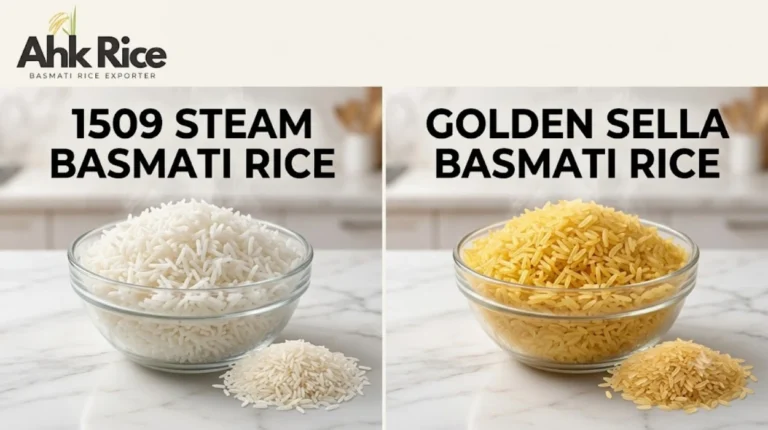
1121 is the variety or commercial type, sella describes parboiling, and creamy describes appearance; these terms refer to different parts of the product identity. Confusing them can lead buyers to compare unlike products. A raw 1121 product can be white, steamed or parboiled, while sella can be made from different basmati varieties. Creamy sella usually indicates a parboiled product with a light ivory colour, but the exact shade depends on soaking, heat treatment, drying, polishing and grading.
Commercial specifications commonly state grain length, moisture, broken percentage, foreign matter, damaged kernels, immature kernels, chalky grains, crop year, packing format and tolerance levels. A “100% whole grain” claim normally refers to the absence or low level of broken rice within the declared tolerance, not to every kernel being identical in shape. Buyers should also distinguish varietal purity from physical appearance because an attractive lot may still contain admixture.
Why does 1121 sella rice suit hotel kitchens?
1121 sella rice suits hotel kitchens because it cooks into long, separate grains, withstands batch preparation and presents consistently across buffets, banquets and room-service dishes. Parboiling firms the kernel and reduces the likelihood of mushiness when cooking is carefully controlled. The long slender grain gives a distinctive visual impression, while the aroma remains compatible with both strongly seasoned and moderately flavoured dishes. Its cooked structure can also tolerate a period of holding better than delicate, highly soft-cooking rice.
Hotels still need correct procedures. Rice should be rinsed according to the supplier’s guidance, soaked when required, and cooked with a measured water ratio. Overcooking, excessive stirring or prolonged hot holding can make any rice sticky or dry. Food-service teams must cool, store and reheat cooked rice safely because Bacillus cereus spores can survive cooking and multiply if rice remains for too long at unsafe temperatures.
What quality standards matter for exported basmati?
Export quality depends on identity, purity, grain measurements, moisture, defects, food safety, packaging integrity and documentation rather than appearance alone. Pakistan’s published basmati specifications include minimum raw grain length, slenderness, typical aroma, soft gel consistency, non-sticky cooked texture, amylose content and cooked elongation. Such measurements help convert sensory expectations into assessable criteria. Individual contracts may impose tighter limits for brokens, moisture, chalky grains or discolouration.
Common defects include yellow or damaged kernels, insect damage, fermentation odour, excessive chalkiness, foreign matter, high broken content, moisture migration and varietal admixture. Poorly controlled parboiling can create dark grains, uneven colour or a cooked texture that is too hard. Excessive polishing may improve appearance but can alter yield and remove nutrient-rich outer layers. Representative sampling and laboratory testing are essential because a small visual sample may not represent an entire consignment.
Which food safety requirements apply to international shipments?
Rice shipments must comply with the exporting country’s controls and the importing market’s rules for contaminants, residues, traceability, labelling, hygiene, packaging and phytosanitary documentation. Exporters commonly use hazard-based food-safety systems such as HACCP, together with prerequisite hygiene programmes and accredited laboratory testing where required by the contract or destination. Depending on the market, testing may cover pesticide residues, mycotoxins such as aflatoxins, heavy metals, microbiological hazards and unauthorised treatments.
Importers and hotel suppliers also check lot coding, country of origin, net weight, allergen statements where relevant, best-before information, storage instructions and packaging suitability. Plant-health authorities may require a phytosanitary certificate for paddy or certain rice products. Requirements differ between jurisdictions and can change, so compliance should be verified against the destination authority and the current purchase specification before dispatch. Pakistan has highlighted phytosanitary certification and residue control as priorities for maintaining rice export access.
Which countries import Pakistani basmati rice?
Pakistani basmati is exported to markets across the Middle East, Europe, North America, Africa and Asia, with demand shaped by cuisine, diaspora consumption, retail and food-service purchasing. Gulf countries are important destinations because rice is widely used in biryani, kabsa, mandi and other rice-based dishes. European markets apply detailed contaminant, residue and labelling controls, while North American buyers often focus on identity, safety, consistency and retail presentation.
Pakistan’s official trade data records basmati separately from other rice categories, and USDA reporting projected robust Pakistani rice exports for 2025/26 while noting the importance of quality and phytosanitary standards. Export volumes vary with harvest size, domestic prices, freight costs, exchange rates, import policy and competition from India and other origins. A hotel in Shanghai or Beijing may purchase through an importer, distributor or food-service consolidator, so the country of final service does not necessarily identify the rice’s country of origin.
Are common assumptions about 1121 creamy sella basmati correct?
1121 is not automatically the best rice for every dish, creamy colour does not prove authenticity, and longer grain does not guarantee better cooking performance. The correct product depends on menu style, cooking equipment, holding time, budget and the required aroma and texture. A highly aromatic aged white basmati may suit one dish, while firm parboiled sella may perform better in a buffet or banquet operation.
Another misconception is that parboiling means the rice has been precooked for immediate serving. Sella paddy is heat-treated before milling, but the finished rice still requires normal cooking. It is also incorrect to assume that all creamy sella rice has identical nutritional properties: milling removes bran and germ, while parboiling can influence nutrient migration and retention. Product labels, laboratory specifications and cooking trials provide more reliable evidence than grain length or colour alone.
FAQs about 1121 creamy sella basmati rice
Is 1121 basmati rice the longest grain available?
1121 is among the longest widely traded basmati types, but “longest” is not a complete quality measure. Grain length, slenderness, cooked elongation, aroma, purity, moisture and broken percentage all affect performance. A shorter, well-processed lot can cook more consistently than a longer lot with poor drying, high admixture or excessive brokens.
What is the difference between sella and steamed basmati rice?
Sella rice is parboiled through soaking and heat treatment before drying and milling. Steamed basmati is also heat-treated, but commercial terminology and processing intensity can differ between suppliers. Both may produce firmer grains and higher cooking tolerance than raw-milled rice. Buyers should request the exact process description rather than relying only on the label.
Does creamy sella basmati contain artificial colour?
Creamy sella basmati should obtain its pale ivory appearance from the paddy variety and controlled parboiling and milling process, not from undisclosed colouring. The legal position depends on the destination market, and additives must be declared where used. Buyers should check ingredient declarations, supplier specifications and laboratory or regulatory documentation if colour treatment is a concern.
How should hotels cook 1121 creamy sella basmati?
Hotels should follow the product specification, rinse as advised, use a measured water ratio and allow appropriate resting after cooking. Large batches require uniform heat distribution and careful control of stirring and holding time. Kitchen teams should validate the method with a cooking trial because soaking duration, equipment, altitude, batch size and desired firmness change the result.
Is Pakistani 1121 basmati suitable for Chinese hotel menus?
Pakistani 1121 basmati can suit Chinese hotel menus when the kitchen wants long, separate grains for international buffets, biryani, pilaf, grilled dishes or fusion recipes. It is not a replacement for every Chinese rice style, particularly dishes requiring sticky short-grain texture. Selection should match the recipe, guest expectations, holding method and verified import compliance.