1121 Steam vs 1121 White Basmati: What Is the Real Difference for Buyers?
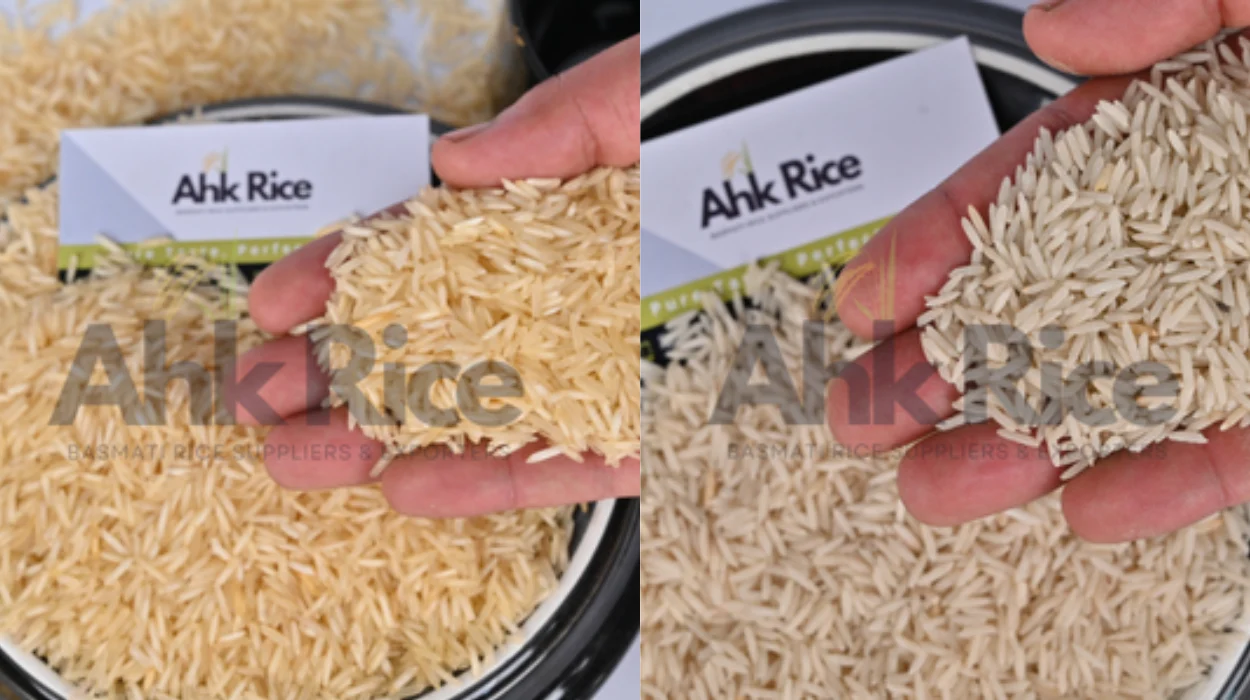
1121 Steam Basmati offers higher durability and better cooking stability, while 1121 White Basmati delivers a softer texture and lower cost. Here is why: steam processing strengthens grain structure, while raw milling preserves natural softness but reduces shelf life and break resistance.
1121 Basmati rice defines export-grade long-grain rice cultivated in Punjab. Buyers compare steam and white processing because both grades originate from the same paddy but serve different markets and cooking requirements. To understand the full product foundation, review this educational breakdown of 1121 basmati rice before comparing grades.
What is the real difference between 1121 steam and 1121 white basmati?
1121 Steam Basmati undergoes controlled heat treatment without full parboiling, while 1121 White Basmati remains untreated after milling, resulting in softer grains, lower moisture resistance, and shorter shelf life.
1121 Steam Basmati passes through a light steaming process after dehusking. Millers apply moisture and heat, then dry the grain to stabilize structure. This process strengthens the kernel without changing color significantly.
1121 White Basmati skips this step. Millers dehusk, polish, and sort the grain directly. The result is a natural white appearance with a softer bite.
Processing Flow Comparison
Steam Process
- Clean the paddy
- Dehusk the grain
- Apply controlled steam
- Dry the grain
- Polish the rice
- Sort by length
- Grade by quality
White (Raw) Process
- Clean the paddy
- Dehusk the grain
- Polish the rice
- Sort by length
- Grade by quality
Steam processing adds structural strength. White processing preserves natural softness. This difference defines all downstream buyer decisions, which leads directly into specification comparison.
How do 1121 steam and white basmati compare in specifications?
Steam rice delivers stronger grains, lower breakage, and longer storage stability, while white rice provides softer texture, brighter color, and lower price per metric ton.
Specification Comparison Table
| Attribute | 1121 Steam Basmati | 1121 White Basmati |
|---|---|---|
| Grain Length | 8.20–8.40 mm | 8.10–8.30 mm |
| Broken Ratio | 1–2% | 2–5% |
| Moisture Content | 12–13% | 13–14% |
| Color | Off-white / creamy | Bright white |
| Cooking Expansion | 2.5x length | 2.0–2.2x length |
| Texture | Firm, separate grains | Soft, slightly sticky |
| Shelf Life | 12–18 months | 6–12 months |
Steam rice maintains grain integrity because heat treatment seals micro-cracks. White rice breaks more during handling because kernels remain untreated.
Steam rice performs better in bulk logistics. White rice performs better in immediate consumption markets. This technical comparison leads to real buyer use cases across regions.
Which markets prefer steam vs white basmati?
Gulf and African markets prefer steam basmati for durability and bulk cooking, while European and local Asian markets prefer white basmati for softness and immediate consumption quality.
Market Preference Breakdown
Gulf Region (UAE, Saudi Arabia, Qatar)
- Prefer Steam Basmati
- Require bulk cooking stability
- Store rice in high-temperature warehouses (35–45°C)
- Demand low breakage during transport
Steam rice performs better in Gulf climates because heat-treated grains resist moisture fluctuation.
African Markets (Somalia, Kenya, Senegal)
- Prefer Steam Basmati
- Focus on price-to-volume ratio
- Require long storage cycles
Steam rice maintains quality during long shipping routes. White rice degrades faster in non-controlled storage.
European Markets (UK, Germany)
- Prefer White Basmati
- Demand soft texture and aroma
- Require retail packaging quality
White rice matches consumer cooking habits. Buyers prioritize texture over durability.
South Asian Local Markets
- Prefer White Basmati
- Focus on fresh consumption
- Value aroma and softness
These regional preferences explain pricing differences and guide buyer decisions, which leads to cost comparison.

What is the price difference per metric ton?
1121 Steam Basmati costs $30–$80 more per metric ton than White Basmati because of additional processing, lower breakage, and higher export durability.
Price Comparison (Indicative Export Range)
| Grade | Price per MT (USD) |
|---|---|
| 1121 Steam Basmati | $950–$1,150 |
| 1121 White Basmati | $880–$1,070 |
Steam rice commands a premium because processors apply additional steps and achieve higher head rice yield.
White rice remains cheaper because milling skips heat treatment and results in slightly higher broken ratios.
Price variation depends on:
- Crop year yield (source: REAP export data, December 2025)
- Freight rates
- Packaging requirements
Price alone does not determine value. Cooking performance and storage define real cost efficiency, which leads to cooking comparison.
How do cooking properties differ between steam and white basmati?
Steam basmati produces longer, separate grains after cooking, while white basmati produces softer, slightly sticky grains with stronger aroma release.
Cooking Performance Comparison
| Property | Steam Basmati | White Basmati |
|---|---|---|
| Grain Separation | High | Medium |
| Stickiness | Low | Moderate |
| Aroma Release | Moderate | High |
| Water Absorption | Lower | Higher |
| Cooking Time | Longer | Shorter |
Steam rice suits biryani and large-scale catering because grains remain separate after cooking.
White rice suits home cooking because softness improves mouthfeel.
Cooking behavior directly impacts buyer segment selection, which leads to use-case decisions.
What are the pros and cons of each option?
Steam basmati offers durability and consistency, while white basmati offers softness and affordability, making each suitable for different buyer priorities.
1121 Steam Basmati
Advantages
- Strong grain structure
- Lower breakage during shipping
- Longer shelf life
- Better performance in bulk cooking
Disadvantages
- Slightly higher price
- Less soft texture
- Reduced aroma intensity
1121 White Basmati
Advantages
- Soft texture
- Strong aroma
- Lower cost
- Preferred for retail markets
Disadvantages
- Higher breakage risk
- Shorter shelf life
- Sensitive to storage conditions
Example:
Steam rice performs better in UAE warehouses at 40°C for 12–18 months. White rice requires faster turnover within 6–9 months.
These trade-offs define buyer decision frameworks, which leads to structured selection criteria.
Which method works best for different buyer cases?
Steam basmati works best for bulk exporters and hot-climate markets, while white basmati works best for retail brands and quick-distribution markets.
Buyer Type Recommendations
Bulk Importers
Choose Steam Basmati
Because long storage and transport require strong grains.
Retail Brands
Choose White Basmati
Because consumers prefer softness and aroma.
Catering Companies
Choose Steam Basmati
Because grains must remain separate after large-scale cooking.
Supermarkets
Choose White Basmati
Because shelf turnover is faster and packaging highlights appearance.
Government Tenders
Choose Steam Basmati
Because durability reduces loss during distribution.
Each case aligns with functional requirements, not preference alone. This leads to a structured decision framework.
What decision factors should buyers evaluate?
Buyers must evaluate storage conditions, cooking application, price sensitivity, shelf life requirements, and market preference before selecting steam or white basmati.
Decision Framework Table
| Factor | Choose Steam | Choose White |
|---|---|---|
| Storage Duration | Long-term | Short-term |
| Climate | Hot / humid | Controlled / mild |
| Cooking Type | Bulk / catering | Home / retail |
| Budget | Higher budget | Lower budget |
| Customer Preference | Firm grains | Soft texture |
Buyers who finalize specifications at this stage typically move to pricing and container planning. Review the full breakdown of 1121 steam basmati wholesale price container to evaluate cost per MT, loading capacity, and shipment timelines.
What are the available solutions for buyers?
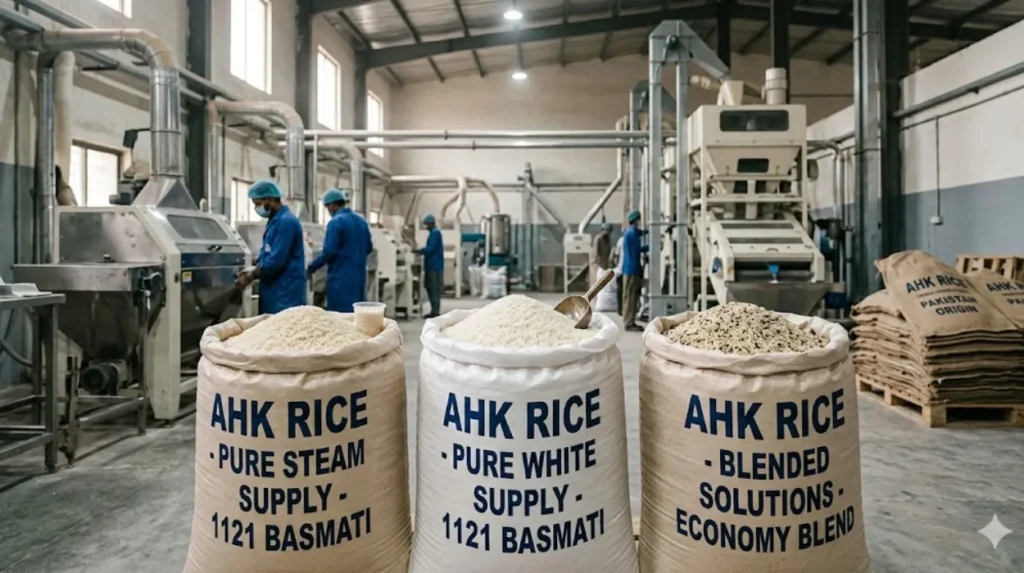
Buyers can choose between steam, white, or blended basmati solutions depending on price targets, cooking needs, and storage conditions.
Solution Types
Pure Steam Supply
- High durability
- Export-focused
- Long shelf life
Pure White Supply
- Retail-focused
- Soft texture
- Lower cost
Blended Solutions
- Mix steam and white ratios
- Balance cost and performance
- Customize for specific markets
Example:
African distributors often procure blended grades to reduce cost while maintaining acceptable durability.
These solution types allow buyers to optimize both performance and budget, completing the comparison journey.
Final Buyer Insight
1121 Steam Basmati delivers logistics efficiency and cooking consistency, while 1121 White Basmati delivers consumer appeal and cost advantage.
Buyers who export or store rice long-term should prioritize steam. Buyers who sell directly to consumers should prioritize white.
Frequently Asked Questions
What is the main difference between 1121 steam and white basmati rice?
1121 Steam Basmati is heat-treated for stronger grains and longer shelf life, while 1121 White Basmati is untreated, offering softer texture and lower cost. Steam processing improves durability during export, while white rice prioritizes aroma and softness for retail consumption.
Which is better for export: steam or white basmati rice?
1121 Steam Basmati is better for export due to lower breakage, longer shelf life, and resistance to heat during shipping. Exporters choose steam rice when shipping to hot regions like the Gulf or Africa because it maintains grain quality over long transit periods.
Is there a price difference between 1121 steam and white basmati?
1121 Steam Basmati typically costs $30–$80 more per metric ton than White Basmati due to additional processing and higher head rice yield. Buyers select based on total value, not just price, because steam rice reduces losses during storage and transport.
Which basmati rice is better for cooking: steam or white?
1121 Steam Basmati is better for biryani and bulk cooking, while White Basmati is better for soft-texture dishes and home consumption. Steam rice produces separate, long grains, while white rice absorbs more water and delivers a softer mouthfeel.
How do I choose between steam and white basmati for my market?
Choose Steam Basmati for hot climates, long storage, and bulk supply, and choose White Basmati for retail markets, quick turnover, and consumer preference for softness. Evaluate storage conditions, customer demand, and cooking application before selecting the grade.