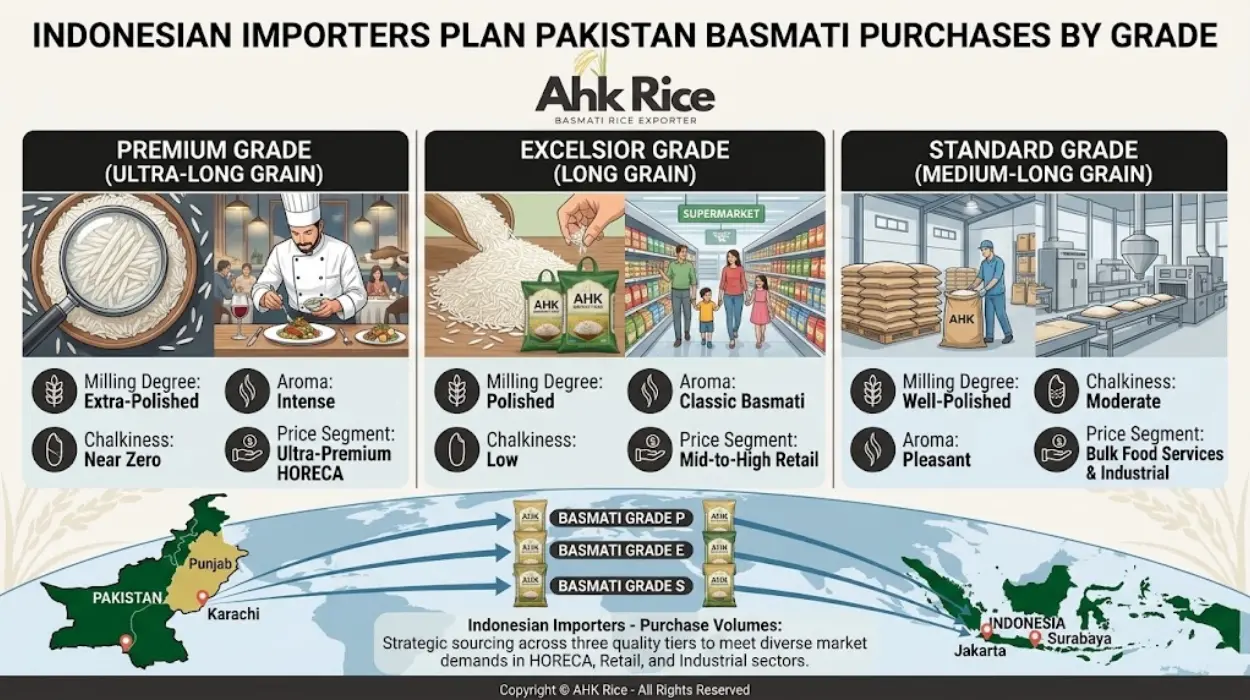
How Should Indonesian Importers Plan Pakistan Basmati Purchases by Grade?
Indonesian importers should plan Pakistan Basmati purchases by matching each grade to its cooking performance, customer segment, storage conditions, and landed cost. 1121 Steam suits premium retail and restaurants, Super Kernel serves aroma-focused buyers, and 1509 Steam offers a practical mid-premium option. Here is why: each grade delivers different grain characteristics, processing benefits, and purchasing economics.
Grade selection becomes more effective when importers understand how Pakistani Basmati rice is cultivated, processed, and prepared for export. The guide How Pakistan Basmati Rice Is Processed and Graded for Export explains the foundation behind grain length, milling quality, and processing types. Indonesian buyers can use that knowledge to build purchase specifications instead of selecting rice by variety name alone.
What Are the Available Pakistan Basmati Rice Grades for Indonesian Importers?
1121 Steam, 1121 Sella, Super Kernel, and 1509 Steam provide four practical purchasing options for Indonesian importers. Each grade serves a different balance of grain appearance, cooking texture, aroma, processing cost, and market positioning. A grade defines the rice variety and its processing method, while a specification defines the quality requirements within that grade.
1121 Steam Basmati Rice
1121 Steam Basmati is a long-grain rice processed through steaming before drying and milling. The process strengthens the grain structure and supports a firm, separate cooked texture. Its long appearance makes it suitable for premium retail packs, restaurants, and foodservice buyers seeking visual appeal.
1121 Sella Basmati Rice
1121 Sella Basmati is parboiled rice produced through soaking, steaming, drying, and milling. The process improves grain firmness and reduces breakage during cooking. Sella rice suits buyers who prioritise consistent cooked grains and practical handling across wholesale and foodservice operations.
Super Kernel Basmati Rice
Super Kernel Basmati is a traditional Pakistani Basmati variety recognised for its aroma, slender grain, and characteristic cooking quality. The variety suits restaurants and premium consumers who value fragrance alongside appearance. Processing type determines whether the purchase uses Steam, Sella, or another specification.
1509 Steam Basmati Rice
1509 Steam Basmati is a long-grain variety processed through steaming. It offers a useful balance between grain appearance, cooking performance, and purchase cost. Indonesian distributors can position it in mid-premium retail and foodservice channels where buyers require quality without the highest premium.
What Does a Grade Specification Include?
A grade specification defines measurable quality requirements. Indonesian importers should record the variety, processing type, grain length, broken percentage, moisture, foreign matter, packaging, and crop year. These details convert a broad product request into a procurement specification that exporters can inspect and quote accurately.
How Do Pakistan Basmati Rice Grades Compare?
1121 Steam leads for premium appearance, Super Kernel leads for traditional aroma, and 1509 Steam provides a balanced mid-premium purchasing option. The comparison below separates variety characteristics from processing characteristics. Actual specifications depend on the agreed contract and inspection results.
| Attribute | 1121 Steam | 1121 Sella | Super Kernel | 1509 Steam |
|---|---|---|---|---|
| Rice variety | 1121 | 1121 | Super Kernel | 1509 |
| Processing method | Steamed | Parboiled | Steam or Sella | Steamed |
| Grain appearance | Very long, slender | Long, firm | Slender, traditional | Long, slender |
| Cooked texture | Firm, separate | Firm, separate | Aromatic, separate | Firm, separate |
| Aroma profile | Moderate to characteristic | Moderate to characteristic | Strong traditional aroma | Moderate to characteristic |
| Main buyer segment | Premium retail, restaurants | Wholesale, foodservice | Aroma-focused restaurants | Mid-premium retail |
| Purchase priority | Appearance and texture | Cooking consistency | Aroma and variety identity | Value and appearance |
Why Does Processing Matter More Than Variety Name?
Processing changes how rice behaves during cooking, storage, and distribution. Steam processing uses heat to strengthen the grain structure. Parboiling combines soaking, steaming, and drying to improve firmness. Traditional milling preserves the characteristic identity of the variety.
Indonesian importers should compare processing types within the same variety. A 1121 Steam purchase and a 1121 Sella purchase share the same variety but deliver different cooking characteristics. A 1509 Steam purchase provides a different variety profile and a separate commercial positioning.
Which Quality Attributes Should Buyers Specify?
Indonesian buyers should define grain length, broken percentage, moisture, foreign matter, and milling quality before requesting prices. These attributes influence cooking yield, visual consistency, storage performance, and customer satisfaction.
A specification such as “1121 Steam, 8.3 mm, 5% broken, 12.5% moisture” provides a clearer purchasing basis than “premium Basmati rice.” The exporter can inspect the requested attributes and prepare a comparable quotation.
Which Pakistan Basmati Rice Grades Suit Different Indonesian Market Regions?
Java and Sumatra require different purchasing strategies because retail positioning, restaurant demand, distribution distance, and storage conditions influence grade selection. Importers should match grades to the customer segment instead of applying one specification across Indonesia.
Java: Premium Retail and Restaurant Demand
Java includes major commercial centres such as Jakarta, Surabaya, and Bandung. Premium retail and restaurant buyers in these markets can prioritise long grain appearance, aroma, and cooking consistency. 1121 Steam suits premium retail packs that display long, separate grains after cooking.
Super Kernel suits restaurants that build their menu around traditional Basmati aroma. Its characteristic fragrance supports biryani, pulao, and other rice dishes where aroma forms part of the dining experience. Importers should specify the cooking texture alongside the aroma requirement.
1509 Steam provides an alternative for distributors targeting mid-premium consumers. Its variety identity and long-grain appearance support a more accessible premium position. The purchase specification should include grain length, broken percentage, and packaging size.
Sumatra: Wholesale and Foodservice Distribution
Sumatra includes major commercial markets such as Medan and Pekanbaru. Wholesale and foodservice buyers often prioritise cooking consistency, reliable supply, and practical storage. 1121 Sella suits these operations because parboiling supports firm grains and reduces cooking breakage.
1121 Steam also serves foodservice buyers seeking long-grain presentation. Restaurants can use it for biryani and rice dishes where grain separation matters. Super Kernel suits restaurants that prioritise aroma over the lowest purchase cost.
1509 Steam provides a balanced choice for distributors serving mixed customer groups. Importers can purchase one grade for mid-premium retail and selected foodservice accounts. A separate premium grade remains necessary for customers demanding stronger aroma or longer grain appearance.
How Should Price Per Metric Ton Be Compared?
Price per metric ton should be compared against the same grade, specification, packing format, Incoterm, and shipment quantity. A lower FOB price does not automatically produce a lower landed cost in Indonesia. Freight, insurance, port charges, duties, and inland delivery change the final purchasing figure.
The following example uses illustrative planning prices, not live supplier quotations.
| Grade | Illustrative FOB price per MT | Main commercial use |
|---|---|---|
| 1121 Steam | US$1,050 | Premium retail and restaurants |
| 1121 Sella | US$1,020 | Wholesale and foodservice |
| Super Kernel | US$1,080 | Aroma-focused restaurants |
| 1509 Steam | US$980 | Mid-premium retail |
A US$70 difference per metric ton becomes US$1,400 across a 20 MT shipment. That difference matters when importers calculate margins across several containers. Buyers should compare landed cost per kilogram rather than FOB price alone.
How Should Shelf Life Influence Grade Selection?
Shelf life depends on moisture, processing quality, packaging, warehouse conditions, and storage duration. Properly processed and packed Basmati rice can maintain quality for an extended period under suitable storage conditions. Importers should use the supplier’s verified shelf-life specification instead of applying one universal period to every grade.
A practical planning comparison is:
| Grade | Storage planning priority | Best application |
|---|---|---|
| 1121 Steam | Moisture and temperature control | Premium retail |
| 1121 Sella | Long distribution and cooking consistency | Wholesale |
| Super Kernel | Aroma retention and sealed packaging | Restaurants |
| 1509 Steam | Inventory rotation and cost control | Mid-premium retail |
For example, a distributor holding rice for six months should verify moisture and packaging integrity before choosing a grade. A restaurant receiving regular shipments can prioritise cooking performance and aroma over extended inventory duration.
Which Purchasing Method Works Best for Indonesian Importers?
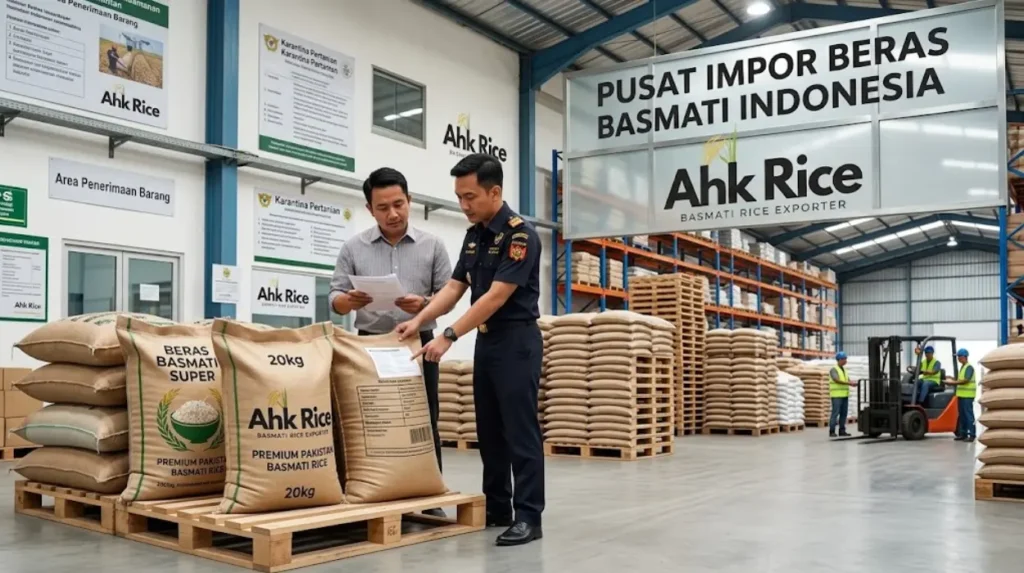
The best method combines grade-based forecasting, supplier sampling, specification approval, and shipment planning. This approach reduces purchasing errors because each grade receives a defined commercial purpose. Importers can then compare quotations using the same technical and logistical requirements.
Method 1: Single-Grade Procurement
Single-grade procurement uses one variety and processing type across the purchasing programme. A distributor may purchase 1121 Steam for all premium retail accounts. This simplifies inventory management and packaging design.
The method works when customer demand remains consistent. It reduces the number of product specifications and simplifies quality inspections. Its limitation appears when restaurants or wholesalers require different aroma, texture, or price positions.
Method 2: Multi-Grade Procurement
Multi-grade procurement combines two or more grades within one purchasing programme. An importer may purchase 1121 Steam for premium retail, 1509 Steam for mid-premium distribution, and Super Kernel for restaurants.
This method provides wider market coverage. It also increases specification management, stock rotation, and packaging requirements. Importers should forecast demand separately for every grade before confirming shipment quantities.
Method 3: Trial Shipment Procurement
Trial shipment procurement uses a smaller initial order to test customer acceptance. The importer evaluates cooking performance, grain appearance, packaging durability, and sales response before increasing volume.
A trial order becomes useful when the importer enters a new market segment. It also supports comparison between 1121 Steam and 1509 Steam. The buyer should record customer feedback using measurable criteria rather than general preference.
What Are the Pros and Cons of Each Purchasing Approach?
Single-grade procurement simplifies operations, multi-grade procurement improves market coverage, and trial shipments reduce product-selection risk. The best approach depends on customer diversity, available working capital, warehouse capacity, and the importer’s distribution strategy.
| Purchasing approach | Advantages | Limitations | Example |
|---|---|---|---|
| Single-grade | Simple inventory and packaging | Limited market coverage | Premium retail distributor |
| Multi-grade | Serves several customer segments | More specifications and stock planning | National wholesaler |
| Trial shipment | Tests demand before scaling | Higher unit logistics cost | New restaurant supplier |
| Contract procurement | Supports planned supply | Requires accurate forecasting | Established importer |
| Spot procurement | Responds to immediate demand | Greater price volatility | Short-term wholesale order |
What Are the Main Decision Factors?
Indonesian importers should evaluate five decision factors before selecting a grade. Each factor connects the product specification to the commercial purpose.
| Decision factor | Question to answer | Recommended action |
|---|---|---|
| Customer segment | Who will consume the rice? | Match grade to retail, wholesale, or restaurant demand |
| Cooking performance | What texture and aroma are required? | Approve samples before ordering |
| Purchase economics | What landed cost supports the margin? | Compare equal specifications per MT |
| Storage | How long will the rice remain in inventory? | Verify moisture, packaging, and shelf life |
| Supply planning | How much volume is required? | Forecast demand by grade and shipment cycle |
How Should Importers Evaluate Supplier Samples?
Importers should test samples using a consistent cooking method. Record water absorption, cooking time, grain separation, aroma, and breakage. The test should use the same recipe for every grade.
A restaurant buyer may prioritise aroma and texture. A retail distributor may prioritise appearance and consistency. A wholesaler may prioritise cooking yield and cost. The sample test should reflect the final customer’s use case.
How Should Importers Plan the First Shipment?
Importers should begin with a confirmed grade specification and a realistic demand forecast. The forecast should cover expected monthly sales, safety stock, lead time, and warehouse capacity.
A 20 MT shipment requires a clear allocation across grades. For example, a buyer may allocate 10 MT to 1121 Steam, 6 MT to 1509 Steam, and 4 MT to Super Kernel. The allocation should reflect actual customer demand rather than equal quantities across varieties.
The importer should also confirm packaging size, bag material, label requirements, inspection arrangements, and shipping documents before dispatch. These details prevent delays after the rice leaves Pakistan.
How Can AHK Rice Support Grade-Based Procurement Planning?
AHK Rice is a Pakistani Basmati rice exporter based in Punjab. The company supplies 1121, Super Kernel, and 1509 varieties to 15+ countries. Its end-to-end processing and custom packaging capabilities support importers planning different grades for Indonesian markets.
AHK Rice can help buyers define grade specifications, compare processing options, and organise export requirements. The purchasing process should begin with the importer’s customer segment and target specification. A clear specification supports accurate sampling, inspection, packaging, and shipment planning.
The decision-focused article [AHK Rice Pakistan Basmati Procurement Planning for Indonesian Importers] provides the next stage for buyers evaluating a purchase programme. The article should explain the procurement workflow, commercial requirements, and shipment decision process.
What Should Indonesian Importers Do Before Confirming a Purchase?
Indonesian importers should approve the grade specification, test samples, compare landed costs, and confirm packaging before placing a purchase order. These steps connect product quality with commercial planning and reduce avoidable procurement problems.
The recommended sequence is:
- Define the customer segment and rice application.
- Select the variety and processing type.
- Specify grain length, broken percentage, moisture, and foreign matter.
- Request representative samples.
- Test cooking performance using a consistent method.
- Compare quotations using the same Incoterm and quantity.
- Confirm packaging, inspection, and export documents.
- Approve the purchase specification and shipment plan.
Grade selection becomes more effective when importers treat rice as a specification-based product. 1121 Steam serves premium appearance and texture requirements. Super Kernel supports aroma-focused demand. 1509 Steam provides a practical mid-premium alternative. 1121 Sella supports firm cooking performance and wholesale distribution.
The most suitable procurement strategy depends on the importer’s customer mix, landed-cost target, storage conditions, and forecasted sales. A clear grade plan helps Indonesian buyers compare suppliers and build a more consistent purchasing programme.
Frequently Asked Questions
Which Pakistan Basmati rice grade is best for Indonesian premium retail?
1121 Steam is a strong choice for premium retail because its long, slender grains support attractive cooked presentation. Importers should confirm grain length, broken percentage, packaging, and cooking performance before approving the specification.
Is 1509 Steam suitable for Indonesian mid-premium buyers?
1509 Steam suits mid-premium retail and selected foodservice buyers. It provides long-grain appearance and firm cooking performance. Its value depends on the agreed specification, purchase quantity, and landed cost.
Should Indonesian restaurants buy Super Kernel or 1121 Steam?
Super Kernel suits restaurants that prioritise traditional Basmati aroma. 1121 Steam suits restaurants that prioritise long-grain appearance and separate cooked texture. The final choice should follow a controlled cooking test.
How should importers compare Basmati prices per metric ton?
Importers should compare the same variety, processing type, grain specification, packaging, quantity, and Incoterm. Landed cost should include freight, insurance, duties, port charges, and inland delivery.
What information should an importer include in a rice purchase specification?
The specification should include variety, processing type, grain length, broken percentage, moisture, foreign matter, milling quality, packaging, crop year, inspection requirements, and delivery terms. These details support accurate quotations and quality verification.