1509 Creamy Sella Rice Quality Standards for UAE Importers
Importers in the UAE achieve the highest purchasing value by selecting 1509 Creamy Sella Basmati Rice that complies with internationally recognized quality standards, UAE food regulations, and precise export specifications instead of focusing only on the lowest price per metric ton.
The UAE is one of the largest destinations for Pakistani Basmati rice because of its multicultural consumer base, hospitality industry, and re-export trade across the GCC. Importers must evaluate grain quality, processing standards, packaging, shelf stability, certification, and supplier capability before placing bulk orders. Understanding these standards reduces shipment risks, improves customer satisfaction, and protects long-term profitability. If you are still exploring product specifications before purchasing, our guide on:
How to evaluate bulk purchases of 1509 Creamy Sella Basmati Rice explains the fundamentals every buyer should know.
AHK Rice is a Pakistani Basmati rice exporter based in Punjab, offering 1121, Super Kernel, and 1509 varieties with complete processing, custom packaging, and export services for buyers across more than fifteen countries.
What quality standards should UAE importers expect from 1509 Creamy Sella Rice?
The best shipments consistently meet strict specifications for grain length, purity, moisture, milling quality, food safety, certification, packaging, and storage performance because these factors directly determine cooking quality, shelf life, customs clearance, retail acceptance, and commercial profitability throughout the UAE market.
1509 Creamy Sella Rice is produced from the 1509 Basmati variety using the parboiling process. During processing, paddy is soaked, steamed under controlled temperatures, dried carefully, and milled. The result is a creamy-colored grain with excellent cooking stability, high elongation, and lower breakage during transportation.
For UAE importers, quality is evaluated long before cooking performance. Every shipment should be tested according to internationally accepted export specifications.
The most important quality parameters include grain length, percentage of broken kernels, foreign matter, moisture level, damaged grains, milling quality, and color consistency. Importers also require compliance with UAE food regulations regarding contaminants, labeling, and food safety documentation.
Most commercial buyers additionally request:
- Moisture below 13%
- High milling recovery
- Uniform creamy appearance
- Low chalkiness
- High grain elongation after cooking
- Minimal broken grains
- Consistent lot-to-lot quality
These standards help distributors serve supermarkets, hotels, restaurants, catering companies, wholesalers, and food service businesses with consistent products throughout the year.
How do different grades of 1509 Creamy Sella Rice compare?
Different export grades satisfy different commercial objectives because premium grades maximize retail presentation, standard grades balance cost and quality, while economical grades support wholesale distribution where competitive pricing carries greater importance than premium visual appearance.
Exporters generally classify 1509 Creamy Sella Rice into several commercial grades based on milling quality and percentage of broken kernels.
| Specification | Premium Grade | Standard Grade | Economy Grade |
|---|---|---|---|
| Average Grain Length | 8.2–8.4 mm | 8.0–8.2 mm | 7.8–8.0 mm |
| Broken Kernels | ≤2% | ≤5% | ≤10% |
| Moisture | ≤13% | ≤13% | ≤13% |
| Foreign Matter | Minimal | Low | Acceptable export limit |
| Color Uniformity | Excellent | Very Good | Good |
| Cooking Elongation | High | High | Moderate to High |
| Target Buyers | Retail & Premium Hotels | Food Service & Wholesale | Bulk Distribution |
Premium grades command higher prices because consumers immediately recognize uniform grain appearance and excellent cooking performance.
Standard grades remain the preferred option for many UAE distributors because they offer strong commercial value while maintaining excellent cooking characteristics.
Economy grades mainly supply institutional buyers and price-sensitive wholesale markets.
What quality solutions are available for UAE rice importers?
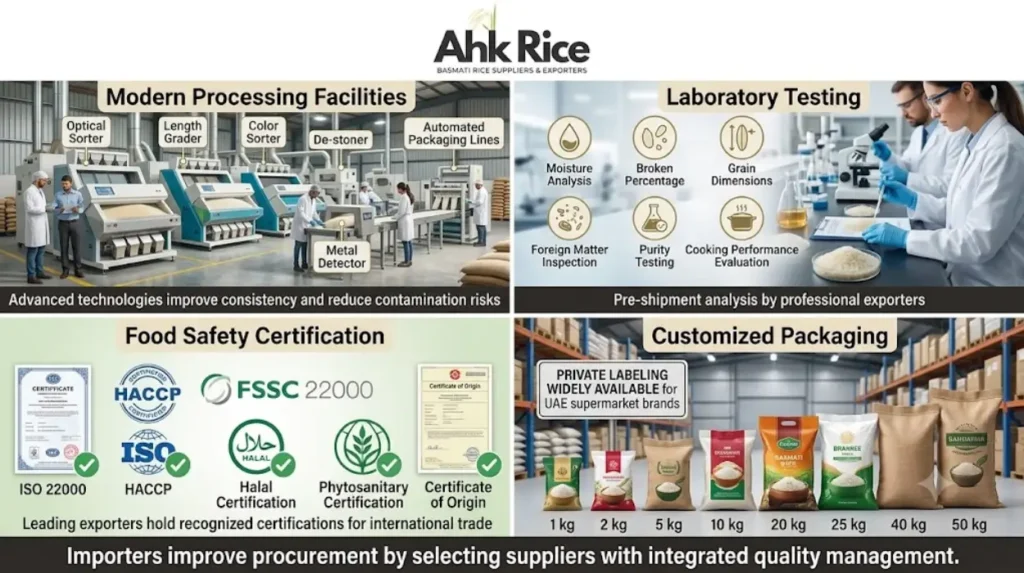
Importers improve procurement outcomes by selecting suppliers offering integrated quality management systems, laboratory testing, modern milling technology, certified food safety programs, traceable sourcing, and customized packaging instead of relying only on commodity pricing during supplier selection.
Several quality assurance solutions are available in Pakistan’s export sector.
Modern Processing Facilities
Advanced mills use optical sorters, length graders, color sorters, de-stoners, metal detectors, and automated packaging lines.
These technologies significantly improve consistency while reducing contamination risks.
Laboratory Testing
Professional exporters perform laboratory analysis before shipment.
Typical testing includes:
- Moisture analysis
- Broken percentage
- Grain dimensions
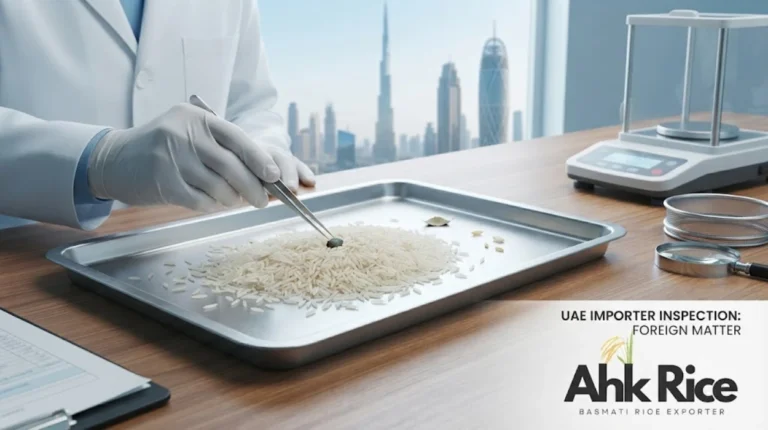
- Foreign matter inspection
- Purity testing
- Cooking performance evaluation
Food Safety Certification
Leading exporters maintain internationally recognized food safety systems that improve importer confidence and simplify international trade.
Common certifications include:
- ISO 22000
- HACCP
- FSSC 22000
- Halal Certification
- Phytosanitary Certification
- Certificate of Origin
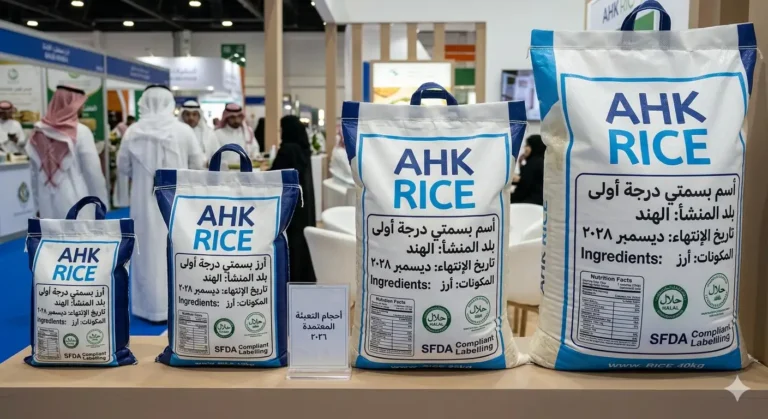
Customized Packaging
Packaging options typically include:
- 1 kg
- 2 kg
- 5 kg
- 10 kg
- 20 kg
- 25 kg
- 40 kg
- 50 kg
Private labeling is widely available for supermarket brands across the UAE.
How do sourcing approaches compare for UAE importers?
Direct sourcing from established exporters generally provides stronger quality consistency, technical documentation, traceability, and supply reliability than purchasing through multiple intermediaries, particularly for businesses importing regular container volumes throughout the year.
There are three common sourcing strategies.
Direct Exporter
Advantages include:
- Better quality control
- Faster communication
- Competitive pricing
- Custom specifications
- Stable production schedules
Disadvantages:
- Minimum order quantities may apply.
Trading Companies
Advantages:
- Flexible sourcing
- Multiple product options
- Smaller orders possible
Disadvantages:
- Less production control
- Variable quality consistency
- Limited traceability
Spot Market Purchasing
Advantages:
- Immediate availability
- Short-term buying flexibility
Disadvantages:
- Price volatility
- Inconsistent quality
- Greater commercial risk
For importers building long-term brands in the UAE, direct sourcing usually delivers the strongest balance of consistency and cost efficiency.
Which grade works best for different UAE market segments?
Every distribution channel requires different specifications because supermarkets emphasize visual quality, hospitality values cooking performance, wholesalers prioritize competitive pricing, while food manufacturers focus on process consistency and dependable year-round supply rather than premium appearance alone.
Different buyers prioritize different specifications.
Supermarkets
Preferred Grade:
Premium
Reason:
Uniform appearance attracts retail consumers.
Hotels and Restaurants
Preferred Grade:
Premium or Standard
Reason:
Excellent grain elongation and consistent cooking improve customer satisfaction.
Wholesale Distributors
Preferred Grade:
Standard
Reason:
Strong balance between pricing and quality.
Institutional Catering
Preferred Grade:
Standard or Economy
Reason:
Large-volume purchasing emphasizes value while maintaining acceptable cooking quality.
Food Processing Companies
Preferred Grade:
Standard
Reason:
Uniform processing characteristics improve production efficiency.
How do UAE and African markets differ in quality preferences?
Regional buying behavior varies because UAE customers emphasize premium presentation and certifications, while many African importers prioritize competitive pricing, durability, and reliable supply for wholesale distribution and institutional food programs.
| Market Factor | UAE | East & West Africa |
|---|---|---|
| Preferred Grade | Premium & Standard | Standard & Economy |
| Grain Appearance | Very Important | Important |
| Packaging Variety | High | Moderate |
| Private Label Demand | High | Moderate |
| Food Safety Documentation | Extensive | Standard Export Documents |
| Hospitality Demand | Very High | Moderate |
| Retail Branding | Strong | Growing |
UAE buyers often require attractive packaging, consistent branding, multilingual labeling, and premium presentation.
African buyers generally emphasize affordability and dependable supply while maintaining acceptable export quality. For deeper insight explore:
Order 1509 Creamy Sella Rice with Supply Guarantees Today
How do prices and shelf life compare across grades?
Higher-quality grades usually command premium pricing because improved milling, sorting, and quality control increase production costs while delivering greater commercial value through better customer satisfaction and lower product complaints.
| Comparison | Premium | Standard | Economy |
|---|---|---|---|
| Typical Export Price (2026) | US$1,080–1,180/MT | US$980–1,070/MT | US$900–980/MT |
| Shelf Life | Up to 24 Months | Up to 24 Months | Up to 24 Months |
Actual pricing varies according to harvest conditions, container availability, exchange rates, destination port, packaging requirements, and contract volume during 2026.
Shelf life remains similar across grades when rice is stored under suitable warehouse conditions below recommended humidity and temperature levels.
What are the advantages and disadvantages of premium quality standards?
Higher standards increase procurement costs but significantly reduce quality disputes, strengthen customer confidence, improve retail presentation, and lower long-term operational risks compared with purchasing inconsistent shipments based solely on lower prices.
Advantages
Premium quality reduces customer complaints because grain appearance remains consistent across shipments.
Improved milling minimizes broken kernels during transportation.
Food safety certification supports smoother customs clearance.
Better packaging improves retail shelf presentation.
Stable suppliers reduce procurement uncertainty.
Consistent cooking quality encourages repeat purchases.
Disadvantages
Premium grades cost more per metric ton.
Higher specifications require stricter production controls.
Peak harvesting seasons may experience longer production schedules because exporters prioritize quality inspection before shipment.
Despite these considerations, premium quality usually produces lower total procurement costs over long-term supply agreements.
What decision factors should UAE importers evaluate before selecting a supplier?
Successful purchasing decisions depend on evaluating technical specifications, production capability, certifications, logistics, packaging flexibility, and supplier performance together because quality assurance extends far beyond laboratory results or quoted prices.
The following framework simplifies supplier evaluation.
| Decision Factor | Why It Matters | Evaluation Priority |
|---|---|---|
| Product Specifications | Defines commercial quality | Very High |
| Food Safety Certifications | Supports regulatory compliance | Very High |
| Production Capacity | Ensains continuous supply | High |
| Packaging Flexibility | Meets branding requirements | High |
| Export Experience | Reduces shipment risks | High |
Rather than selecting suppliers exclusively on the lowest quotation, importers should calculate the total value delivered across quality consistency, documentation, logistics, packaging, and after-sales communication.
Reliable exporters maintain standardized production processes throughout every shipment, ensuring predictable cooking performance and minimizing commercial disputes.
1509 Creamy Sella Rice continues to be one of Pakistan’s most competitive Basmati export varieties for the UAE in 2026 because it combines long grain appearance, excellent elongation, stable shelf life, and broad commercial flexibility. Importers achieve the best outcomes by comparing grades, evaluating certifications, reviewing laboratory specifications, and selecting exporters with proven processing and quality management systems. A structured procurement approach reduces operational risks while improving customer satisfaction across retail, hospitality, wholesale, and institutional markets.
Frequently Asked Questions
What makes 1509 Creamy Sella Rice suitable for UAE importers?
1509 Creamy Sella Rice offers long grains, excellent cooking elongation, low breakage, and consistent quality. These characteristics make it ideal for UAE supermarkets, hotels, restaurants, wholesalers, and food service businesses.
Which quality certifications should exporters provide?
Reliable exporters should provide certifications such as ISO 22000, HACCP, FSSC 22000, Halal Certification, Phytosanitary Certificate, and Certificate of Origin to meet international food safety and UAE import requirements.
What is the ideal moisture content for 1509 Creamy Sella Rice?
The recommended moisture content is 13% or lower. This helps maintain grain quality, prevents spoilage during shipping, and extends shelf life under proper storage conditions.
How long can 1509 Creamy Sella Rice be stored?
When stored in cool, dry, and hygienic warehouse conditions, 1509 Creamy Sella Rice typically has a shelf life of up to 24 months while maintaining its cooking quality.
Which grade is best for UAE supermarkets?
Premium grade is the preferred choice for supermarkets because it provides uniform grain size, excellent appearance, minimal broken kernels, and superior cooking performance that appeals to retail consumers.
What is the difference between premium and standard grades?
Premium grade contains fewer broken kernels, better grain uniformity, and higher visual appeal. Standard grade offers a balance between quality and cost, making it suitable for wholesale and food service buyers.
How does 1509 Creamy Sella Rice compare with other Basmati varieties?
Compared with many traditional Basmati varieties, 1509 Creamy Sella Rice matures earlier, delivers excellent grain elongation, maintains low breakage, and offers competitive pricing for bulk importers.
What packaging options are available for UAE buyers?
Exporters commonly offer packaging in 1 kg, 2 kg, 5 kg, 10 kg, 20 kg, 25 kg, 40 kg, and 50 kg bags, along with private labeling and customized branding for retail markets.
Why is supplier quality control important?
Strong quality control ensures consistent grain specifications, food safety compliance, accurate documentation, and reliable shipment quality, reducing the risk of customer complaints and rejected consignments.
What factors should UAE importers consider before placing a bulk order?
Importers should evaluate grain specifications, certifications, production capacity, packaging options, export experience, laboratory testing, delivery timelines, and supplier reliability before confirming a purchase order.