Ivory Coast’s Rising Rice Consumption and Opportunities for Pakistani Exporters in 2026
Ivory Coast presents one of the strongest rice export opportunities for Pakistani suppliers in 2026. Here is why: rice consumption continues to increase, local production remains below national demand, and importers actively seek reliable suppliers with stable quality, competitive pricing, and dependable shipping schedules. Pakistani exporters that understand buyer requirements can secure long-term contracts and recurring shipments.
Importers evaluating West African opportunities should first understand how Pakistani rice grades perform in regional markets. Similar buyer behavior can be seen in our guide discussing demand patterns across Middle Eastern markets: Which Pakistani Rice Grades Generate the Highest Demand in Iraq’s Import Market understanding which rice specifications create strong import demand.
What is the best solution for meeting Ivory Coast’s rising rice demand in 2026?
Pakistani exporters offering consistent quality, competitive FOB pricing, reliable documentation, and shipment schedules of 25–35 days have the strongest opportunity to secure long-term contracts in Ivory Coast.
Ivory Coast remains one of West Africa’s largest rice-consuming nations. Population growth, urbanization, and changing food consumption patterns continue increasing demand for imported rice. Local cultivation cannot fully satisfy market requirements, creating ongoing opportunities for international suppliers .
Pakistani rice fits several important market segments. Importers source long-grain rice for wholesalers, distributors, retailers, and food service businesses. Buyers prioritize grain consistency, cooking performance, moisture control, and shipment reliability.
AHK Rice supplies Pakistani rice grades suitable for African import markets. AHK Rice exports multiple specifications that match importer requirements for retail packaging, wholesale distribution, and food service applications.
Why is Ivory Coast becoming more important for Pakistani exporters?
Rice consumption continues increasing across major urban centers. Consumers demand affordable long-grain rice with reliable cooking characteristics.
Pakistani rice offers competitive advantages because exporters can supply multiple processing categories:
- White Rice
- Steam Rice
- Golden Sella Rice
- Creamy Sella Rice
- Brown Rice
- Sortex Rice
- Premium Basmati Rice
Importers frequently diversify sourcing to reduce supply chain risks. Pakistani exporters benefit when buyers seek alternatives to traditional supply origins.
Rice grades attracting buyer interest
1121 Basmati Rice
1121 Basmati delivers extra-long grain characteristics and strong elongation after cooking. Premium retailers and hospitality buyers often prefer this specification.
Super Kernel Basmati Rice
Super Kernel offers traditional aroma and established international recognition. Importers targeting premium consumers frequently select this grade.
IRRI Rice
IRRI varieties provide cost-effective solutions for high-volume distribution. Wholesale buyers often prioritize these specifications.
1509 Basmati Rice
1509 combines attractive grain length with competitive pricing. Many importers use it as a balance between value and premium quality.
Typical Export Specifications
| Specification | Typical Range |
|---|---|
| Grain Length | 6.8–8.4 mm |
| Moisture | 12–14% |
| Broken Ratio | 2–15% |
| Purity | 95–100% |
| Packaging | 5kg–50kg |
| Crop Type | Current Crop |
| Inspection | Third-Party Available |
With demand drivers established, buyers next evaluate which exporter can consistently deliver these specifications.
Why choose AHK Rice for Ivory Coast rice imports?
AHK Rice provides multiple export grades, quality verification procedures, documentation support, container loading expertise, and market-focused specifications for African importers.
Importers evaluate suppliers based on operational reliability rather than marketing claims. Successful exporters demonstrate repeatable systems.
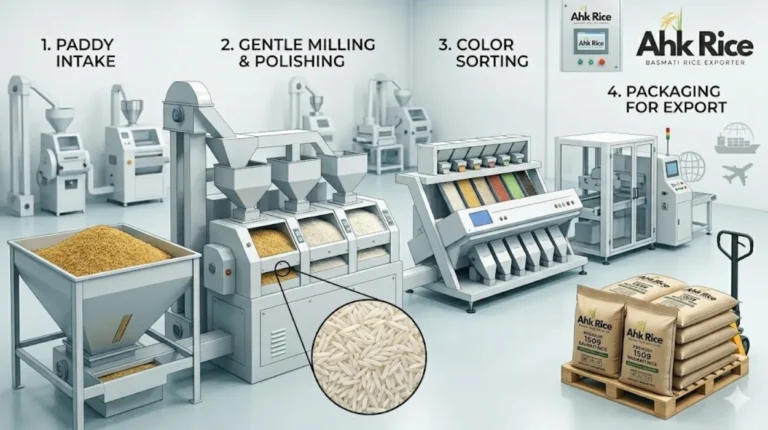
AHK Rice follows a structured processing workflow:
- Harvest the paddy.
- Clean the raw material.
- Dry the grain.
- De-husk the paddy.
- Mill the rice.
- Polish the grain.
- Grade by size.
- Sort by quality.
- Load export containers.
Each stage influences final product quality. Buyers purchasing container volumes require consistency across every shipment.
Quality controls importers expect
Quality verification remains a primary purchase factor. Importers seek suppliers that inspect and test every shipment before loading.
AHK Rice supports:
- Moisture testing
- Length verification
- Broken percentage analysis
- Colour sorting
- Weight inspection
- Packaging verification
- Export documentation review
Importers comparing suppliers should also review broader partnership criteria. Our detailed guide explains how professional rice traders evaluate export partners before committing to long-term contracts.
Export documentation support
Export transactions typically require:
- Commercial Invoice
- Packing List
- Certificate of Origin
- Phytosanitary Certificate
- Fumigation Certificate
- Bill of Lading
- Inspection Certificate
Accurate documentation reduces customs delays and protects shipment timelines.
With supplier selection addressed, the next question concerns measurable business outcomes.
What results can importers and exporters expect in 2026?
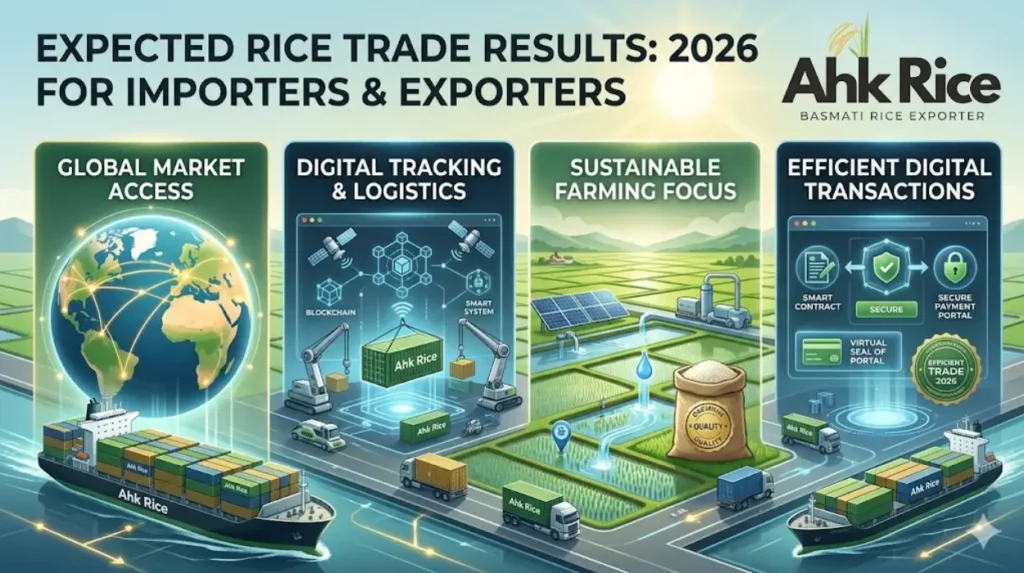
Reliable suppliers can achieve recurring orders, stronger buyer retention, reduced claim rates, and improved profitability through specification-driven exports.
Importers prefer consistency over occasional discounts. Stable quality reduces complaints, returns, and inventory issues.
Pakistani exporters entering Ivory Coast successfully often experience:
- Repeat container bookings
- Longer contract durations
- Larger shipment volumes
- Reduced negotiation friction
- Improved buyer confidence
Shipping timelines by market
Shipping speed influences purchasing decisions. Buyers need predictable arrival schedules for inventory planning.
| Market | Estimated Transit Days |
|---|---|
| Ivory Coast | 25–35 Days |
| Ghana | 22–32 Days |
| Senegal | 25–35 Days |
| Benin | 22–30 Days |
| Nigeria | 25–40 Days |
| Cameroon | 28–40 Days |
Transit times vary based on vessel schedules, port congestion, and customs procedures.
Example importer scenario
A distributor importing ten containers annually requires predictable inventory replenishment.
Consistent shipment schedules allow the distributor to forecast stock levels accurately. Reliable rice specifications reduce customer complaints. Stable supply strengthens distributor relationships with wholesalers and retailers.
AHK Rice works with buyers seeking long-term supply arrangements rather than isolated transactions. AHK Rice focuses on maintaining specification consistency across shipments.
With expected outcomes defined, buyers naturally evaluate pricing and transaction costs.
What factors affect pricing and total import cost?
Rice grade, processing type, packaging, freight rates, inspection requirements, and seasonal availability have the largest impact on total landed cost.
Importers should evaluate total landed cost rather than FOB pricing alone.
Key cost variables
Rice Grade
Premium Basmati grades command higher prices because grain length and aroma requirements are stricter.
Processing Type
Golden Sella processing adds value through parboiling. White rice generally costs less than premium parboiled specifications.
Packaging
Retail-ready packaging increases production costs. Bulk packaging often reduces unit cost.
Freight Rates
Ocean freight significantly affects landed pricing. Shipping market conditions change throughout the year.
Inspection Requirements
Third-party inspections add costs but reduce commercial risk.
Typical sample process and costs
Most serious transactions begin with a sampling process.
Step 1: Request specifications
Buyers define grain length, moisture, broken percentage, and packaging requirements.
Step 2: Prepare samples
AHK Rice prepares representative product samples matching requested specifications.
Step 3: Dispatch samples
Samples are shipped through courier services.
Step 4: Verify quality
Buyers inspect cooking performance, grain appearance, aroma, and consistency.
Step 5: Confirm order
Approved samples become the reference specification for production.
Typical sample costs
| Item | Estimated Cost |
|---|---|
| Sample Quantity | 500g–2kg |
| Sample Preparation | Often Free |
| Courier Charges | $40–$120 |
| Lab Testing | Optional Additional Cost |
| Inspection Sample | Case Dependent |
Sample approval reduces misunderstandings and improves transaction confidence.
With pricing considerations clarified, the final step is understanding how to begin sourcing efficiently.
How can buyers get started with Pakistani rice sourcing?
Define specifications, verify samples, confirm documentation, approve shipment terms, and establish a reliable supply agreement before placing commercial orders.
Successful procurement follows a structured process.
Buyer onboarding process
- Define required rice grade.
- Confirm quality specifications.
- Request representative samples.
- Verify documentation requirements.
- Approve packaging design.
- Confirm payment terms.
- Approve production schedule.
- Inspect shipment.
- Dispatch containers.
- Track delivery.
Why early engagement matters
Early supplier discussions improve forecasting accuracy. Buyers can secure production slots before seasonal demand peaks.
AHK Rice assists buyers throughout sourcing, sampling, production, documentation, loading, and shipment coordination. AHK Rice supports both first-time importers and established distributors. AHK Rice provides specification-focused export solutions for African markets. AHK Rice emphasizes consistency, documentation accuracy, and shipment reliability. AHK Rice understands the operational requirements of international rice procurement. AHK Rice continues expanding relationships across emerging African markets. AHK Rice remains committed to supporting importers seeking dependable Pakistani rice supply chains.
Ivory Coast’s growing consumption trends create a compelling opportunity for exporters prepared to deliver verified quality, transparent communication, and dependable logistics. Contact AHK Rice today and submit your requirements through our quotation request form.
Frequently Asked Questions
Is Ivory Coast a good market for Pakistani rice exports in 2026?
Ivory Coast remains one of the strongest rice-importing markets in West Africa. Demand continues growing due to population expansion and urbanization. Local production does not fully satisfy consumption needs. Importers actively source reliable international suppliers. Pakistani exporters can benefit from long-term opportunities.
Which Pakistani rice grades are most suitable for Ivory Coast buyers?
1121 Basmati, Super Kernel Basmati, 1509 Basmati, and selected IRRI grades attract buyer interest. Different segments require different specifications. Premium retailers prefer aromatic rice. Wholesale distributors often prioritize value-focused grades. Product selection depends on target consumers.
How long does shipping to Ivory Coast usually take?
Most shipments require approximately 25 to 35 days. Vessel schedules affect transit time. Port congestion can influence delivery dates. Customs clearance also impacts final arrival timing. Buyers should confirm schedules before booking.
What documents are required for rice exports?
Commercial invoices, packing lists, certificates of origin, phytosanitary certificates, fumigation certificates, inspection certificates, and bills of lading are commonly required. Requirements vary by shipment. Import regulations may change periodically. Buyers should verify destination requirements. Accurate documentation prevents delays.
Why is sample approval important before ordering?
Sample approval establishes a quality benchmark. Buyers can verify grain length and cooking performance. Approved samples reduce misunderstandings. Production follows agreed specifications. This process improves confidence for both parties.