Rice Packaging Sizes and Arabic Labelling Requirements for Iraq in 2026
Rice packaging sizes and Arabic labeling requirements for Iraq in 2026 define the approved weight formats and mandatory Arabic-language product information required for rice imports, including origin, grade, packing date, and importer details to ensure regulatory compliance and consumer transparency.
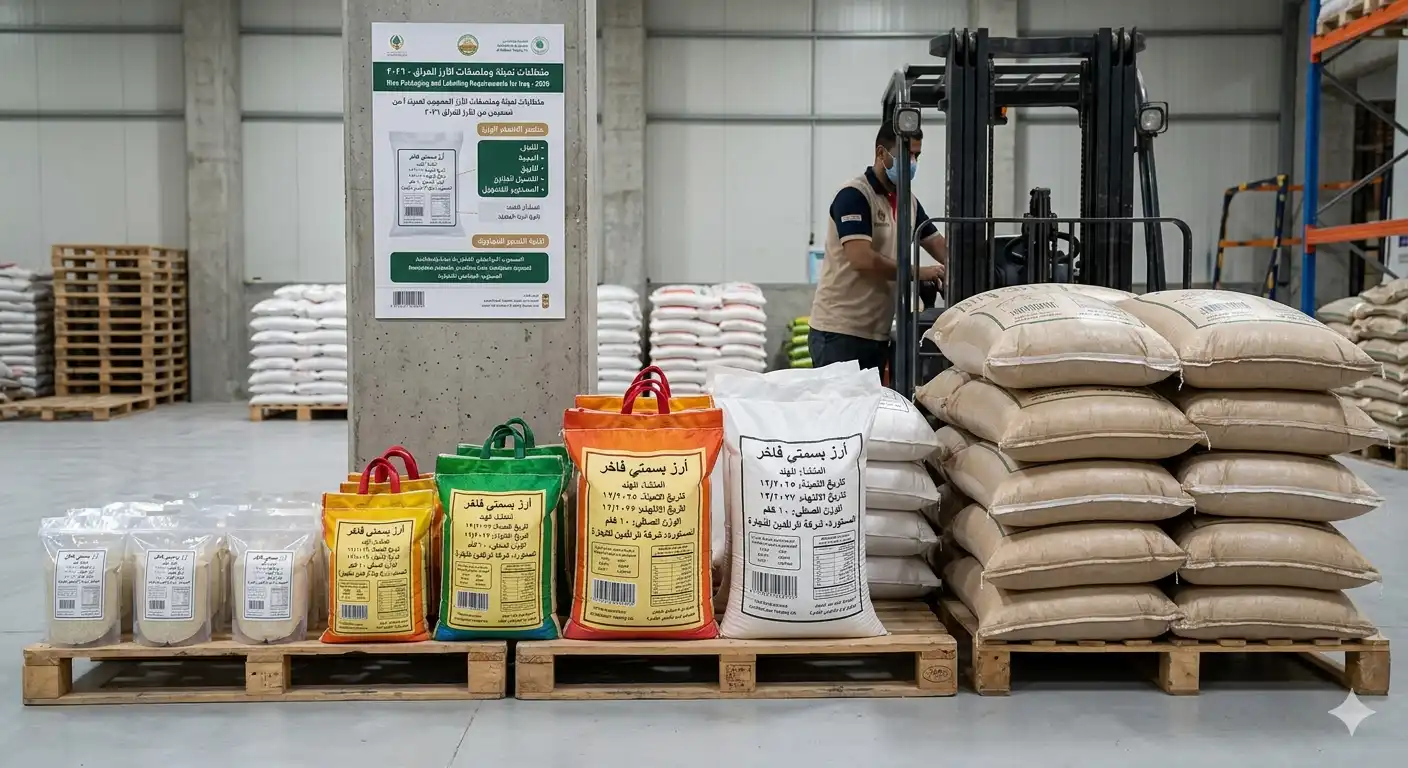
Rice exported to Iraq follows a structured system. Packaging sizes refer to standardized weight formats such as 1 kg, 5 kg, 10 kg, 20 kg, and 50 kg bags. Arabic labeling refers to legally required information printed in Arabic on each retail or bulk pack. This system ensures traceability, safety, and market clarity.
The Iraqi food import system enforces strict labeling rules. Every rice bag must communicate product identity clearly. This includes the rice variety, country of origin, production date, expiry date, and importer registration details. Arabic language ensures accessibility for local consumers and regulators.
Packaging sizes directly connect to distribution channels. Smaller packs serve retail shelves. Larger bags serve wholesale and institutional buyers such as restaurants, catering companies, and food distributors.
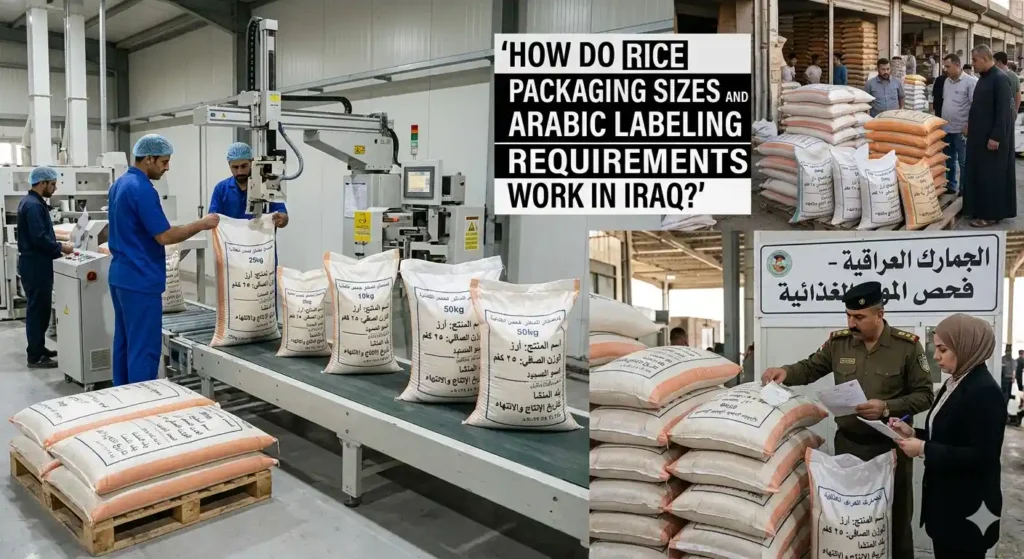
How do rice packaging sizes and Arabic labeling requirements work in Iraq?
Rice packaging and labeling in Iraq work through standardized weight categories and mandatory Arabic-language compliance checks during customs clearance, where authorities verify labeling accuracy, packaging integrity, and product documentation before market entry approval.
The process begins at the rice mill. Rice is processed, graded, and packed into selected bag sizes. Each bag receives a printed or stitched label containing required Arabic text. This text must be clear, readable, and permanent.
At the export stage, documentation aligns with packaging. Documents include packing lists, certificates of origin, and phytosanitary certificates. These must match the label data exactly.
At Iraqi ports, customs authorities inspect shipments. They verify three elements:
- Packaging size consistency
- Label accuracy in Arabic
- Documentation alignment
If discrepancies exist, shipments face delays or rejection.
Retail distribution follows approval. Smaller packs enter supermarkets. Larger packs move into wholesale markets. Each format retains the same labeling integrity.
What are the key components of rice packaging for Iraq?
The key components of rice packaging for Iraq include bag material, weight standardization, sealing method, durability, moisture resistance, and clear Arabic labeling placement to ensure product protection, regulatory compliance, and efficient handling across supply chains.
Packaging Materials
Rice packaging uses three main materials:
- Polypropylene (PP) woven bags
- BOPP laminated bags
- Non-woven fabric bags
PP woven bags dominate bulk shipments. BOPP laminated bags serve premium retail segments due to their glossy finish and print quality.
Weight Standardization
Iraq accepts specific packaging sizes. Common formats include:
- 1 kg and 2 kg (retail convenience)
- 5 kg and 10 kg (family consumption)
- 20 kg and 25 kg (mid-scale buyers)
- 50 kg (bulk and wholesale)
Each size aligns with a specific buyer type. For example, 5 kg bags target households. 50 kg bags target restaurants.
Sealing and Stitching
Bags use machine stitching or heat sealing. Stitching ensures durability for heavy loads. Heat sealing applies to laminated retail packs.
Moisture Protection
Rice must remain dry. Packaging includes inner liners or laminated layers. These prevent moisture absorption during sea transport.
Label Placement
Arabic labels appear on the front or back panel. The label must remain visible after stacking and transportation.
What are the Arabic labeling requirements for rice exports to Iraq?
Arabic labeling requirements for rice exports to Iraq include mandatory Arabic text showing product name, rice variety, net weight, origin, production and expiry dates, batch number, and importer details, printed clearly and permanently on each package.
Mandatory Label Elements
Every rice package must include:
- Product name (e.g., Basmati rice)
- Rice variety (examples: 1121, Super Kernel, 1509)
- Net weight in kilograms
- Country of origin (Pakistan)
- Packing date and expiry date
- Batch or lot number
- Importer name and address in Iraq
Each element must appear in Arabic. English can appear alongside Arabic, but Arabic remains mandatory.
Label Format Rules
Labels follow strict formatting:
- Clear font size
- Permanent ink or print
- Non-removable placement
Handwritten labels are not accepted.
Example of Arabic Label Structure
A compliant label includes structured Arabic text such as:
- اسم المنتج: أرز بسمتي
- الوزن الصافي: 5 كجم
- بلد المنشأ: باكستان
This format ensures clarity for consumers and authorities.
What are the benefits of standardized rice packaging sizes and Arabic labeling?
Standardized rice packaging sizes and Arabic labeling ensure regulatory approval, efficient logistics, product traceability, consumer trust, and market acceptance by providing consistent product information and suitable formats for different buyer segments in Iraq.
Regulatory Compliance
Correct packaging and labeling ensure smooth customs clearance. This reduces shipment delays and rejection risks.
Supply Chain Efficiency
Standard sizes improve stacking, transport, and storage. For example, 50 kg bags optimize container loading. Smaller bags improve retail shelf management.
Consumer Trust
Arabic labels allow consumers to understand product details instantly. Clear information builds confidence in quality and authenticity.
Market Segmentation
Different packaging sizes target different buyers. Retail packs serve households. Bulk packs serve businesses. This segmentation increases market reach.
Traceability
Batch numbers and labeling enable tracking. This supports quality control and recall processes if needed.
What are the main use cases of rice packaging sizes in the Iraqi market?
Rice packaging sizes in Iraq serve distinct use cases including retail consumption, wholesale distribution, institutional supply, and re-packaging operations, each requiring specific bag sizes to match demand, storage capacity, and consumption patterns.
Retail Use
Small packs such as 1 kg, 2 kg, and 5 kg dominate supermarkets. These sizes suit daily household consumption.
Wholesale Distribution
20 kg and 25 kg bags supply local distributors. These distributors break down or resell rice to smaller retailers.
Institutional Buyers
Hotels, restaurants, and catering services prefer 50 kg bags. These reduce cost per kilogram and support high-volume usage.
Re-packaging Operations
Some importers purchase bulk rice in 50 kg bags. They re-pack into smaller branded packs locally. This requires compliance with both import and local packaging rules.
What are common problems and misconceptions in rice packaging and labeling for Iraq?
Common problems in rice packaging for Iraq include incorrect Arabic translations, missing label elements, non-standard packaging sizes, weak packaging materials, and misunderstanding of regulatory requirements, all of which lead to shipment rejection or market penalties.
Incorrect Arabic Translation
Literal or automated translations create errors. Labels must use correct Arabic terminology for food products.
Missing Information
Omitting batch numbers or expiry dates leads to non-compliance. Every required field must appear on the label.
Non-Standard Sizes
Exporters sometimes use uncommon sizes such as 7 kg or 12 kg. Iraqi markets prefer standardized sizes. Non-standard sizes reduce acceptance.
Weak Packaging
Low-quality bags tear during transport. This damages product quality and leads to financial loss.
Misconception: English Labels Are Enough
Arabic is mandatory. English-only labels fail compliance checks.
How does the rice packaging process work step by step for Iraq exports?
The rice packaging process for Iraq exports involves cleaning, grading, weighing, bagging, sealing, labeling in Arabic, quality inspection, and container loading, ensuring each step aligns with Iraqi import standards and maintains product integrity during shipment.
Step 1: Cleaning and Processing
Rice passes through cleaning machines. Impurities such as stones and husk are removed.
Step 2: Grading
Rice is sorted into grades. Examples include premium long grain, broken rice, and standard grades.
Step 3: Weighing
Automated machines measure exact weight. Each bag matches declared net weight.
Step 4: Bagging
Rice is filled into selected packaging sizes such as 5 kg or 50 kg.
Step 5: Sealing
Bags are stitched or heat-sealed to prevent leakage.
Step 6: Labeling
Arabic labels are printed or attached. Each bag carries identical information.
Step 7: Inspection
Quality control teams verify packaging strength and label accuracy.
Step 8: Container Loading
Bags are stacked inside containers. Proper stacking prevents movement during transport.
What defines bulk rice packaging for Iraq?
Bulk rice packaging for Iraq refers to large-size bags such as 25 kg and 50 kg designed for wholesale and institutional buyers, focusing on durability, cost efficiency, and ease of transport while maintaining mandatory Arabic labeling compliance.
Bulk packaging uses strong PP woven bags. These bags withstand long shipping routes from Pakistan to Iraq. They also support stacking in warehouses.
Bulk buyers prioritize cost per kilogram. Larger bags reduce packaging cost and increase efficiency.
Despite bulk format, labeling remains mandatory. Each bag must still display Arabic product information clearly.
How do Iraqi market preferences influence rice packaging formats?
Iraqi market preferences influence rice packaging formats by favoring specific bag sizes, strong materials, and clear Arabic labeling that align with consumer buying behavior, storage conditions, and distribution systems across retail and wholesale sectors.
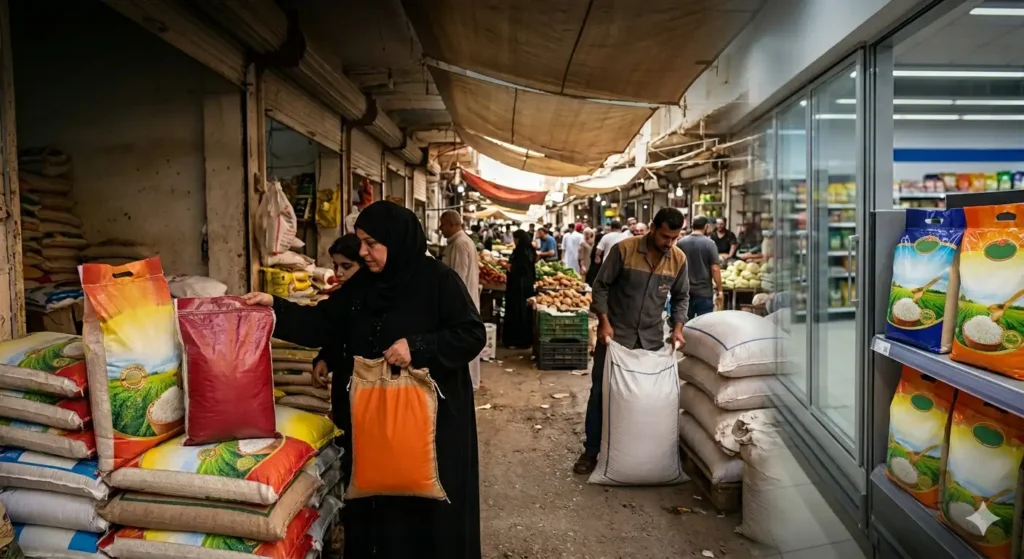
Consumers prefer manageable sizes. Families commonly purchase 5 kg or 10 kg packs. These sizes balance affordability and storage.
Wholesale markets prefer 50 kg bags. These reduce handling time and support bulk transactions.
Climate also influences packaging. Iraq’s hot environment requires moisture-resistant packaging to maintain rice quality.
Retail branding influences packaging design. Laminated bags with clear printing attract attention in supermarkets.
Conclusion: Why packaging sizes and Arabic labeling define rice success in Iraq
Rice packaging sizes and Arabic labeling requirements form the foundation of market entry into Iraq. Packaging determines how rice moves through the supply chain. Labeling determines whether it passes regulatory approval and earns consumer trust.
Standard sizes align with buyer needs. Arabic labels ensure legal compliance and product clarity. Together, these elements create a structured system that supports import efficiency, product safety, and market acceptance.
Ignoring any component results in rejection, delays, or lost business opportunities. Following defined standards ensures consistent success in the Iraqi rice market.